

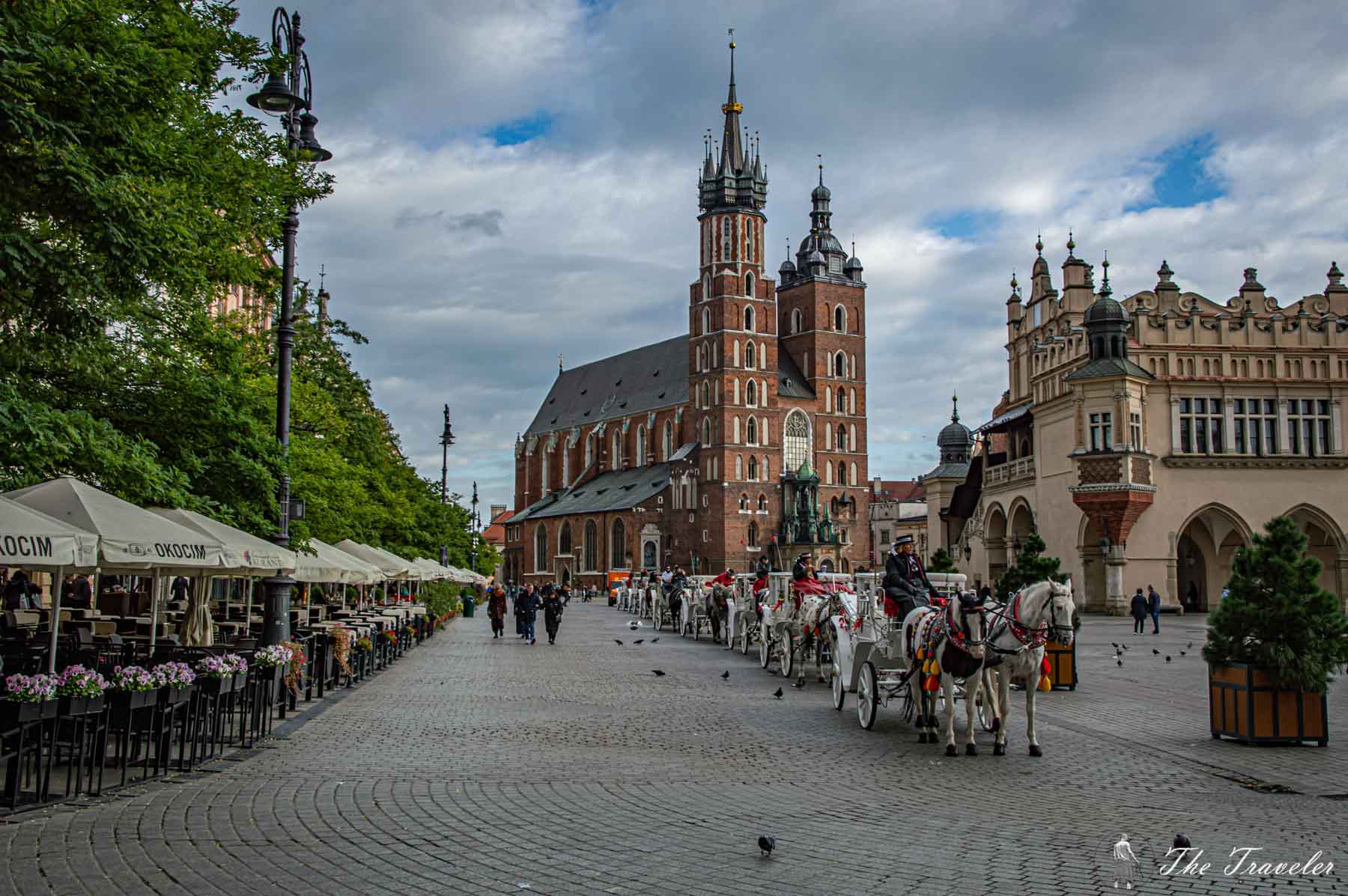
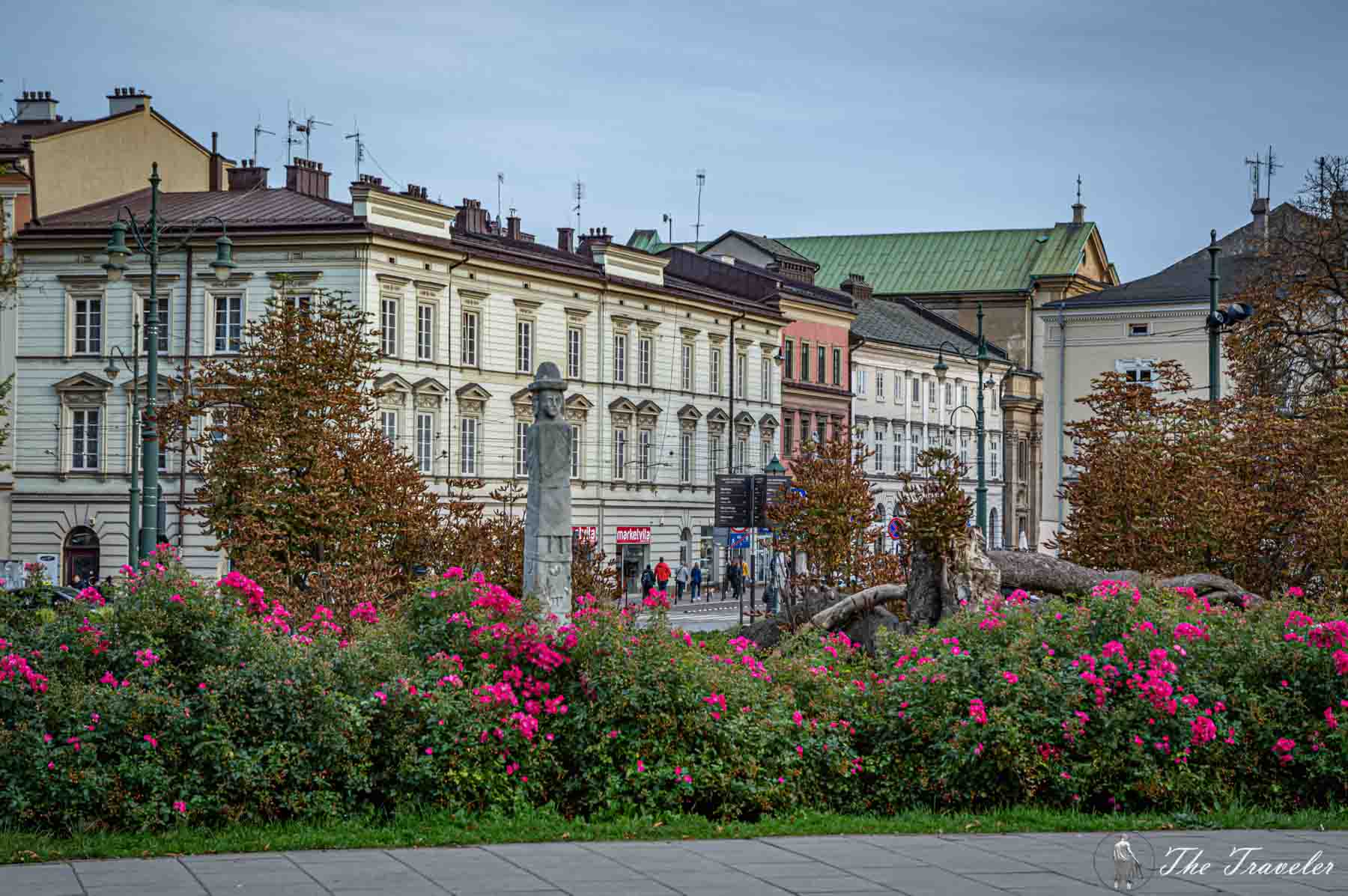
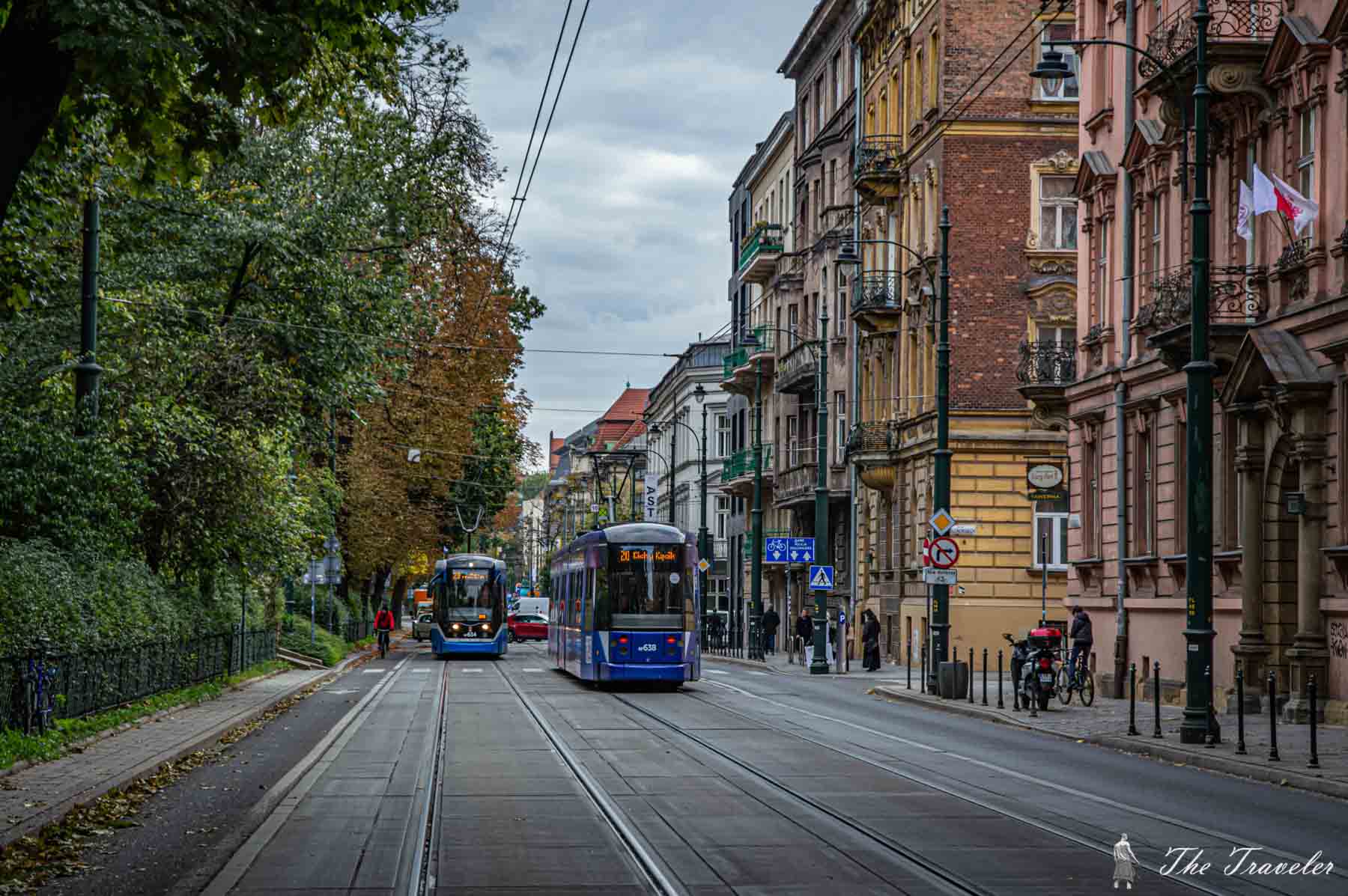
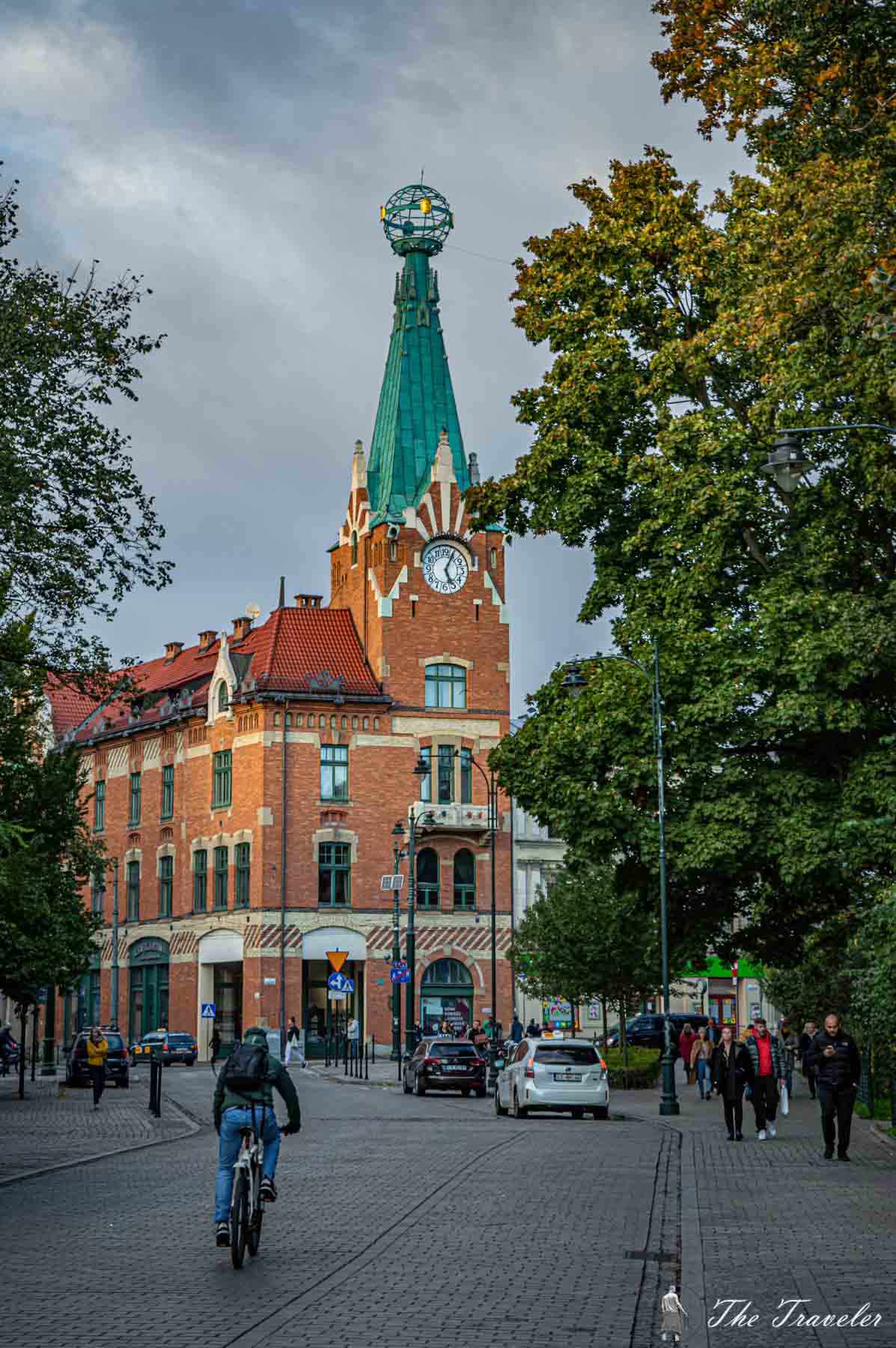
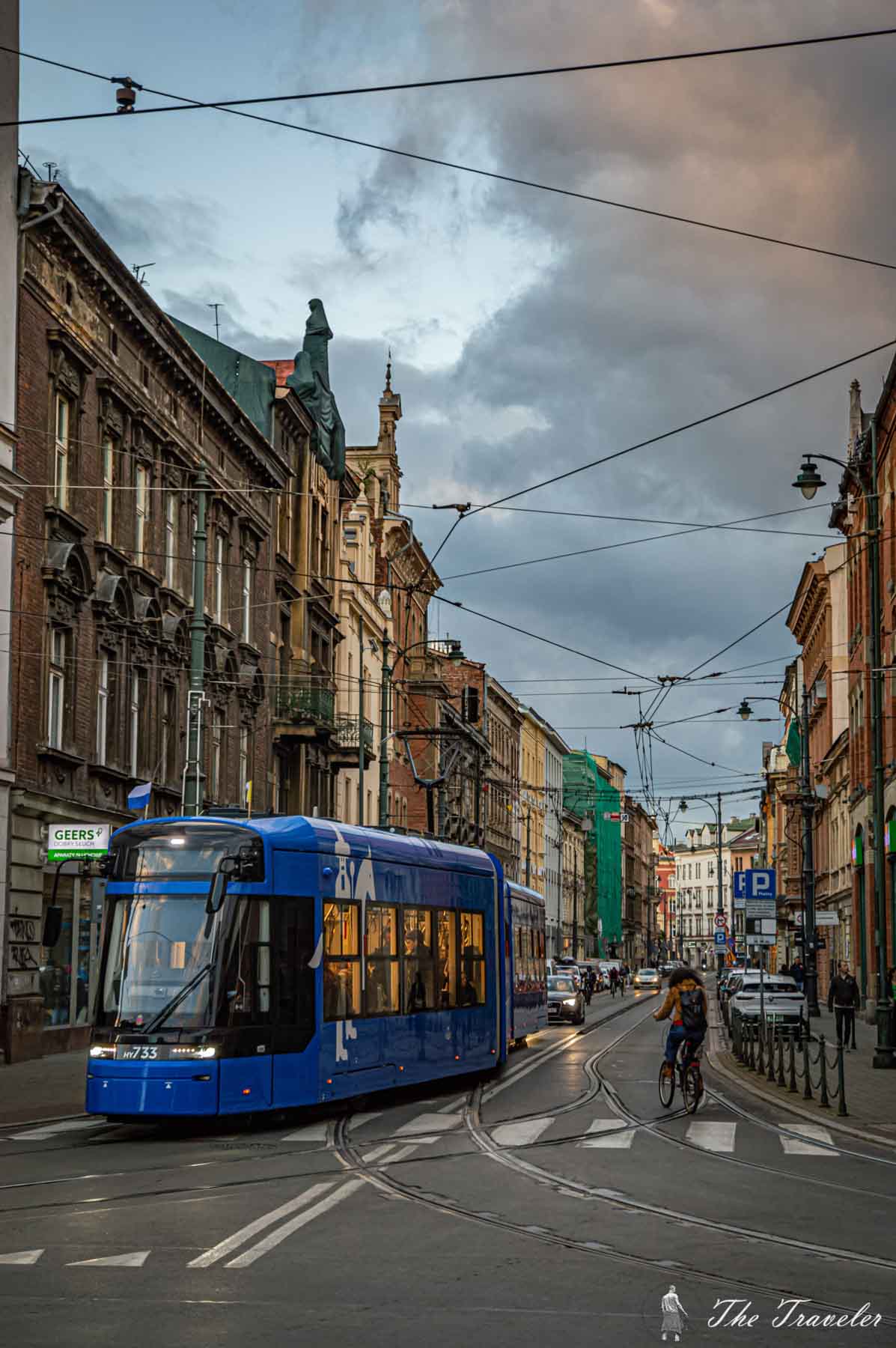
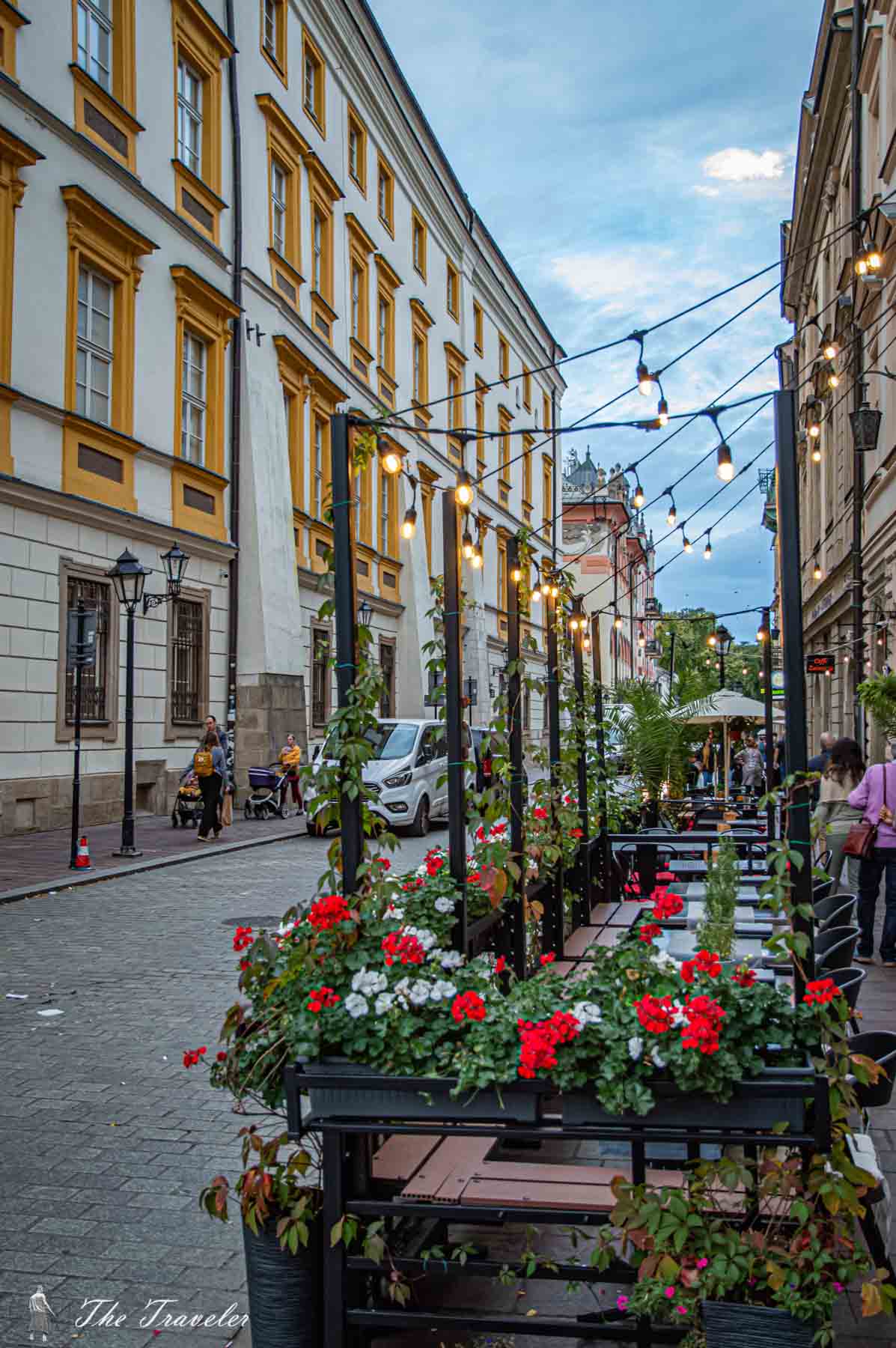
Our first encounter with Poland was through Krakow! I’d be lying if I said I had no expectations, because Poland’s most popular city had been on my radar for a long time… And it didn’t just live up to them – it made us fall in love with the country! Besides being exceptionally clean, neat, and well organized, the city impresses with magnificent architecture that reveals its full charm in autumn. The October atmosphere fit it perfectly – with golden hues everywhere, soft cinematic sunlight over the cobblestones, and that chilly morning mist that makes you order tea instead of coffee. We treated ourselves to a little over two days of leisurely autumn strolls, pushing a stroller and discovering the most beautiful corners of Krakow…
Where is located, how to get there and where to stay
Krakow is located in southern Poland, on the banks of the Vistula River, and is the second-largest city in the country. Getting from Balice Airport (John Paul II) to the center is fairly quick and well organized. The most convenient option is the direct train, connected to the airport terminal by a covered walkway, which reaches the main train station (Krakow Glowny) in under 20 minutes. Trains run frequently, and tickets are easy to buy from the machines on the platform or on board (priced at 20 PLN). It is considerably cheaper if you take one of the buses departing right outside the entrance, but do check Google Maps public transport directions to see which option is fastest and most convenient for you.
See car rental options in Poland
The area between the train station and the Old Town is perhaps the most convenient place to stay – you’re just a few minutes’ walk from the main sights, and getting to and from the airport is effortless. That’s especially important when traveling with a toddler, as we were… We booked a studio at Wanderlust Apartments, which offers several room types. Ours wasn’t the most spacious once the crib was set up, but it was spotless and modernly furnished. Its biggest advantage was definitely the prime location, though I’d also highlight the quiet position facing an inner courtyard, the comfortable bed, and the spotless bathroom!
See more places to stay in Krakow
More about Krakow
Besides being one of the oldest Polish cities, first mentioned in the mid-10th century, Krakow was also the ancient royal capital – from 1038 to 1596! The entire Old Town (Stare Miasto) survived World War II almost unscathed, as if by a miracle, and today is a UNESCO World Heritage Site. Its former fortification walls have been turned into a green park (Planty) that wraps around it like a horseshoe. The city combines impressive Austro-Hungarian and Jewish heritage, Gothic and Renaissance architecture, and local Polish culture to create its unique Central European character. It is rightfully the most visited city in the country, as it is vibrant, filled with a captivating artistic atmosphere, compact, and easy to explore on foot!
The main square (Rynek Główny)
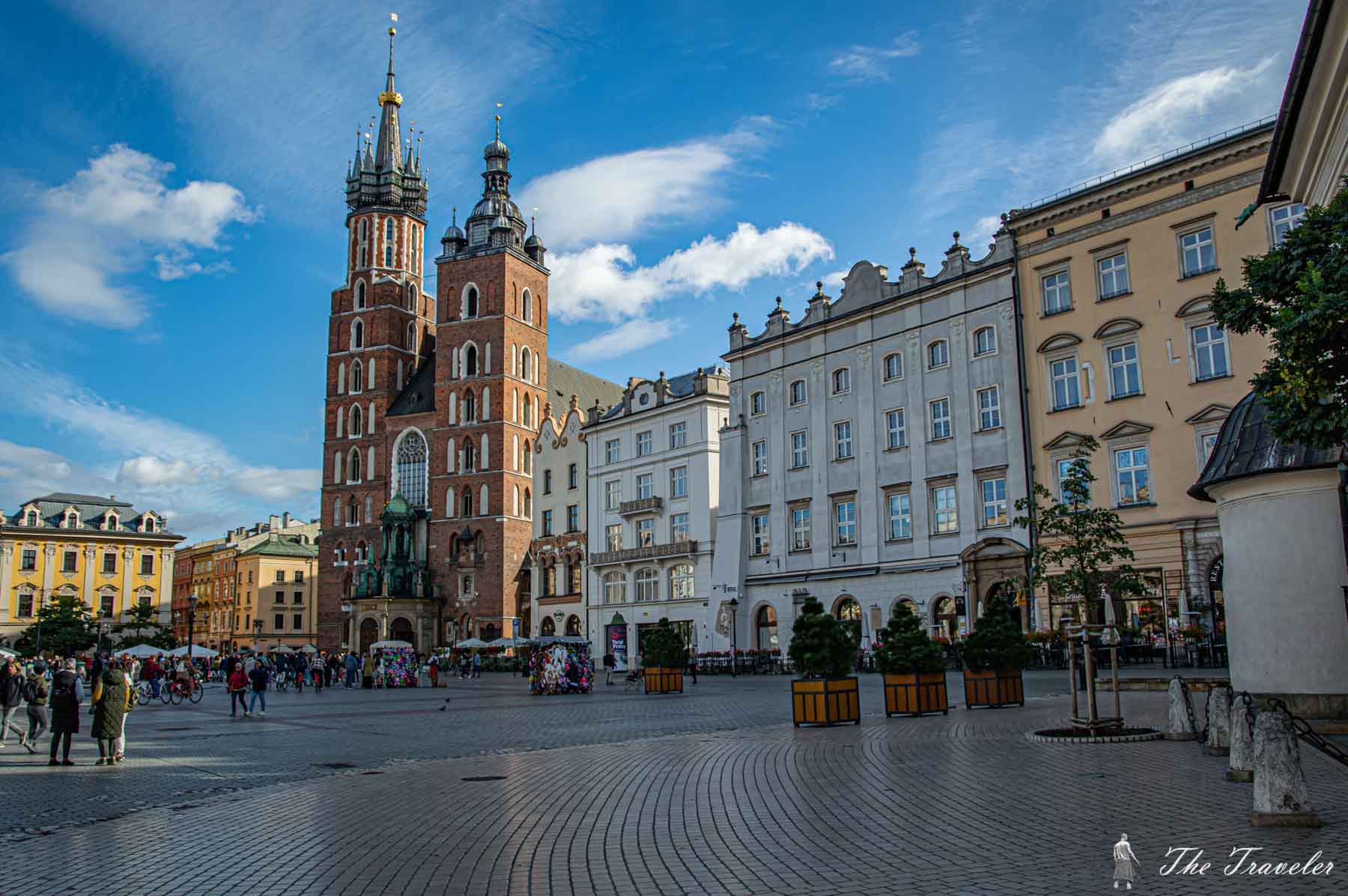
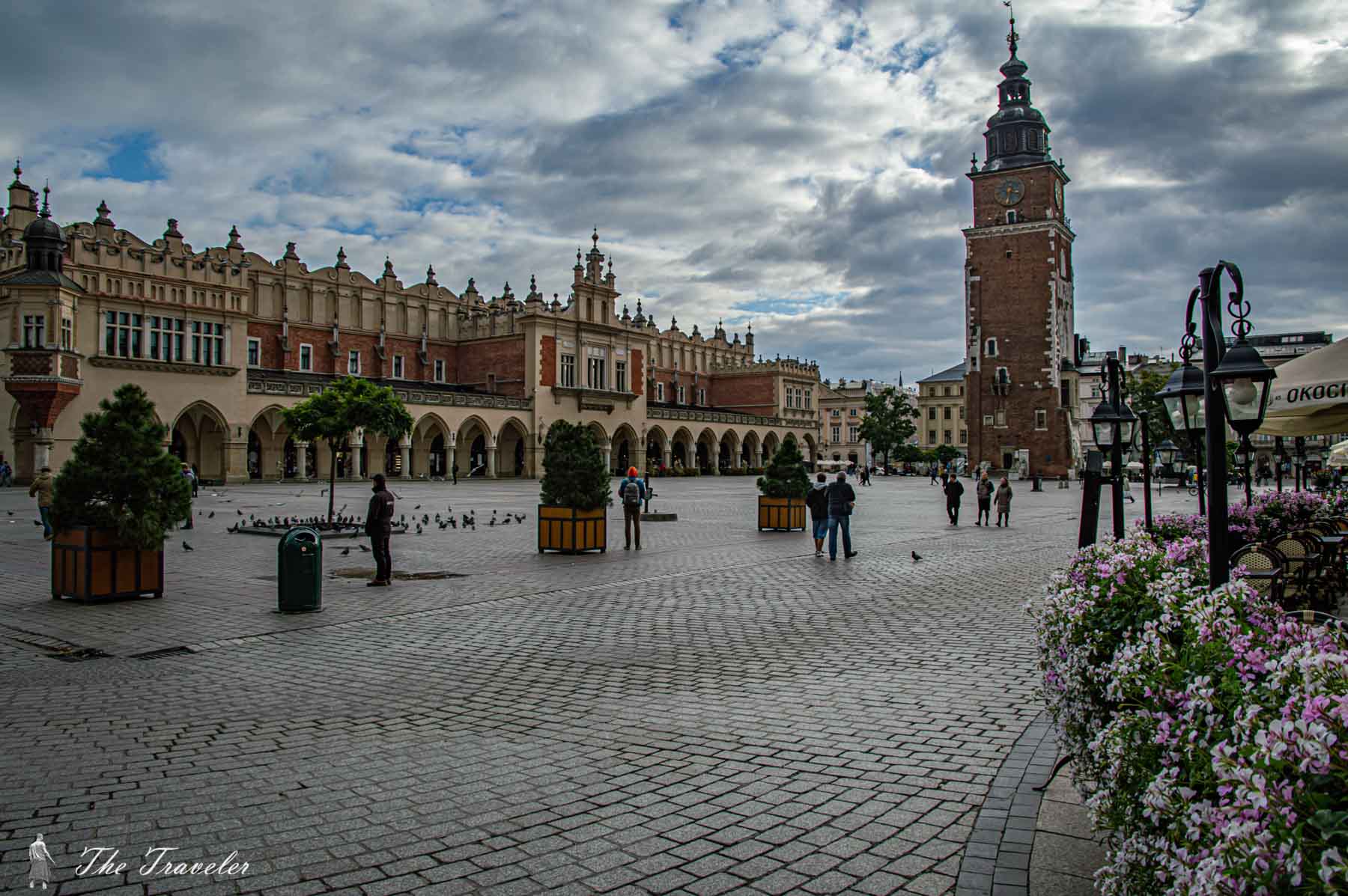
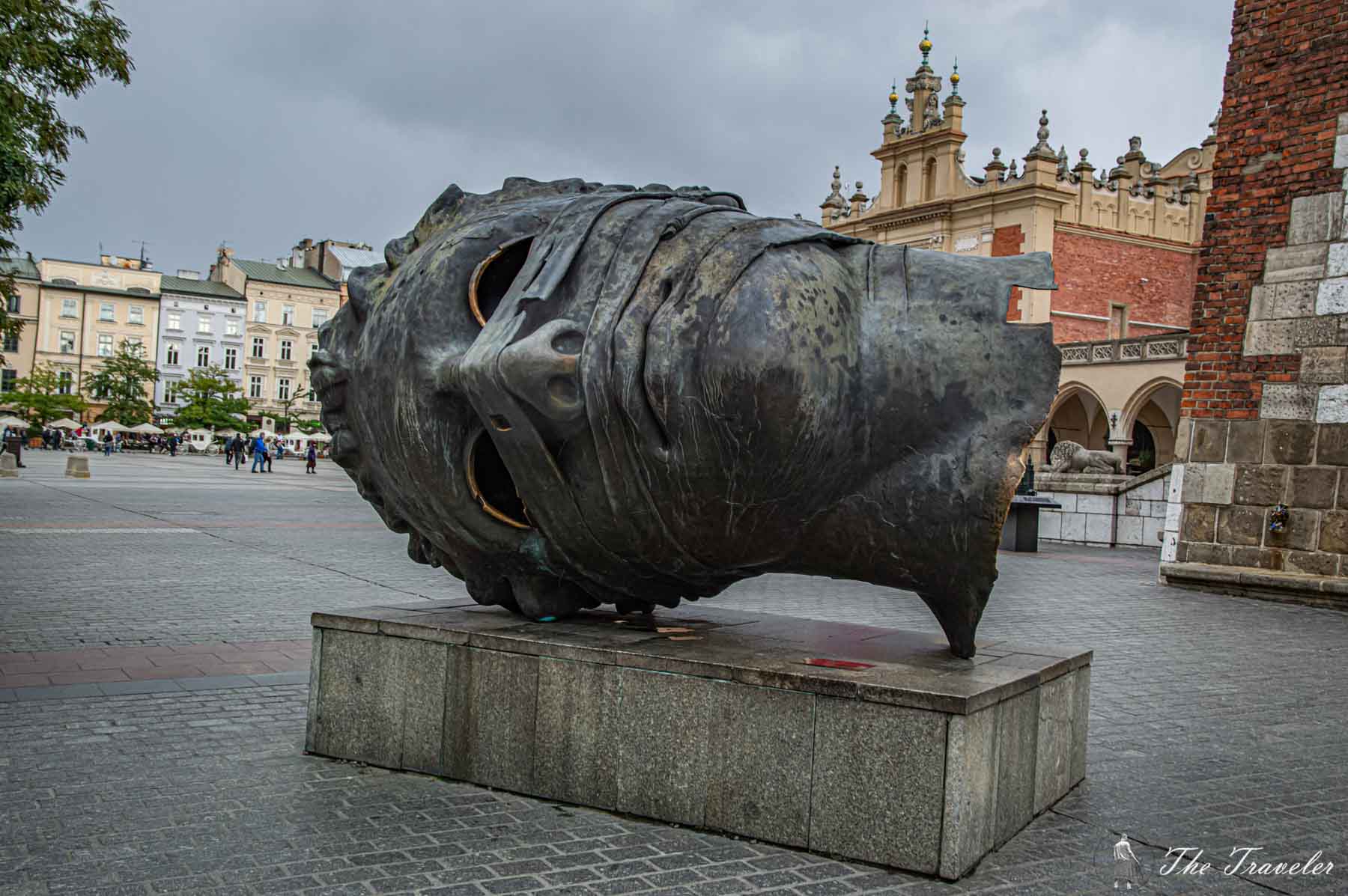
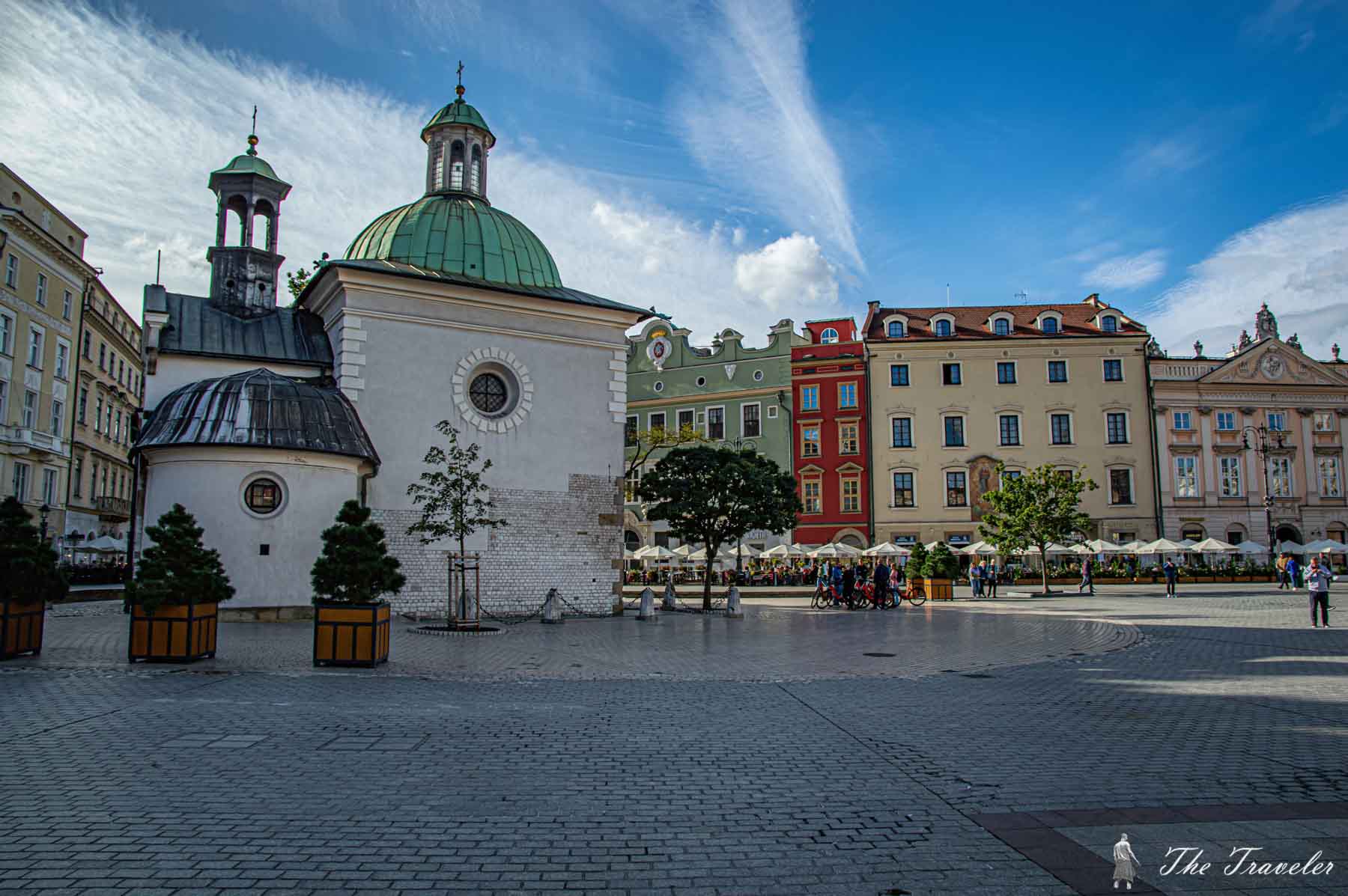
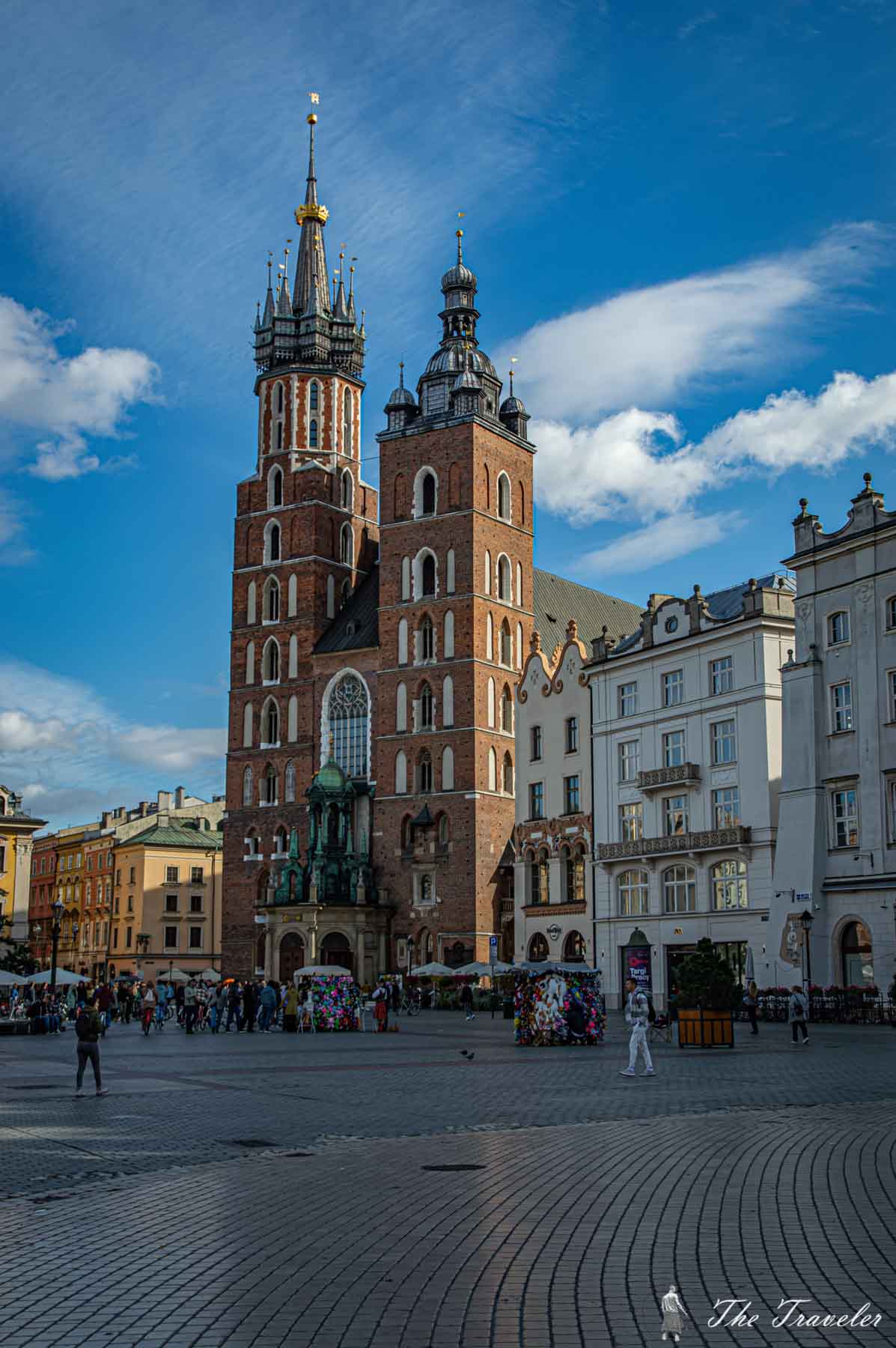
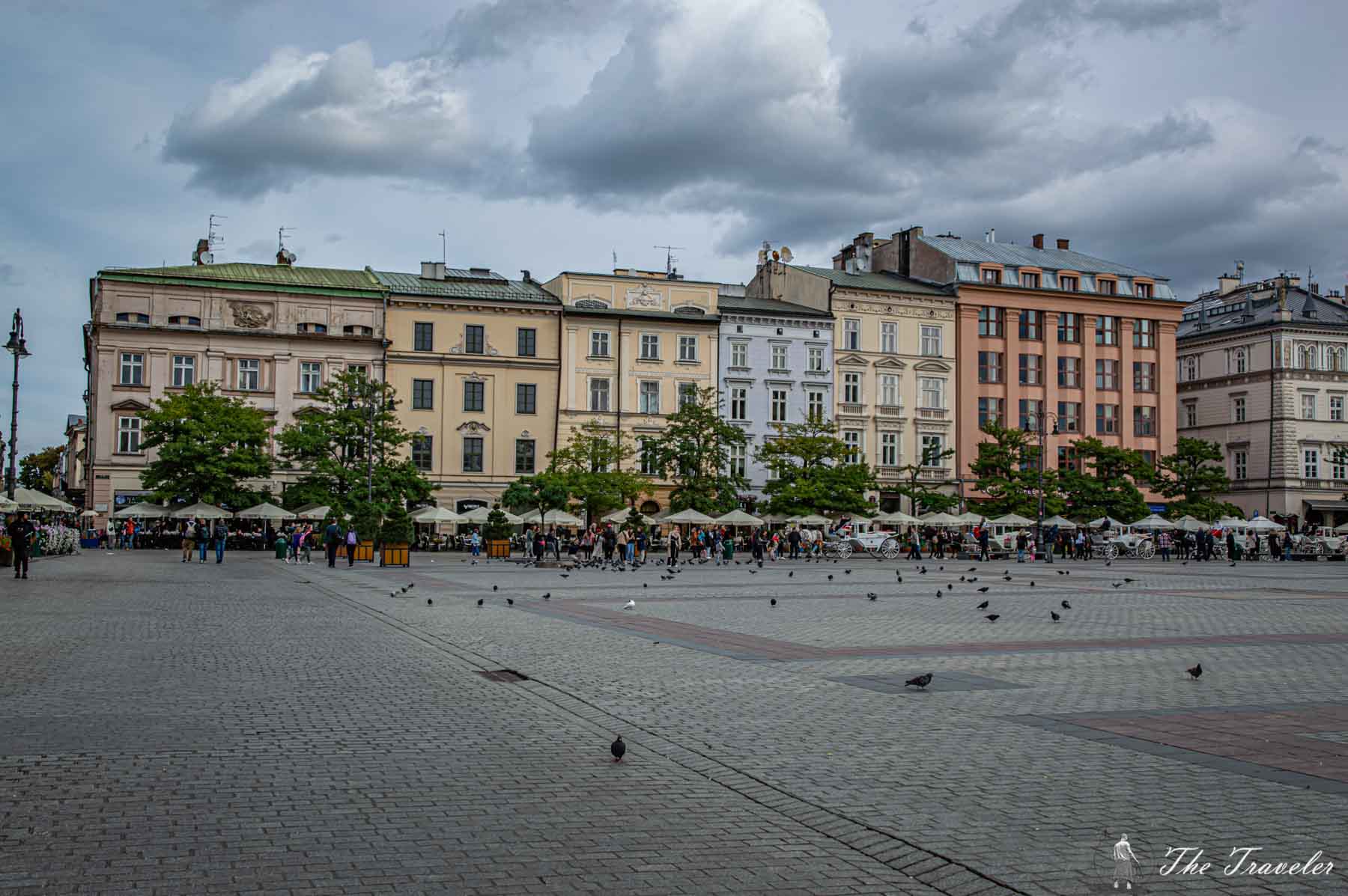
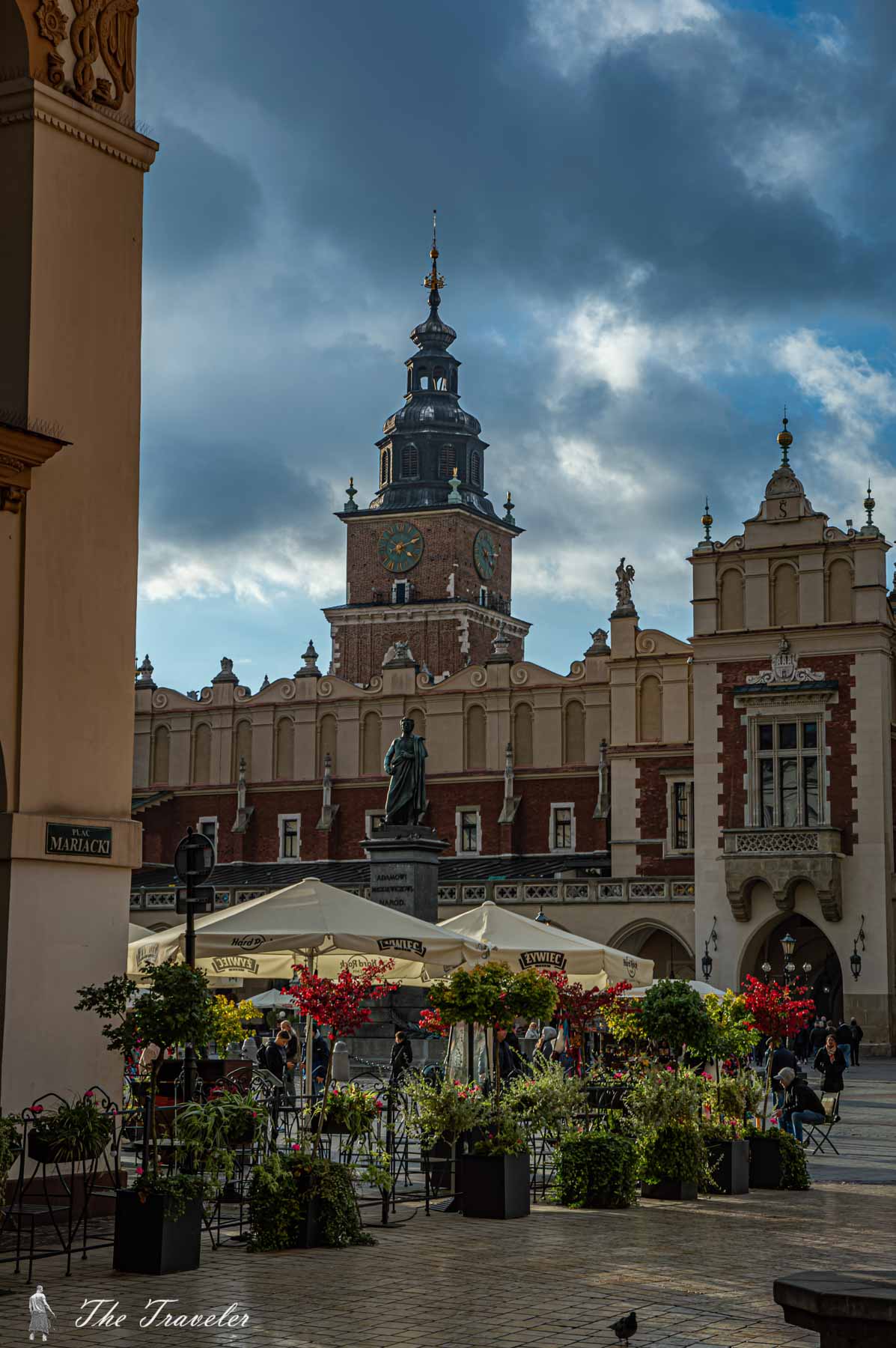
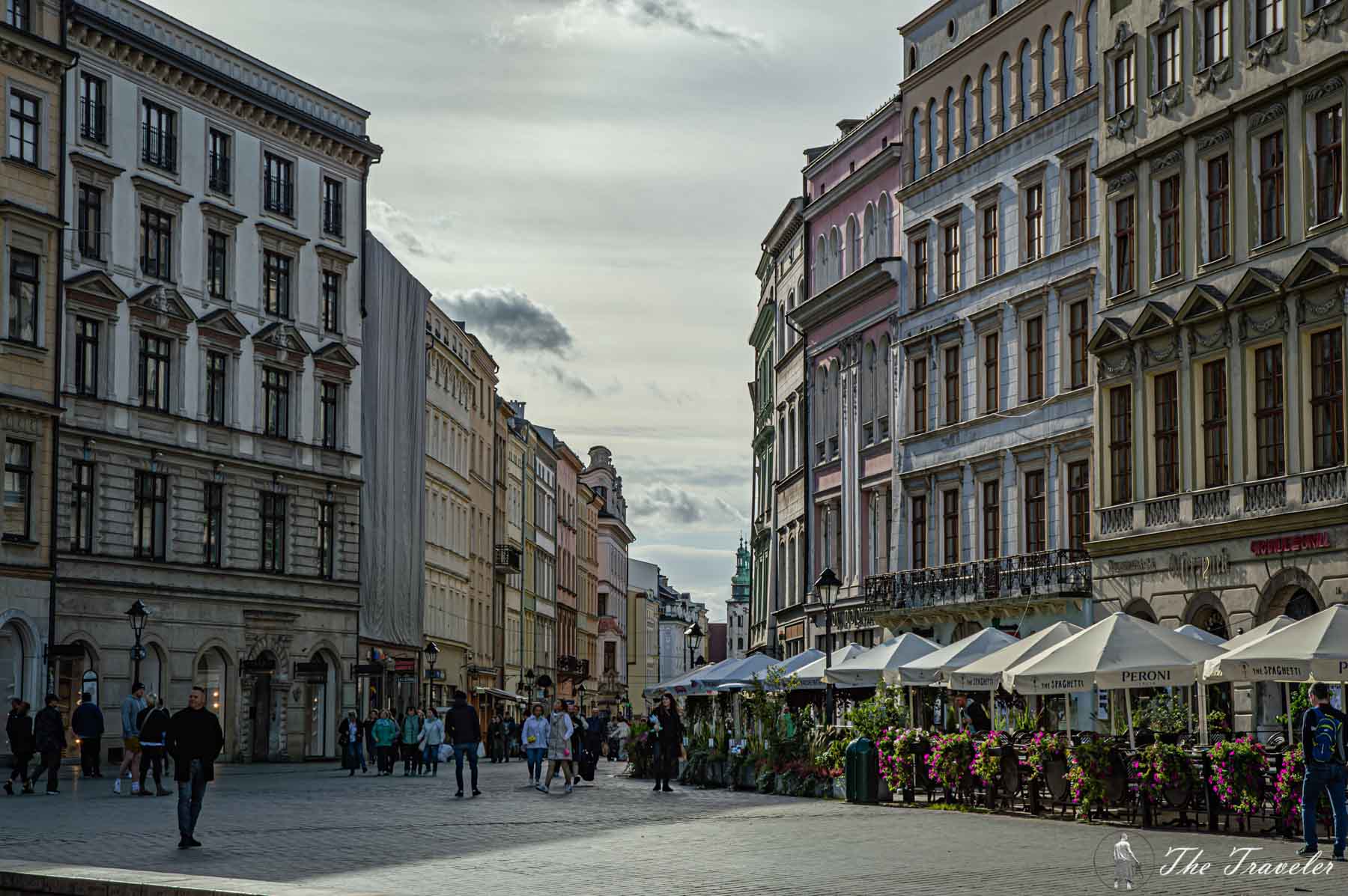
Since we’ve mentioned the Old Town, we can’t help but begin with its biggest attraction – the Main Square (Rynek Główny). Created back in the 13th century, it was at the time among the largest medieval squares in all of Europe. For centuries it served as the main center of Krakow’s social, political, and commercial life, playing a key role in Polish history. The buildings surrounding it are among the most beautiful and best-preserved in the entire city, perfectly showcasing the picturesque Polish architecture.
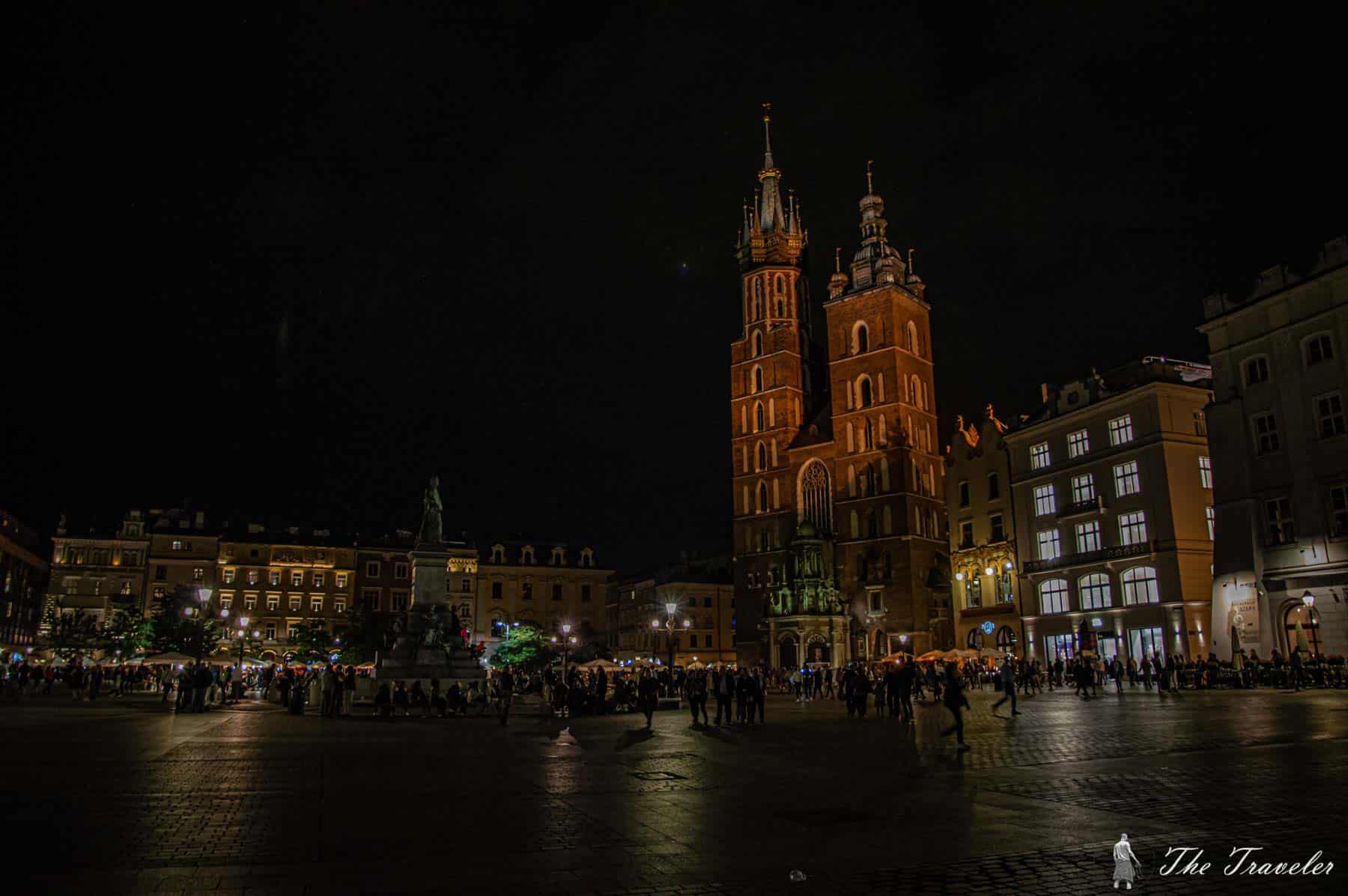
The restaurants and cafés around the square itself are rather commercial and tourist-oriented, but they still create a very pleasant atmosphere. With white horse-drawn carriages waiting for their passengers and flocks of pigeons over the cobblestones, this is a great place for a leisurely stroll at any time of day! And in the evening, when the ringing of the basilica bells, the rhythmic clip-clop of horses, and the lively chatter of the crowds fill the square, while the dimmed lights wrap it in a soft glow, you feel as if you’ve stepped into a medieval fairy tale!
The cloth hall (Sukiennice)
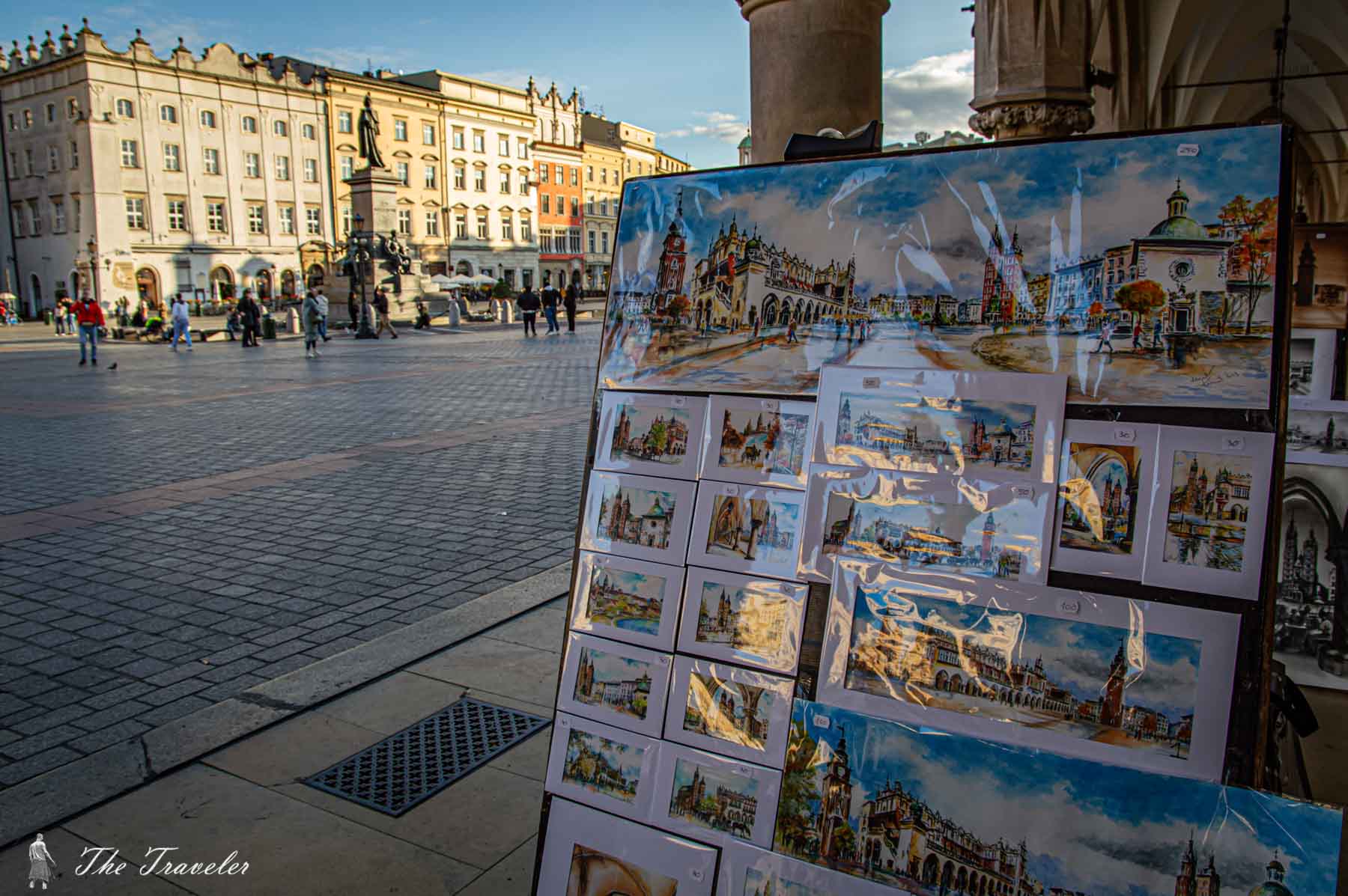
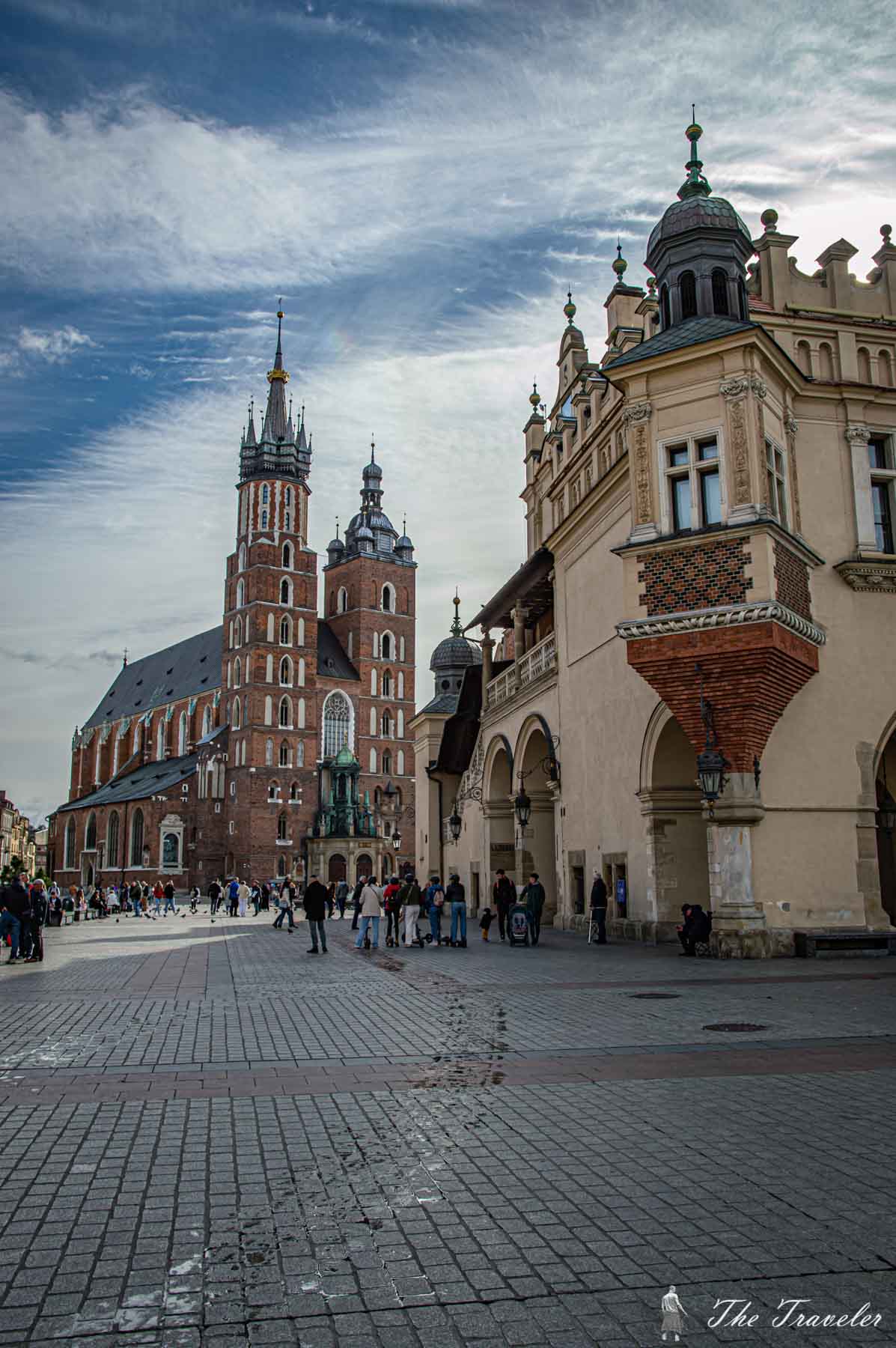
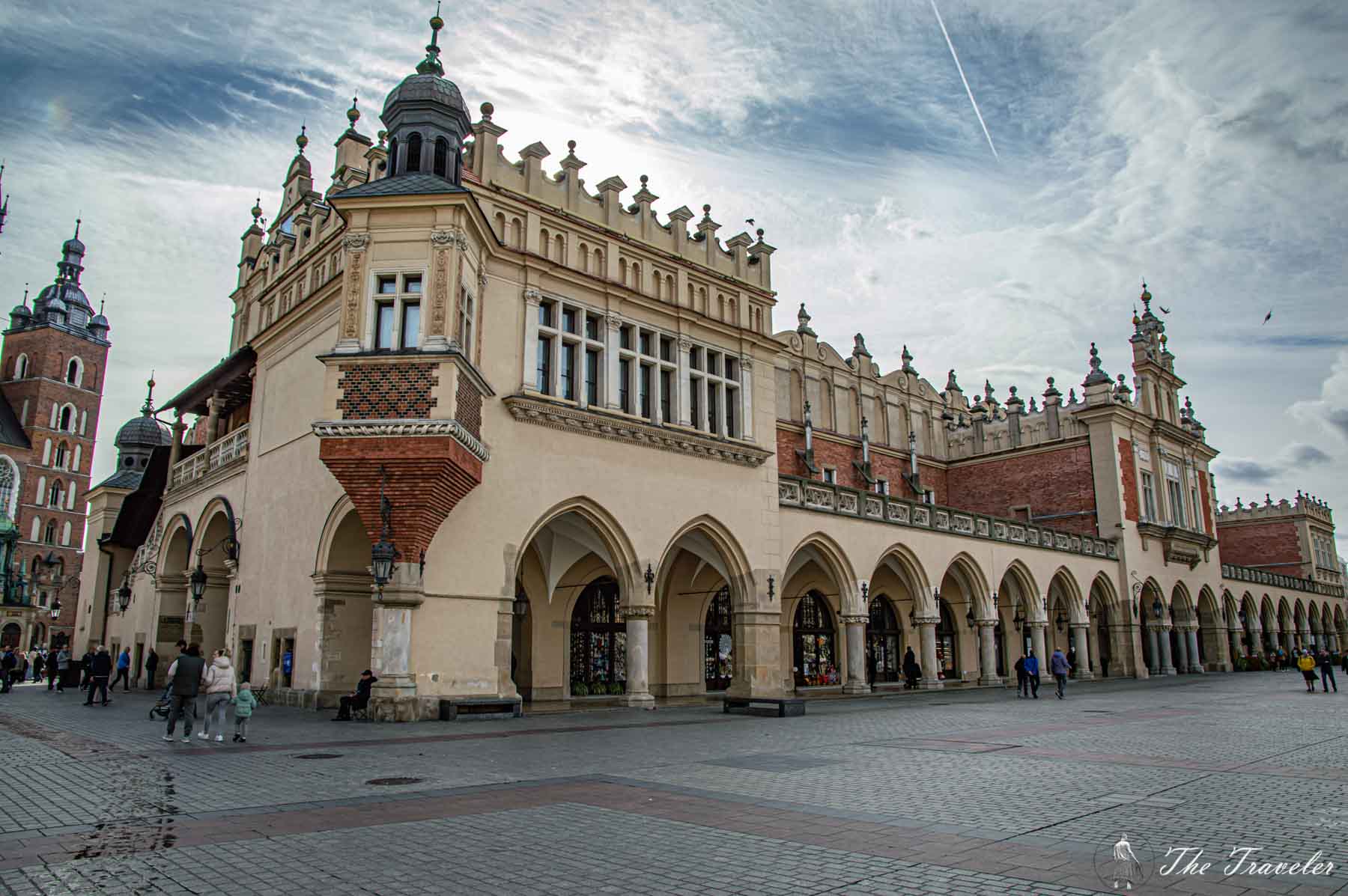
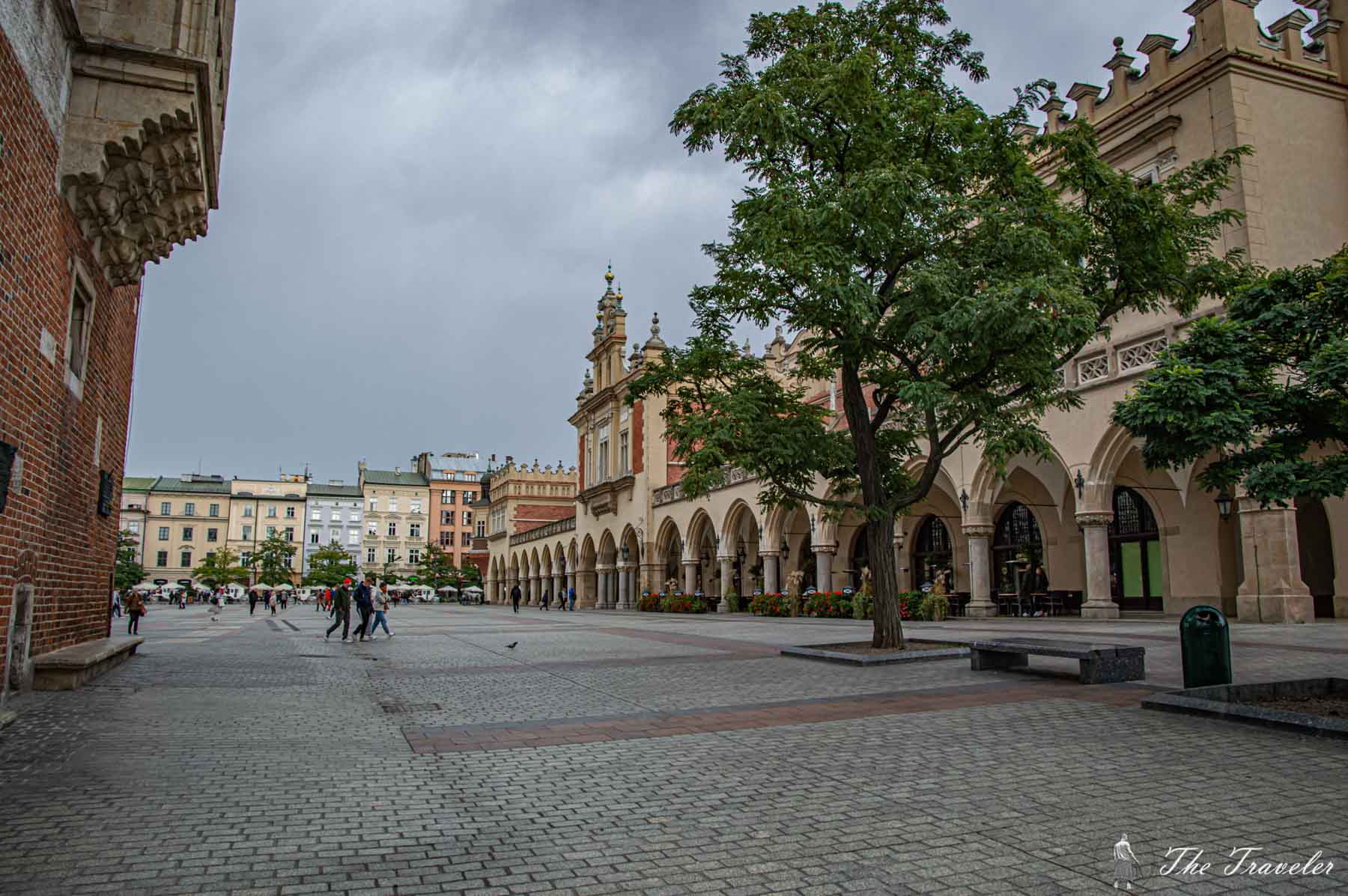
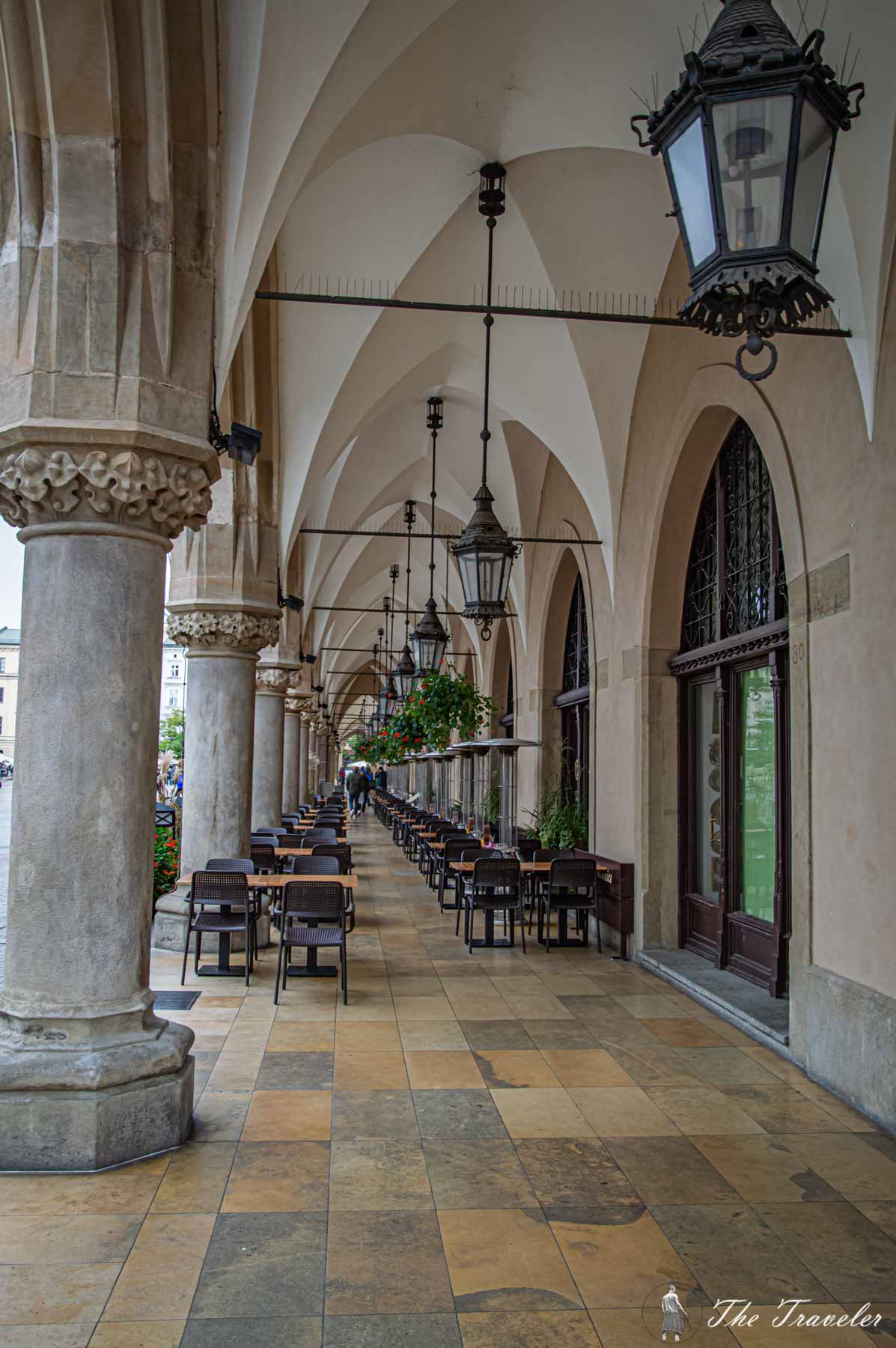
Right in the center of the square rises one of the most emblematic buildings in Krakow – Sukiennice (the Cloth Hall). The trading area originally consisted of a cluster of wooden stalls, but in the 14th century a Gothic building was erected to shelter them. Unfortunately, the original structure burned down in a fire, and its elegant appearance today is the result of a large-scale restoration in the 19th century.
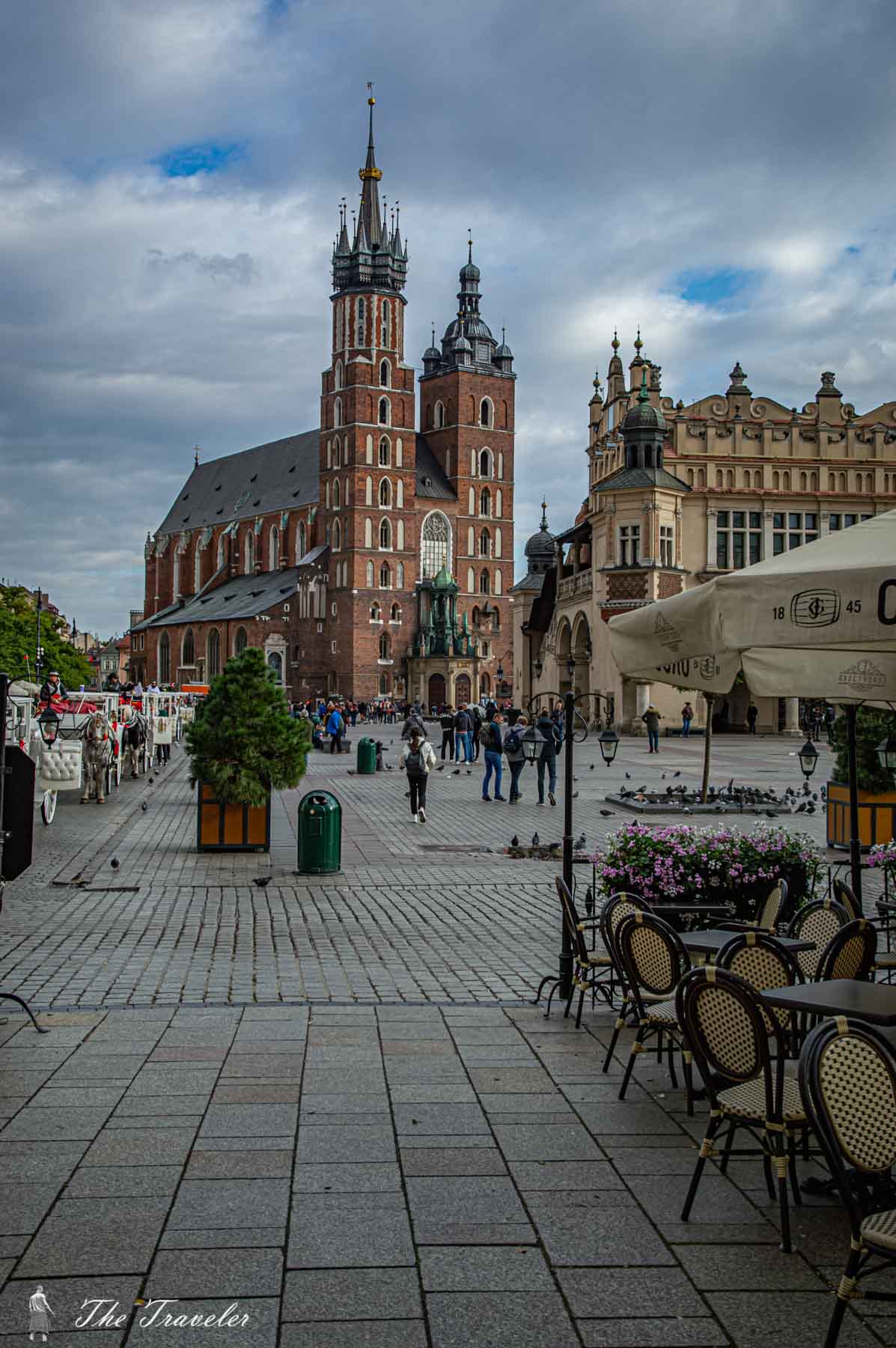
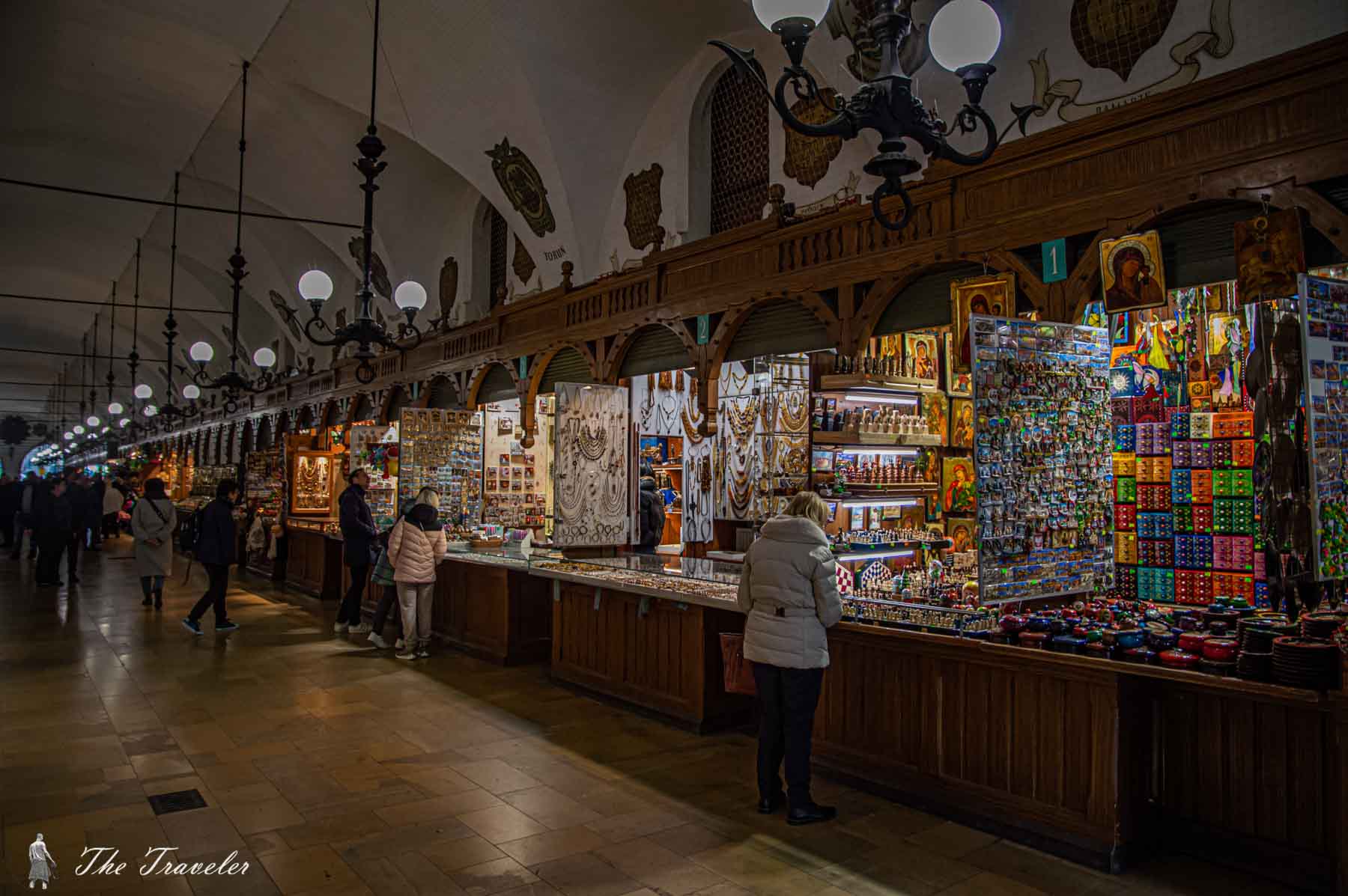
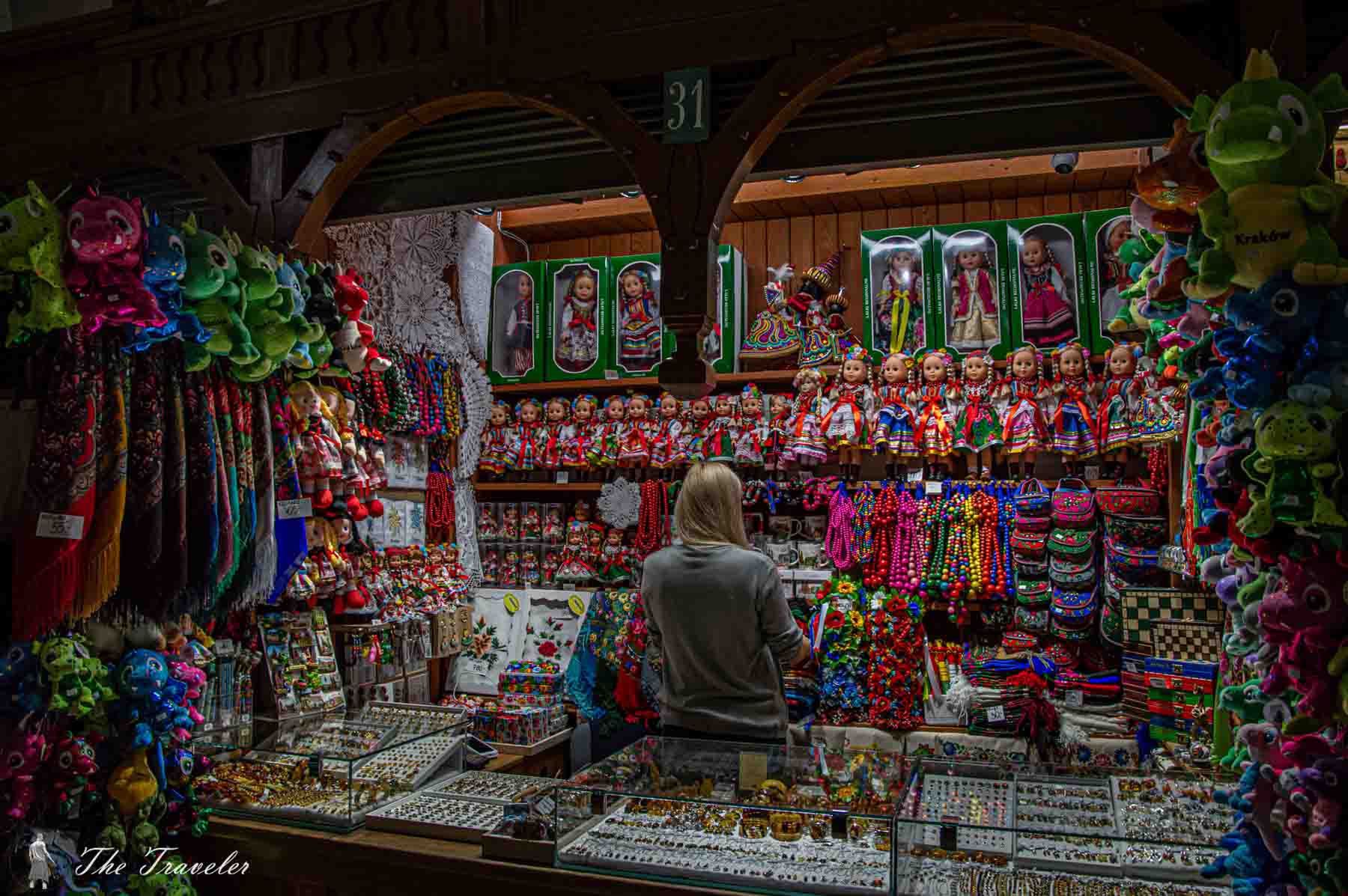
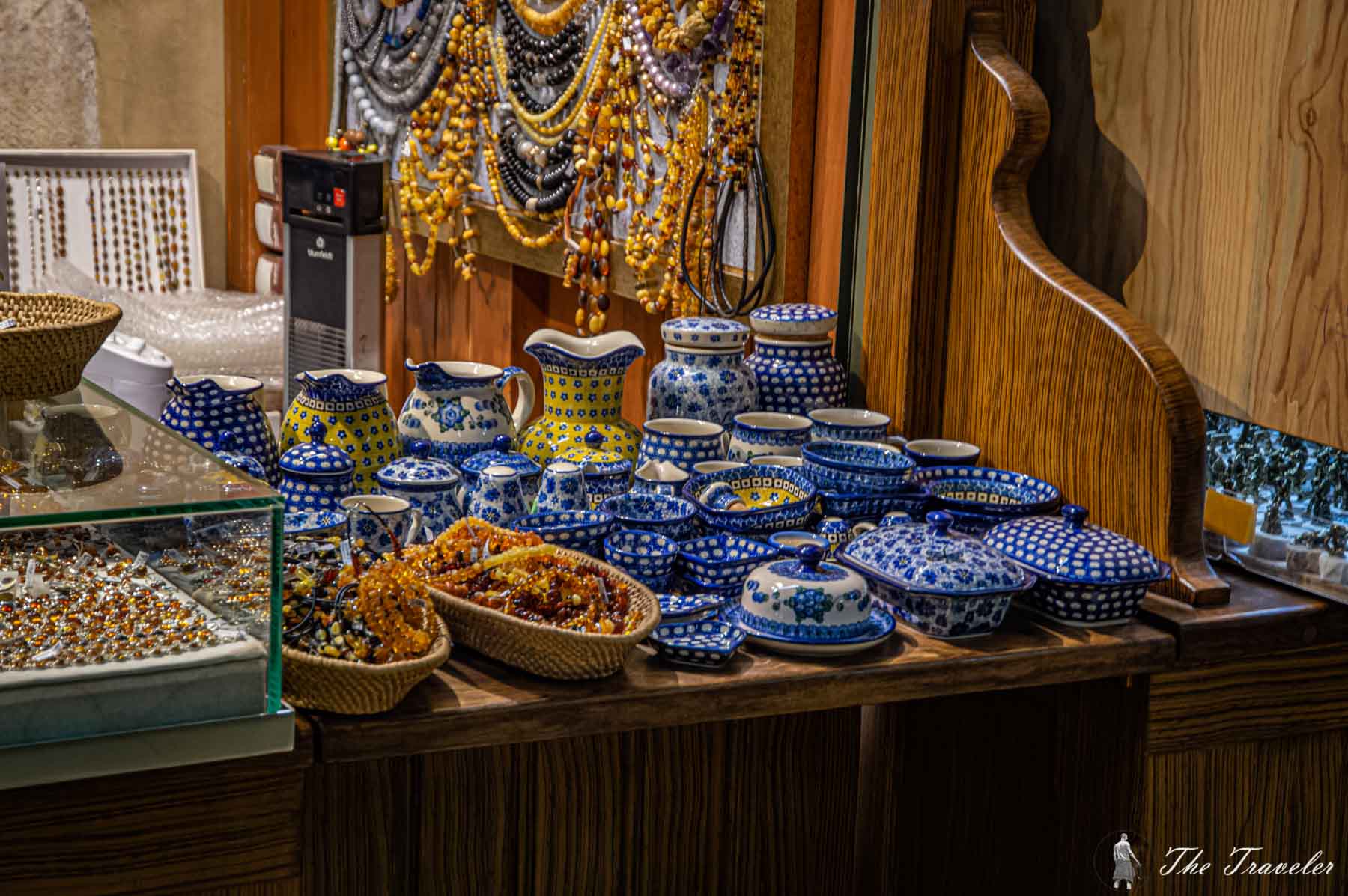
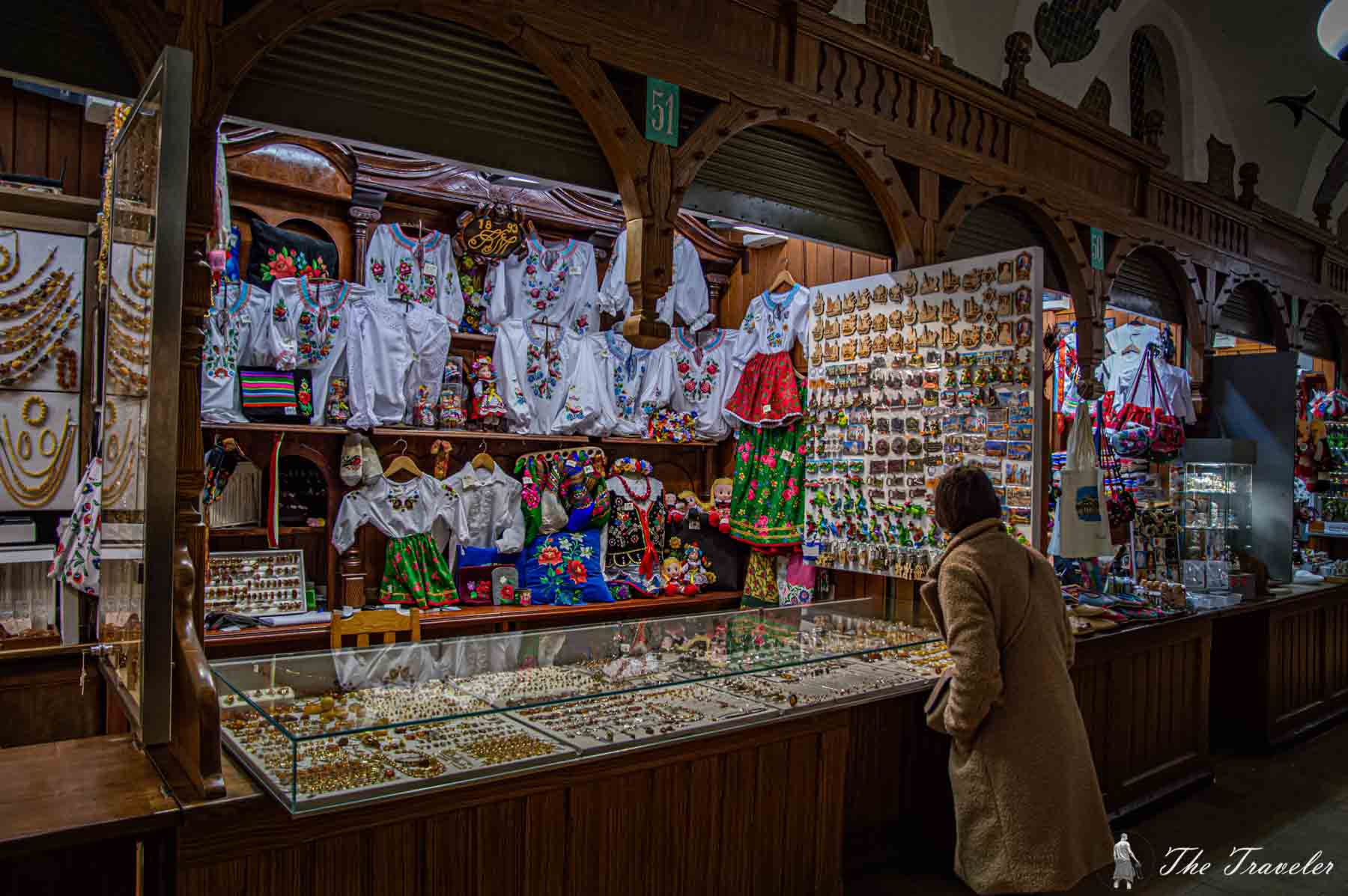
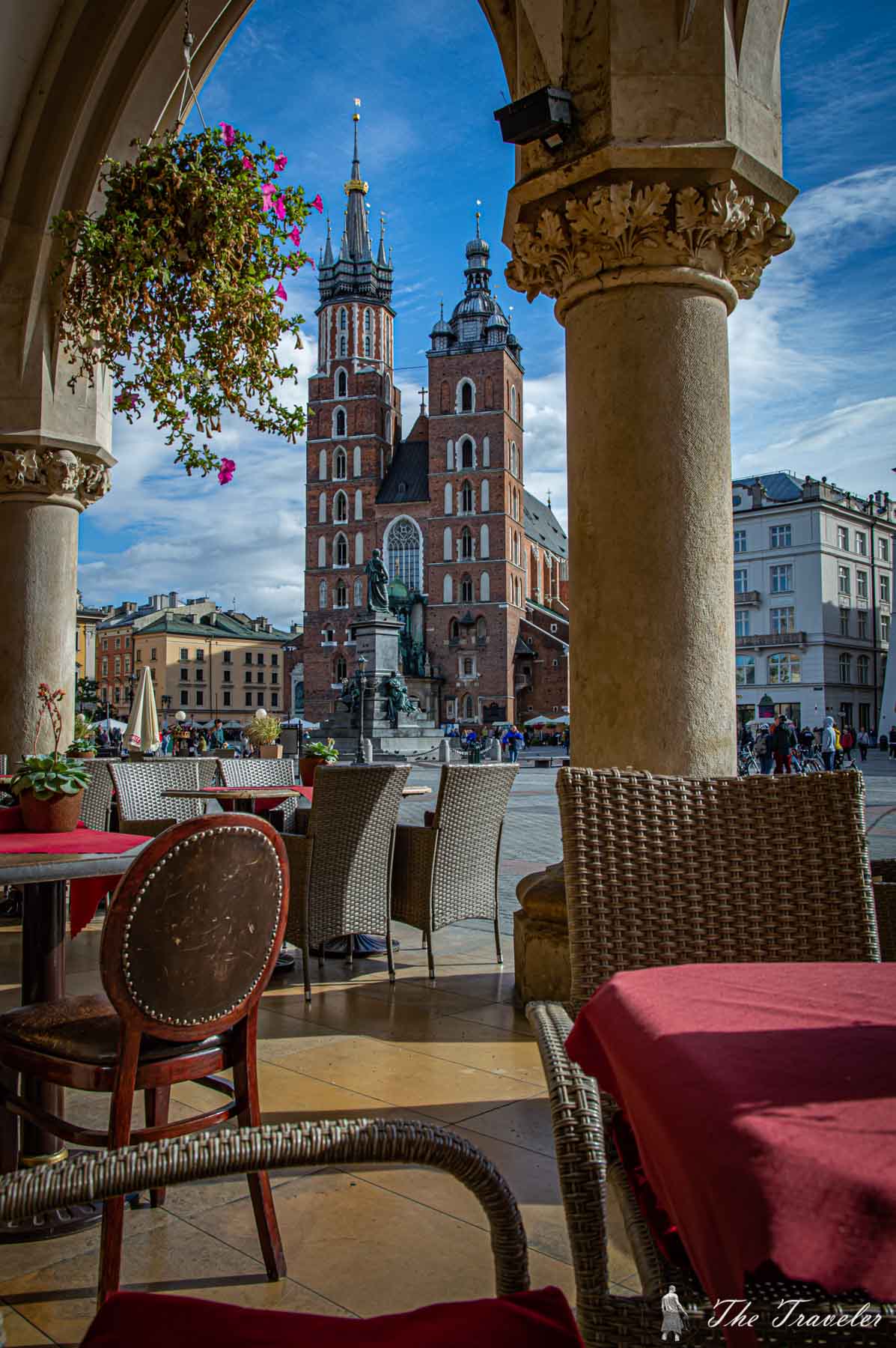
Inside stretches a long trading arcade filled with stalls selling souvenirs, amber items, Polish ceramics, traditional folk costumes, handmade gifts, and all kinds of knick-knacks. On the outer side, beneath the beautiful arcades, there are several pleasant cafés. It was their tables and chairs that gave me the perfect vantage point for one of my favorite shots of Krakow – a view of St. Mary’s Basilica!
St. Mary’s basilica (Bazylika Mariacka)
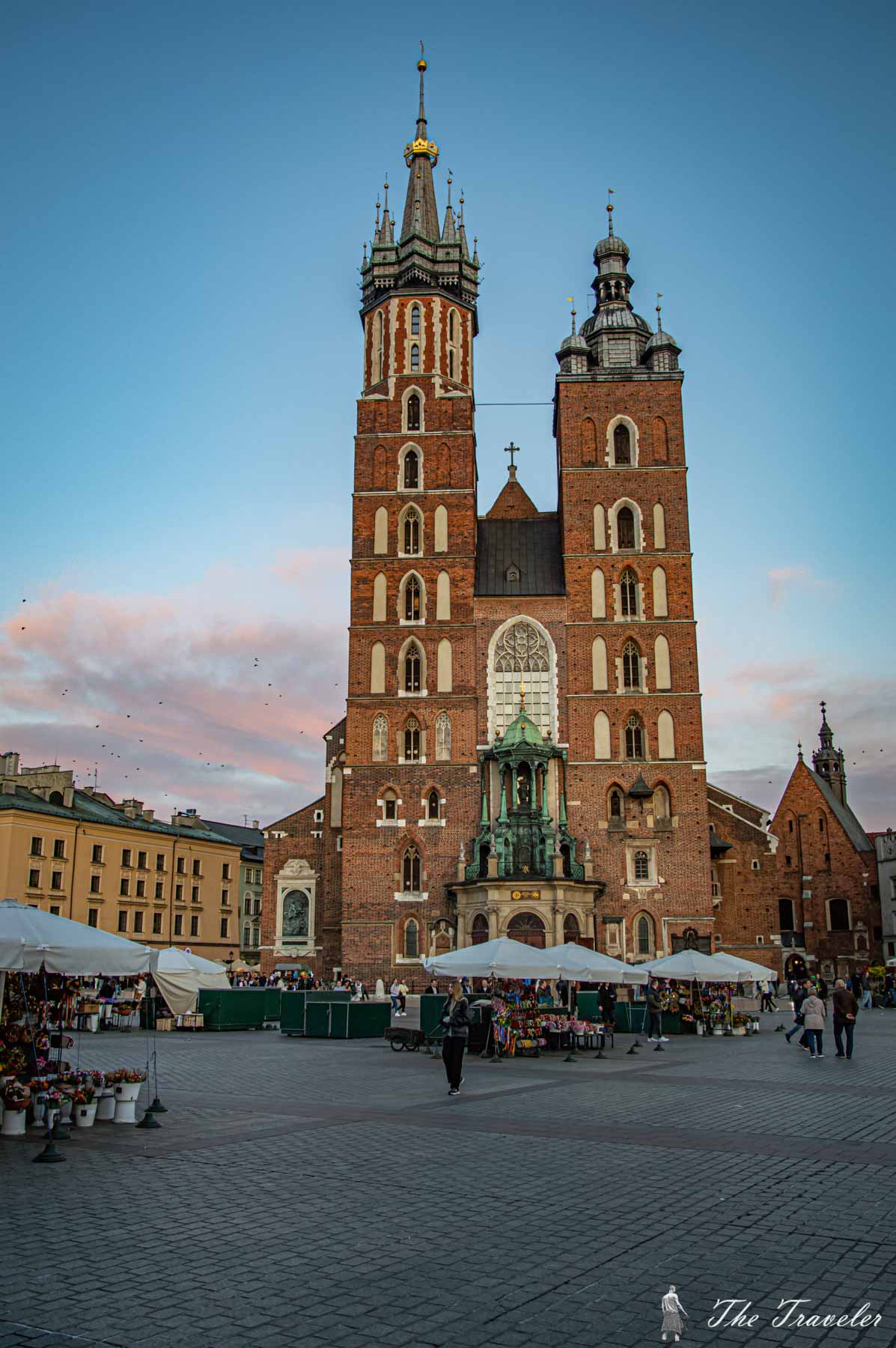
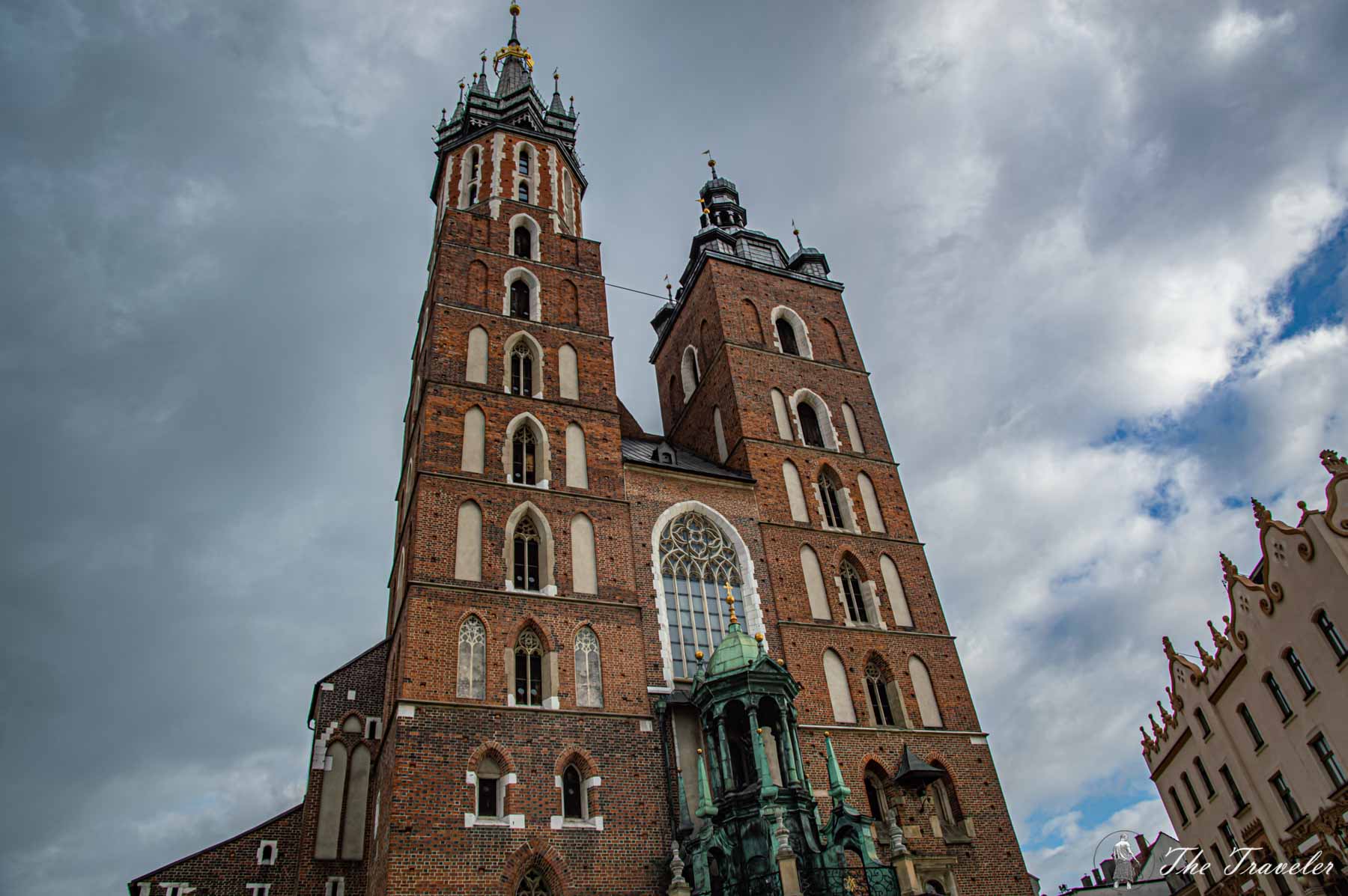
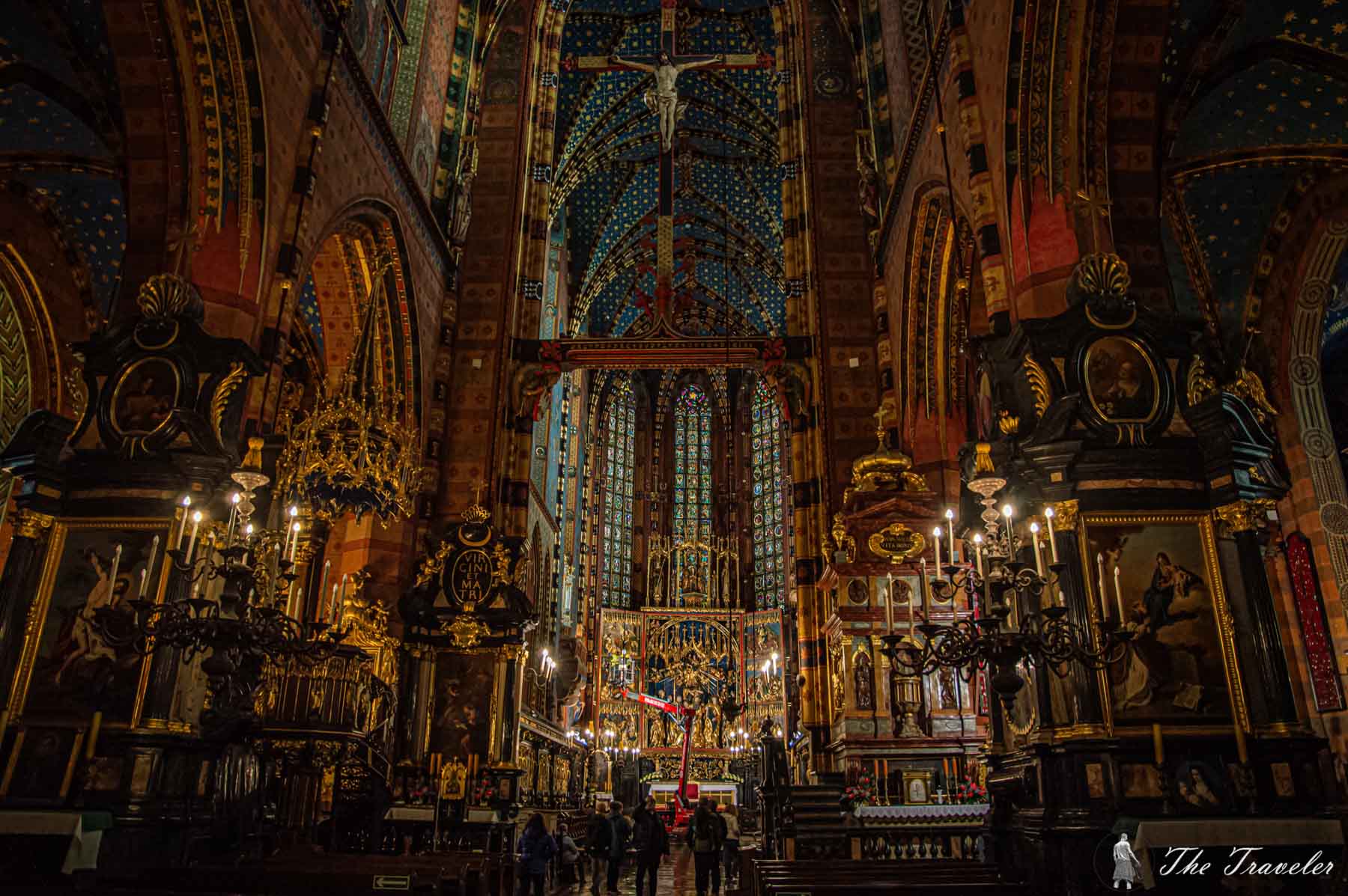
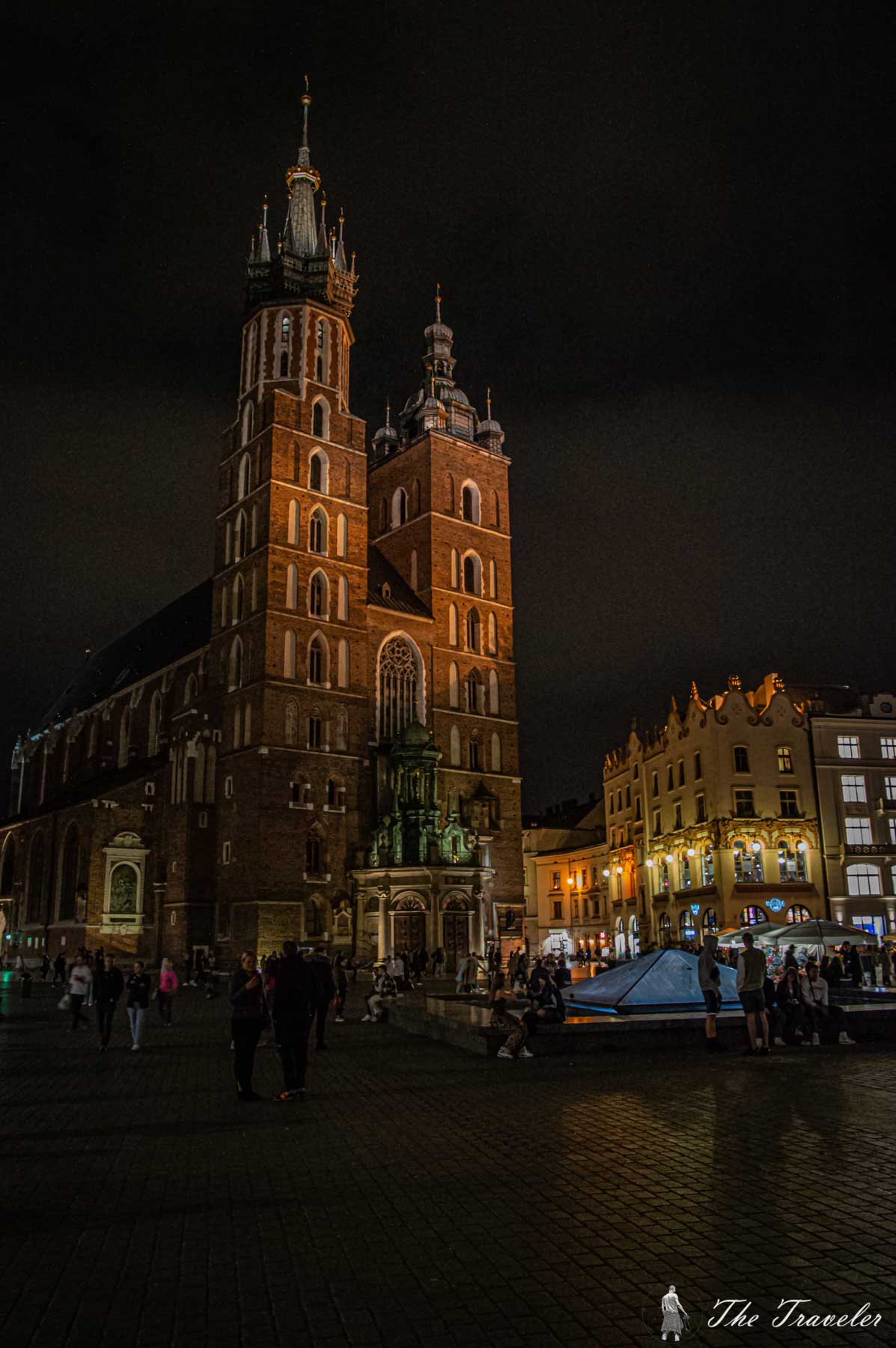
And here it is… the imposing St. Mary’s Basilica (Bazylika Mariacka), the Gothic jewel of the Main Square! Its construction began in the mid-14th century, during the reign of Casimir III the Great, but went through various stages – additional elements were completed in the 15th, and some even in the 16th century. The people of Krakow (above all the wealthy local merchant and civic figure Mikołaj Wierzynek) financed a large part of its construction themselves, with the ambitious goal of making it rival the Royal Cathedral on Wawel Hill.
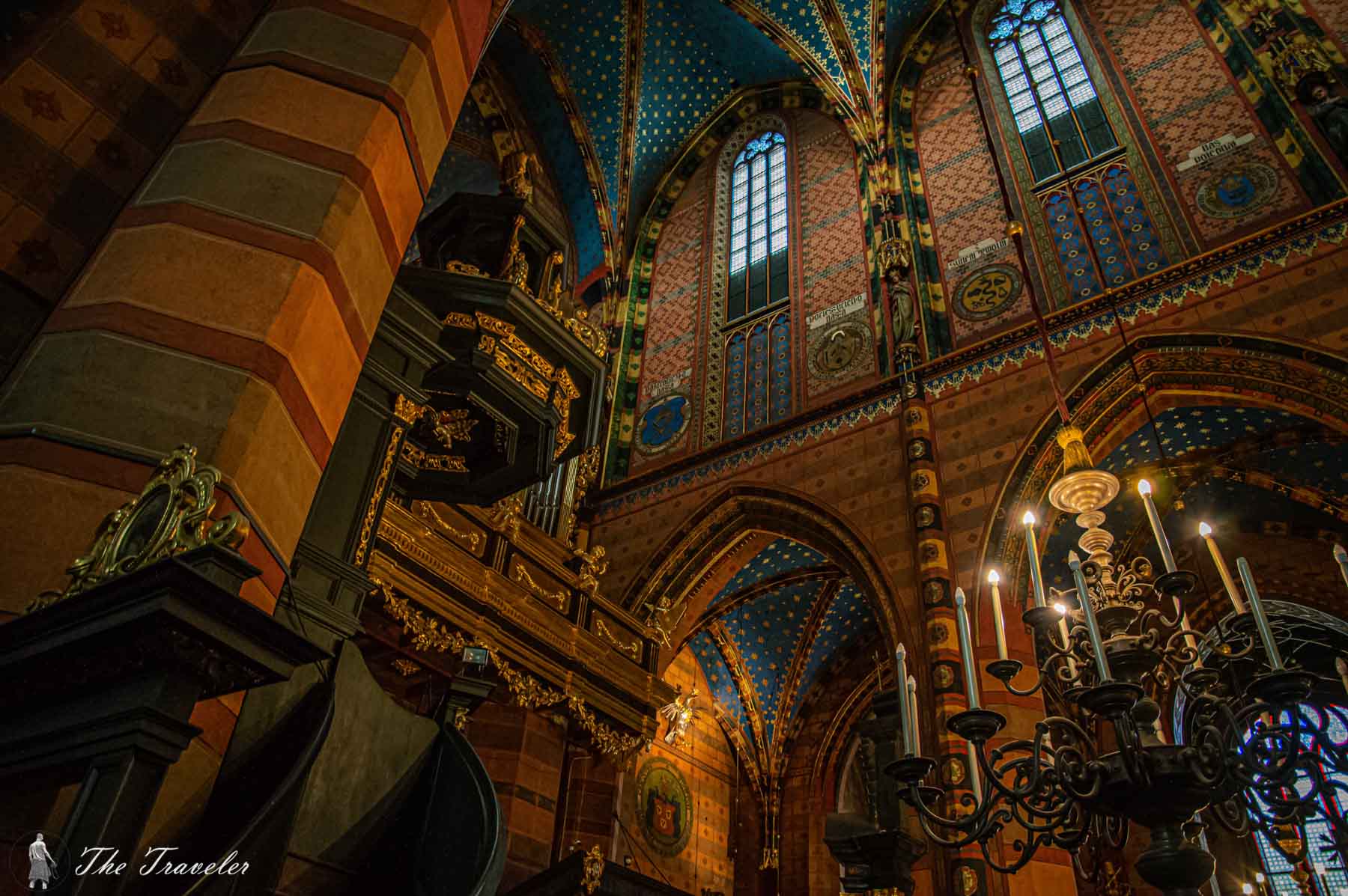
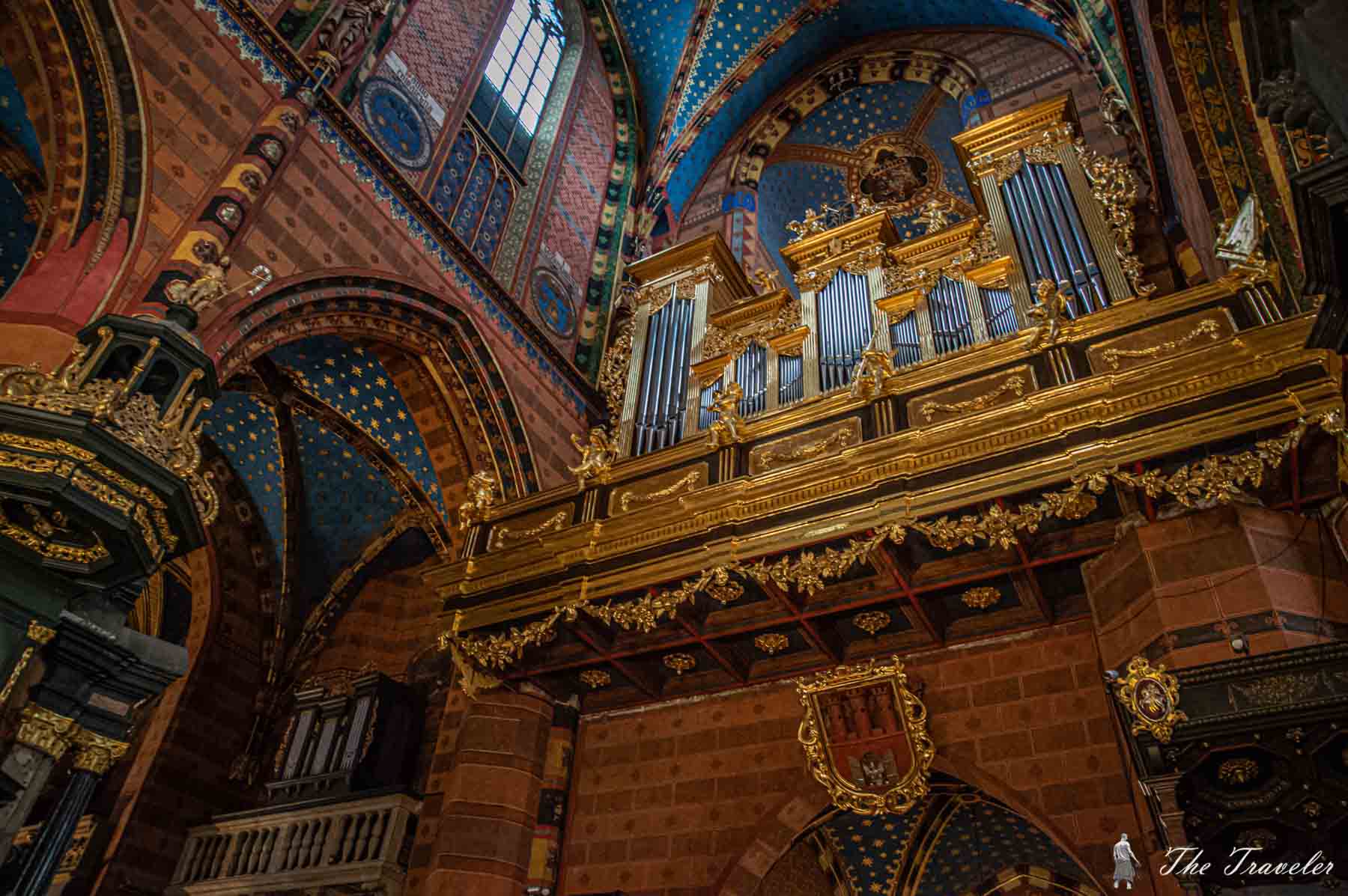
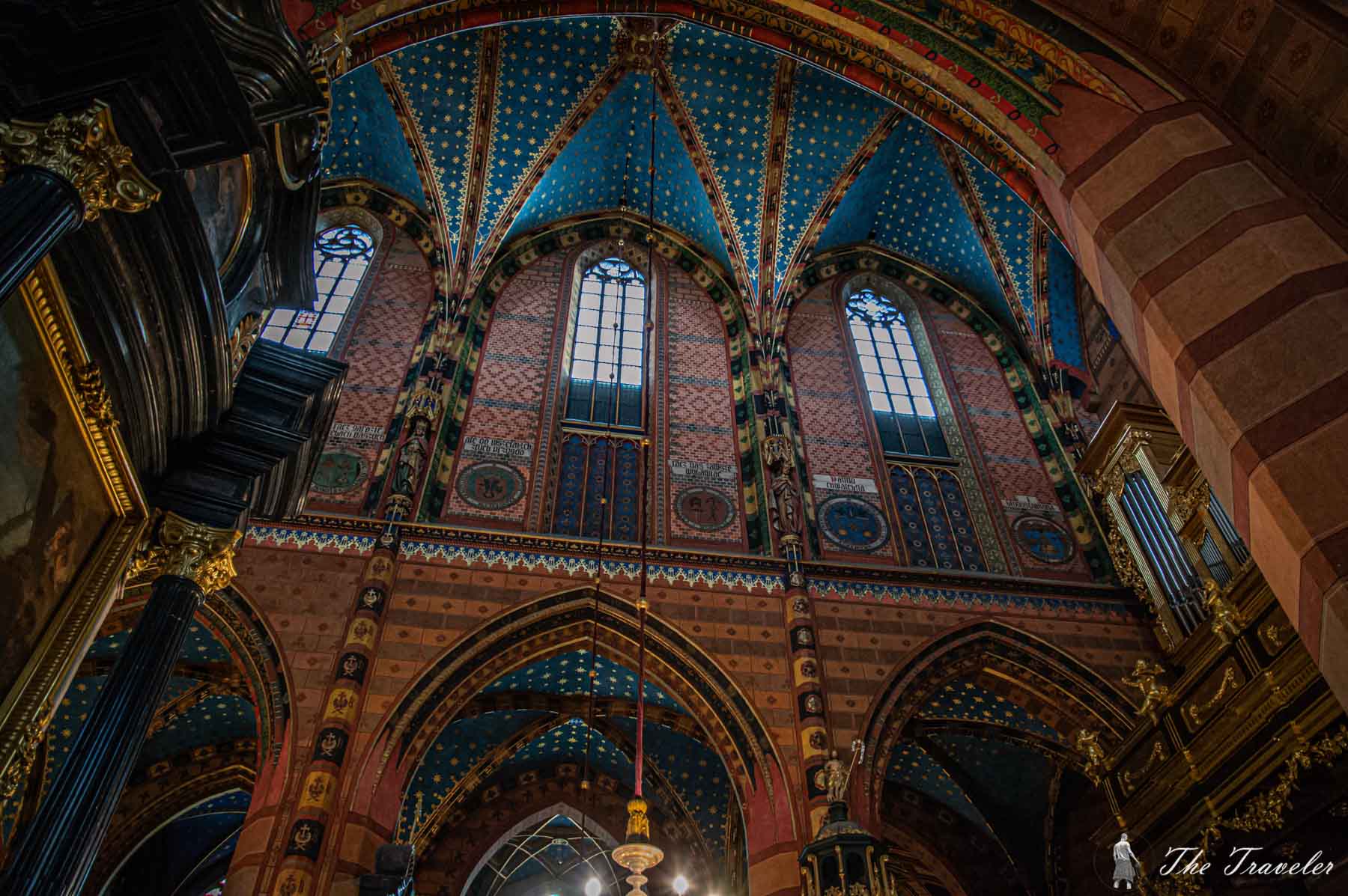
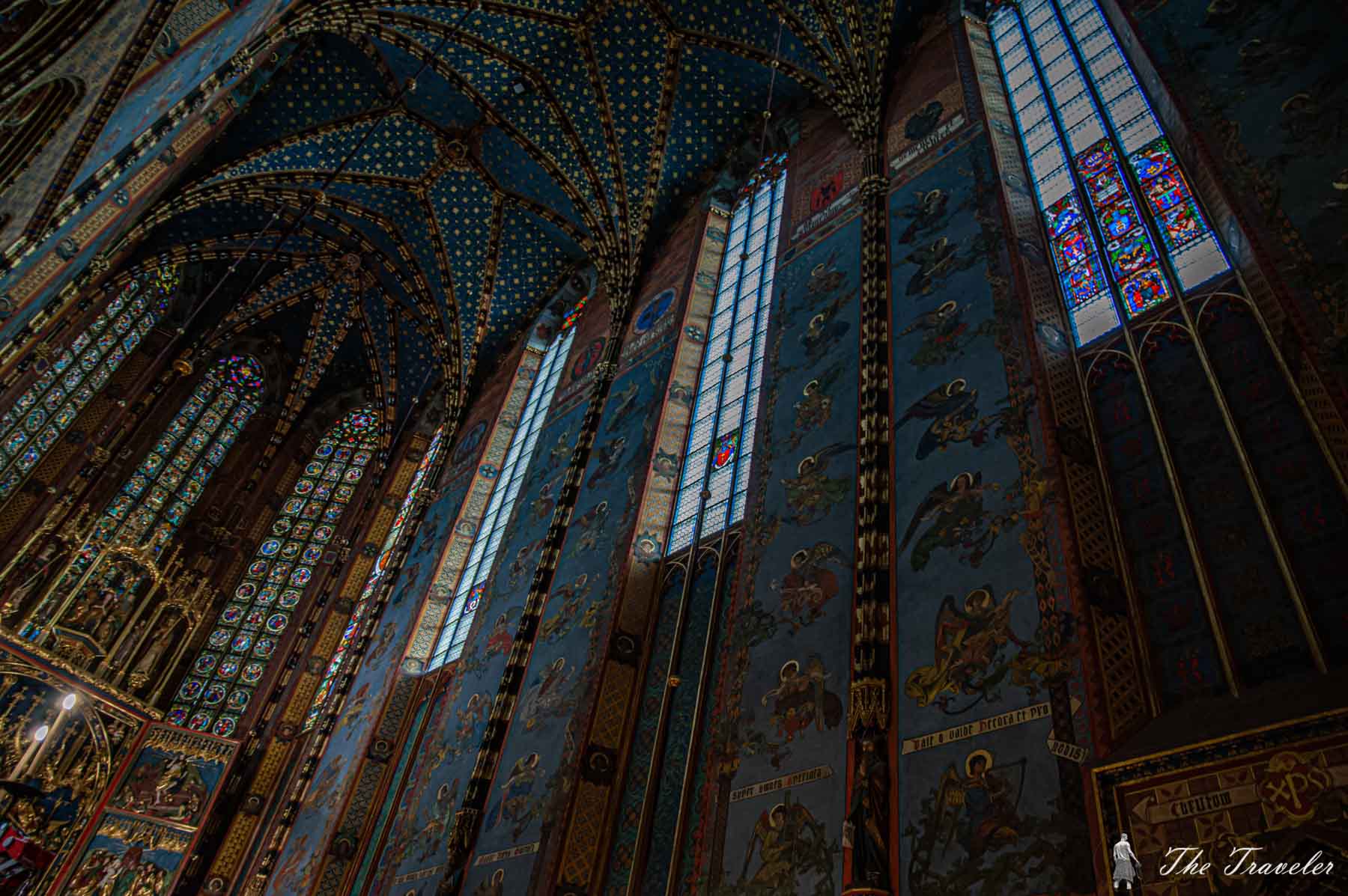
If its exterior silhouette, with its two asymmetrical towers, looks impressive, stepping inside truly takes your breath away… The interior is a colorful extravaganza – the blue ceiling is studded with golden stars, the walls are covered in lavish murals, and light filters through intricate stained-glass windows. At the center of attention, naturally, is the grandiose Gothic altarpiece, the work of master Veit Stoss, which is a true national treasure of Poland!
Let’s return to the towers, which also hide an interesting local legend… The North Tower (the taller of the two) stands at 82 meters and was built to serve as a watchtower over the entire city. It was from here, in the 13th century, upon spotting the Mongol invasion, that a local guard sounded the alarm on his trumpet, only to be struck down by an invader’s arrow… In his memory, to this day, the famous Hejnał mariacki call sounds every hour from the top of the tower, abruptly cutting off as a mark of respect. This tradition has gained such fame that every day at noon, Polish national radio broadcasts the call live!
💡 If you want to climb to the top of the tower, don’t leave it for Monday (as we did), because it’s closed then!
The town hall tower (Wieża Ratuszowa)
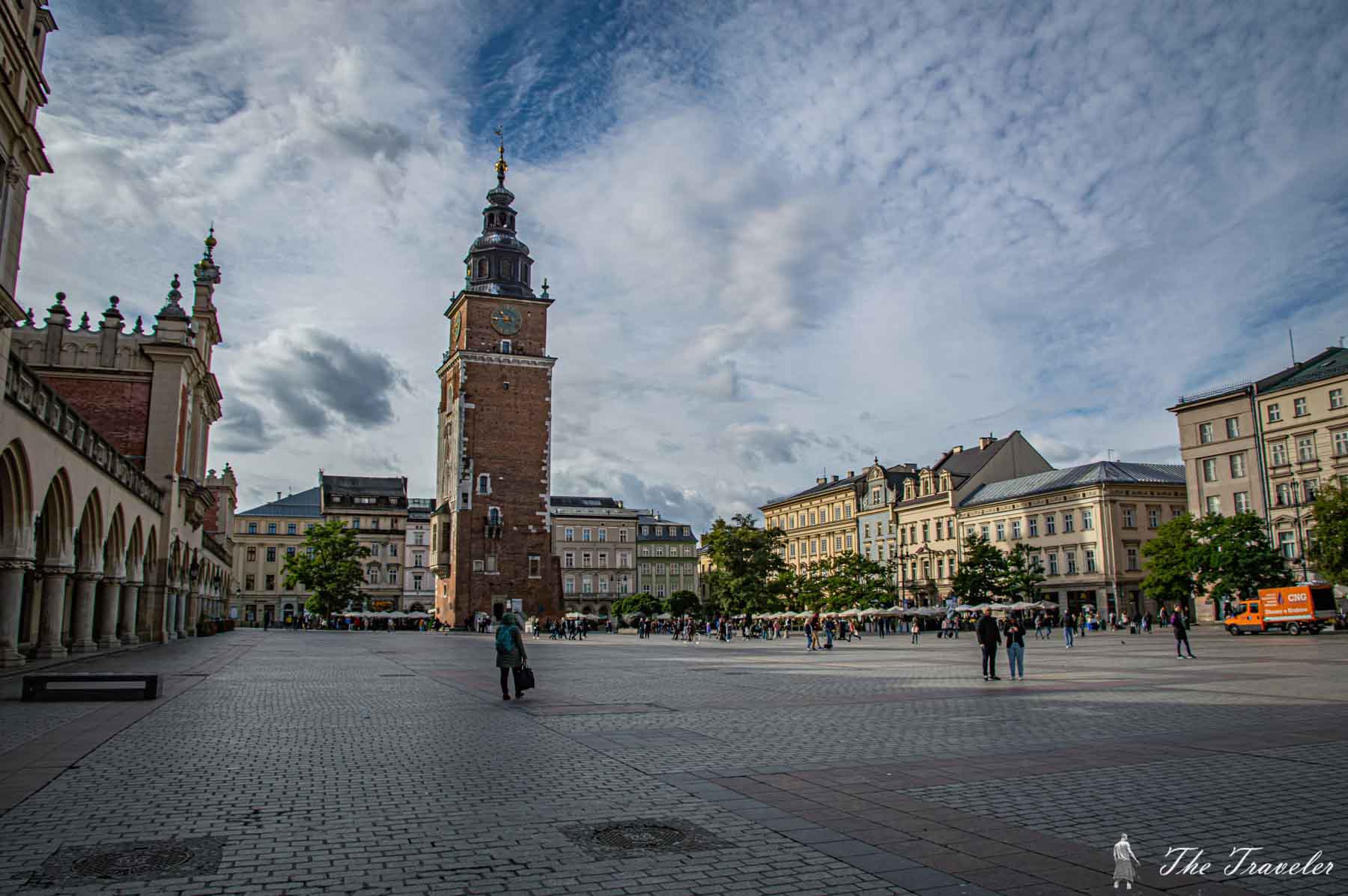
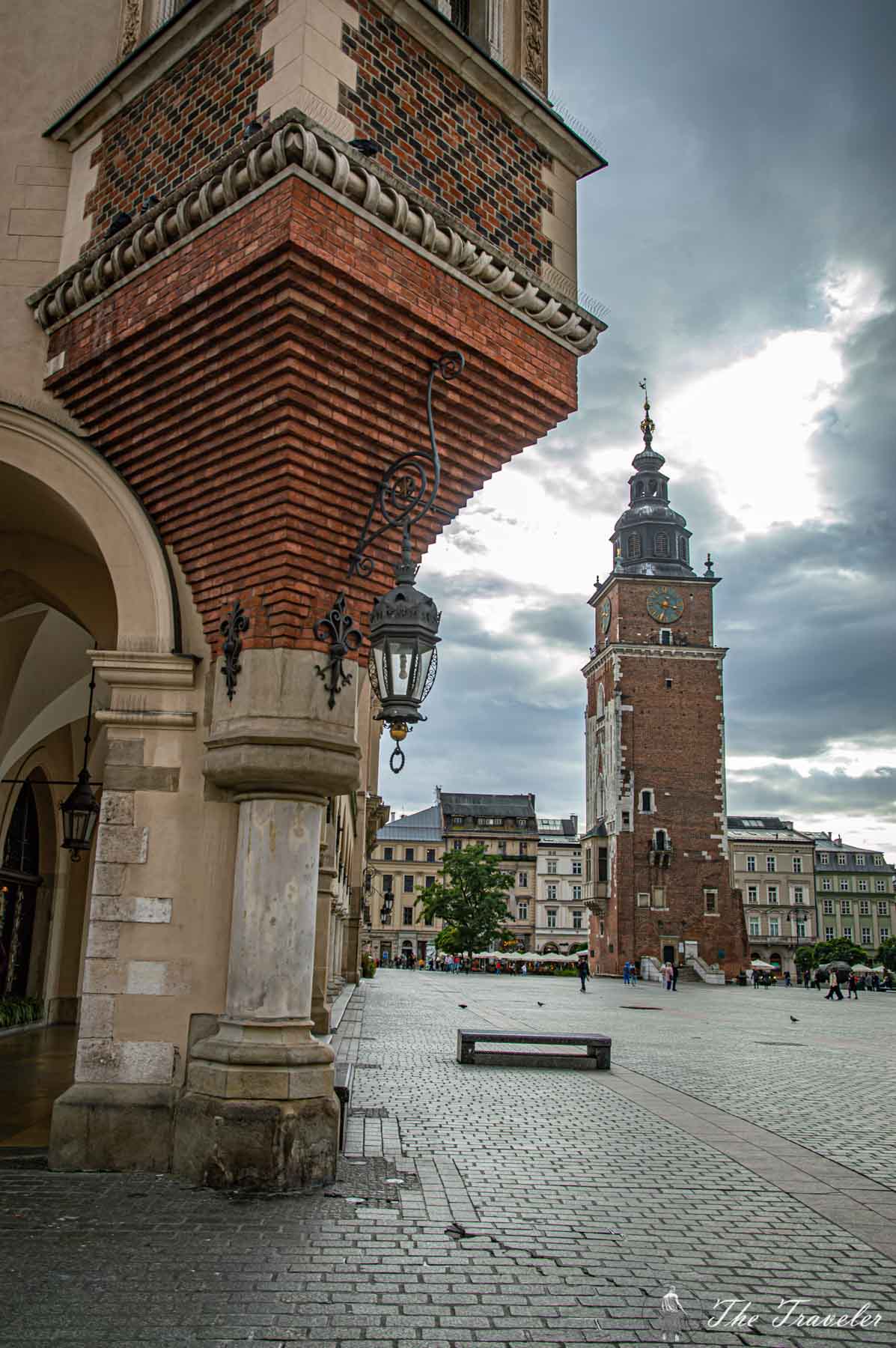
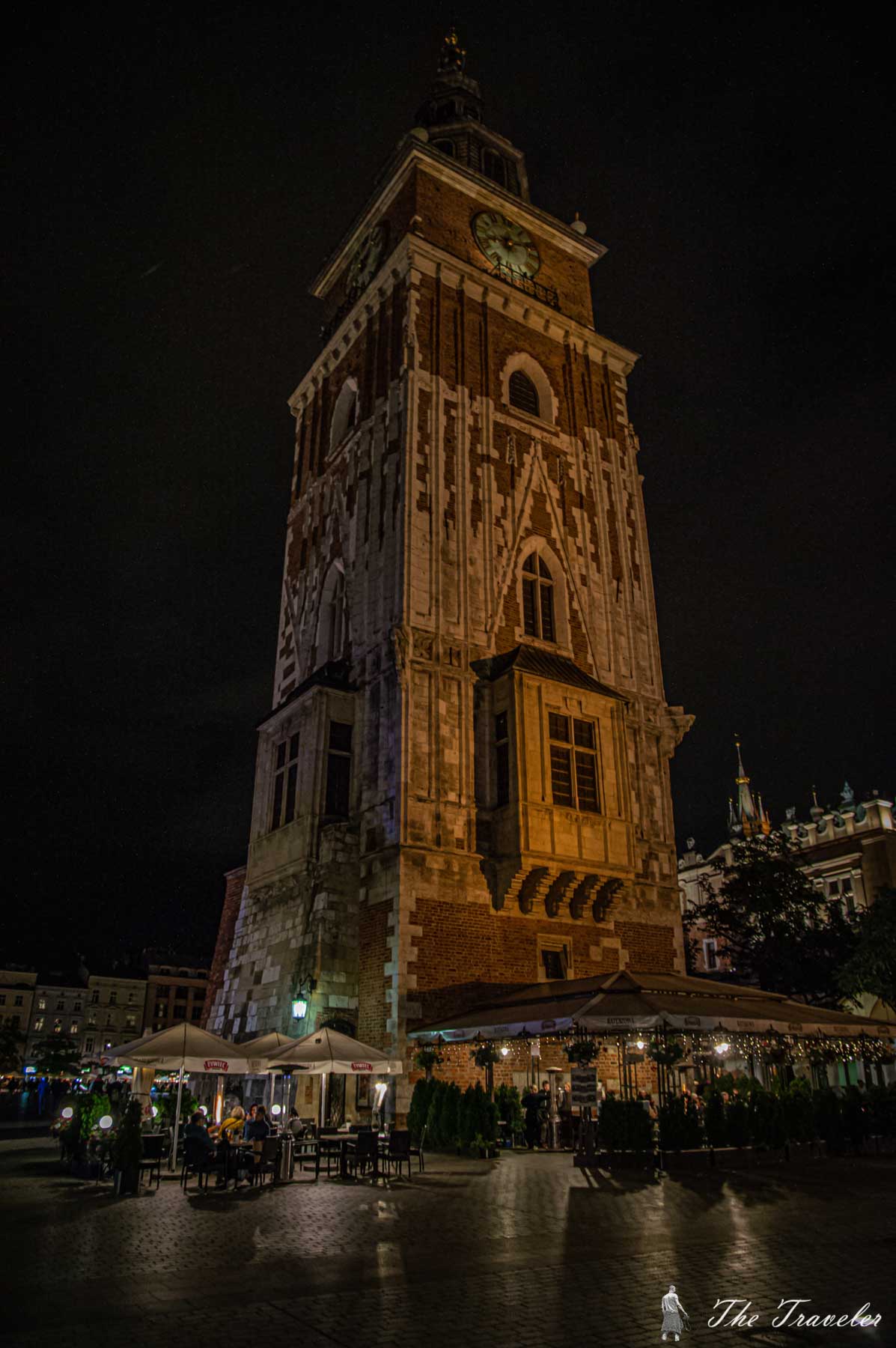
You can’t help but notice the red-brick façade of the Gothic Town Hall Tower (Wieża Ratuszowa), which stands somewhat alone in the center of the square… Dating back to the 14th century, it was originally part of Krakow’s former town hall. In the first half of the 19th century, the decision was made to demolish the city administration building to open up space and form today’s spacious square. However, the tower was preserved, and today it houses a branch of the Historical Museum. You can climb to the top for panoramic views, and along the floors, you’ll find medieval artifacts and archival photographs.
💡 Entry is free every Monday! That was exactly when we had planned our visit, hoping to catch a beautiful sunset over the rooftops of Krakow, but we hadn’t noticed that it closes early at 15:00 on Mondays.
The interactive underground museum (Rynek Podziemny)
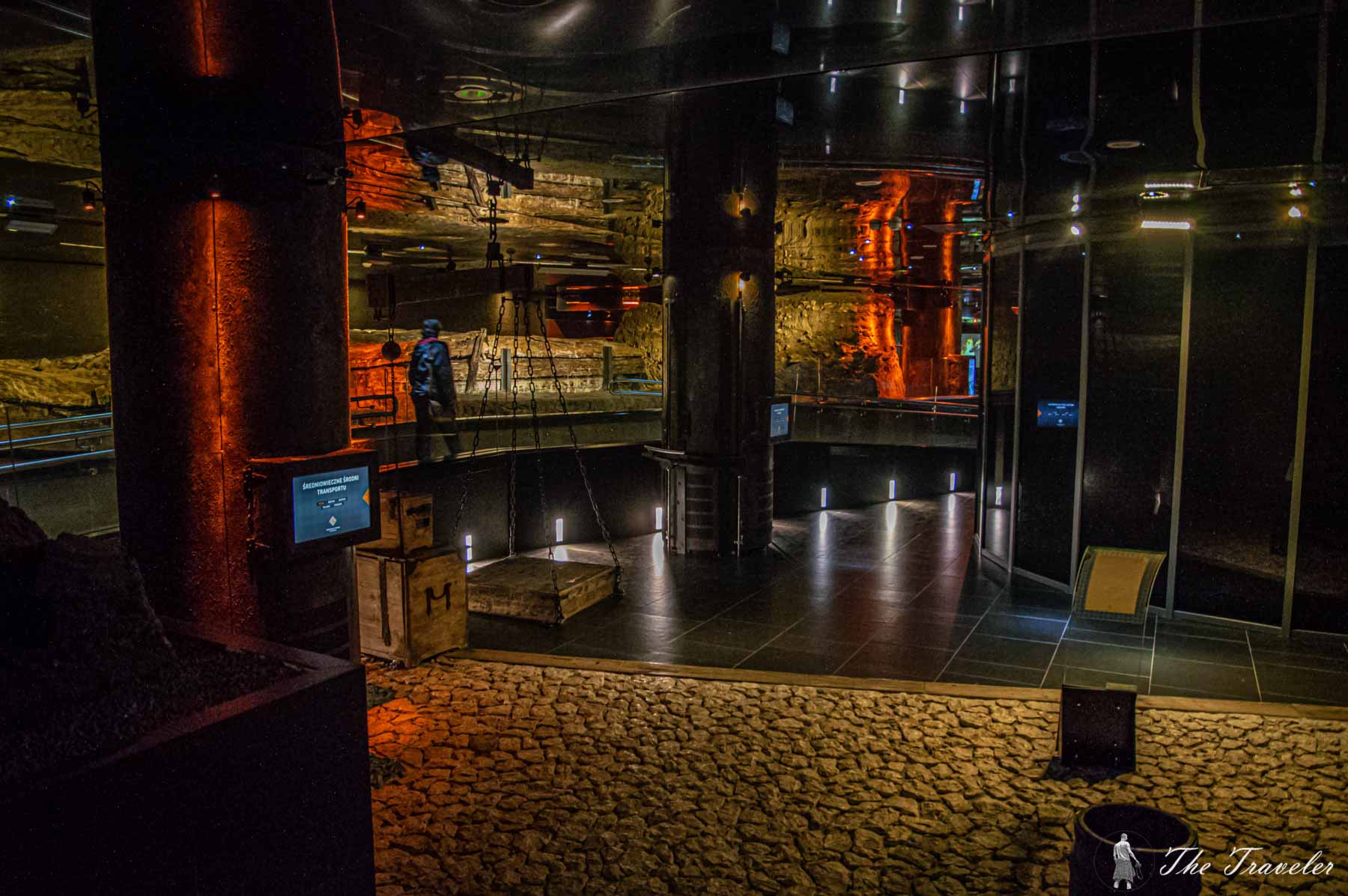
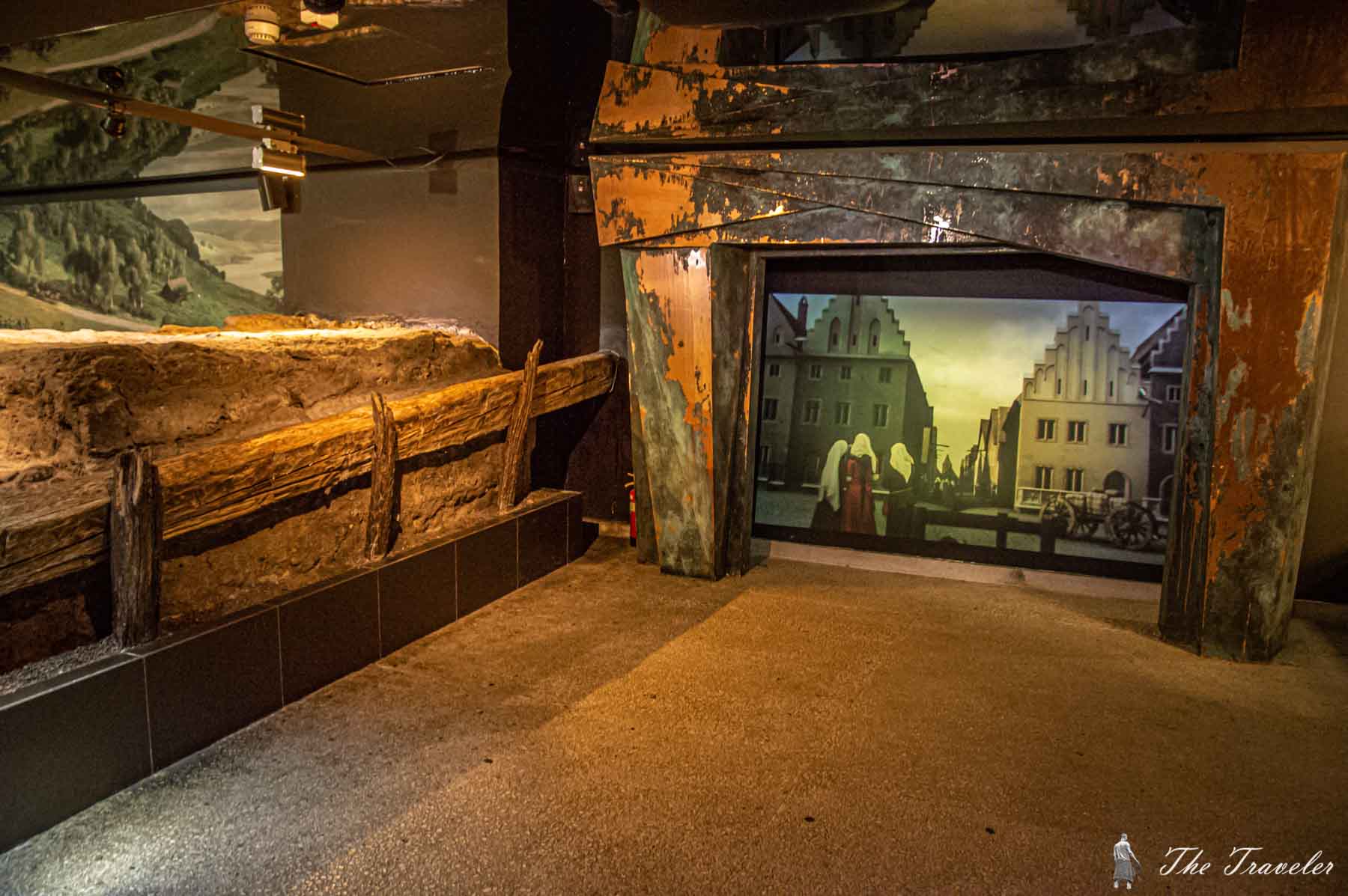
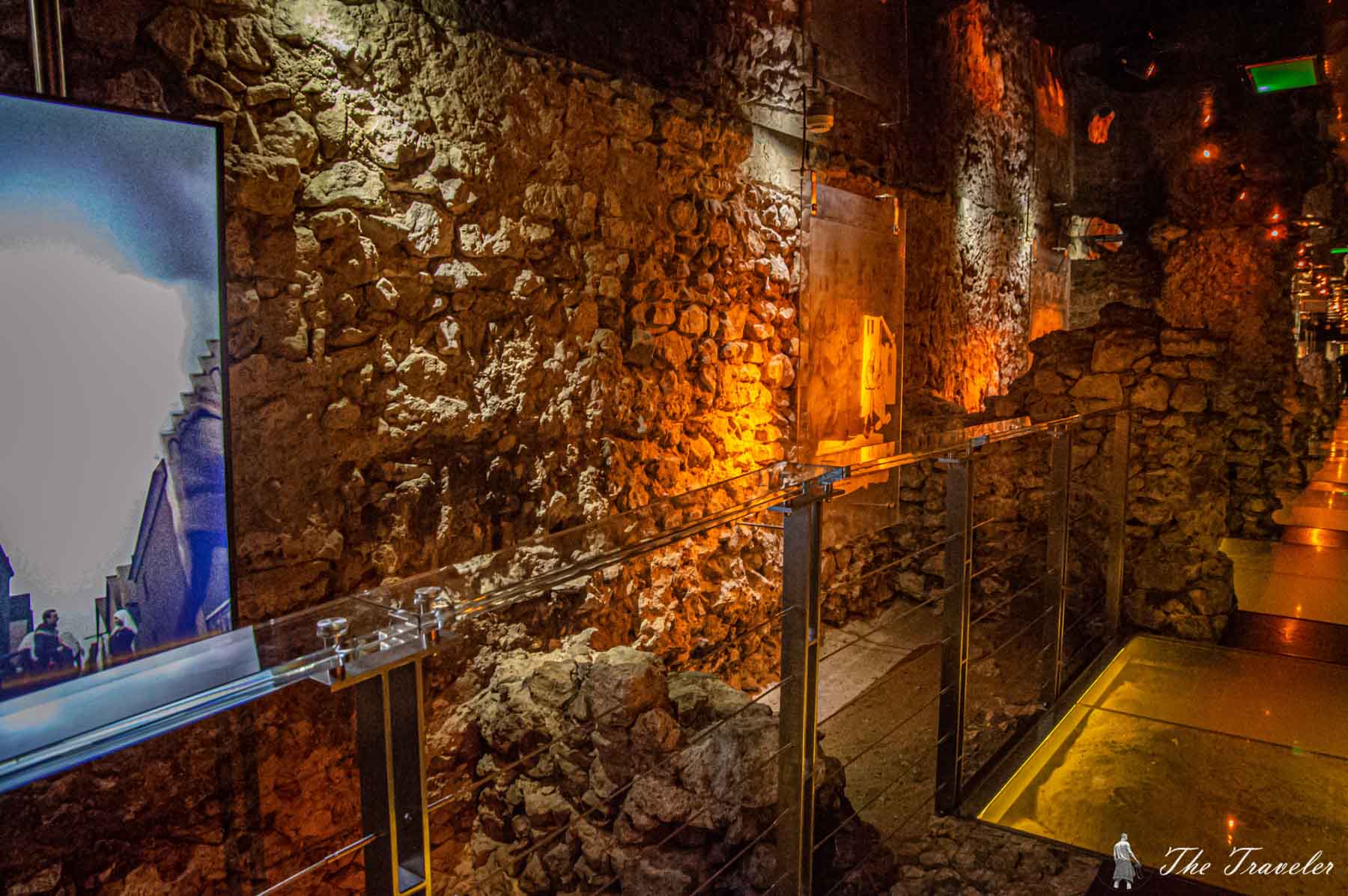
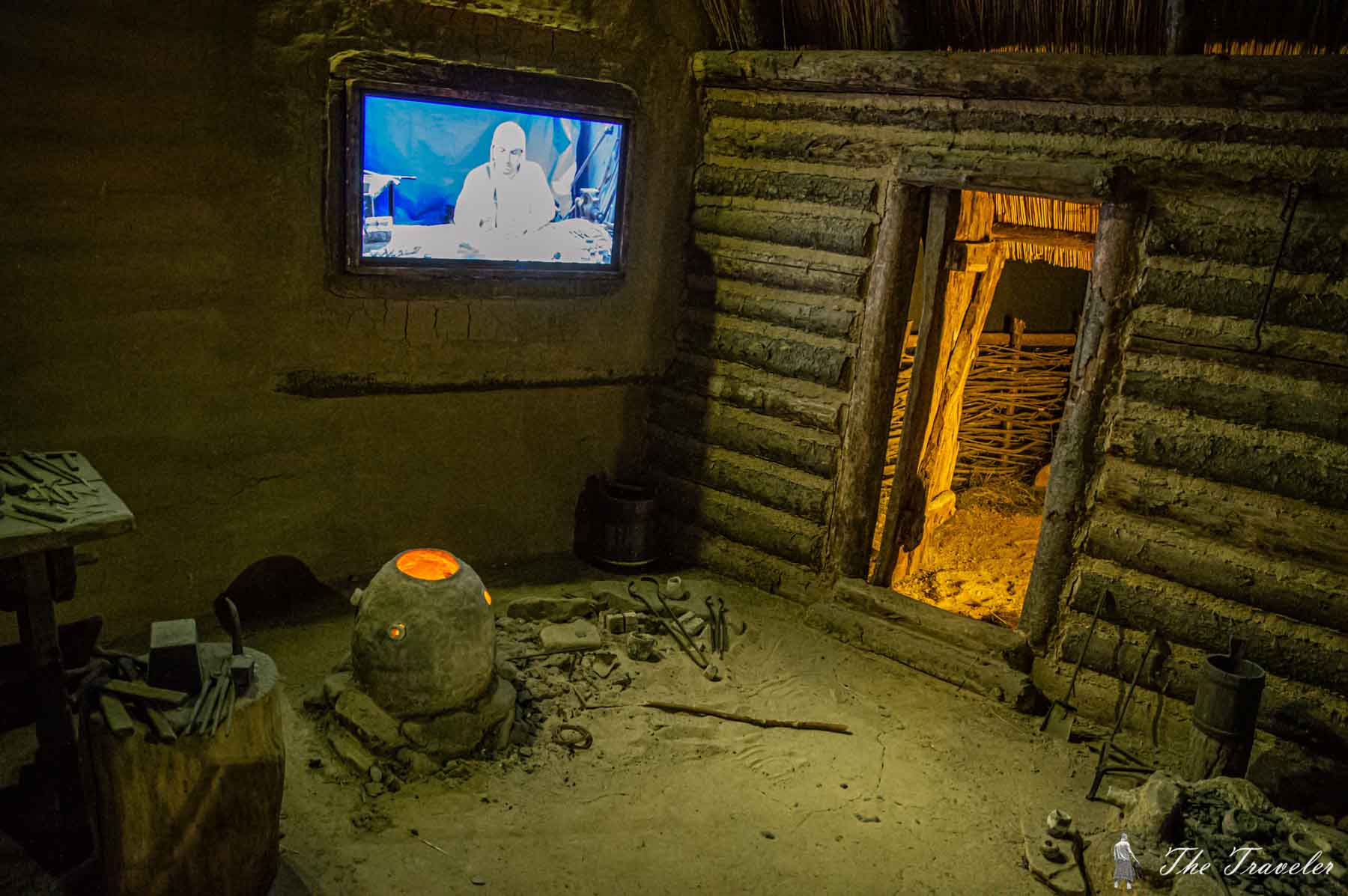
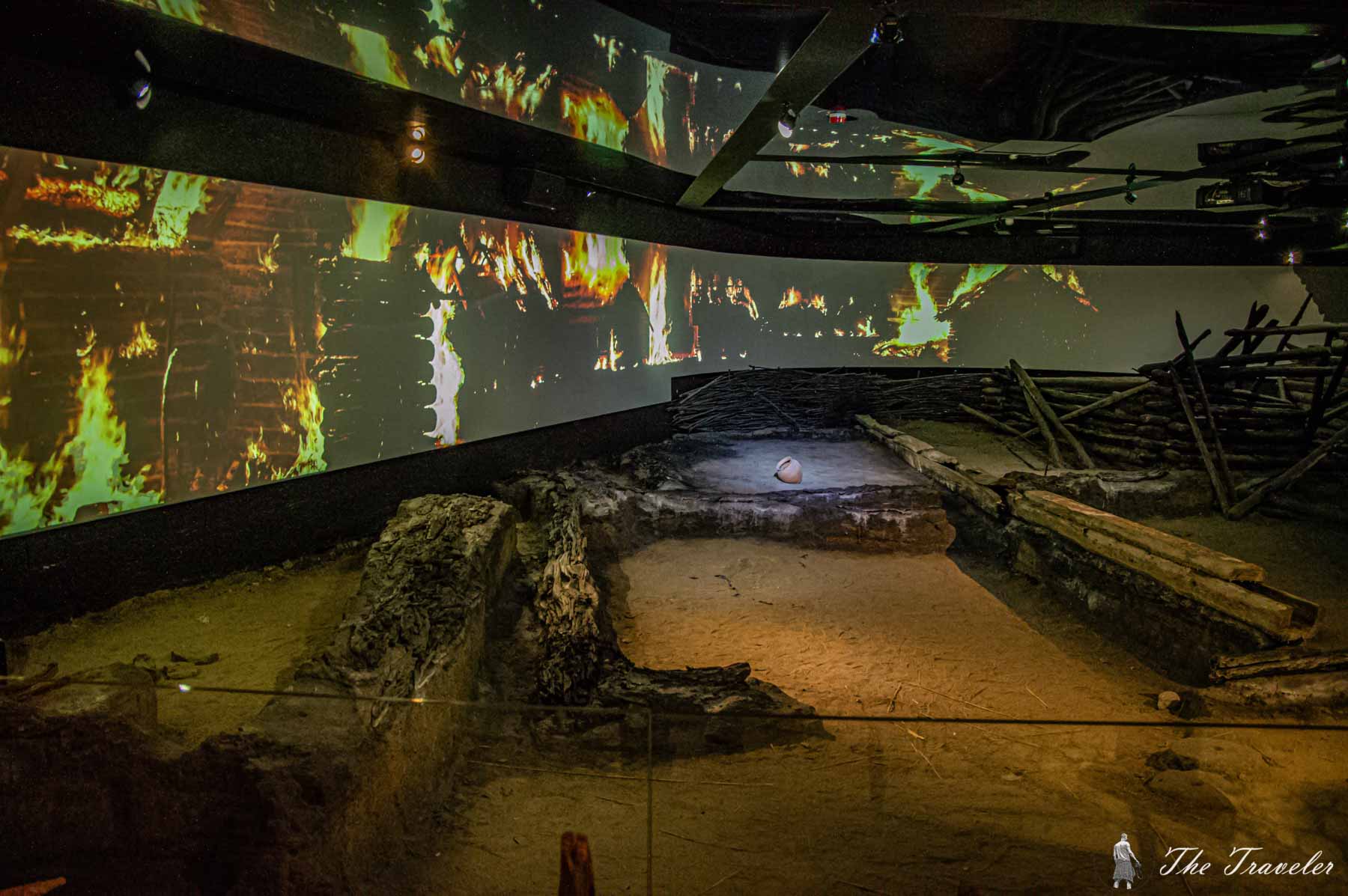
Beneath the paving stones of the Main Square, literally a few meters beneath the footsteps of tourists, lies a completely different Krakow! Rynek Podziemny is not just a museum, but a journey through the layers of the city, where medieval history and modern technology intertwine in a great interactive tour. Walking through the underground labyrinths, you travel back centuries – among authentic remains of ancient streets, foundations of medieval buildings, and everyday objects that reveal how people here lived, traded, and traveled. All of this is brought to life with multimedia, holograms, and light effects, which make for a fantastic experience and let you understand what lies at the very foundations of the city…
💡 Visiting the museum takes about 1 hour. Keep in mind that the entrance and the ticket office are located in two different places, even though both are in the Cloth Hall building. Tickets are bought on the side facing the Town Hall Tower, while the entrance to the underground itself is on the opposite side – facing St. Mary’s Basilica.
The side streets west of the Main Square
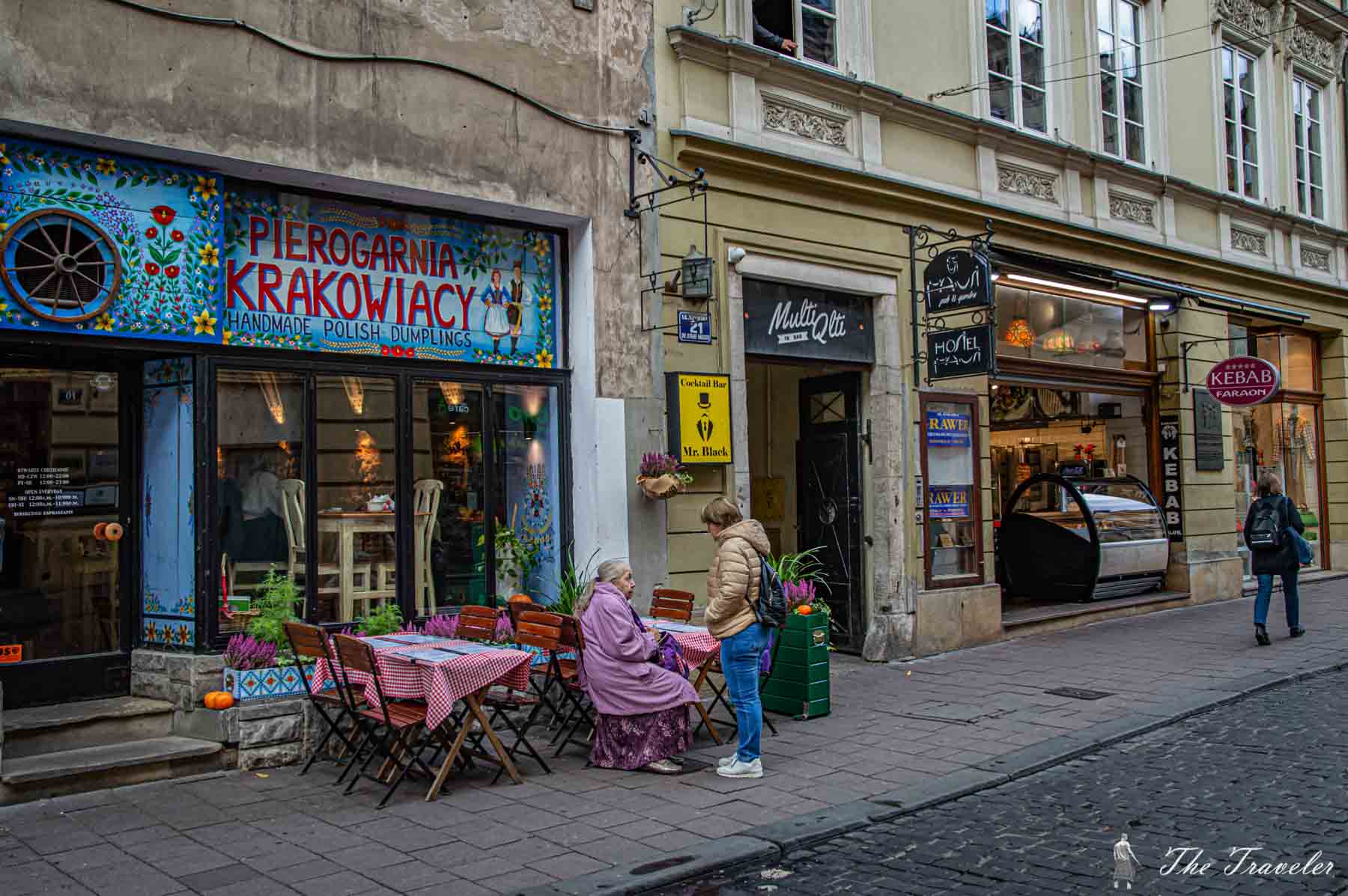
I advise you to take a slight detour through the side streets west of the square to experience a somewhat calmer, yet incredibly artistic and academic side of Krakow. Let’s start with Szewska Street, which, with its hidden bars and numerous cafés, is one of the liveliest spots… Especially in the evening, when it fills with crowds of young people.
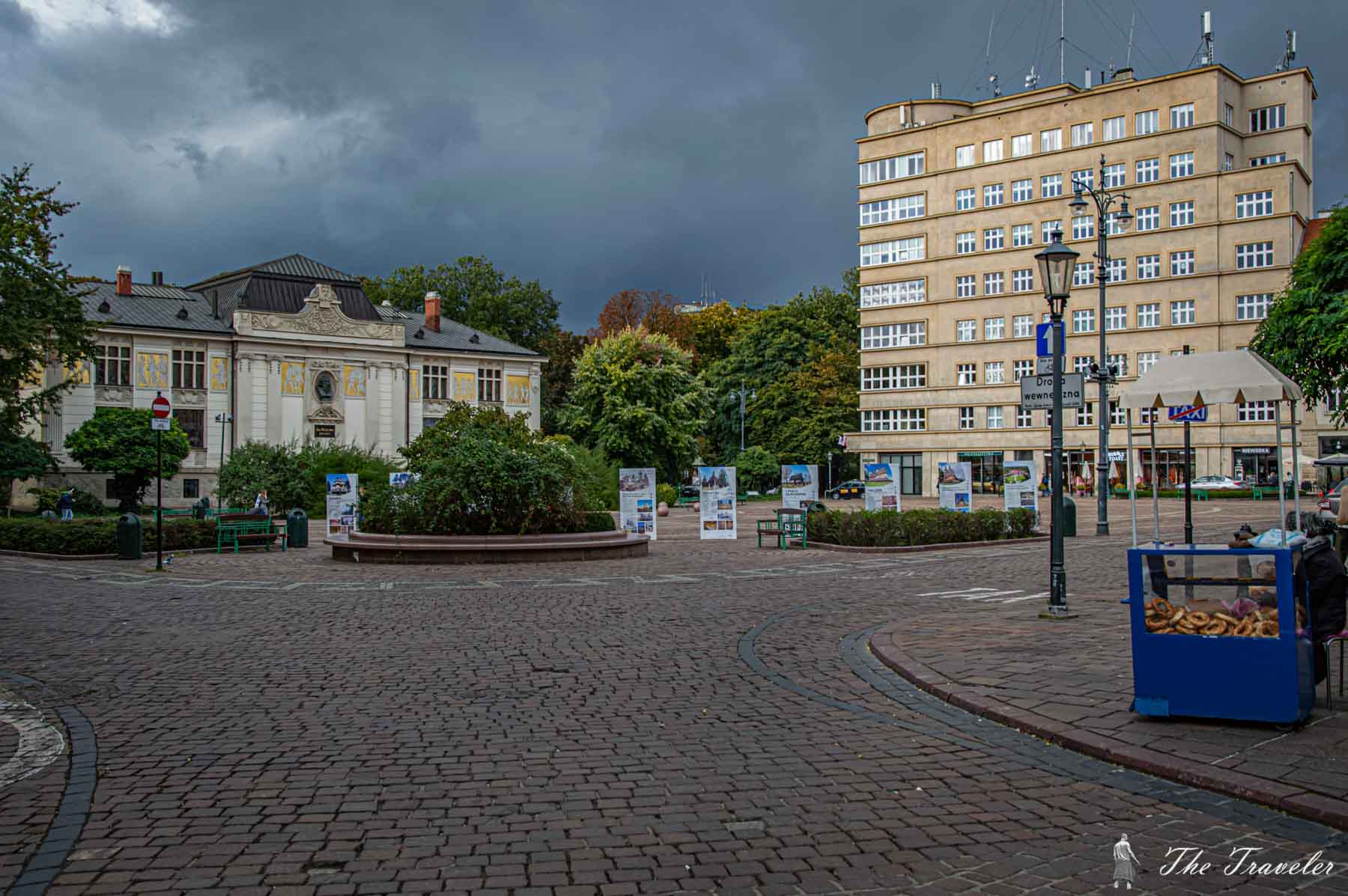
Very close by is Plac Szczepański, which, although a stone’s throw from the main routes, seems to remain completely untouched by the tourist crowds! It is surrounded by beautiful Art Nouveau buildings, and in its center stand the Palace of Art (Pałac Sztuki) and a small fountain. The few restaurants here offer the chance for a pleasant dinner away from the hustle and bustle – as we did on our first evening, sitting down at Morskie Oko (you can find all the food spots we visited in Krakow in our detailed article “Places to eat in Krakow”).
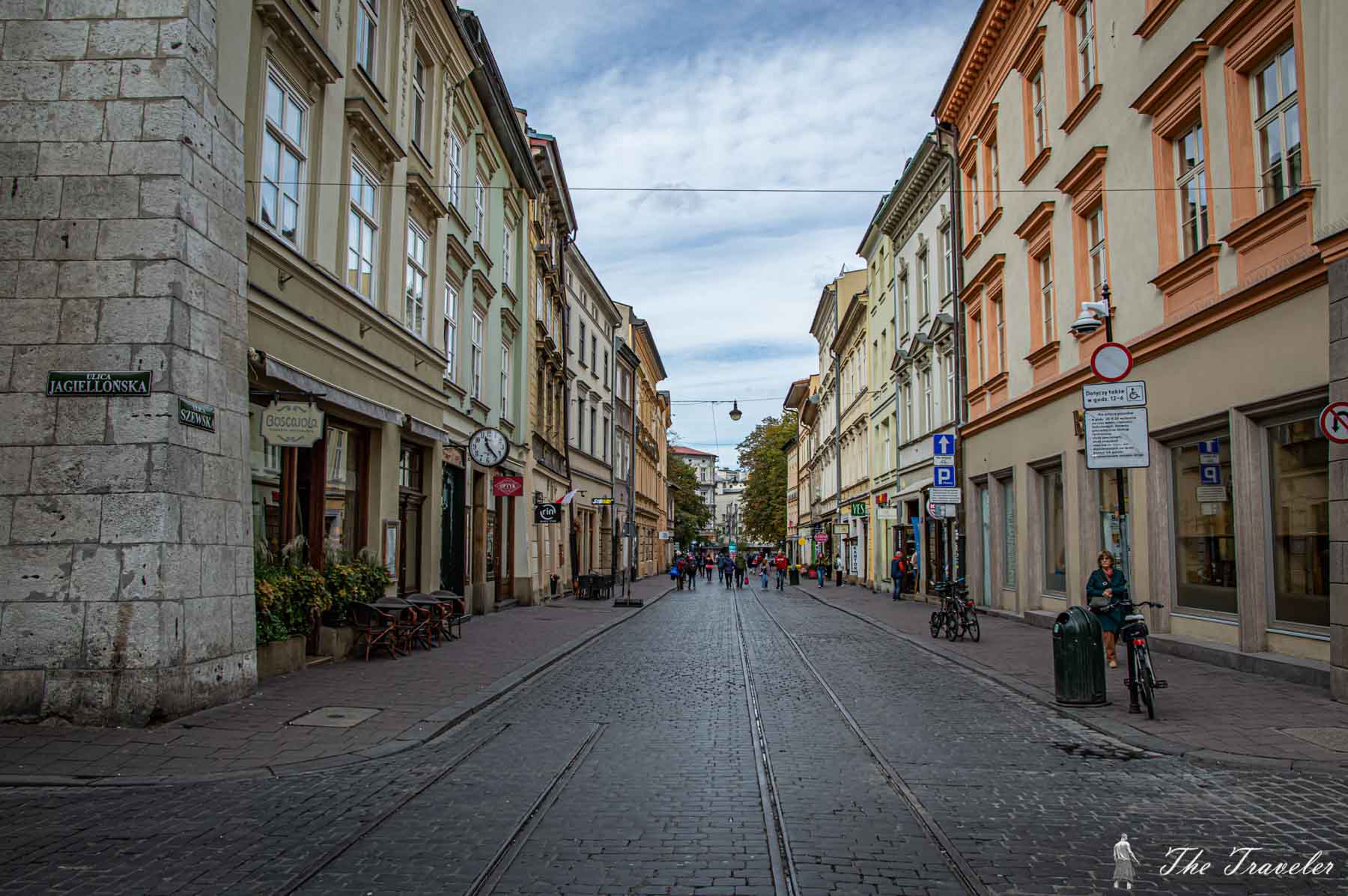
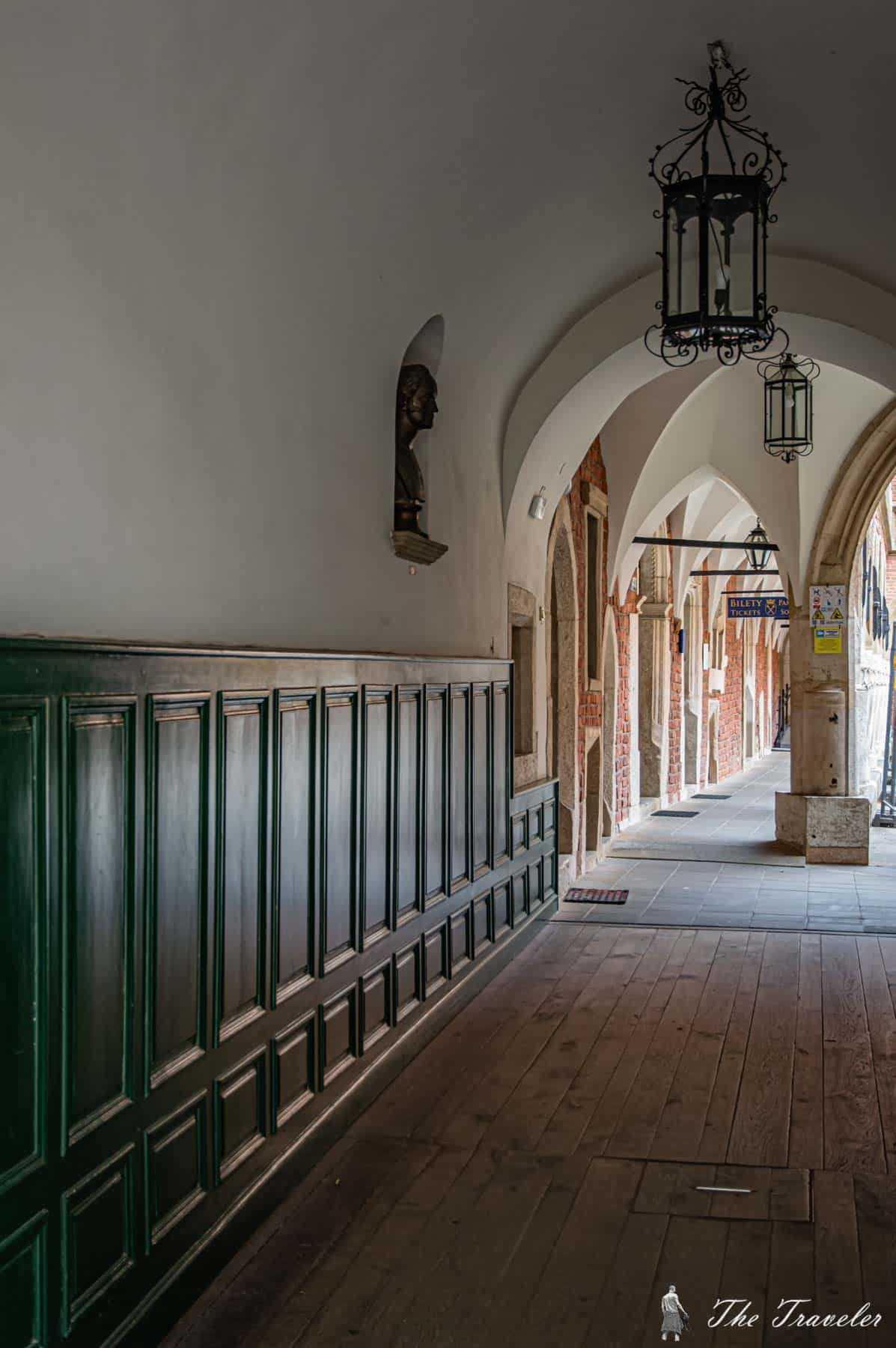
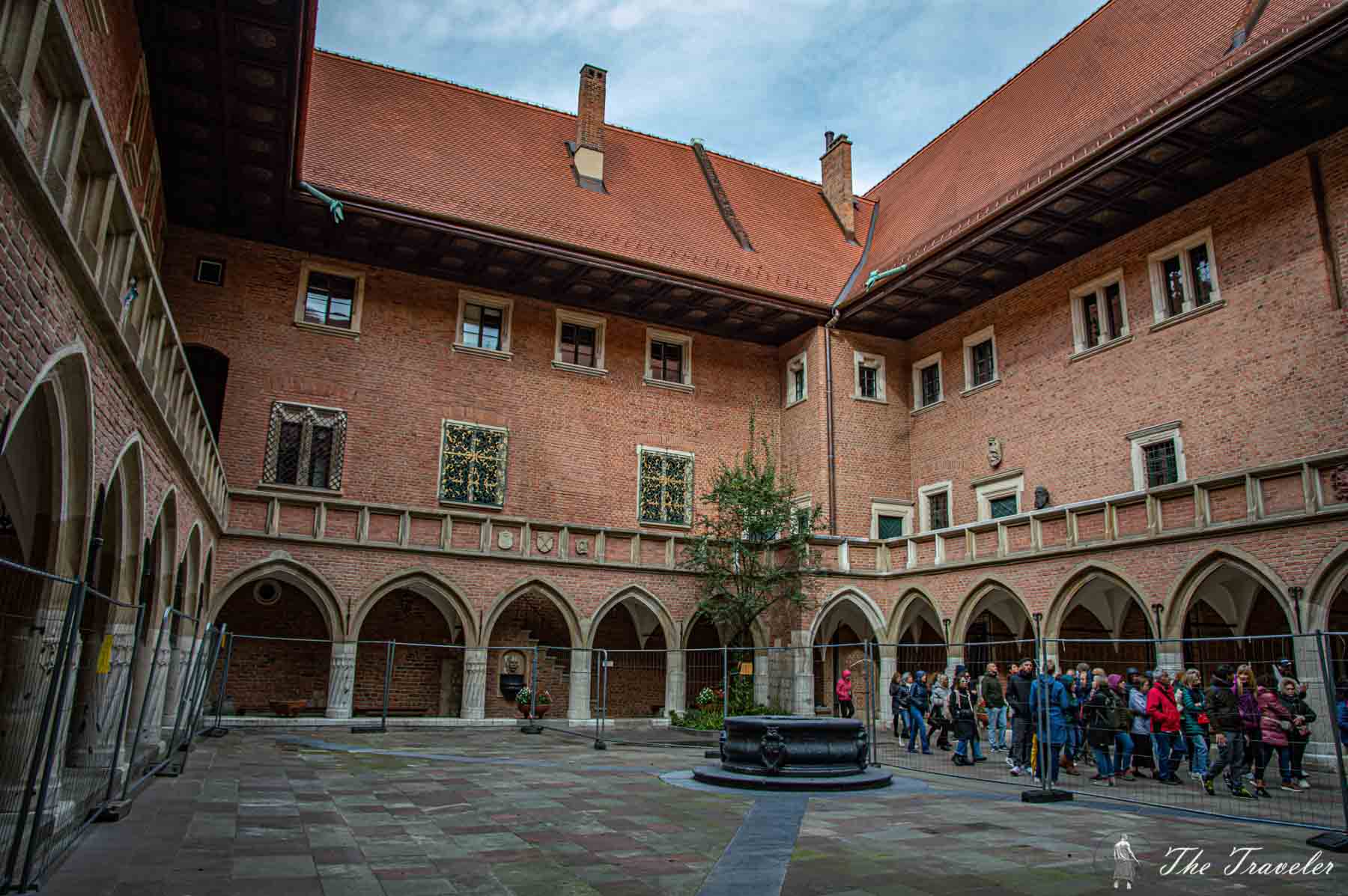
In one corner of the square begins one of the most famous local streets – Jagiellońska. The most impressive building on it is the Gothic façade of Collegium Maius – the oldest surviving part of the renowned Jagiellonian University. This educational institution is among the oldest continuously operating universities in the world, founded by King Casimir III (Kazimierz III Wielki) back in 1364. We didn’t enter the museum itself, but we at least peeked into the inner courtyard, where great figures such as Nicolaus Copernicus and Pope John Paul II once walked!
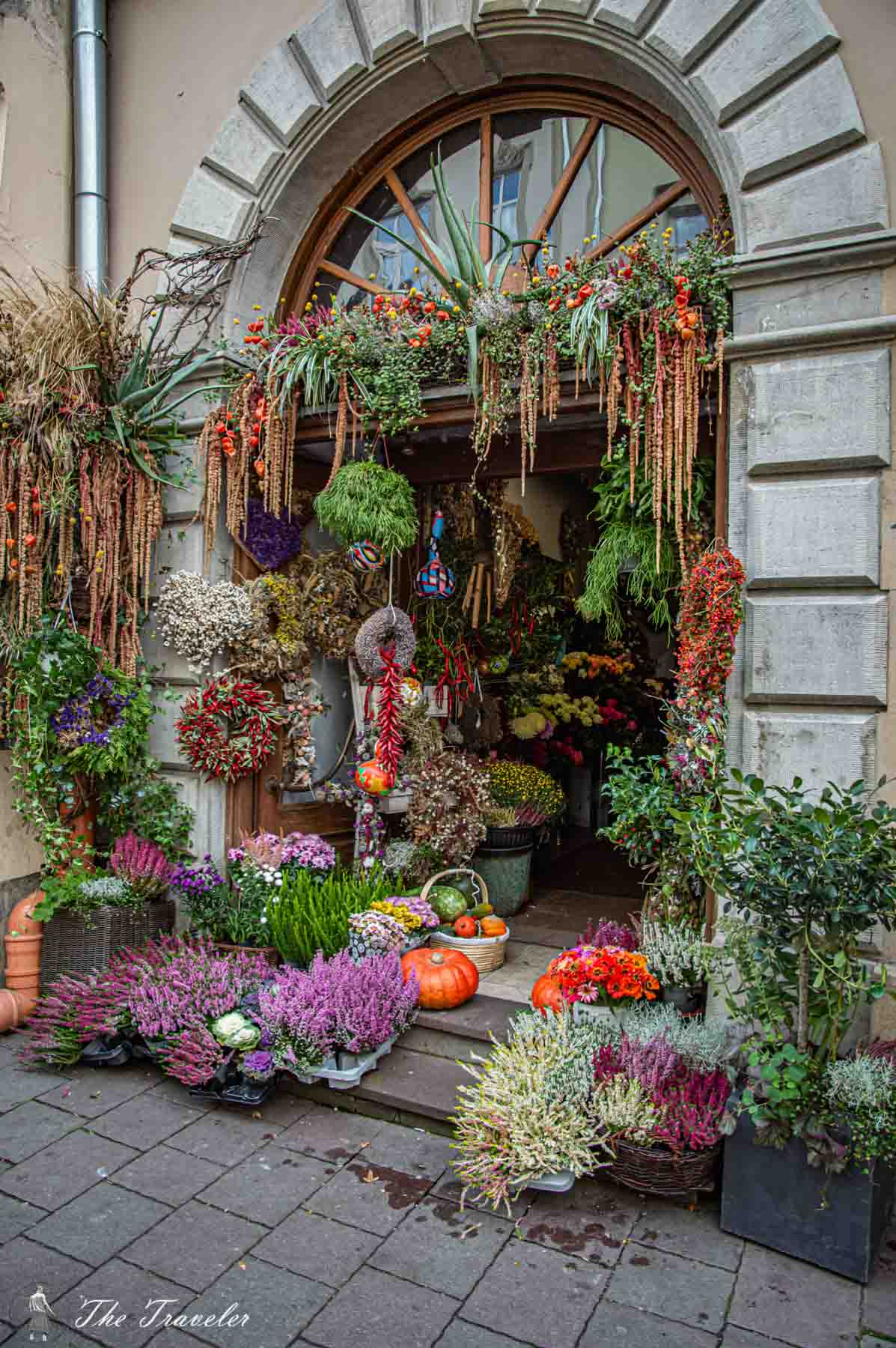
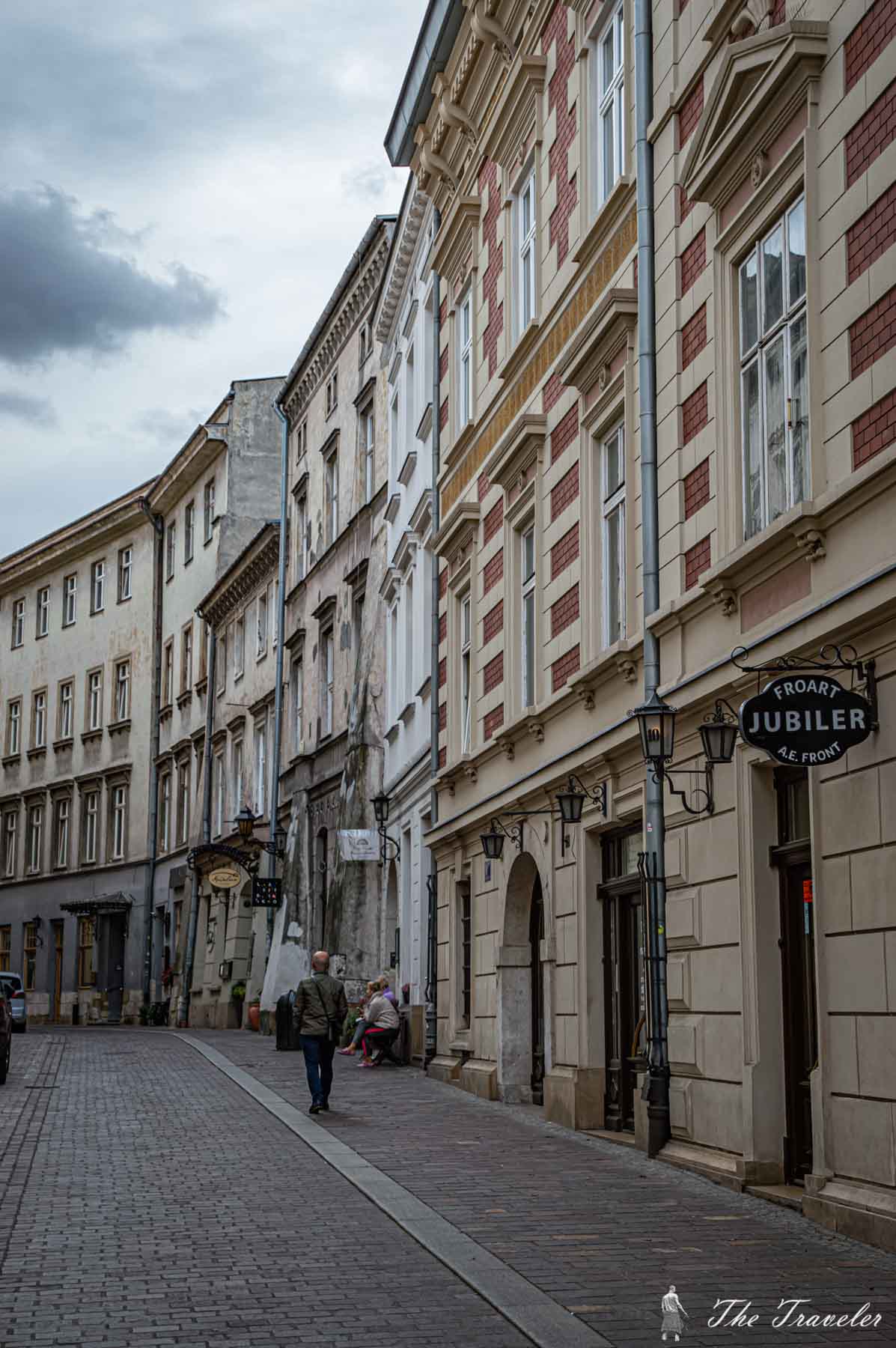
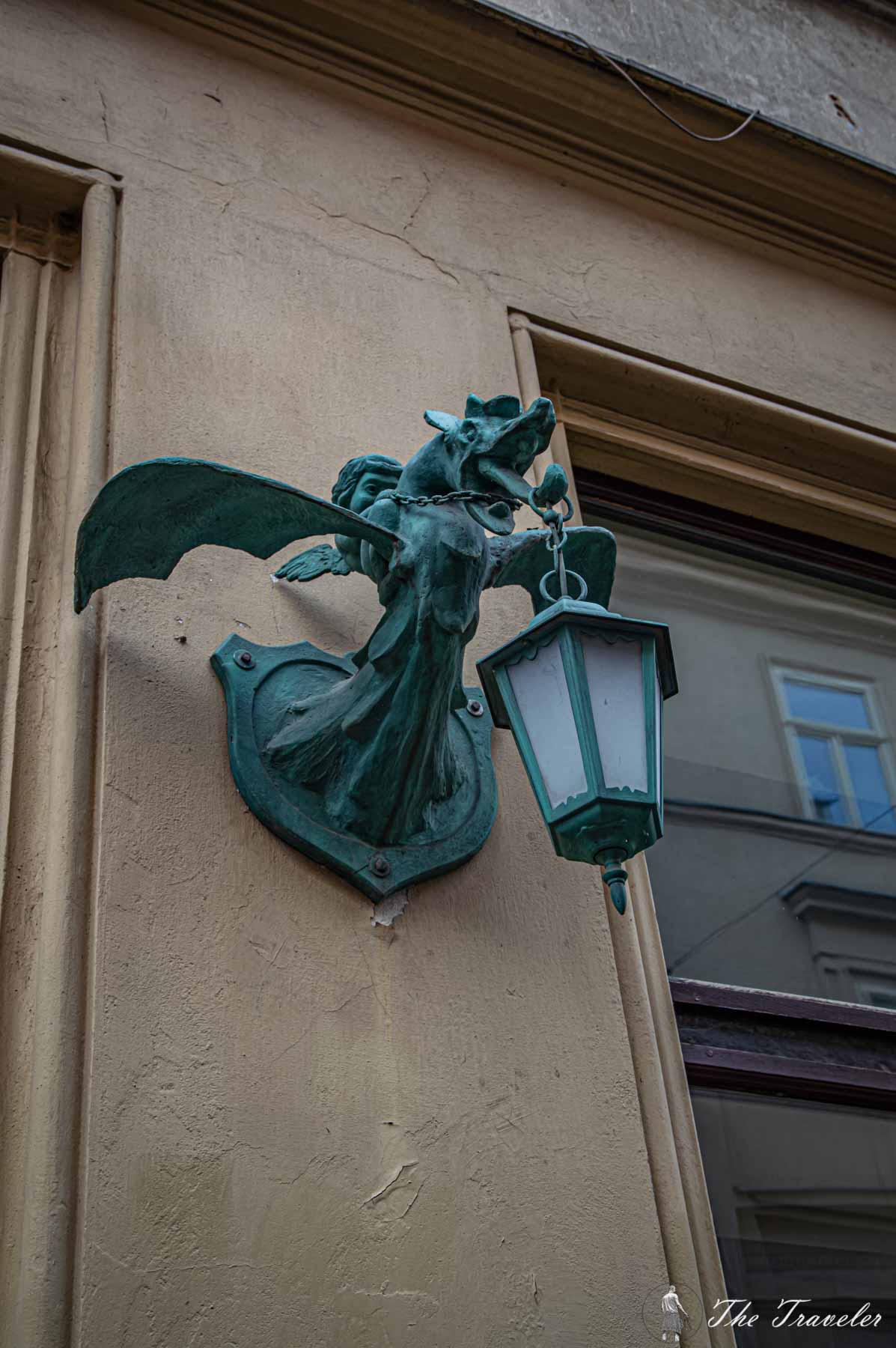
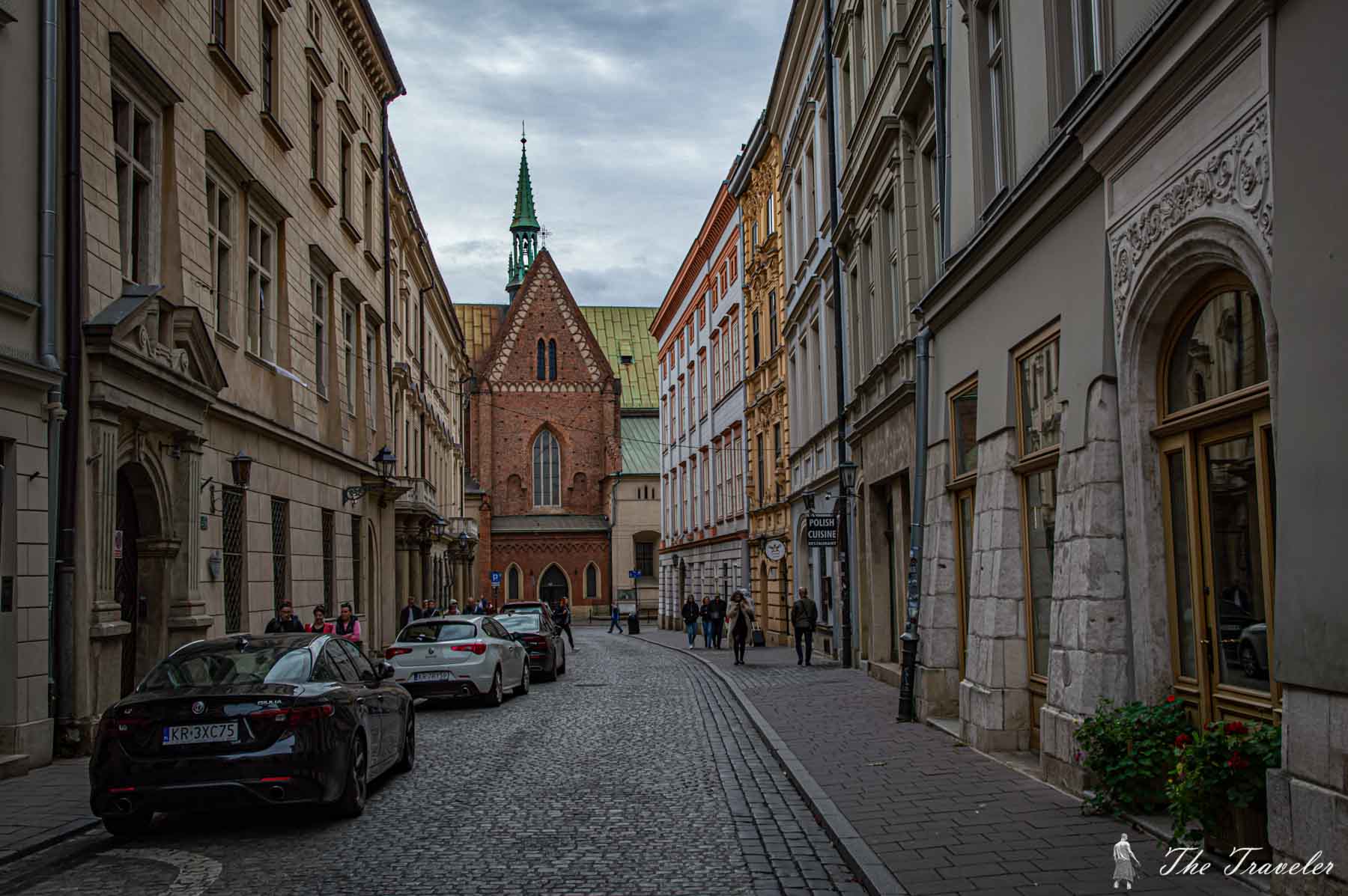
The walk is accompanied by charming details – colorful façades, cute flower shops, and even street lamps shaped like dragons. Gołębia Street and the gently curved Bracka Street finish the tour in this part of the center in great style, and the shot of one of the side entrances of the Basilica of St. Francis of Assisi (Bazylika św. Franciszka z Asyżu) is among my favorites!
Florianska Street and the medieval fortifications
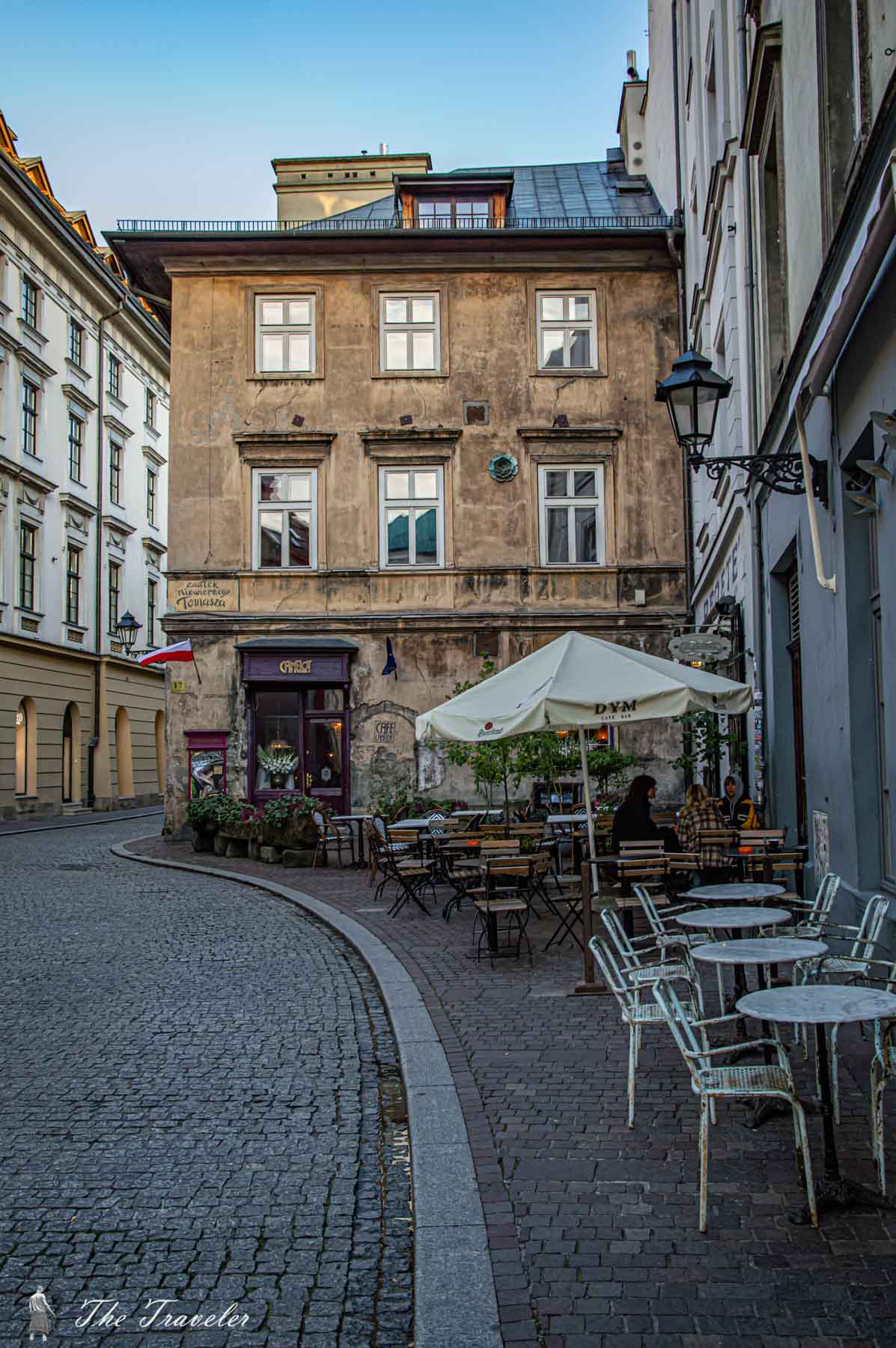
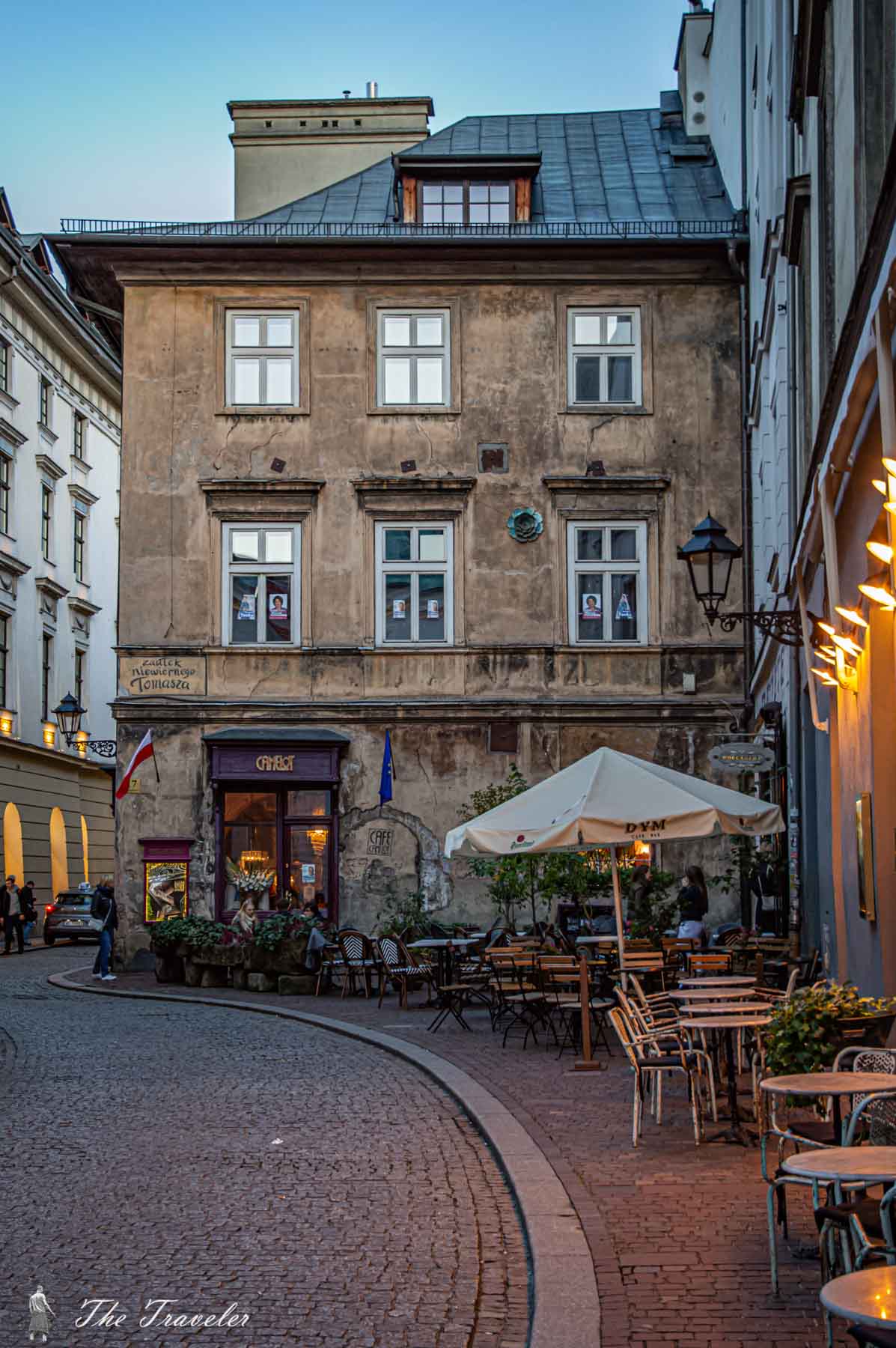
To continue exploring the center, we’ll use the Main Square as our reference point once again. This time we head north, but before getting to the main sights, I’ll share one of the most photographed spots in Krakow! Right at the corner by the Church of St. John the Baptist and St. John the Evangelist (Kościół św. Jana Chrzciciela i św. Jana Ewangelisty) lies the iconic Cafe Camelot. The curved little street here is extremely picturesque – we never got around to visiting the café itself, but I loved photographing this corner both during the day and at dusk, when the warm glow from the street lamps and string lights above the tables make it look like something off a retro postcard…
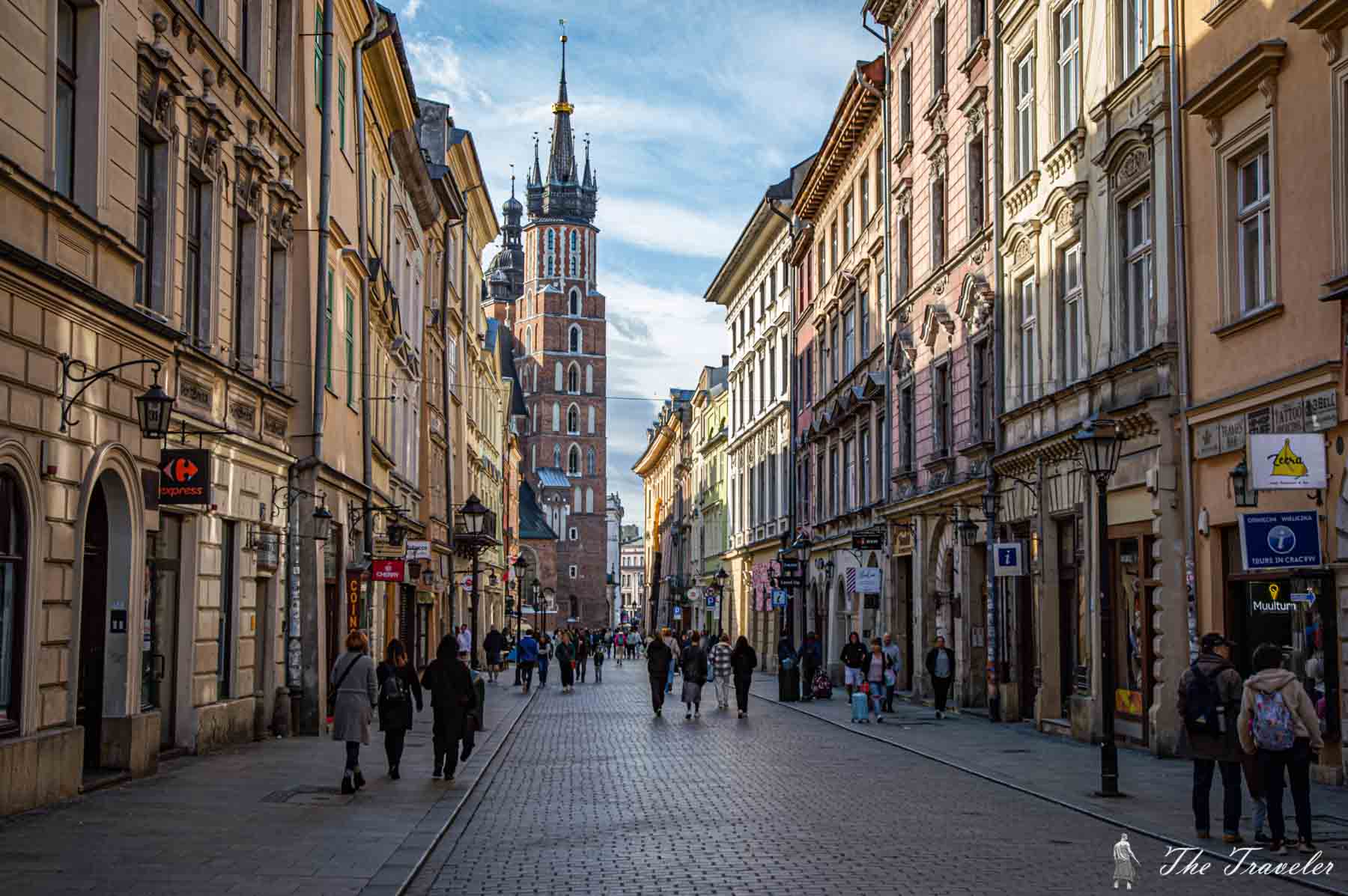
And here we are on Floriańska Street – undoubtedly the liveliest pedestrian artery in the city. Since our apartment was located such that we walked along it every day on our way to the center, we managed to experience all its different moods! From the morning, when shops are just opening and people hurry by with coffee and breakfast in hand, to late afternoon, when bars fill up and a lively buzz fills the air.
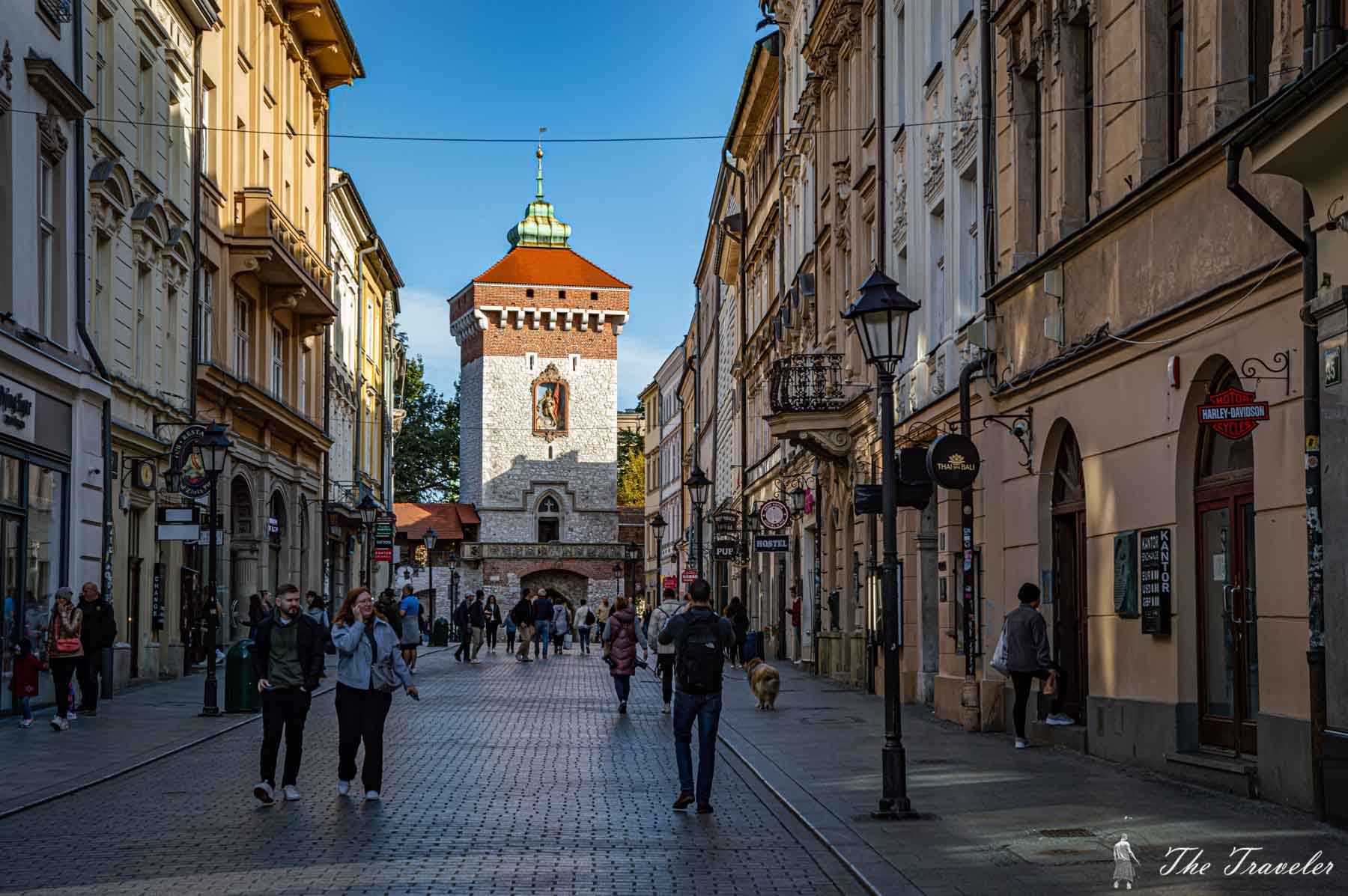
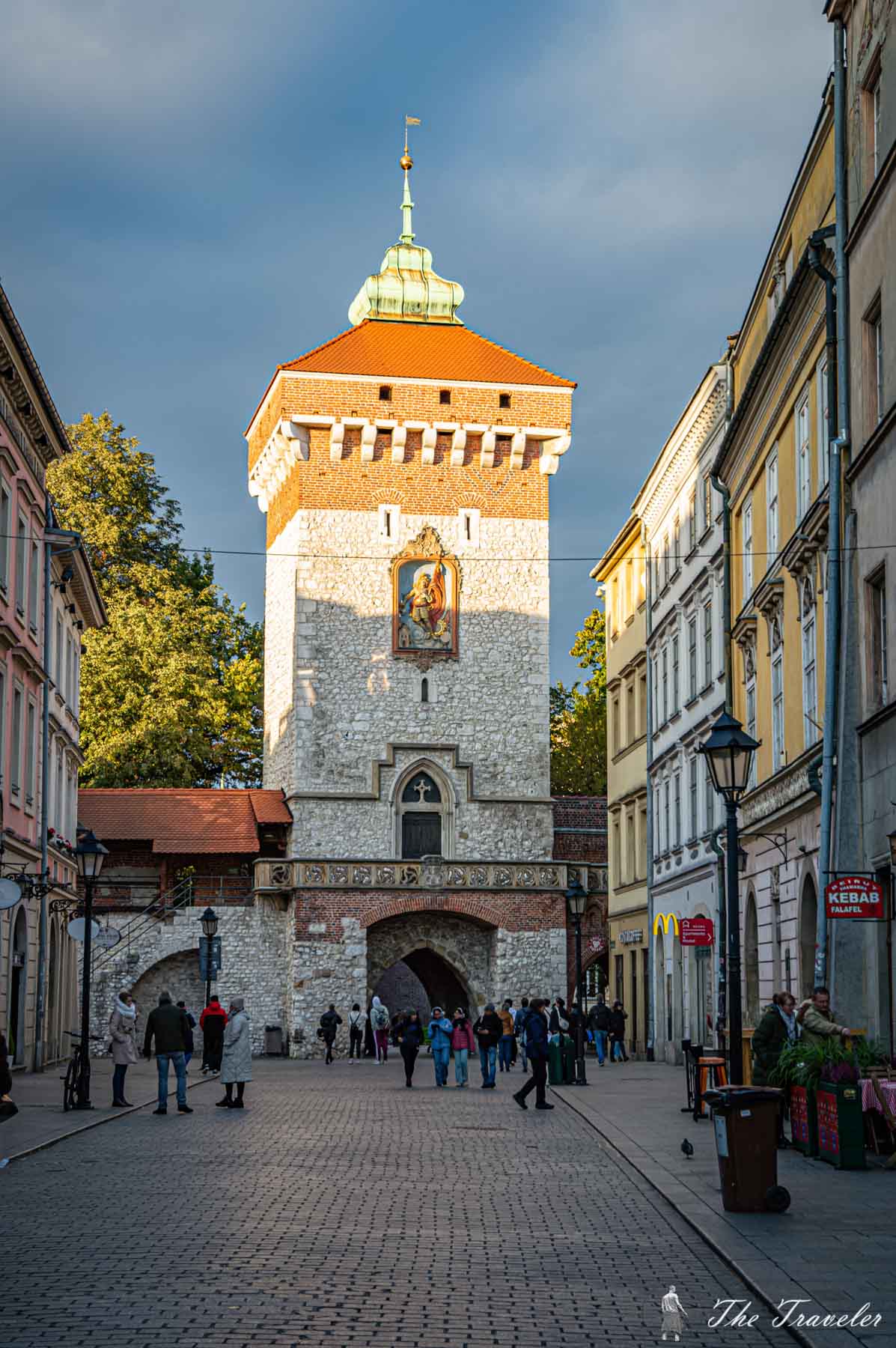
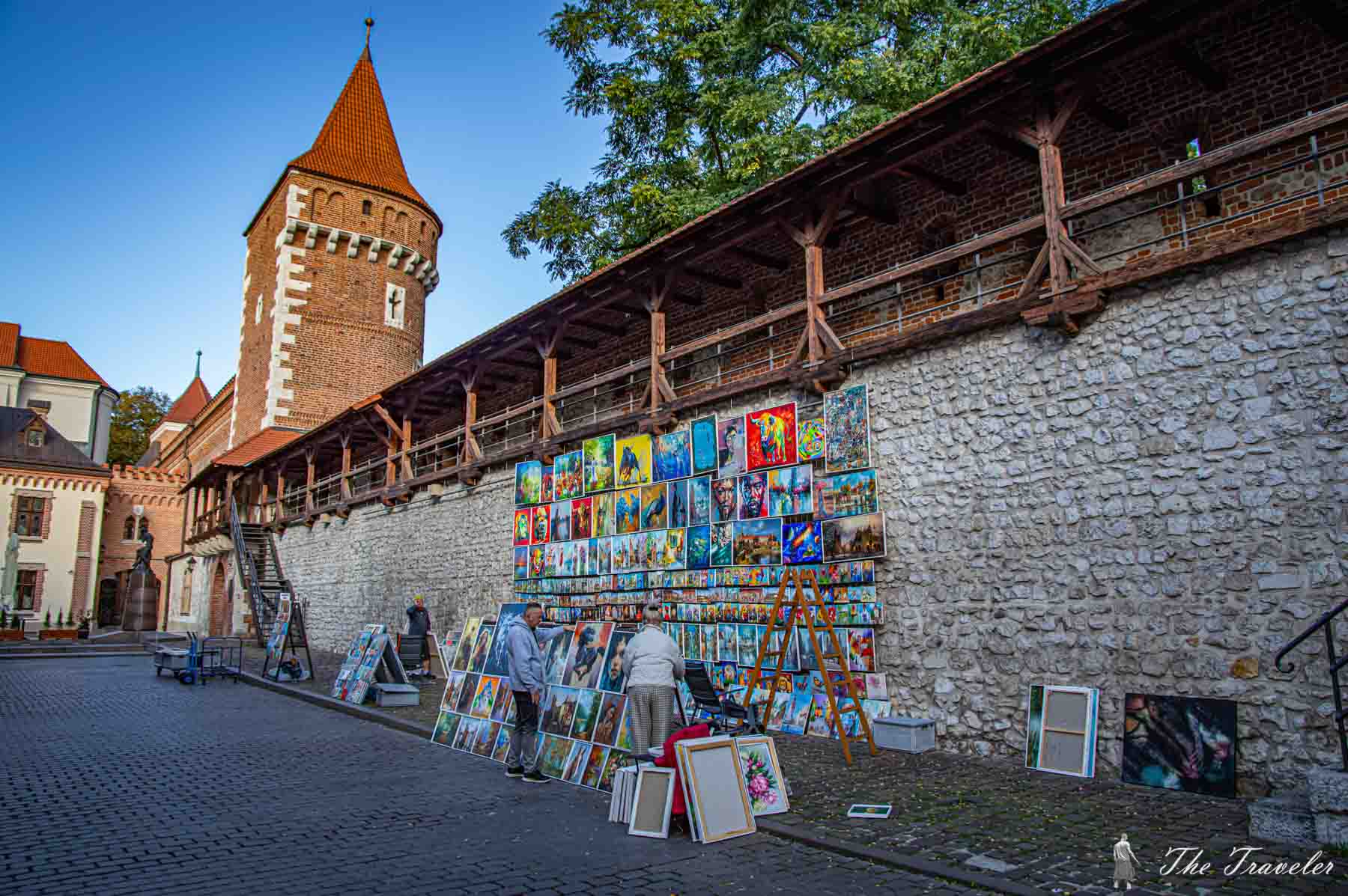
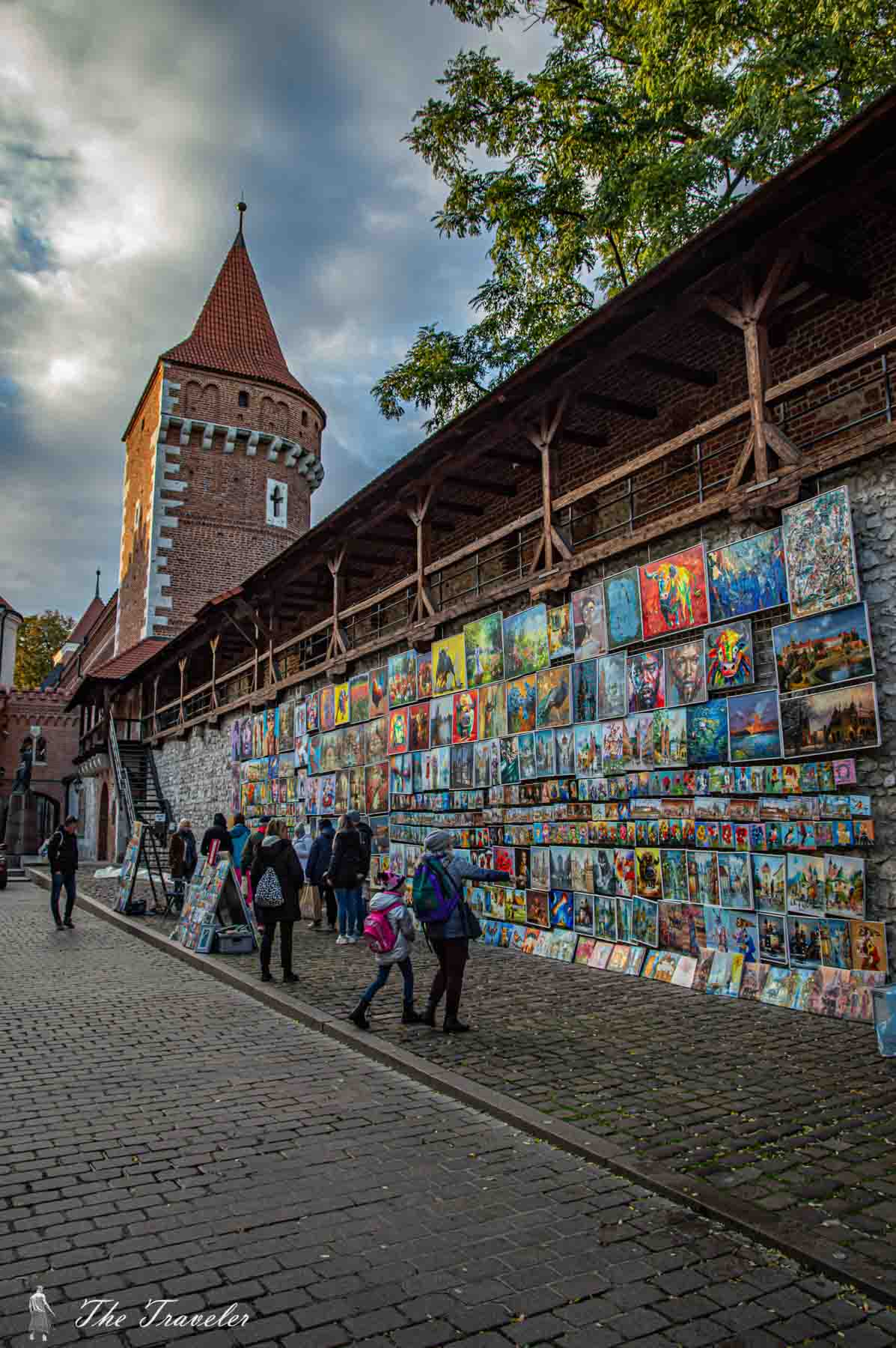
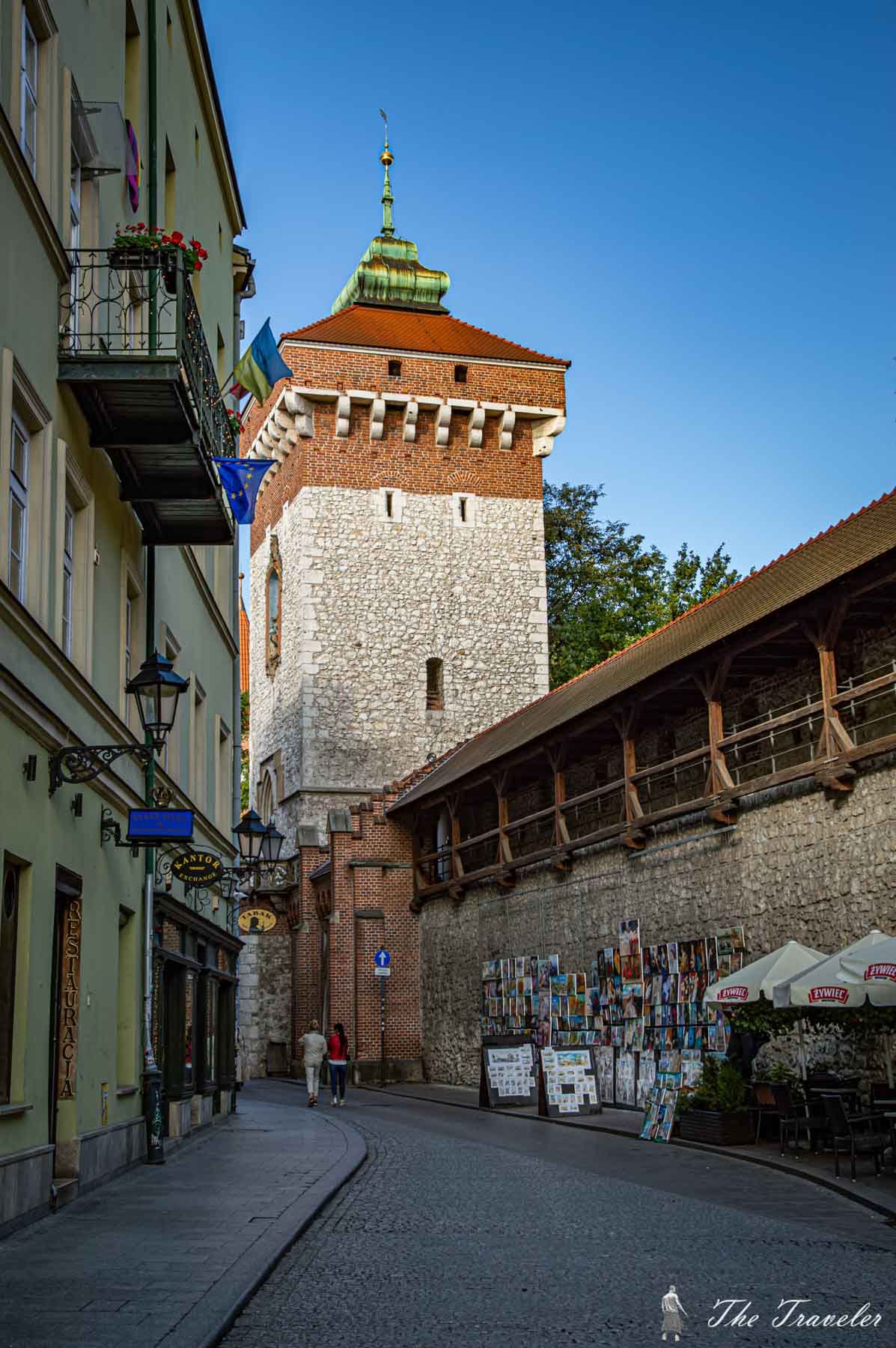
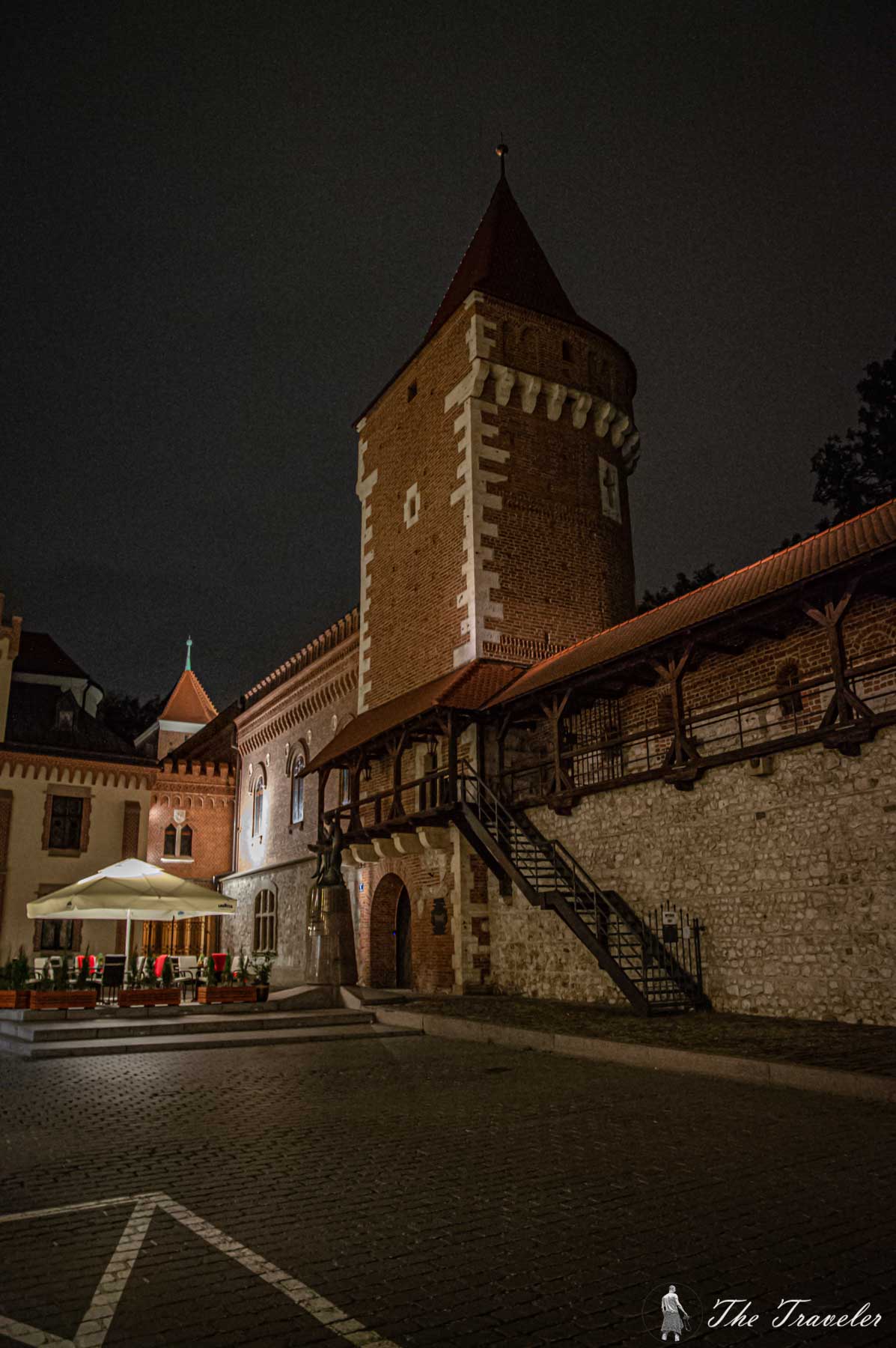
Walking this stretch of the former Royal Route, we arrive at the best-preserved section of the medieval city fortifications – the Florian Gate (Brama Floriańska). Following the devastating Mongol invasions in the 13th century, the decision was made to encircle the city with sturdy walls. Completed in the early 14th century, a large portion was demolished in the 19th century to allow Krakow to expand freely. Still, the remaining segment is imposing enough to give you a sense of their original scale. Today, the brick walls take on extra color thanks to local artists displaying their paintings right here.
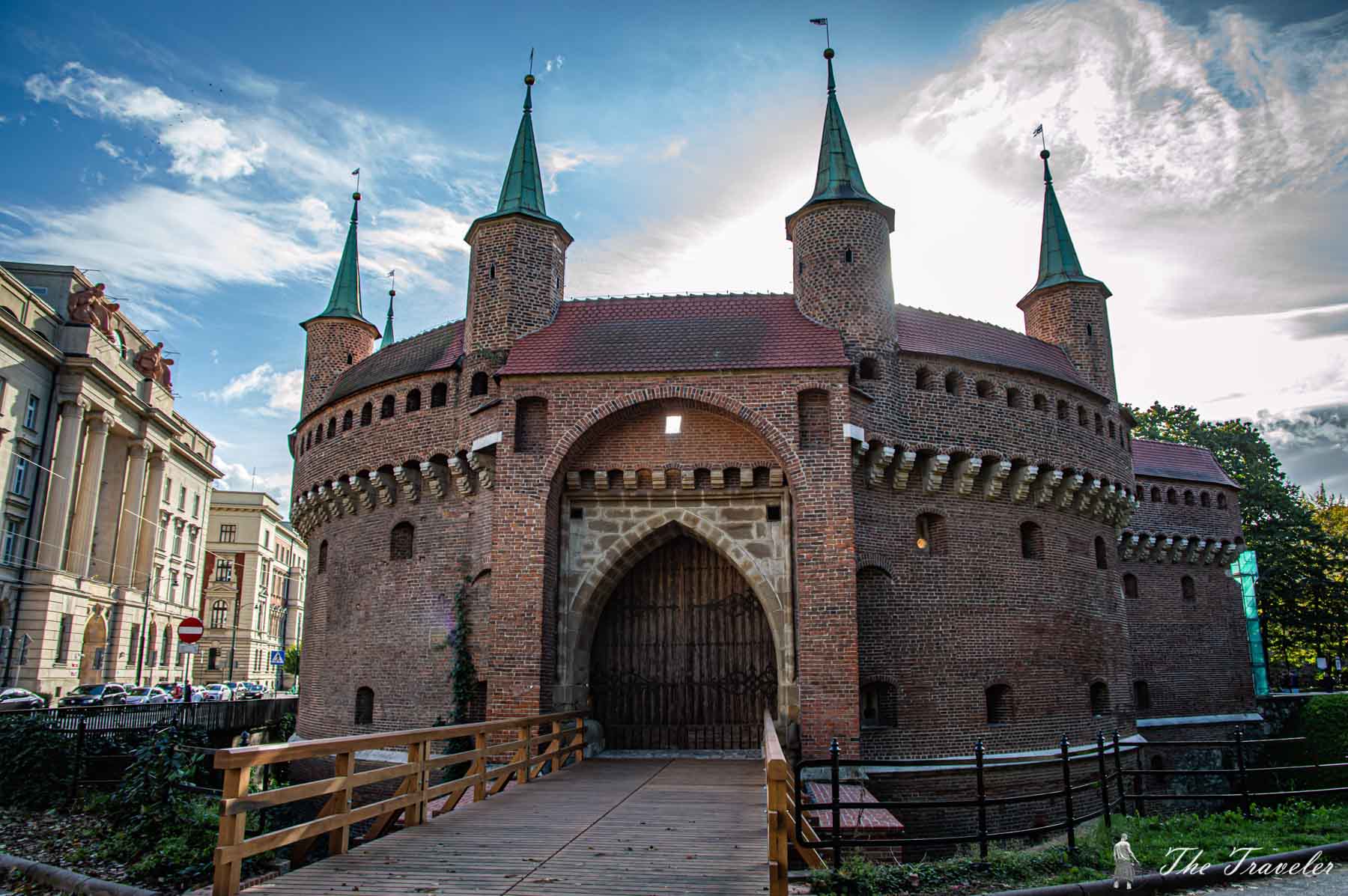
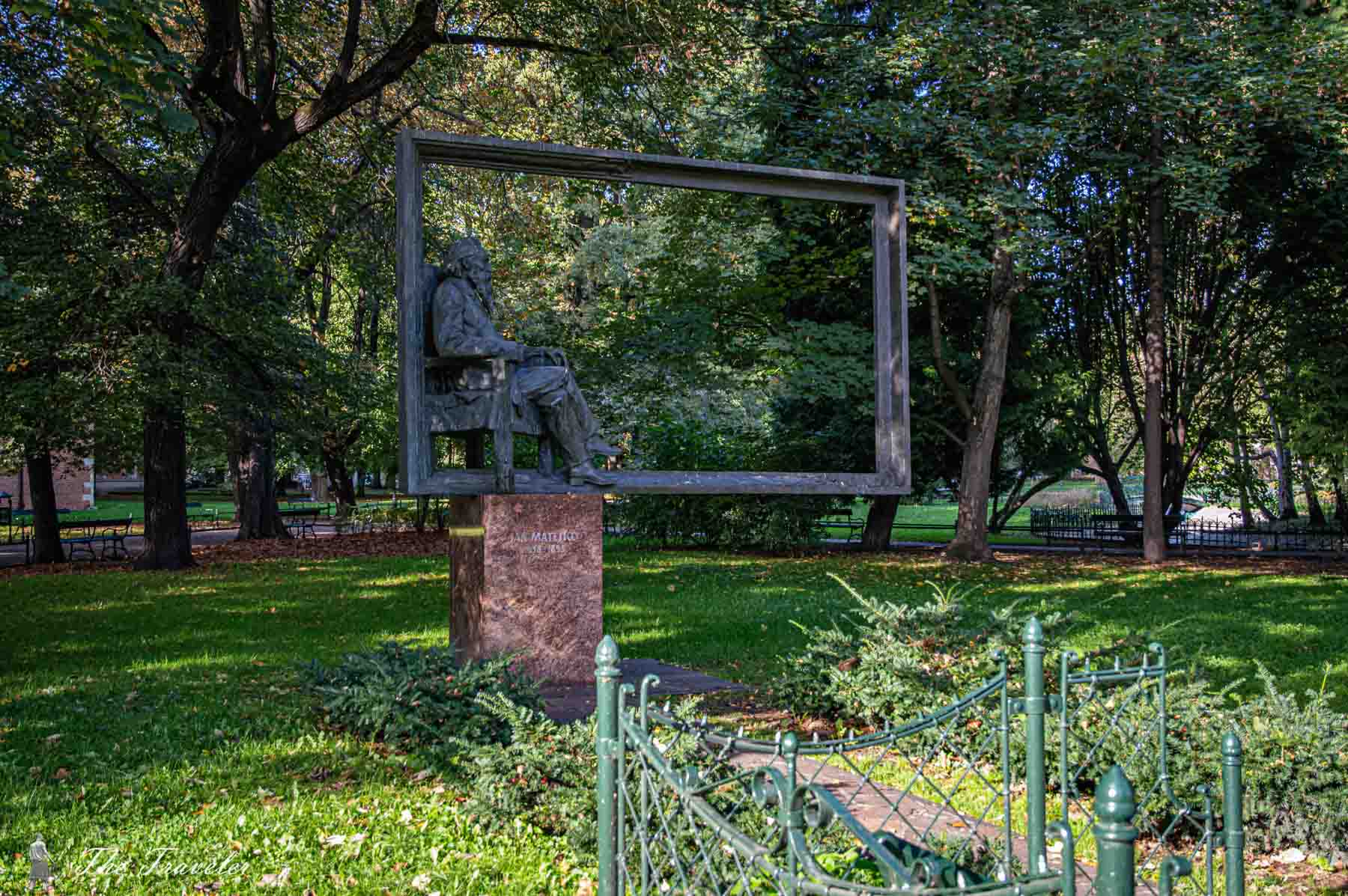
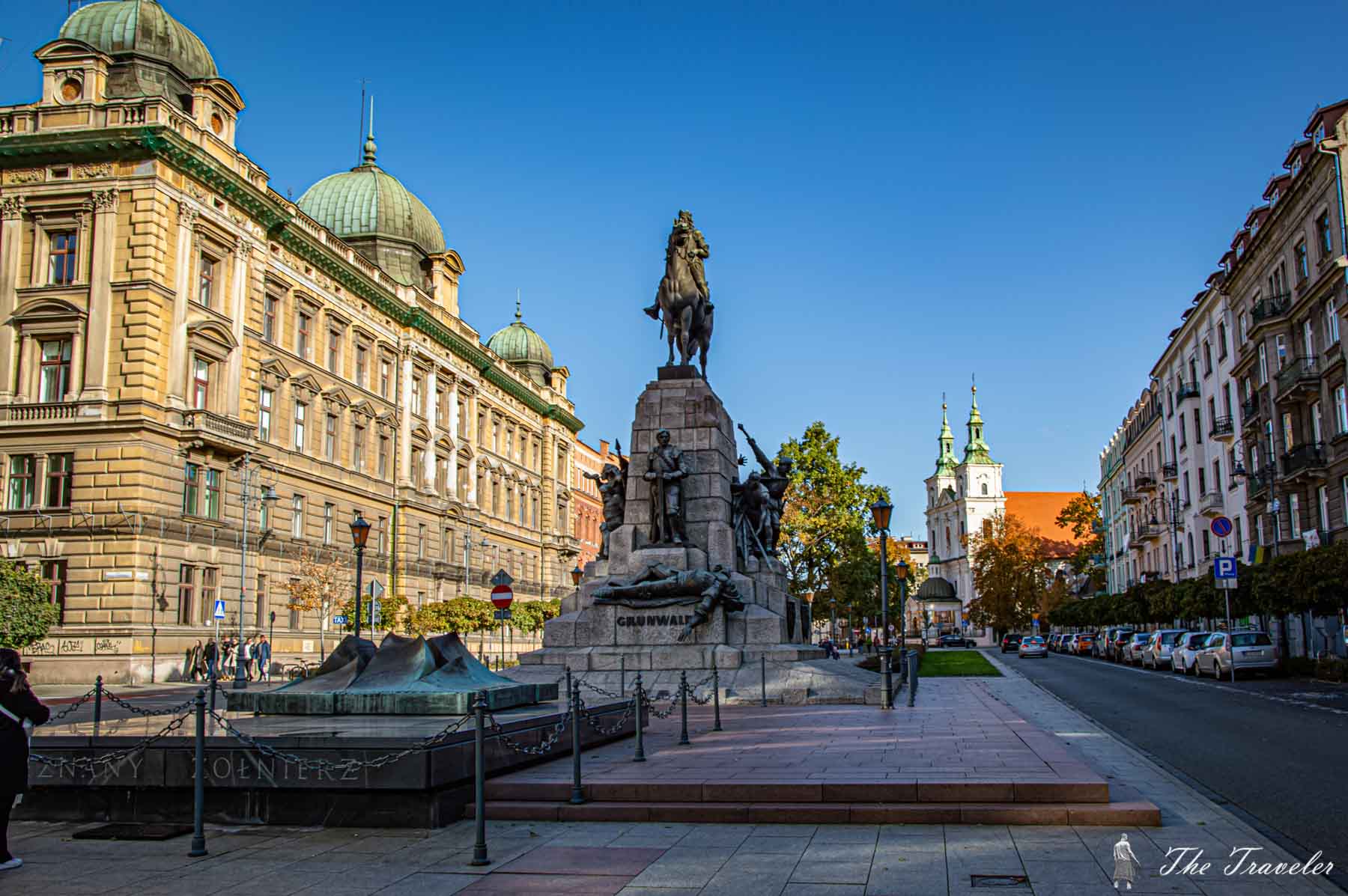
Immediately beyond the gate stands the Barbican (Barbakan) – a massive 15th-century defensive rotunda. Originally surrounded by a deep moat and connected to the gate, it served as the main checkpoint. Today, it houses a branch of the Historical Museum. Right in the small park alongside, you’ll spot a very interesting monument to the famous Polish painter Jan Matejko – his figure framed as if inside a painting. Matejko was born in Krakow, and his family house is actually located at No. 41 Floriańska Street (Dom Jana Matejki). Across from it lies the square named after him (Plac Jana Matejki), in the center of which stands a grand monument (Pomnik Bitwy pod Grunwaldem) commemorating one of the most significant victories in Polish history over the Teutonic Order – the Battle of Grunwald in 1410.
The theatre and the Small Square (Mały Rynek)
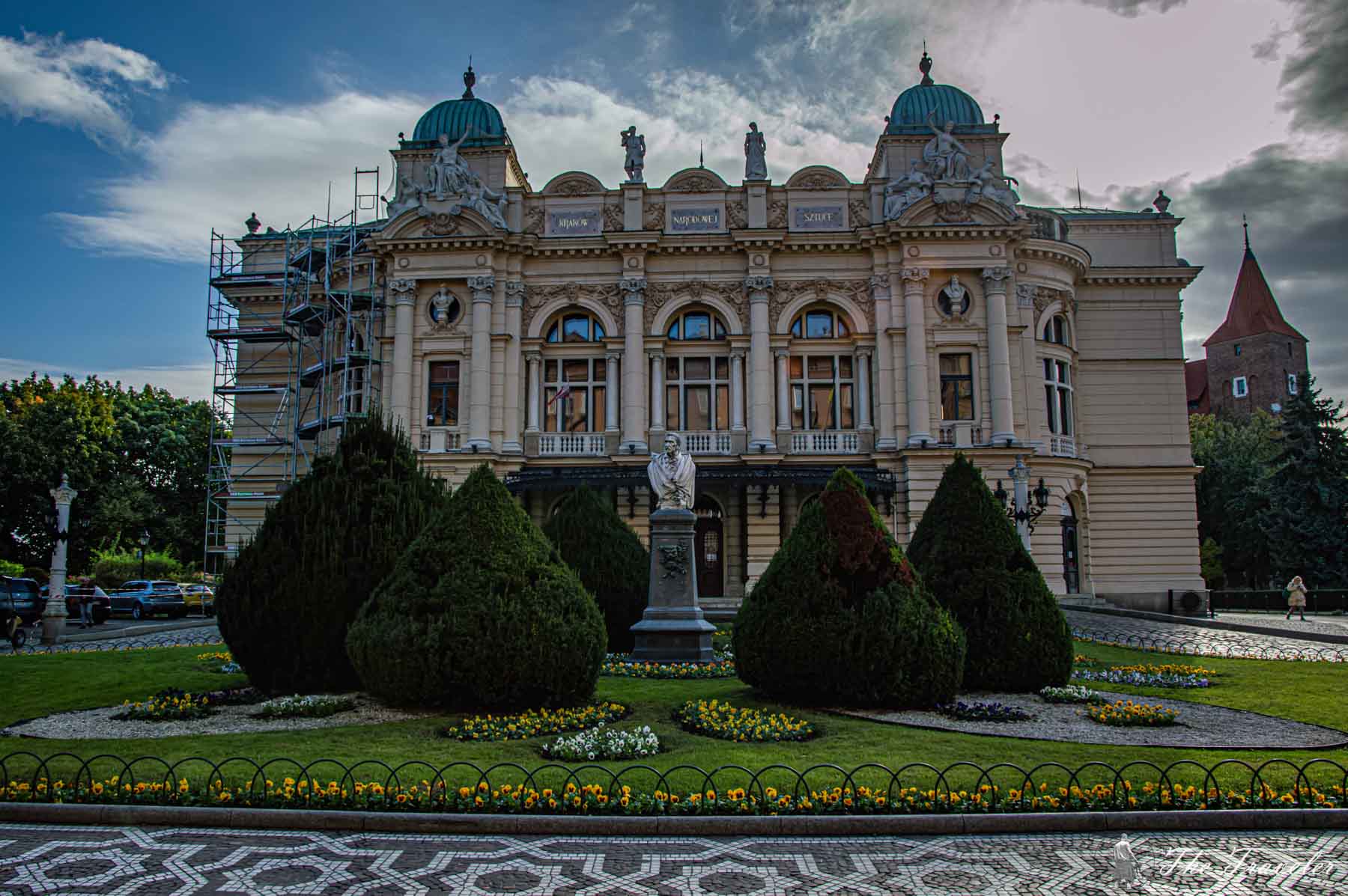
Now we head east to enjoy one of the loveliest buildings in all of Krakow – the Juliusz Słowacki Theatre (Teatr im. Juliusza Słowackiego)! Its construction in the late 19th century, however, was accompanied by quite a few scandals. To make room for its eclectic architecture, a valuable medieval monastery complex was demolished. This enraged the famous painter Jan Matejko to such an extent that, in protest, he returned his title of honorary citizen of Krakow and forbade his paintings from being exhibited in the city!
But in the end, the theatre quickly became a symbol of modern Krakow. An interesting fact is that it was the first building in the city designed entirely with electric lighting, and it is also considered the birthplace of Polish cinema. They say its interior is like a work of art, but the biggest attraction inside is the massive crystal chandelier, spanning a full 3.5 meters in diameter. Once every two to three years, it is solemnly lowered into the auditorium in front of an audience for cleaning and a thorough technical inspection of its more than 120 light bulbs.
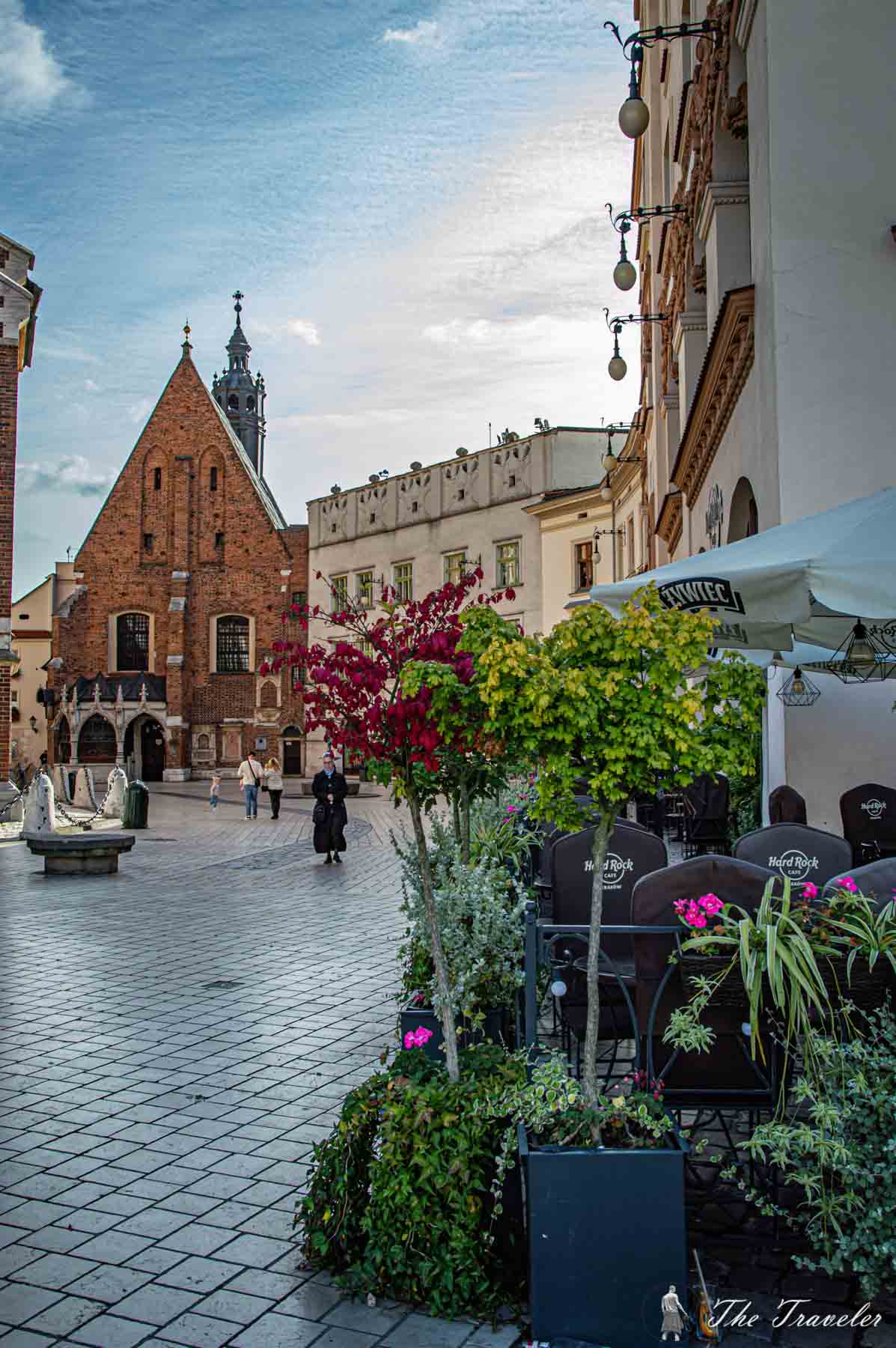
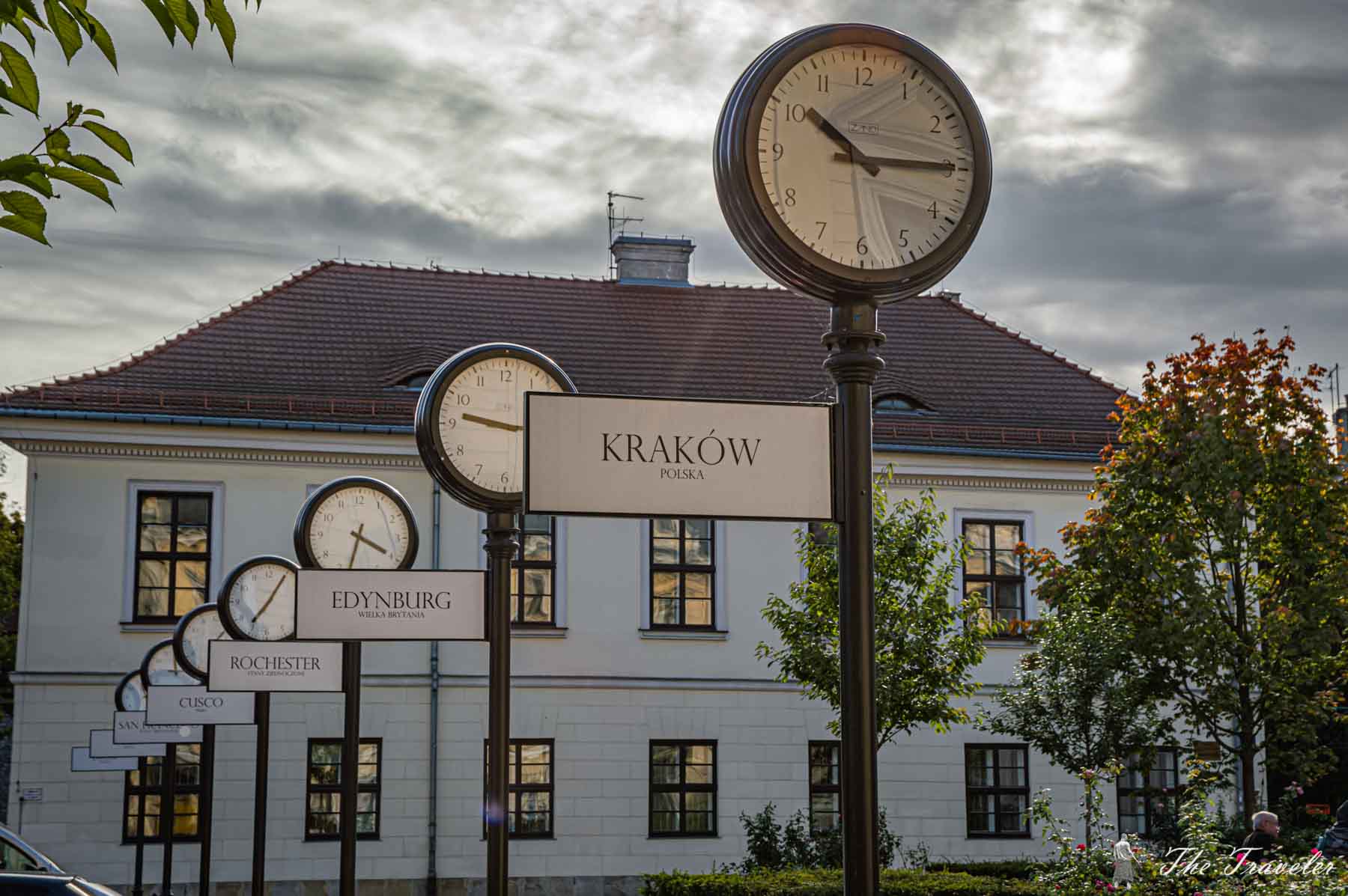
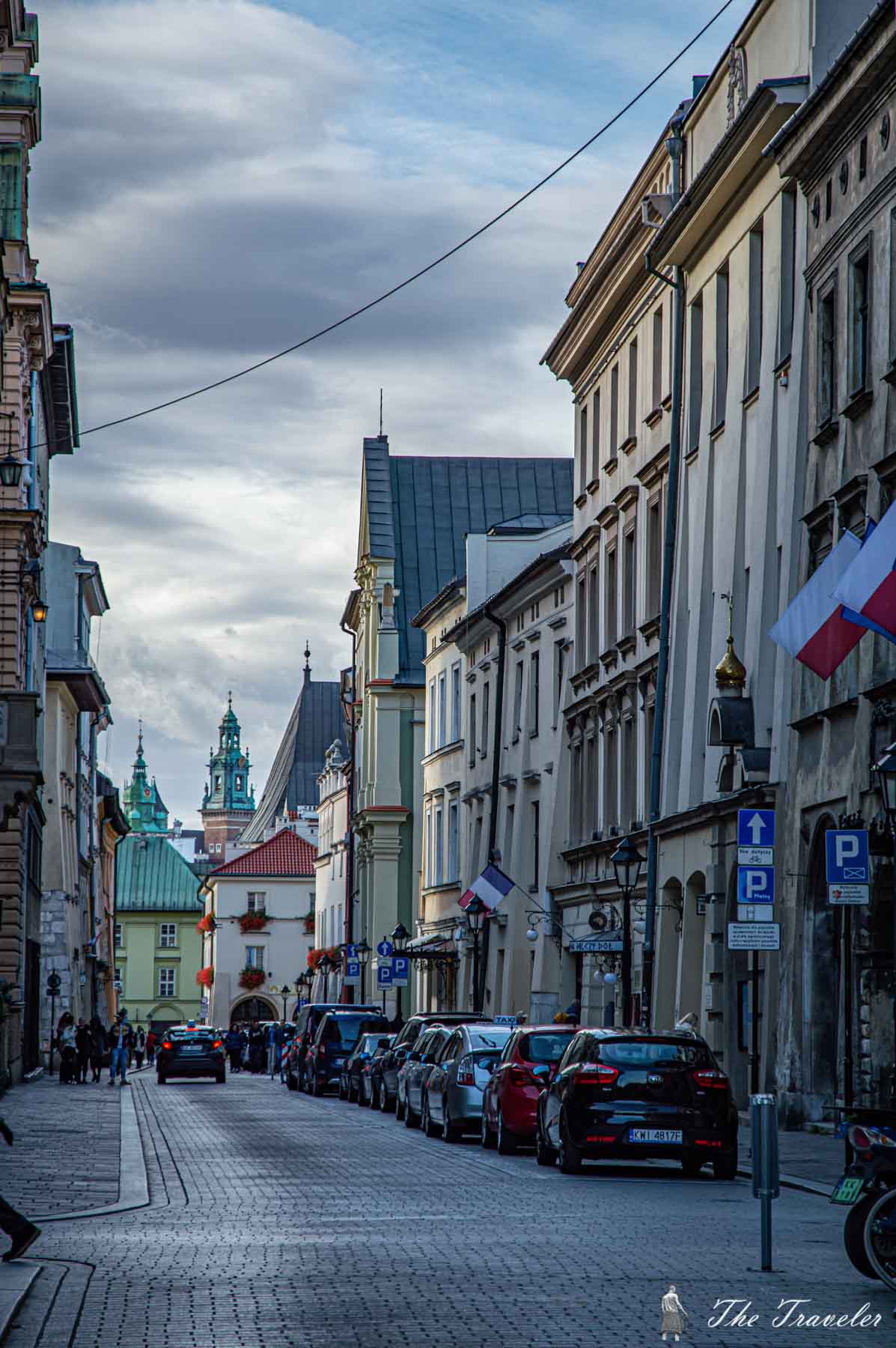
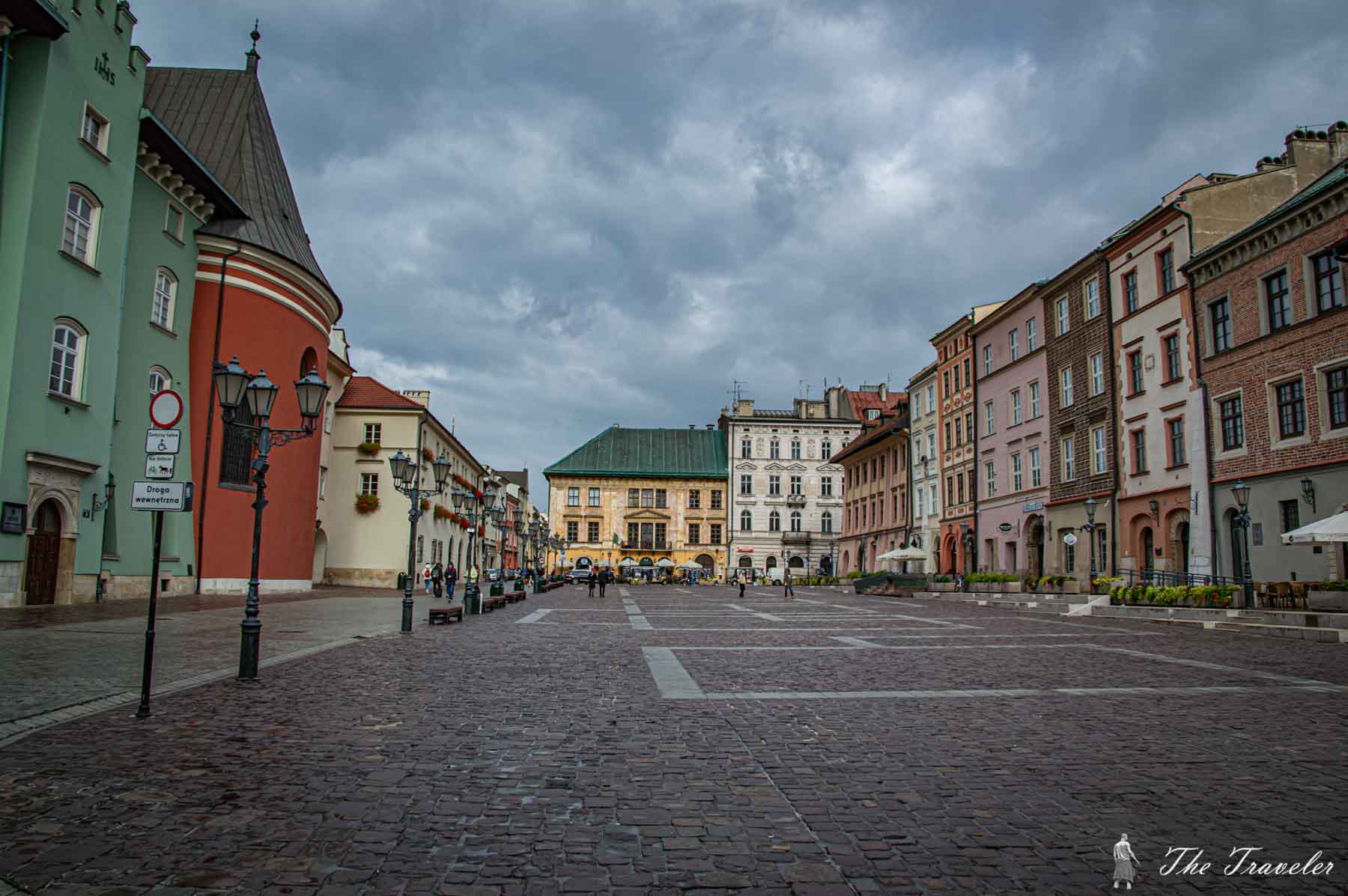
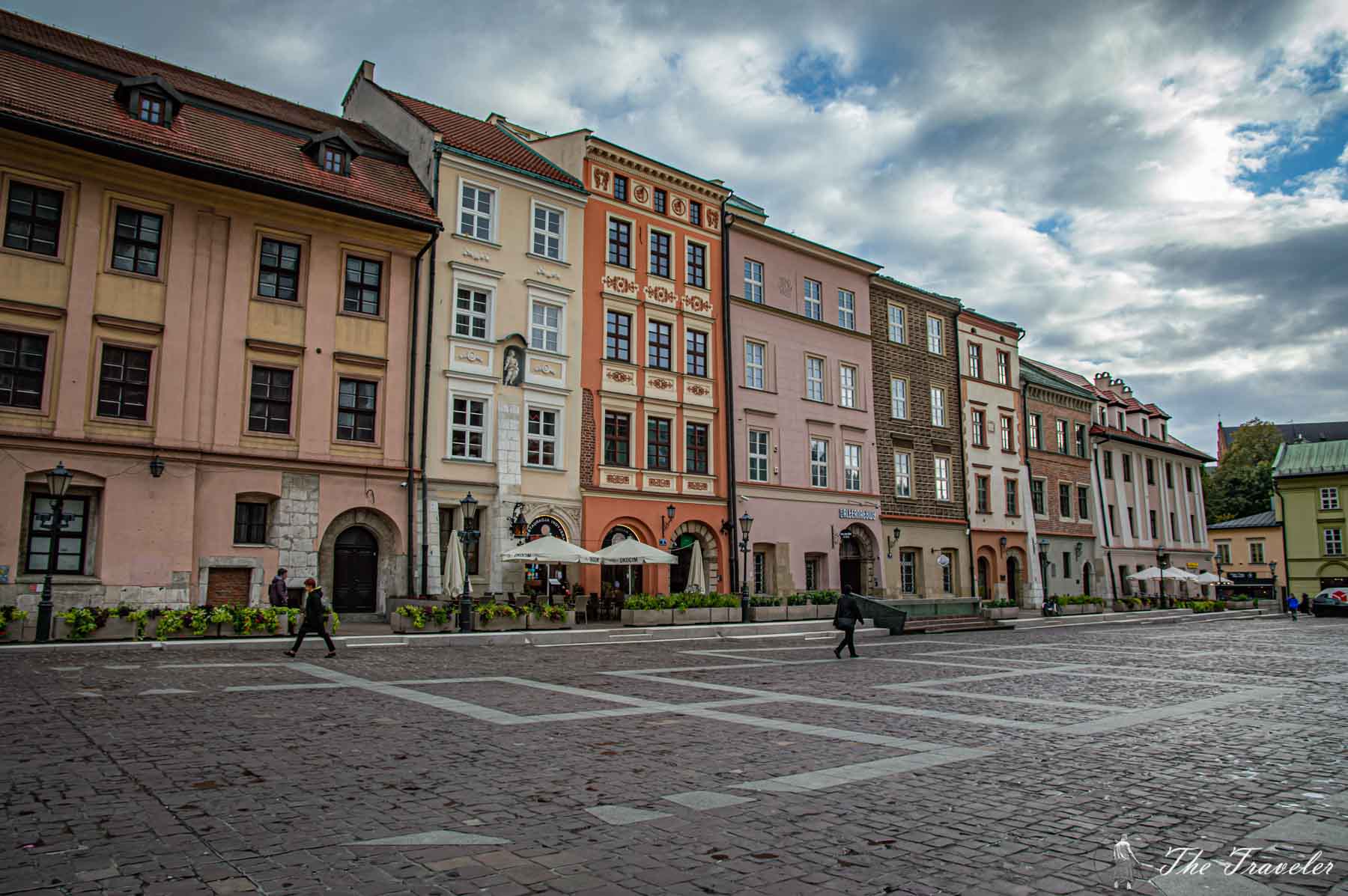
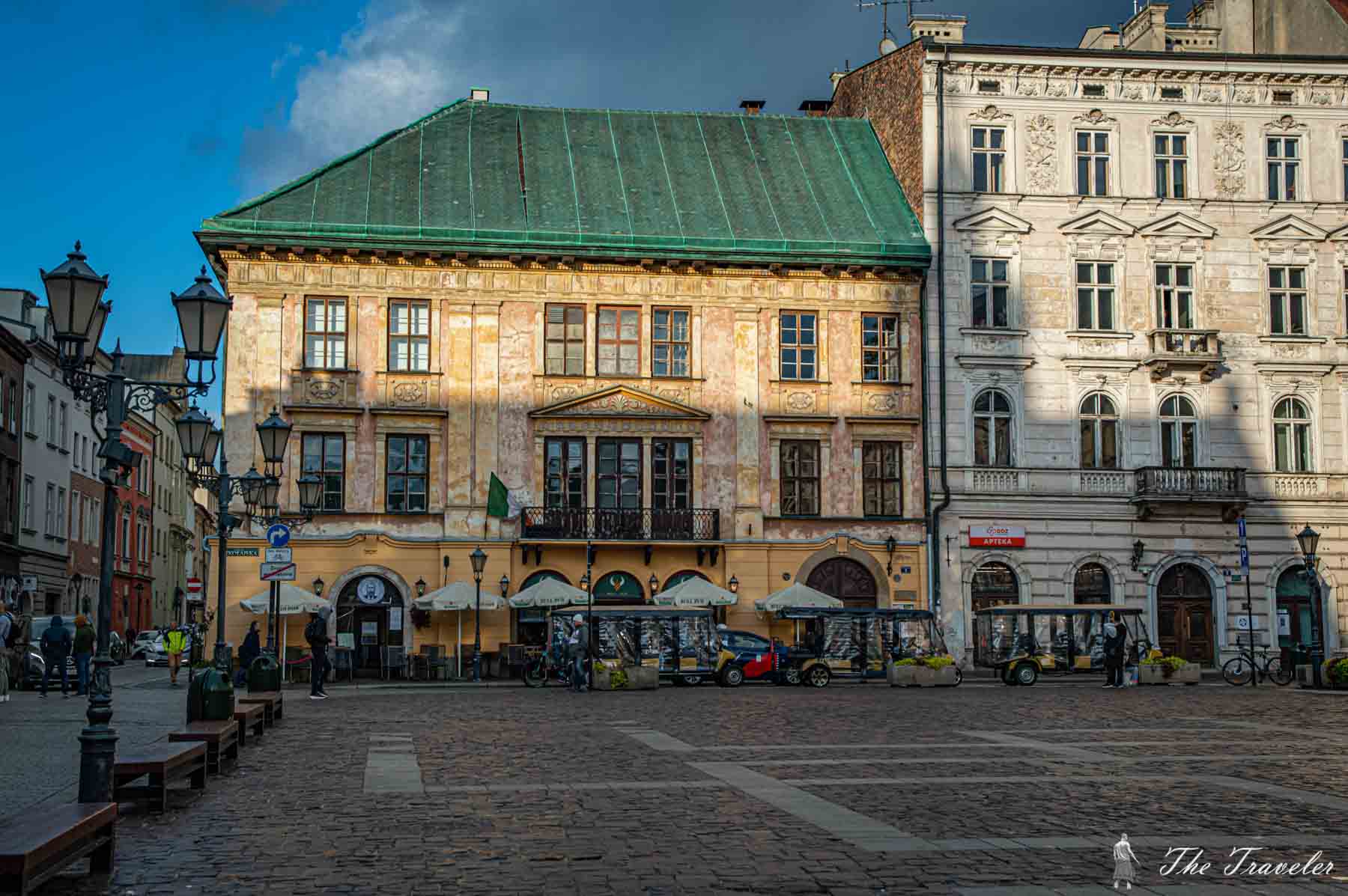
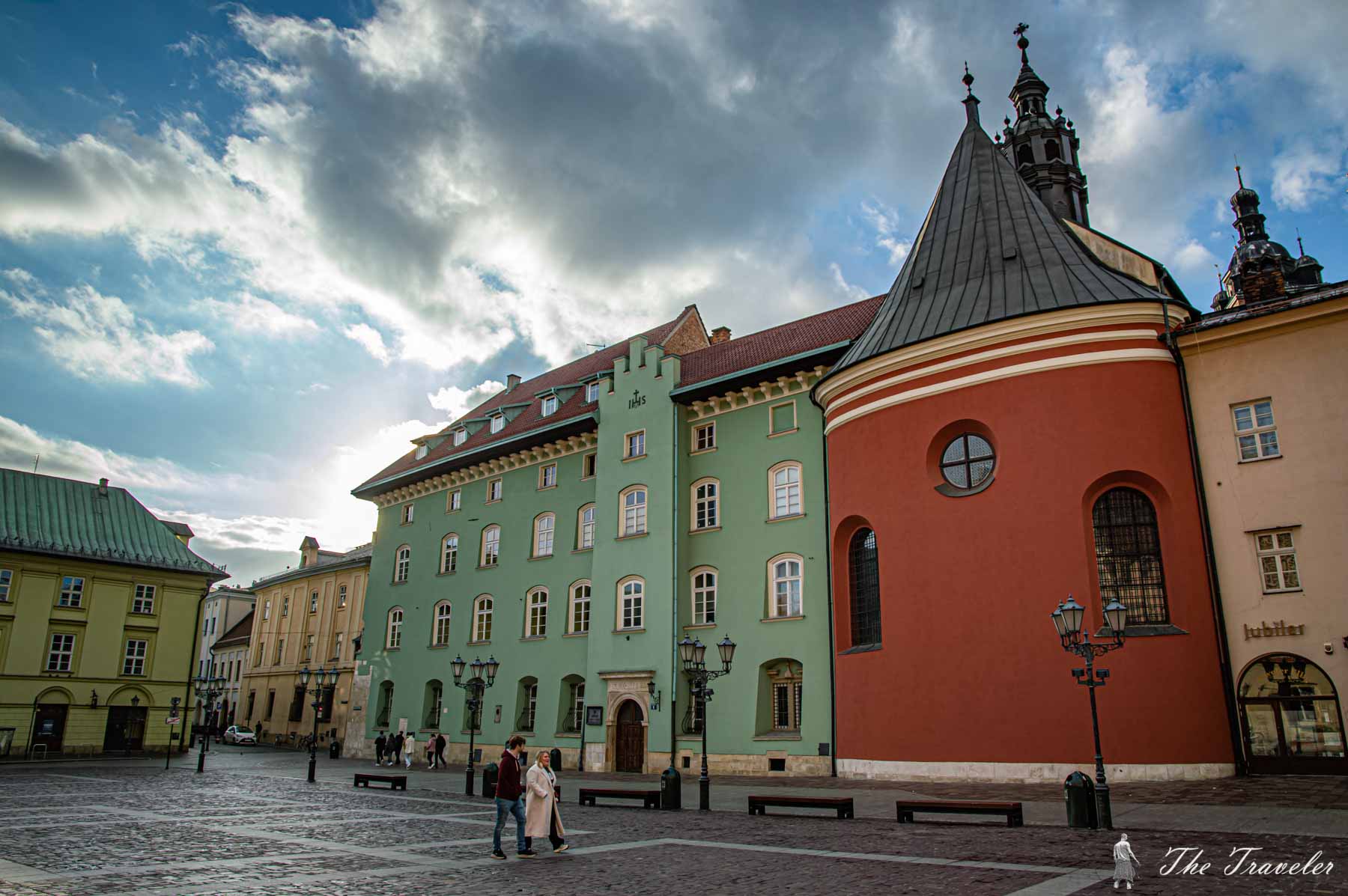
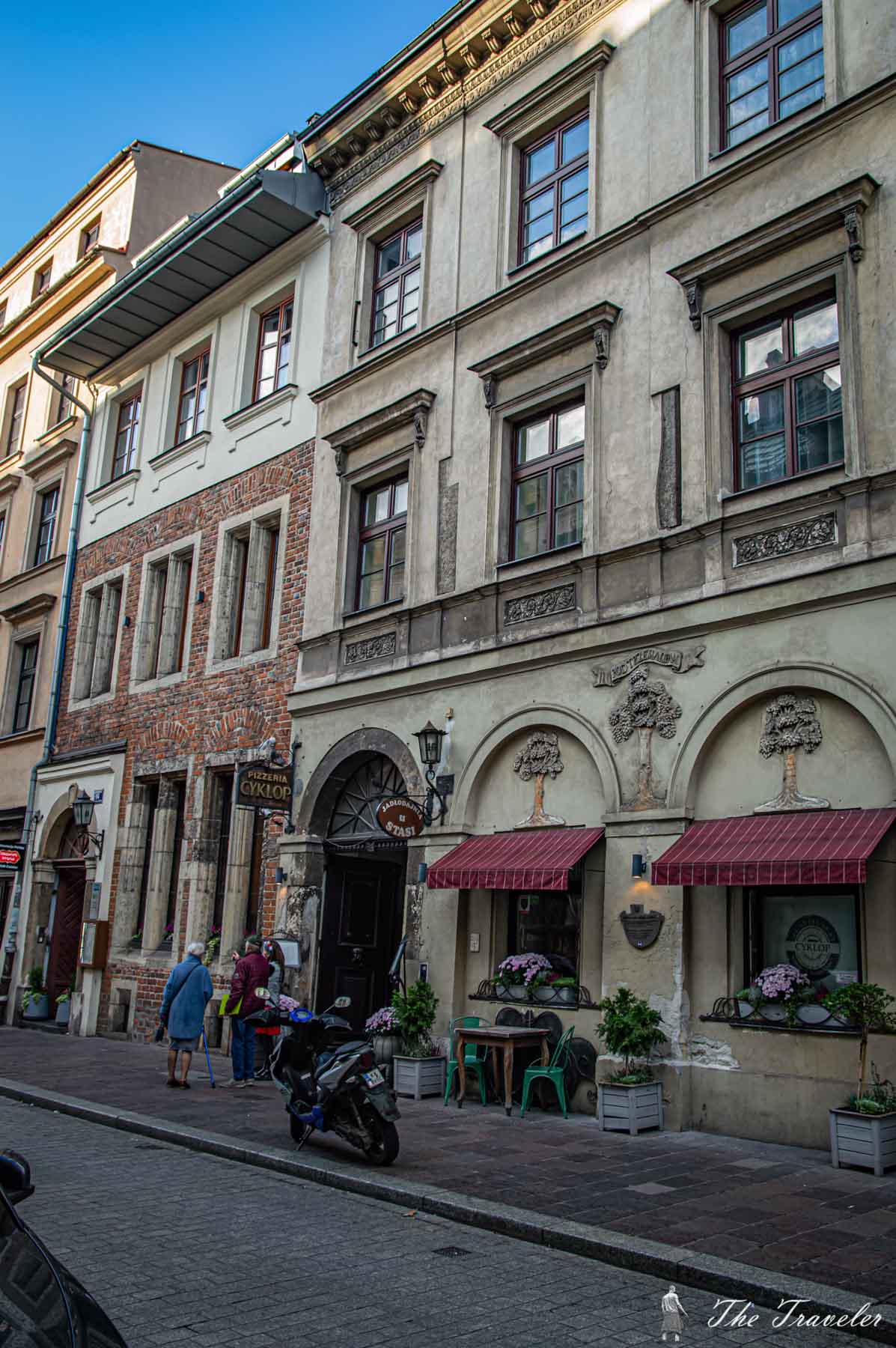
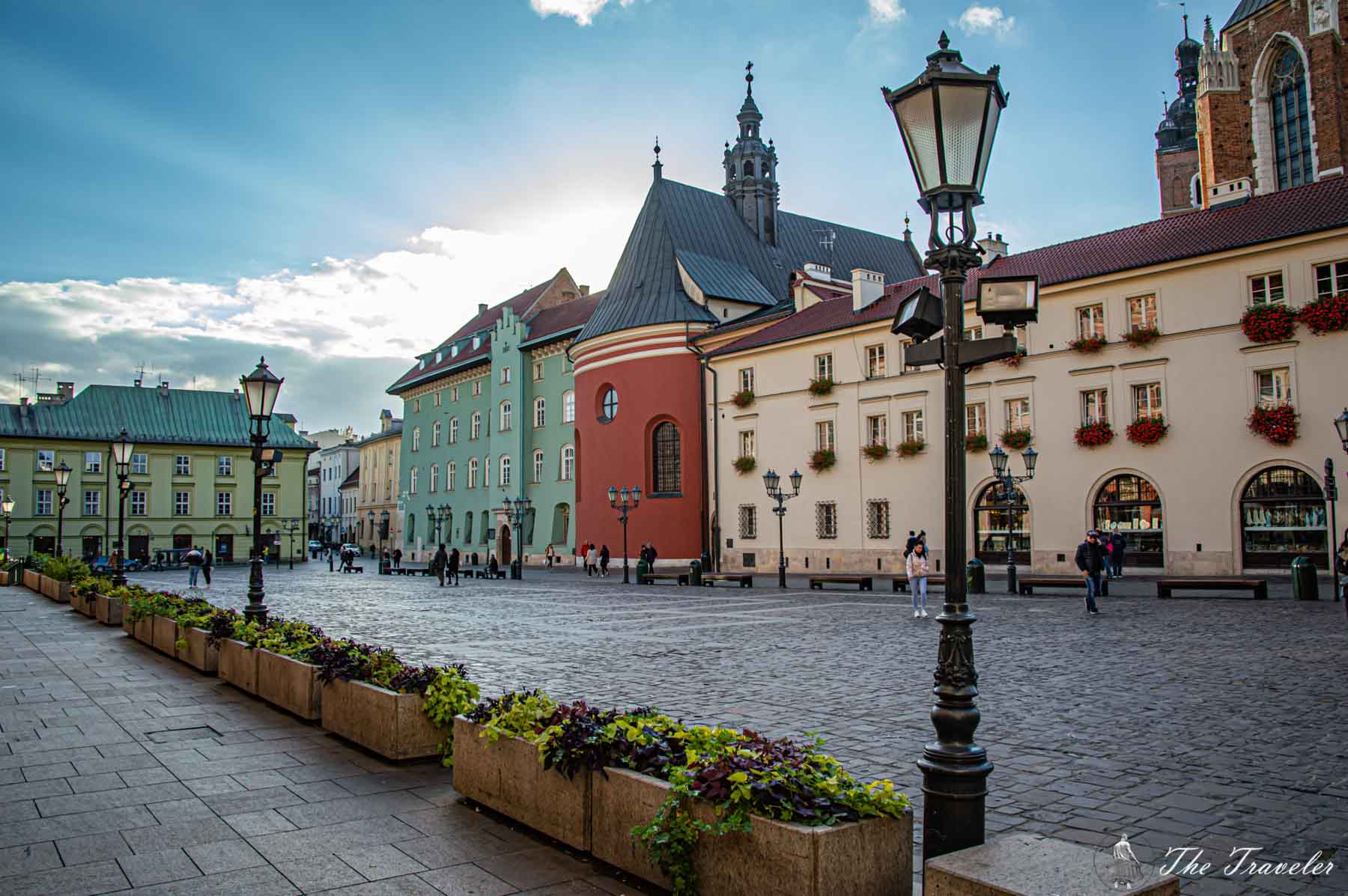
We continue a few meters further down the same street and arrive at the Small Square (Mały Rynek). Today it is a quiet and tidy place, but in the Middle Ages it served as a secondary market square where mainly meat and fish were traded, and rather distinct smells filled the air… Later, it took on a more artistic character and became a hub for vintage goods and antiques, before a tram line to the Main Square was laid through it in the 20th century.
It is surrounded by some of the most dazzling and colorful townhouses in Krakow! Pay attention to the house at No. 6 (Kamienica Szoberowska) – this is where the very first issue of “Merkuriusz Polski”, the oldest Polish newspaper, was printed in 1661!
Grodzka Street and its surroundings
What remains is to explore the south, where we step onto Grodzka Street – the second key stretch of the ancient Royal Route. It is one of the oldest and busiest streets in the city, along which the triumphal processions of Polish monarchs once passed on their way to Wawel Hill. Today, besides being a pleasant mix of architectural styles, it is bursting with life! Street music echoes from everywhere, crowds of young people and tourists pop into cafés and shops, and the flow of people between the hill and the Main Square simply never stops!
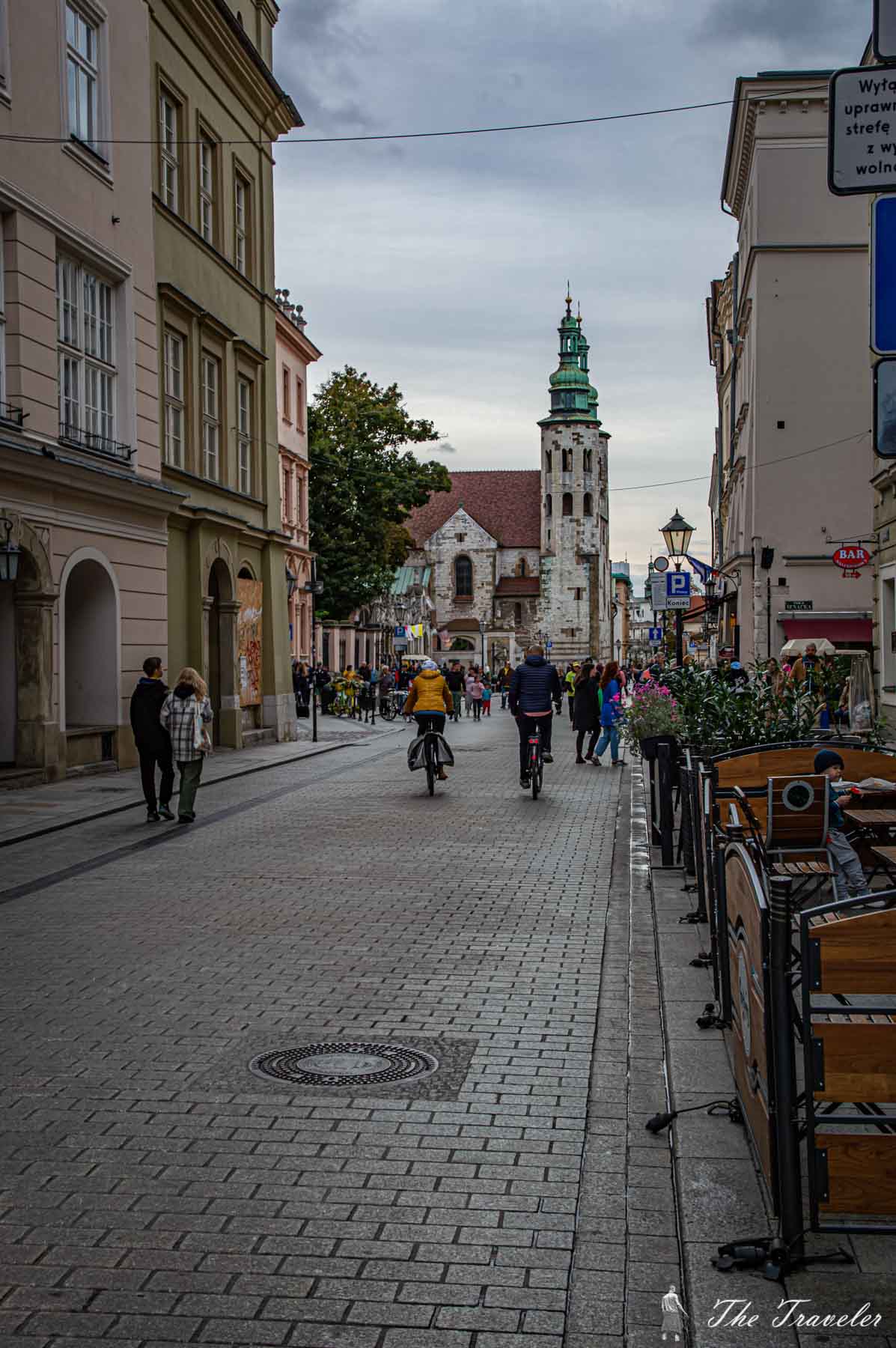
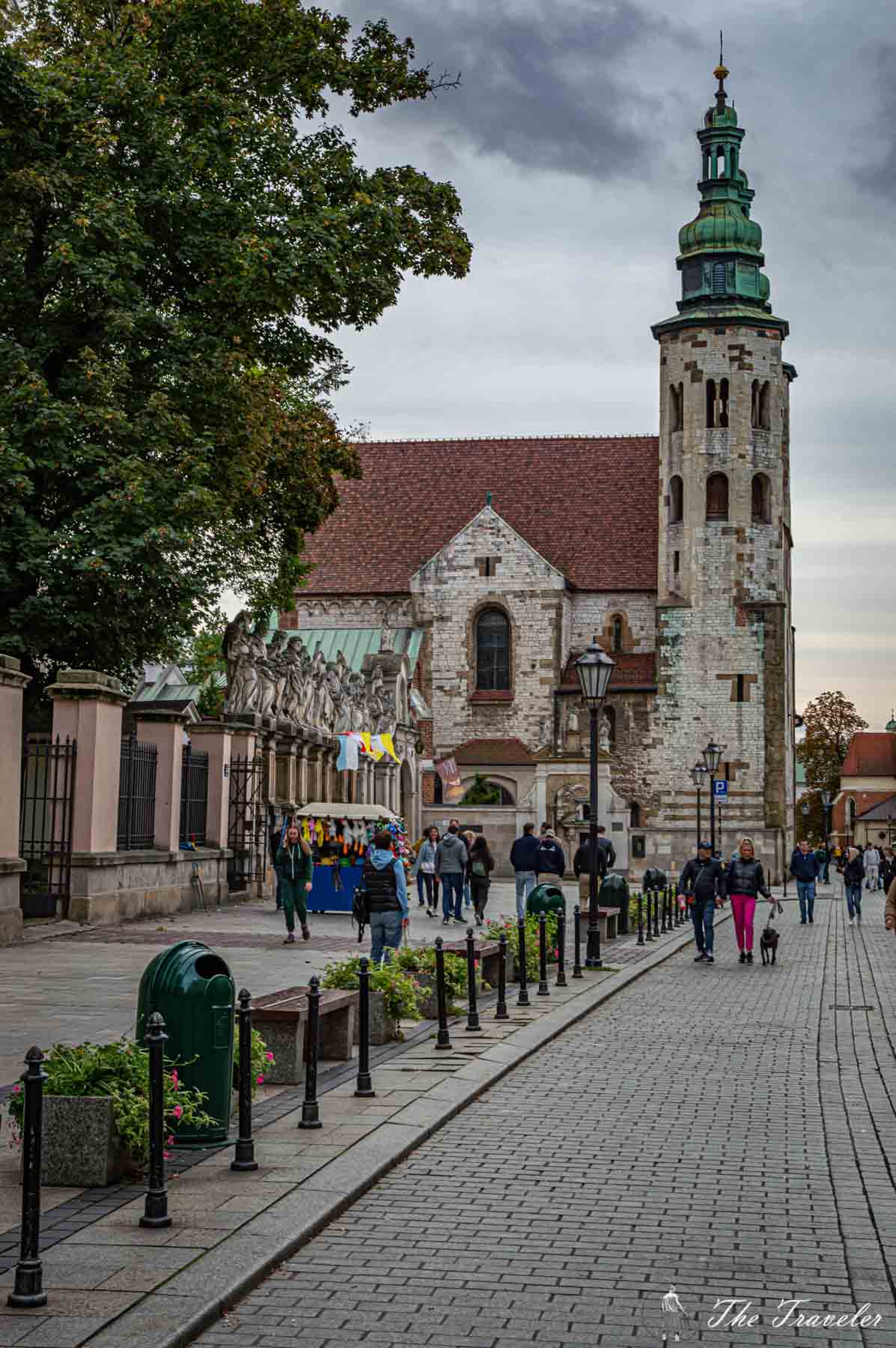
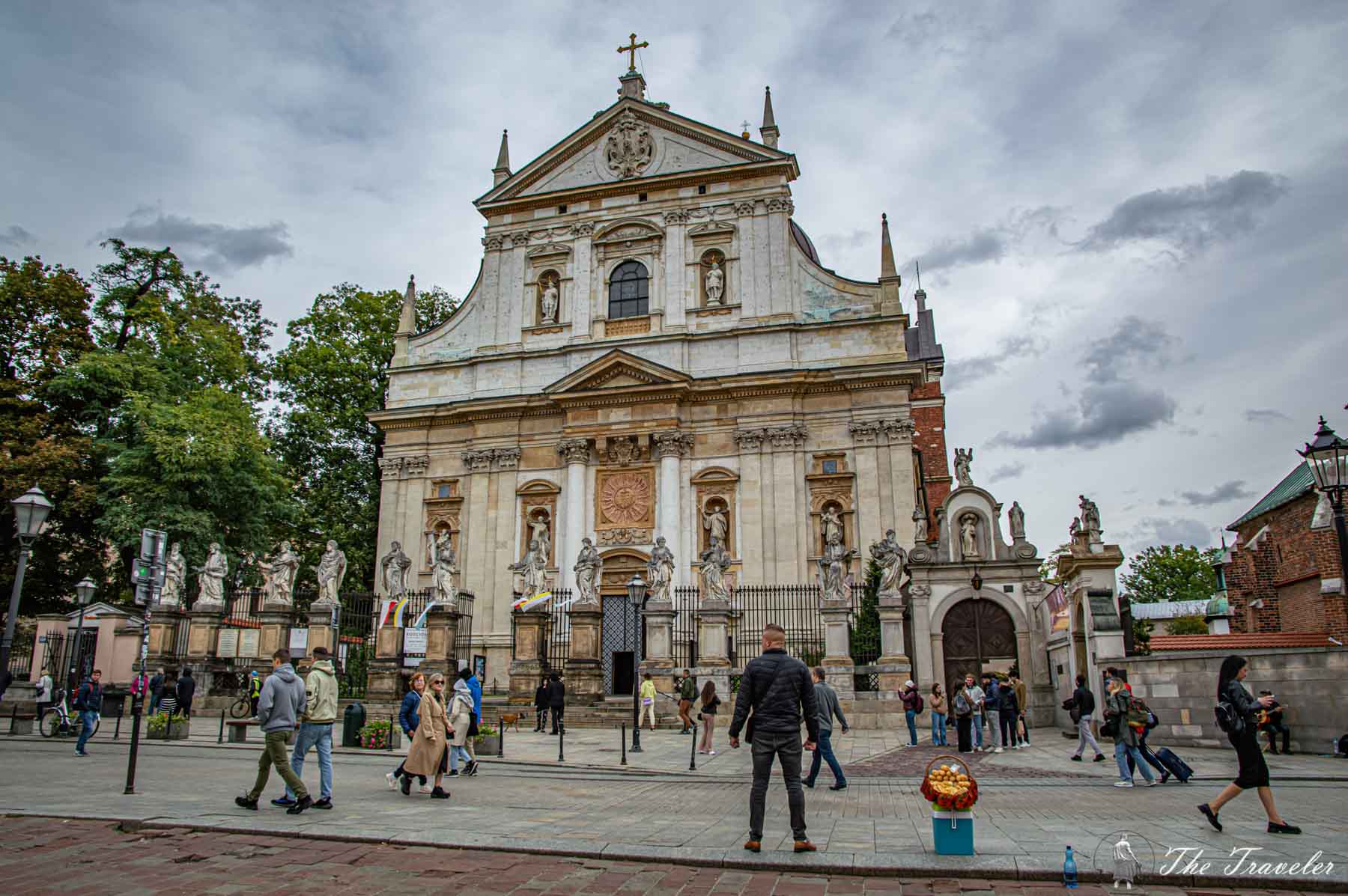
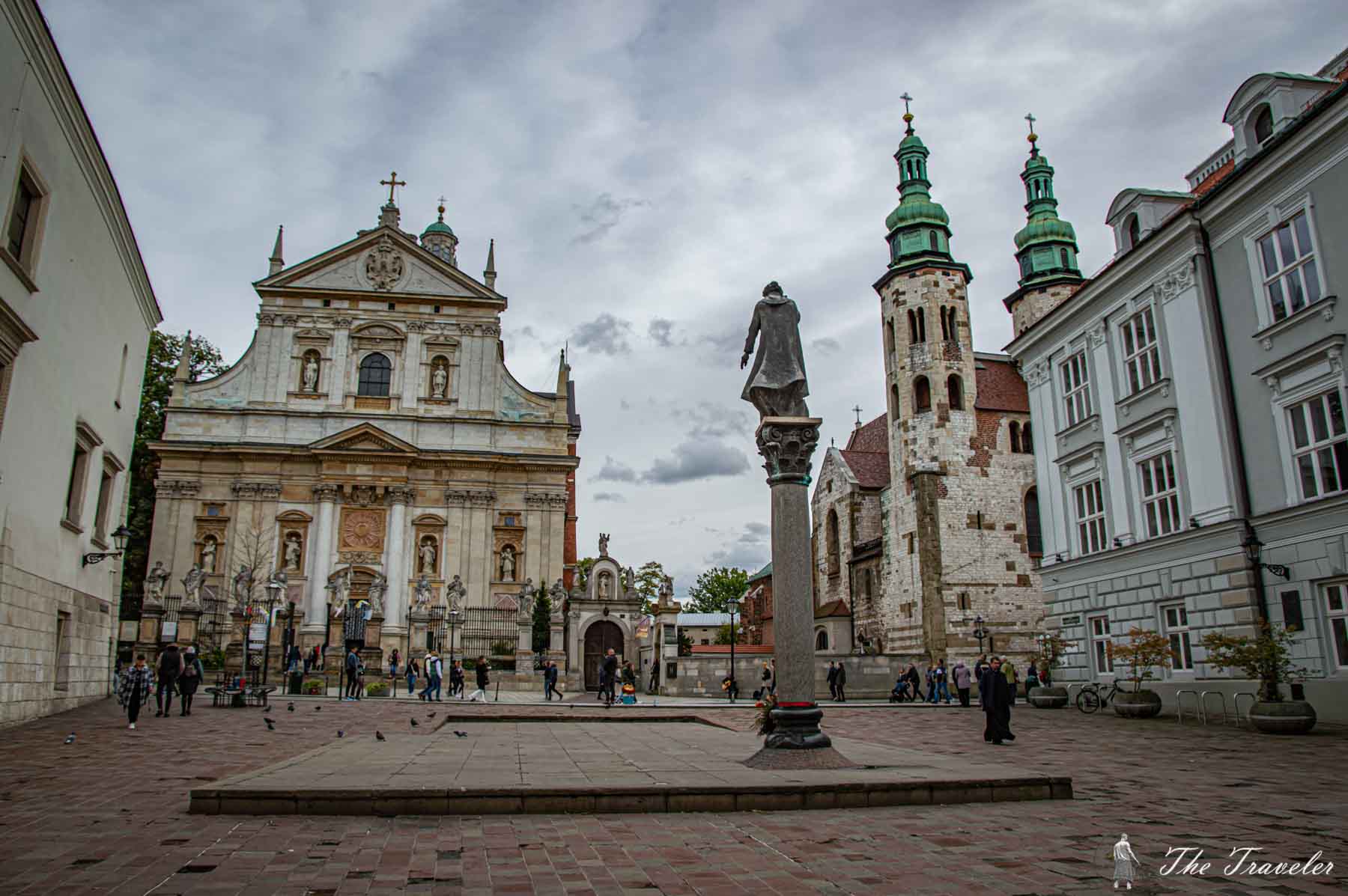
The most remarkable façade belongs to the Baroque Church of Saints Peter and Paul (Kościół Świętych Apostołów Piotra i Pawła). It was the first Baroque building in Krakow, constructed for the Jesuit order in the early 17th century and modeled after the famous Il Gesù in Rome. The most iconic detail here is the series of monumental statues of the twelve apostles lined up along the stone fence in front of the entrance. Locals like to joke that the church was so expensive to build that there was no money left for the interior… and because of its modest size, even the apostles had to stay outside!
The statues face the small St. Mary Magdalene Square (Plac św. Marii Magdaleny), named after a medieval church that once stood there. In fact, you can easily spot where it used to be by the outlines on the pavement. It’s a wonderful spot for a short break, allowing you to take in the full façades of both churches across the way – the aforementioned Baroque Church of Saints Peter and Paul and the Romanesque Church of St. Andrew (Kościół św. Andrzeja). High above the passersby stands the Monument to Piotr Skarga (Pomnik Piotra Skargi), honoring the famous Jesuit preacher.
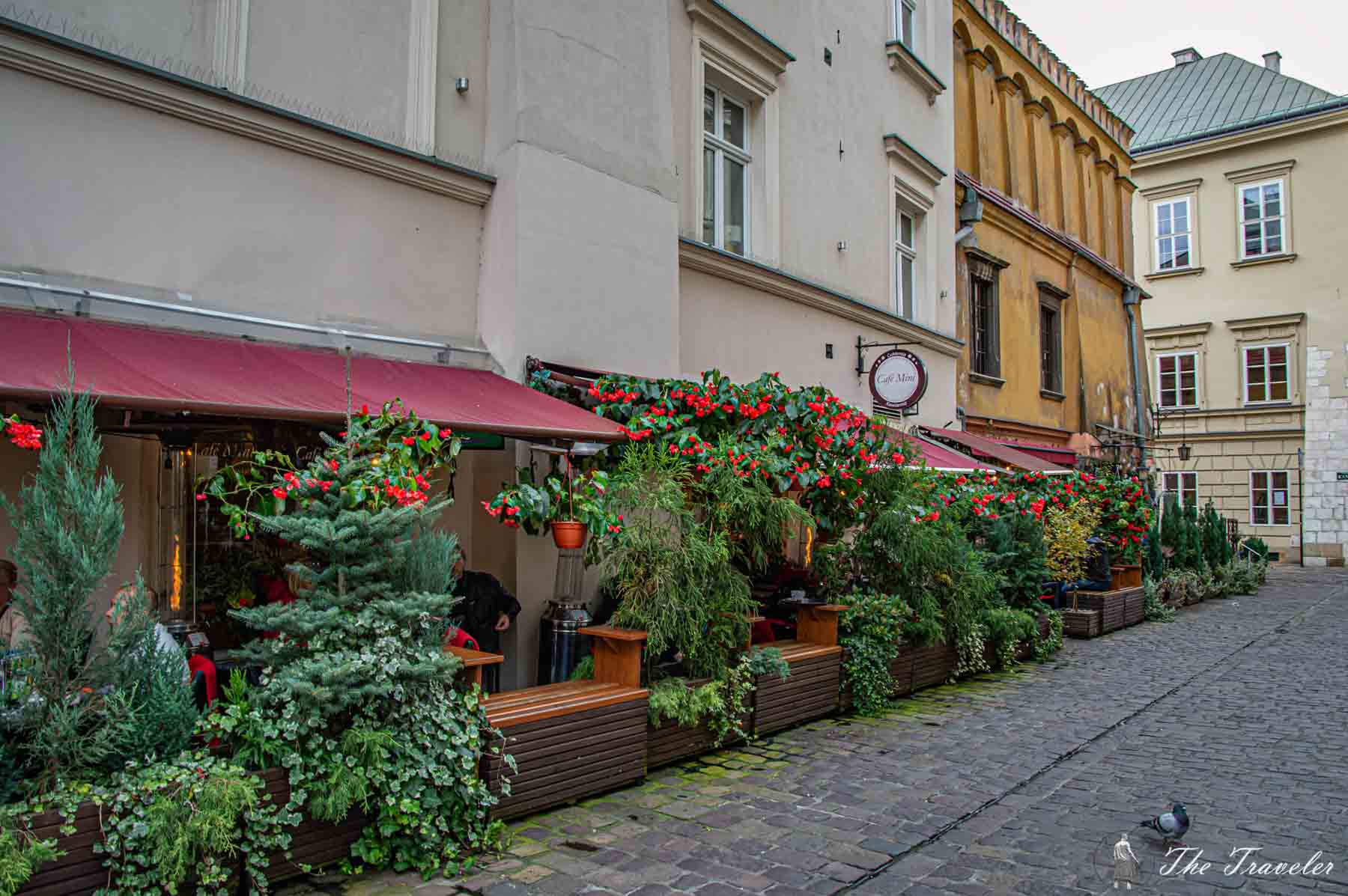
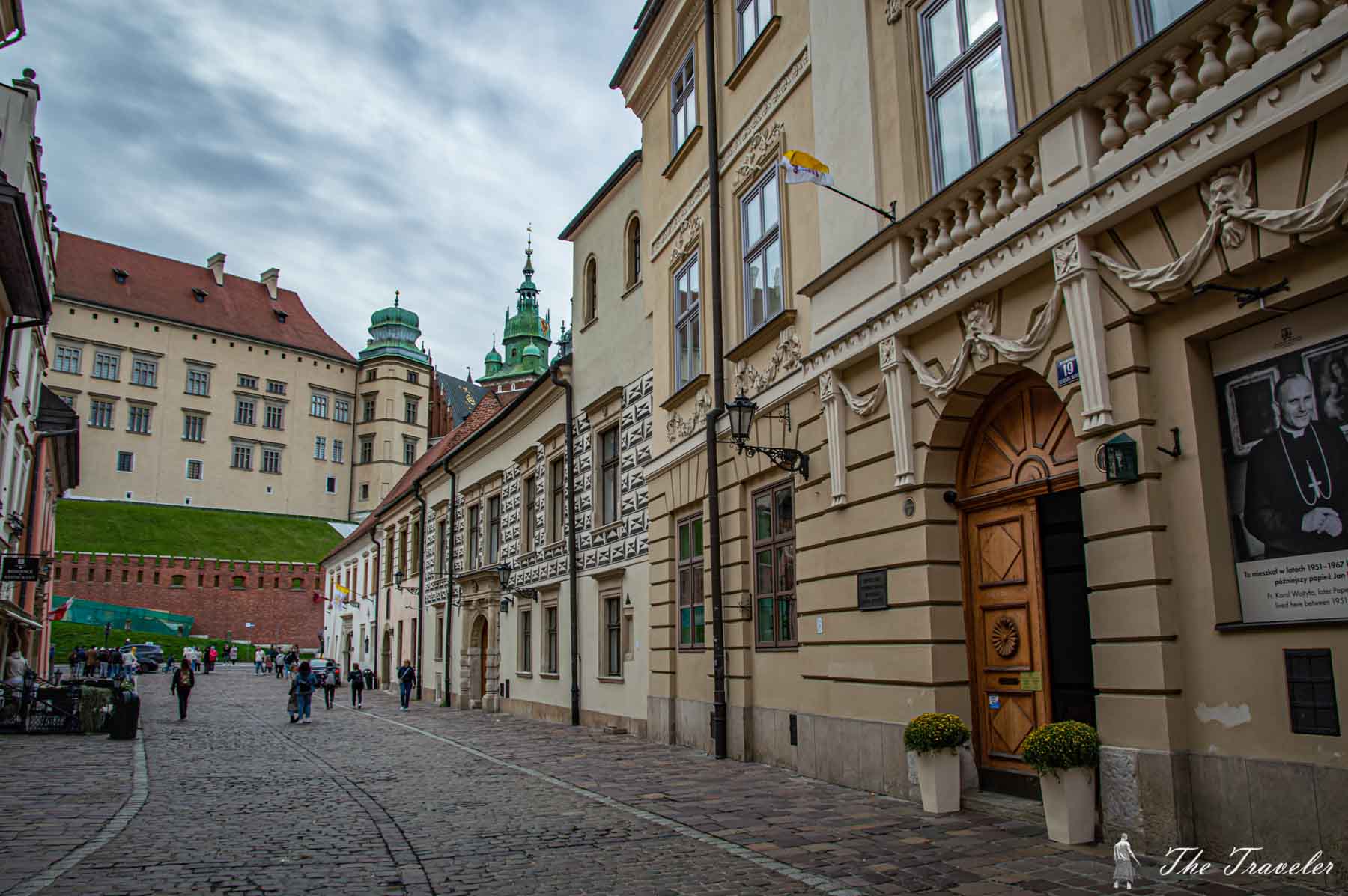
We’ll wrap up this part of Krakow with the small but incredibly picturesque Kanonicza Street! I don’t know if you’ll agree, but this quiet corner is perhaps the most beautiful in the entire center… Its name comes from the Krakow canons (the clergy of Wawel Cathedral), who were granted lifelong housing here upon taking office. Over time, the original Gothic homes acquired arcaded Renaissance courtyards, Baroque portals, or Neoclassical façades. Pay special attention to No. 21 – Kamienica Dziekania. Karol Wojtyła lived here during the 1950s and 1960s, before being elected head of the Roman Catholic Church and becoming known worldwide as Pope John Paul II. Today, the building houses the Archdiocesan Museum, and the street itself leads straight to the foot of Wawel Hill…
Wawel Hill – the royal crown of Krakow
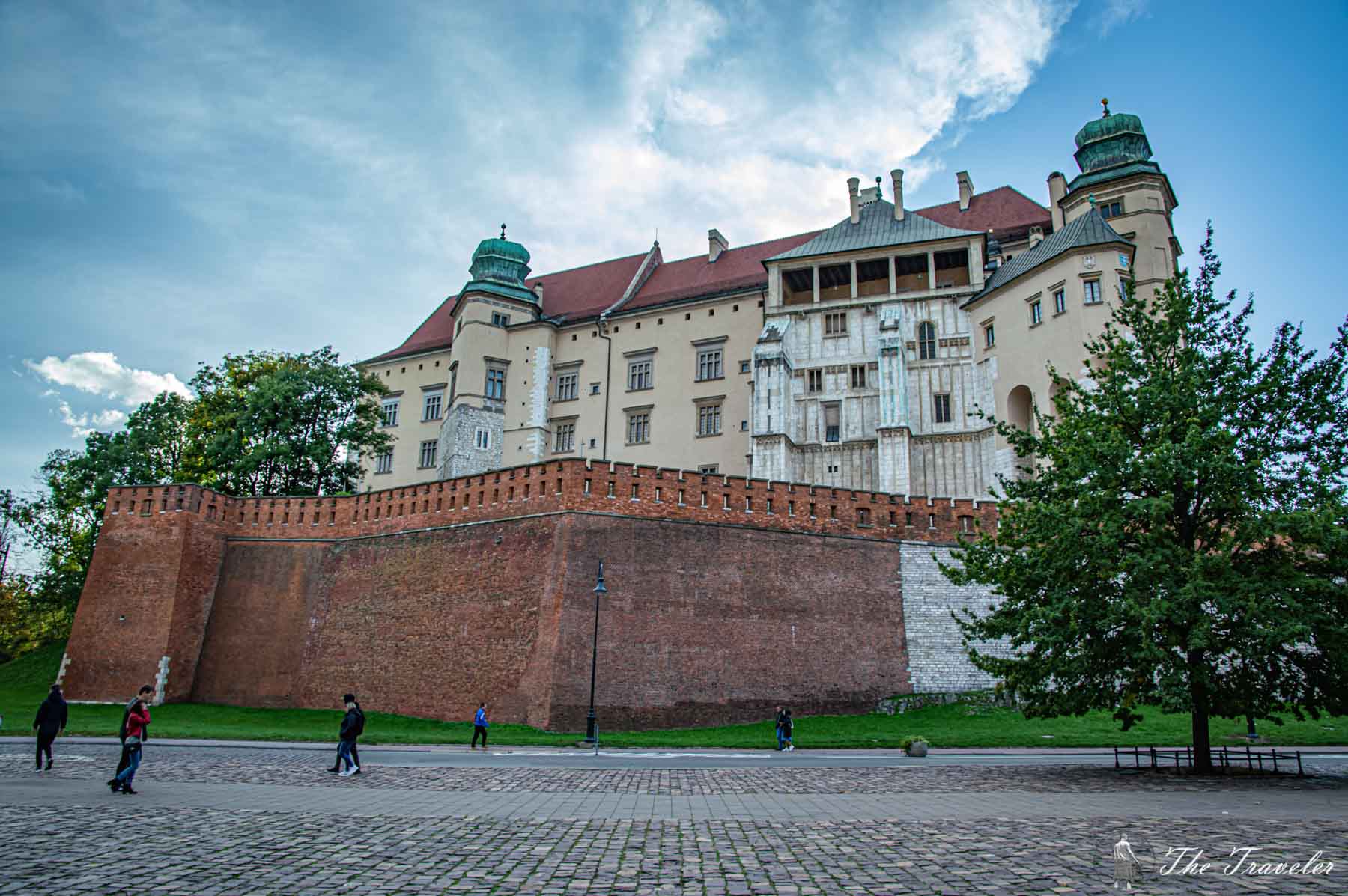
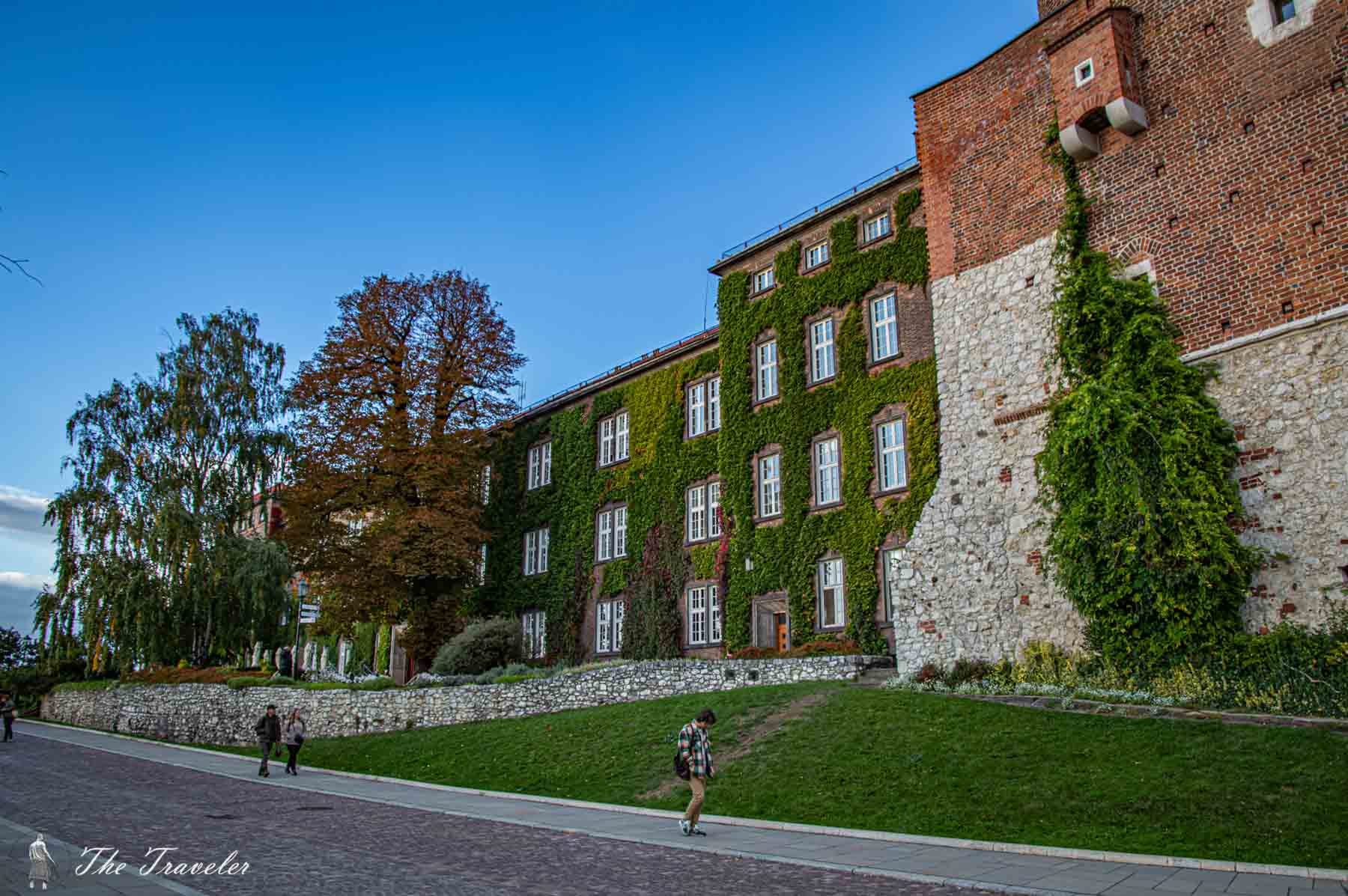
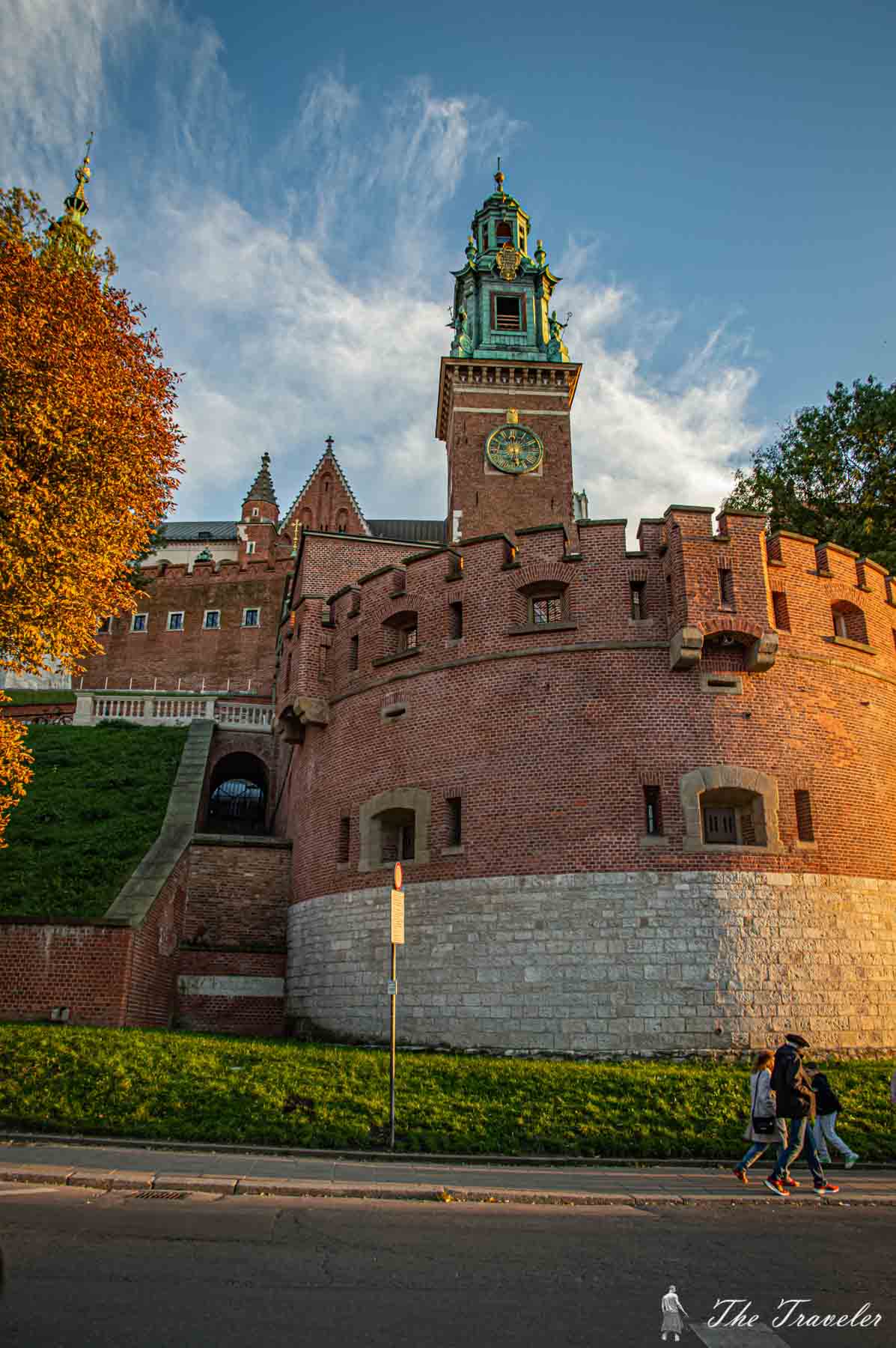
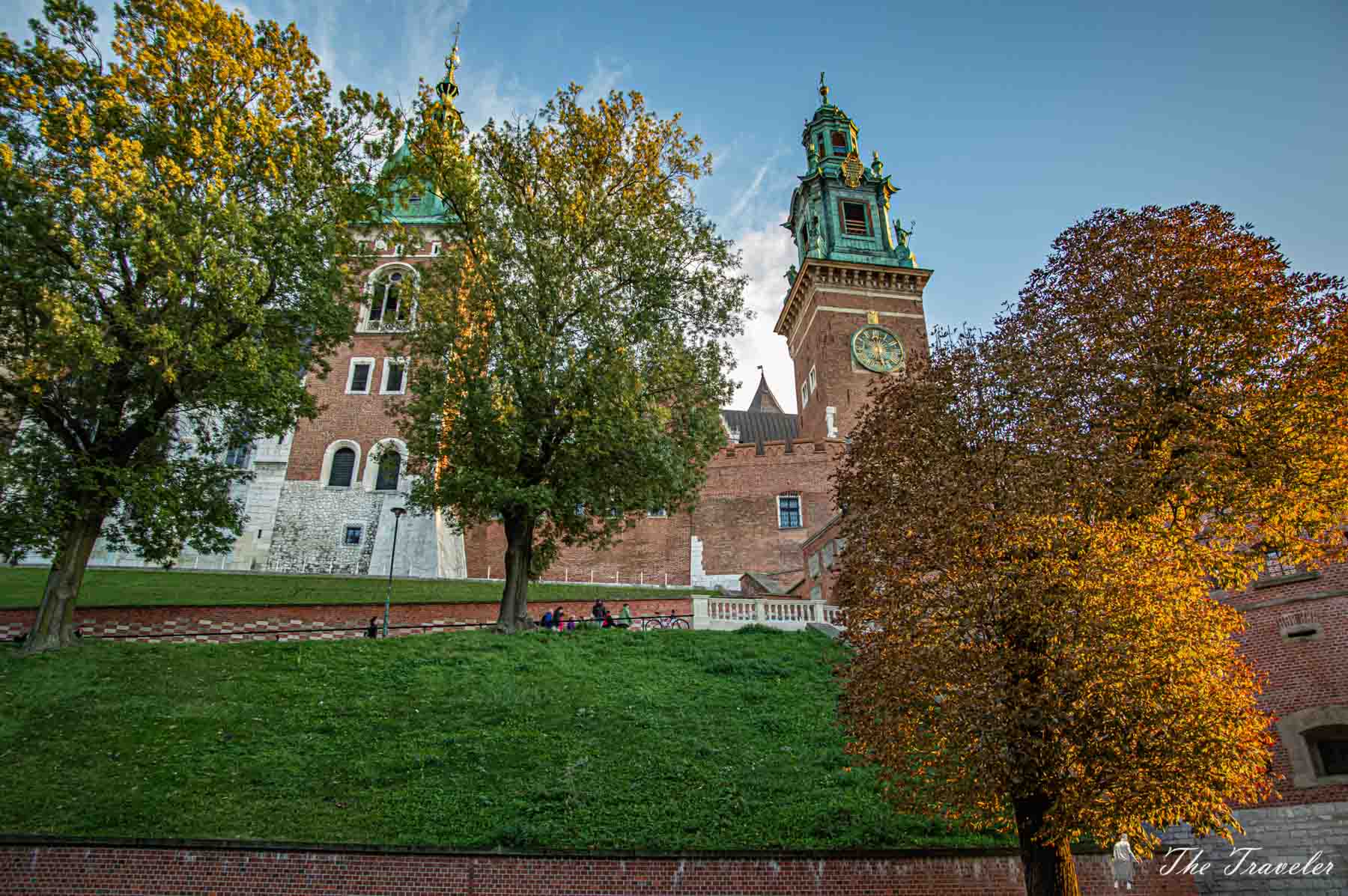
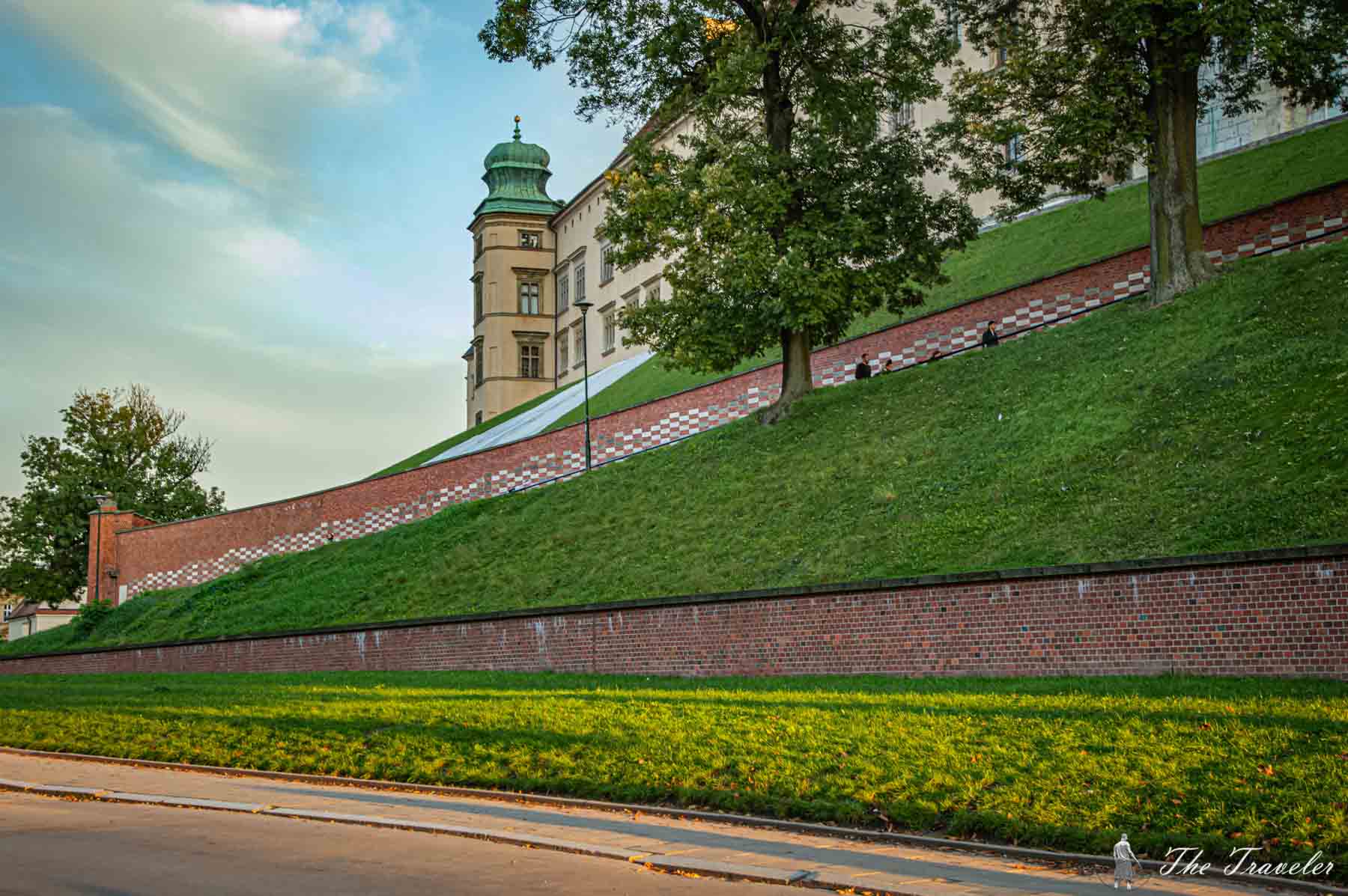
It’s time for the place that for centuries has been a symbol of Poland’s national, cultural, and spiritual identity… Rising about 25 meters above the Vistula River, the limestone Wawel Hill gathers within itself all the grandeur of the Polish monarchy and preserves the memory of the times when Krakow was the glittering capital of the kingdom!
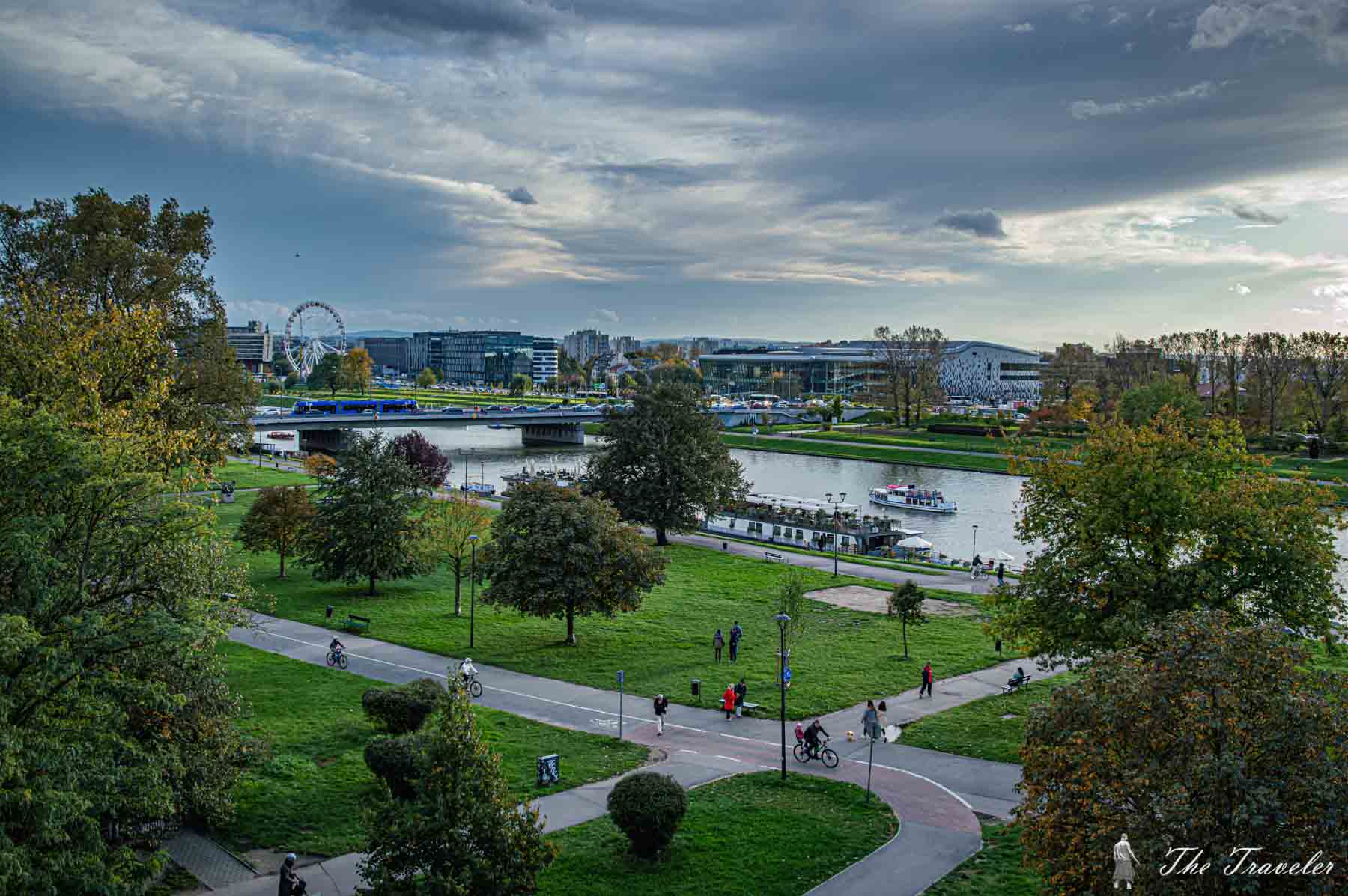
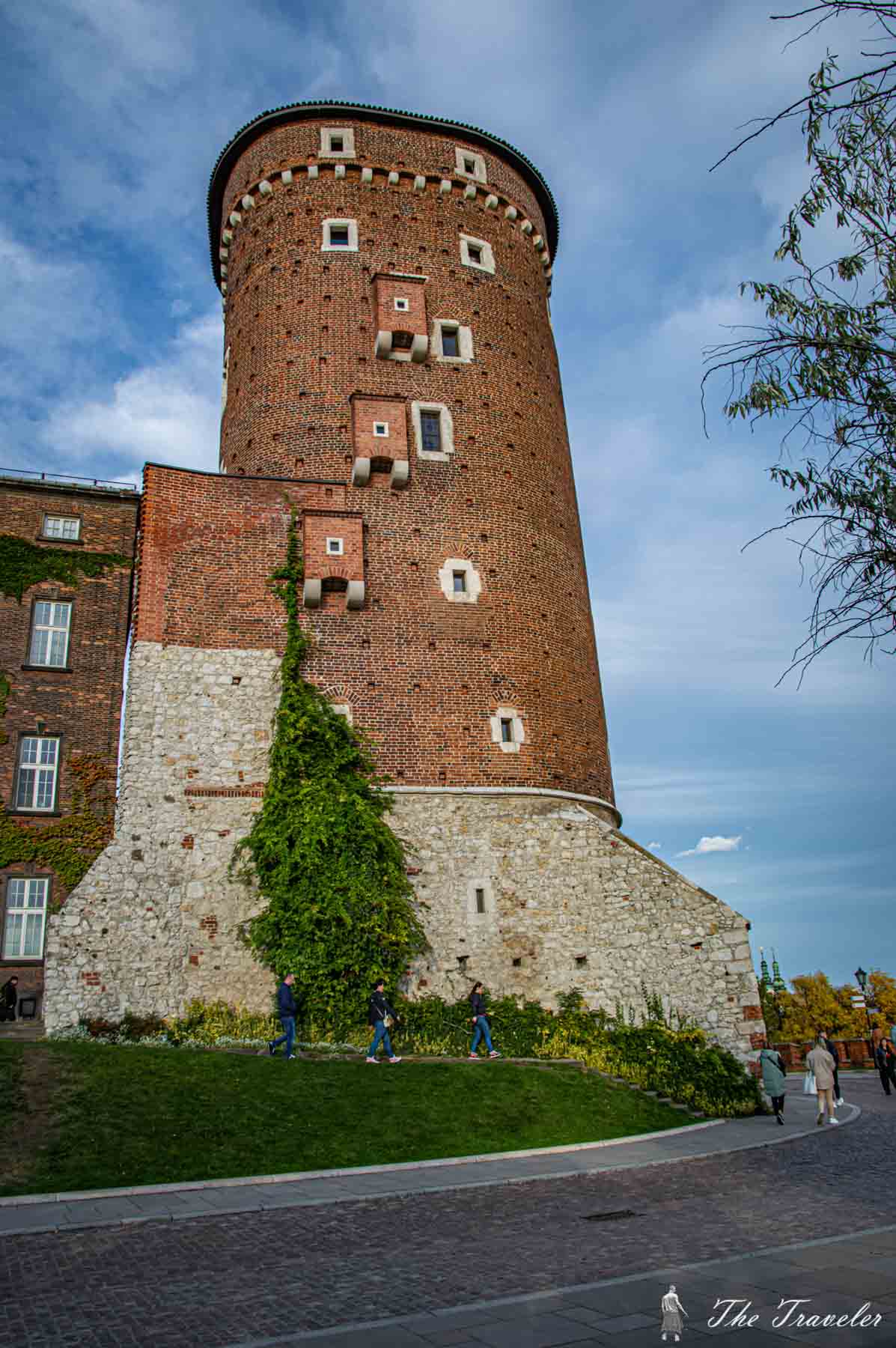
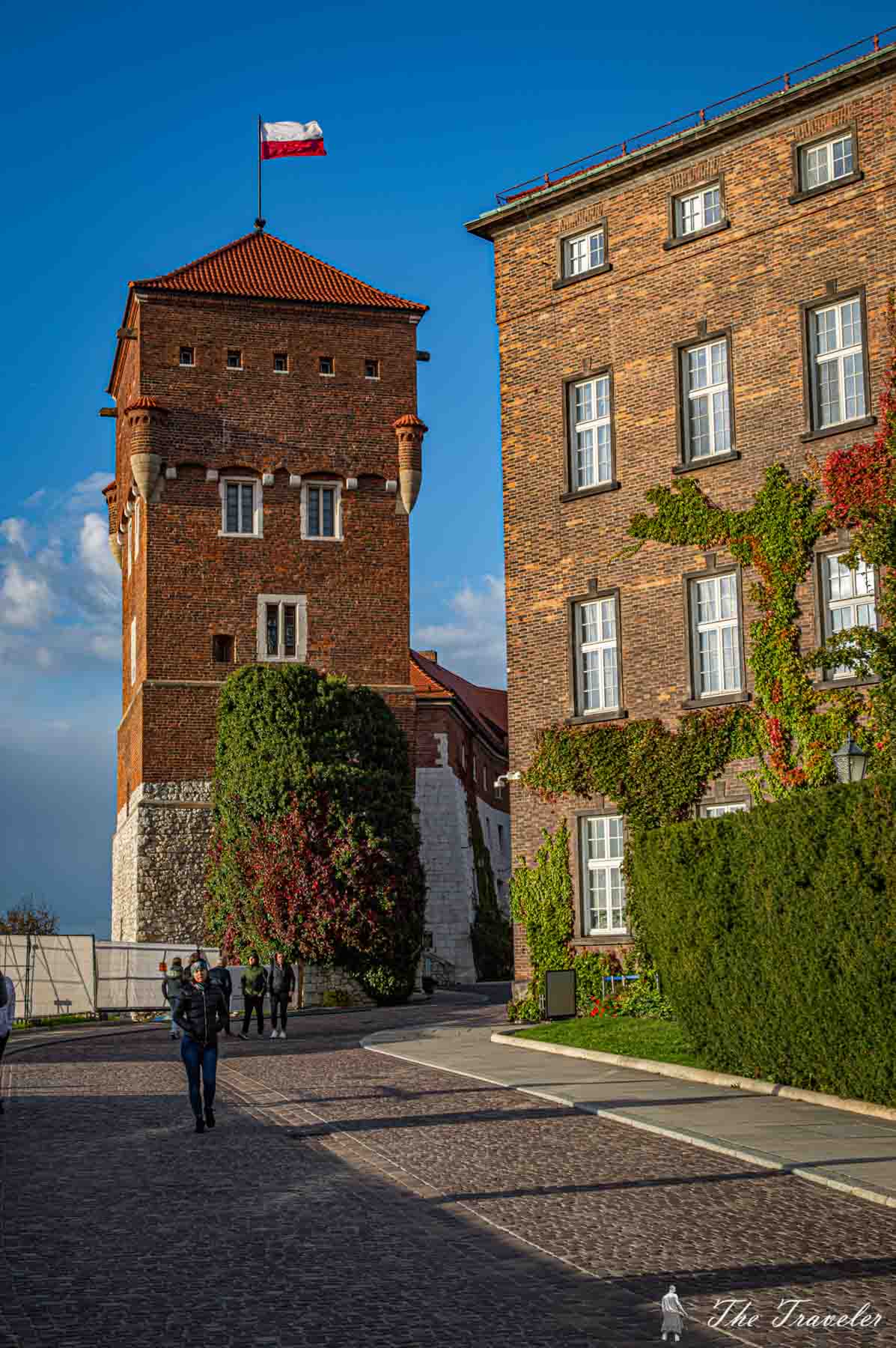
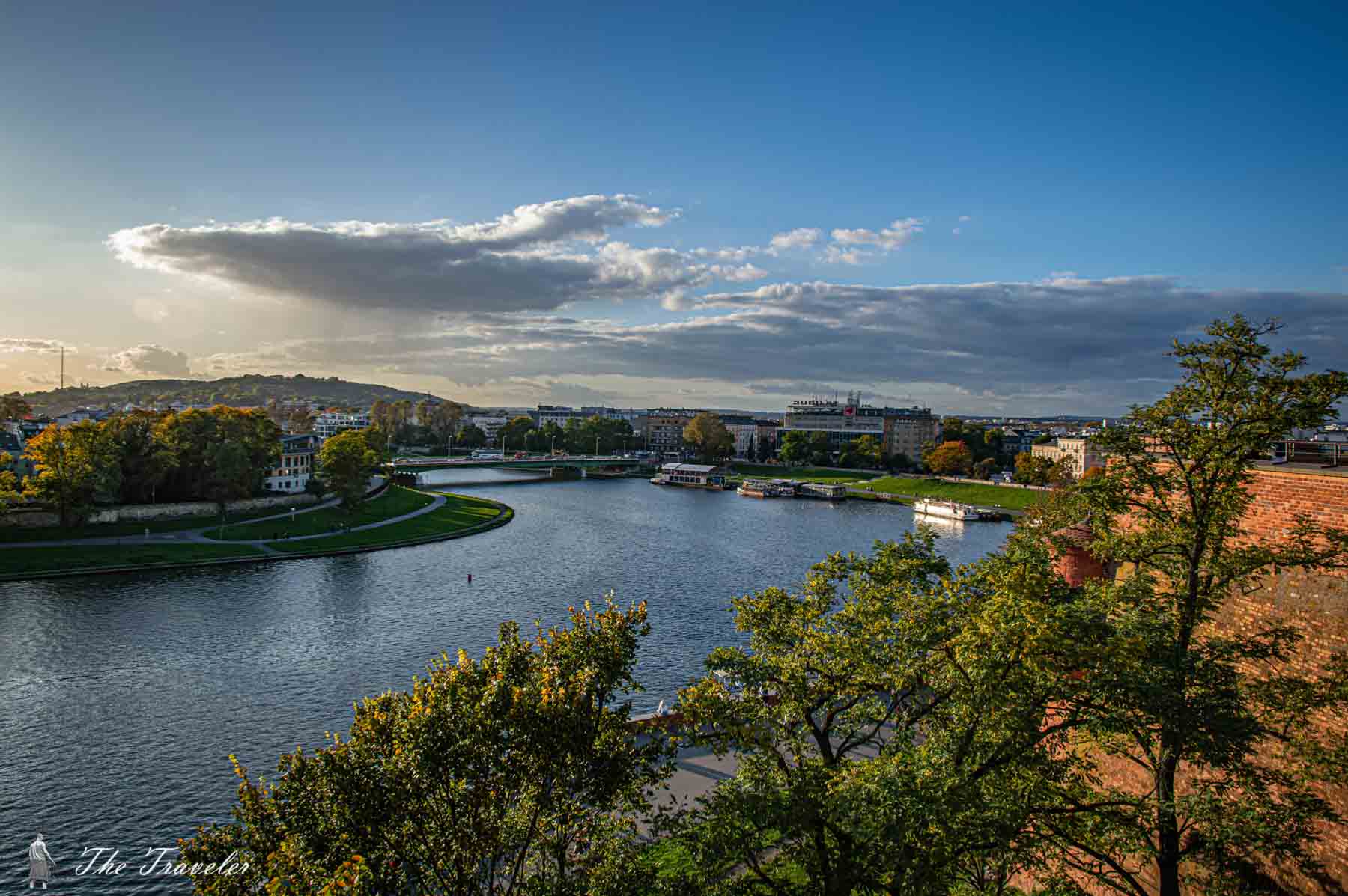
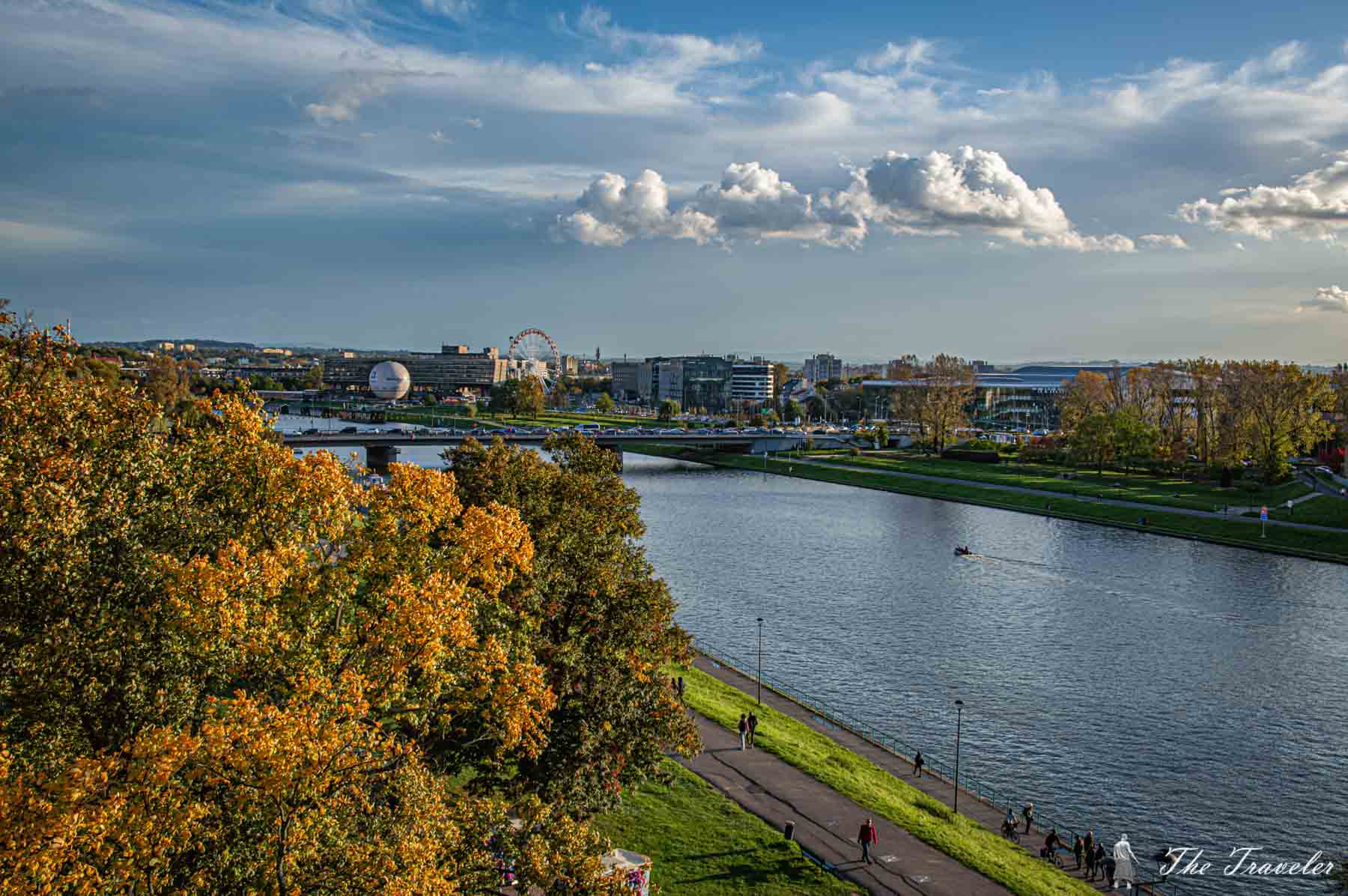
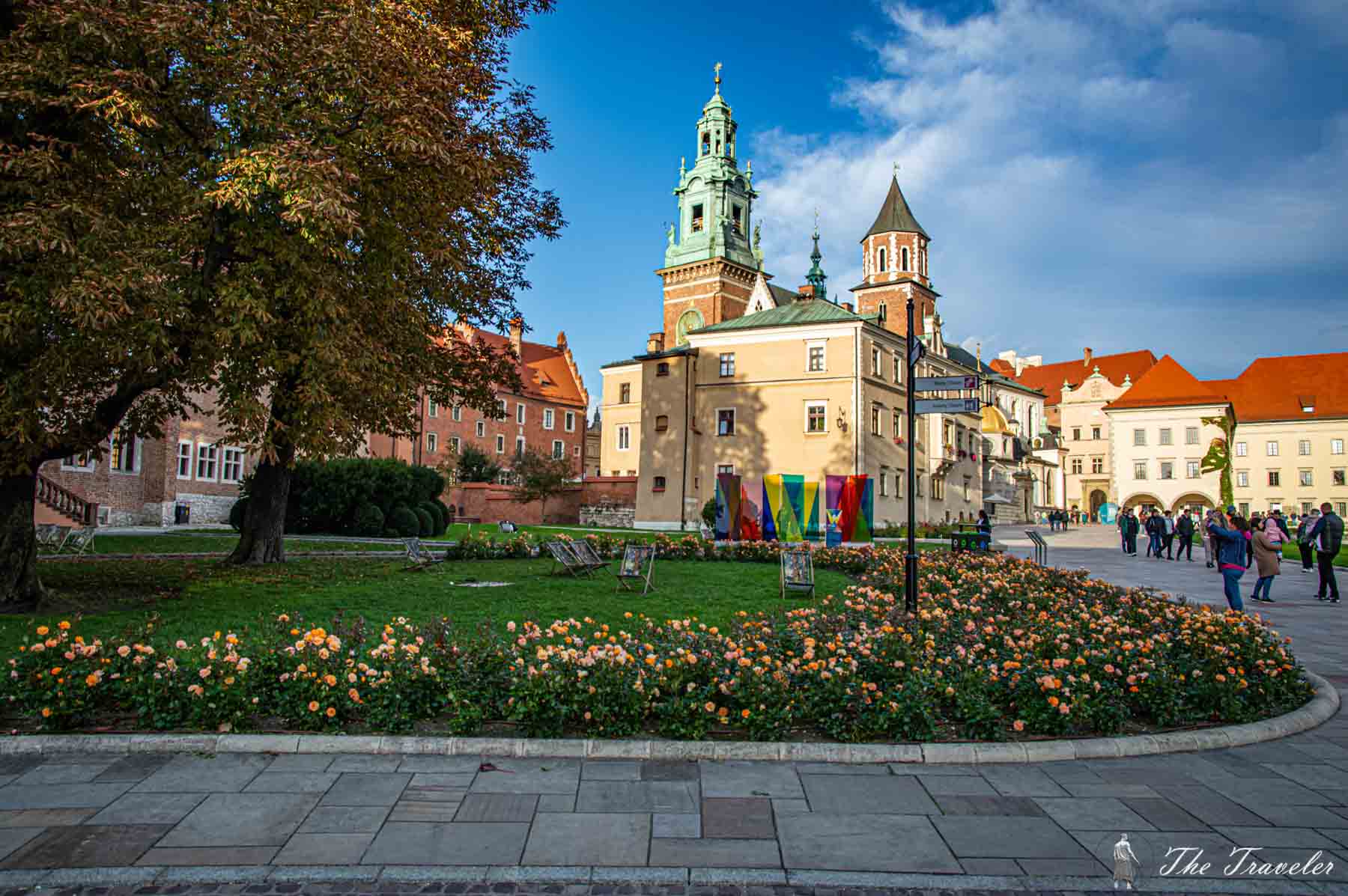
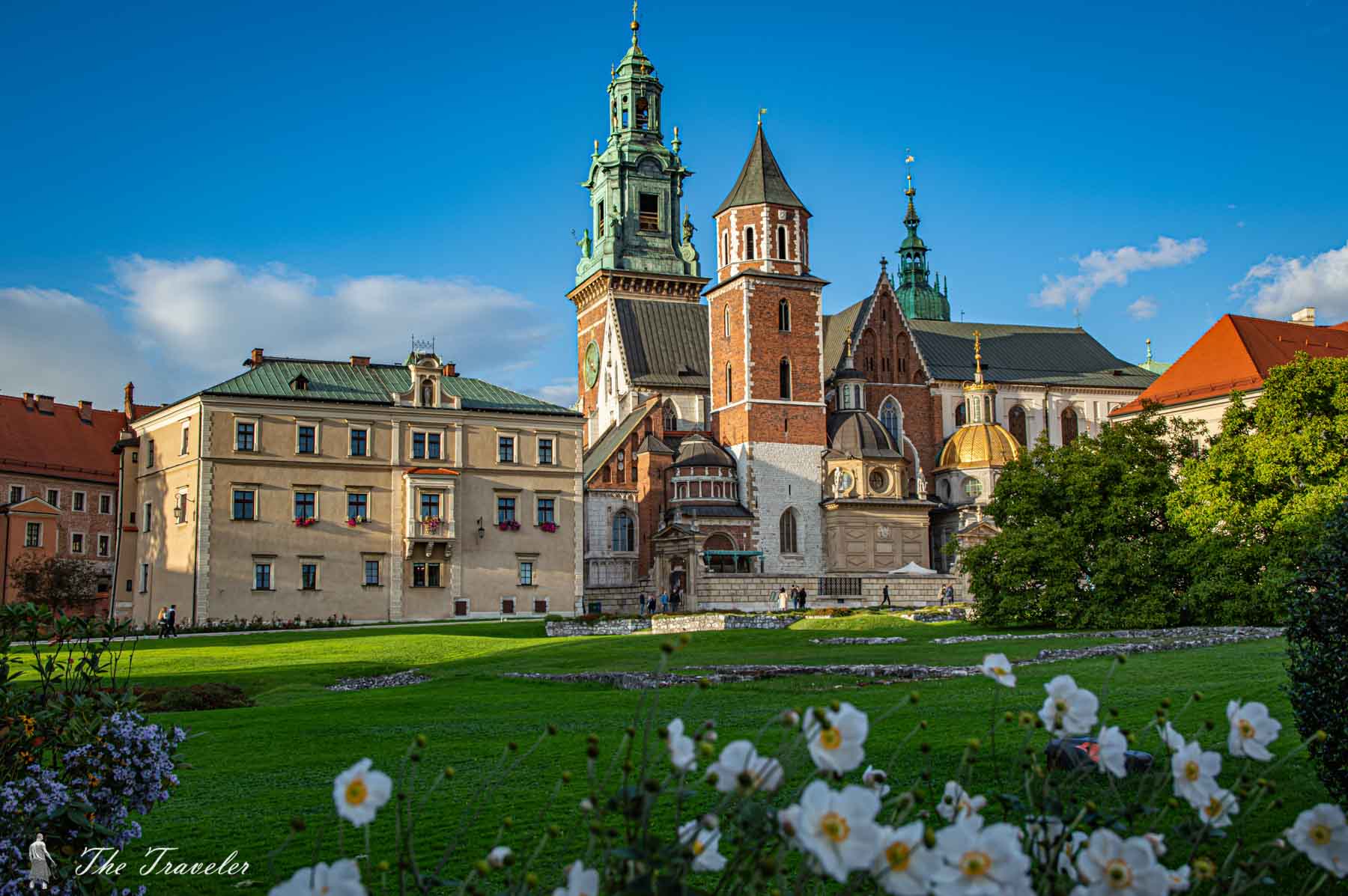
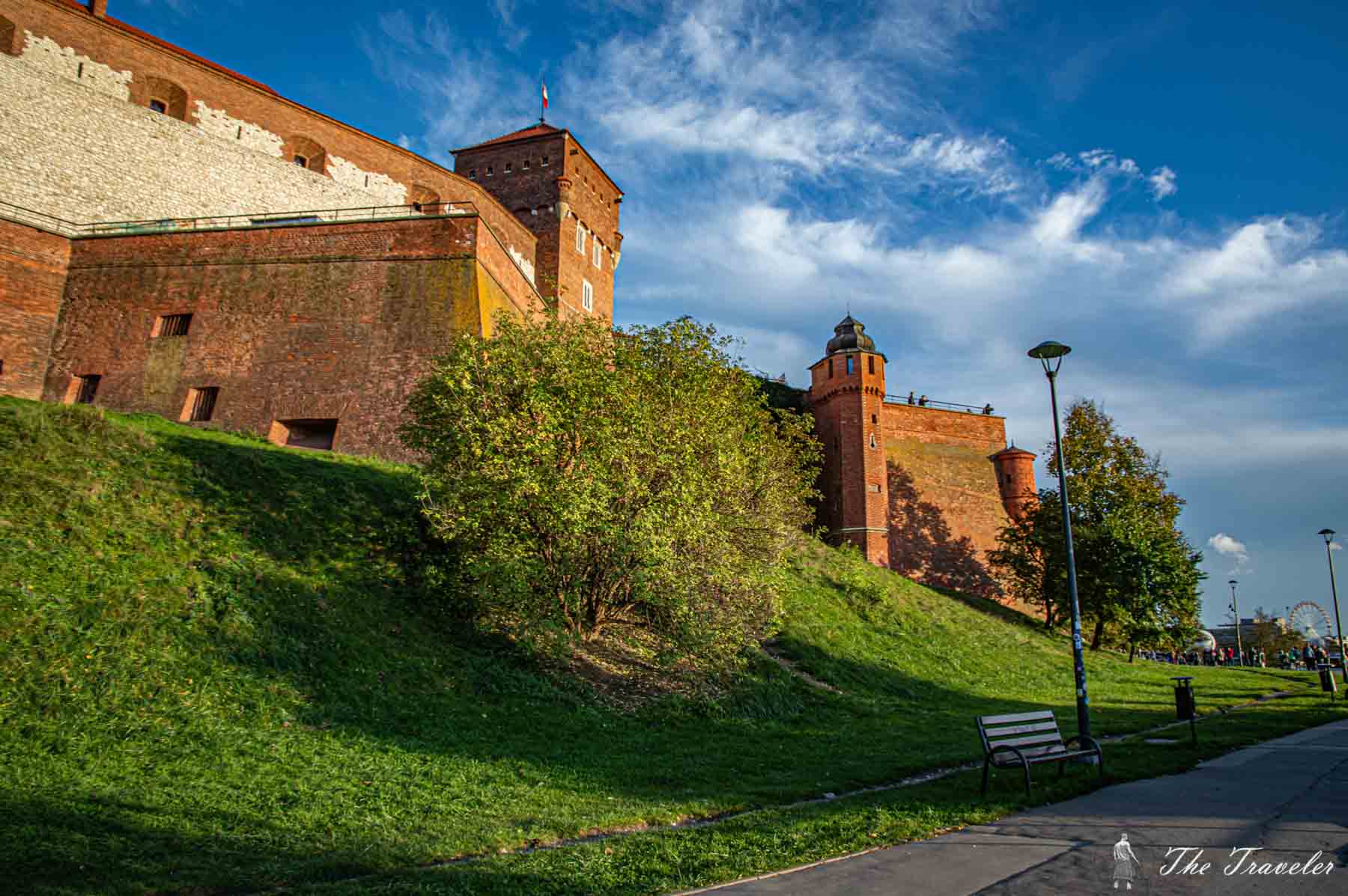
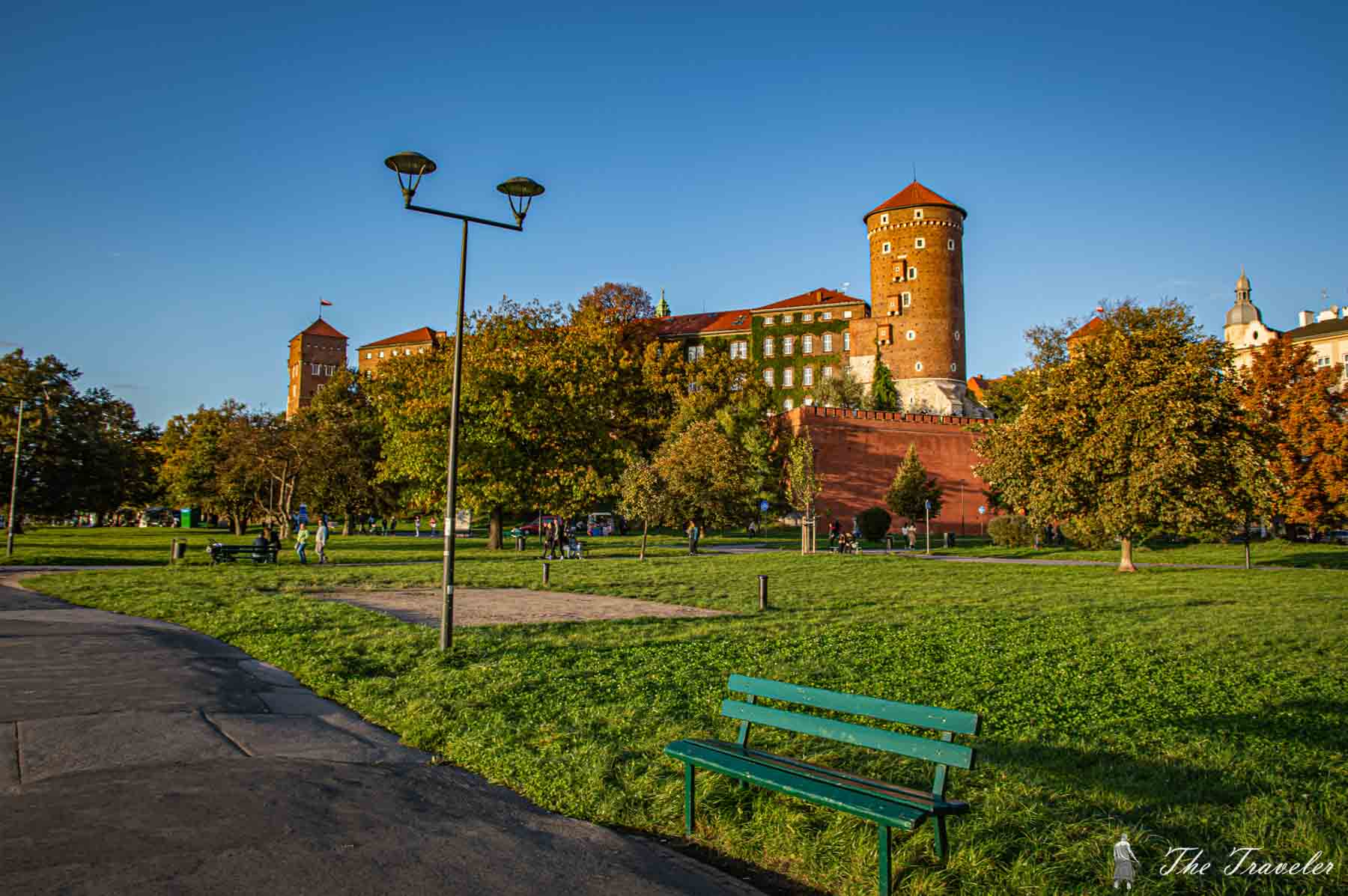
The best part is that strolling through the courtyards and paths of the hill itself is completely free! On the way up, as well as from the viewing platform in front of the main entrance, fairytale views open up over the Vistula River below, the orange canopies of the trees in the park, and part of the city… Inside, the grounds are impeccably maintained and very pleasant for walking – here Gothic, Renaissance, and Baroque coexist in complete harmony, making the entire complex an open-air museum where every era has left its mark.
The Royal Castle (Zamek Królewski na Wawelu), commissioned by Sigismund I in the early 16th century, is a majestic Renaissance residence that the Austrians converted into barracks in 1796. In the 20th century, they returned it to the city, and after World War II, it was declared a national museum and restored to its former glory!
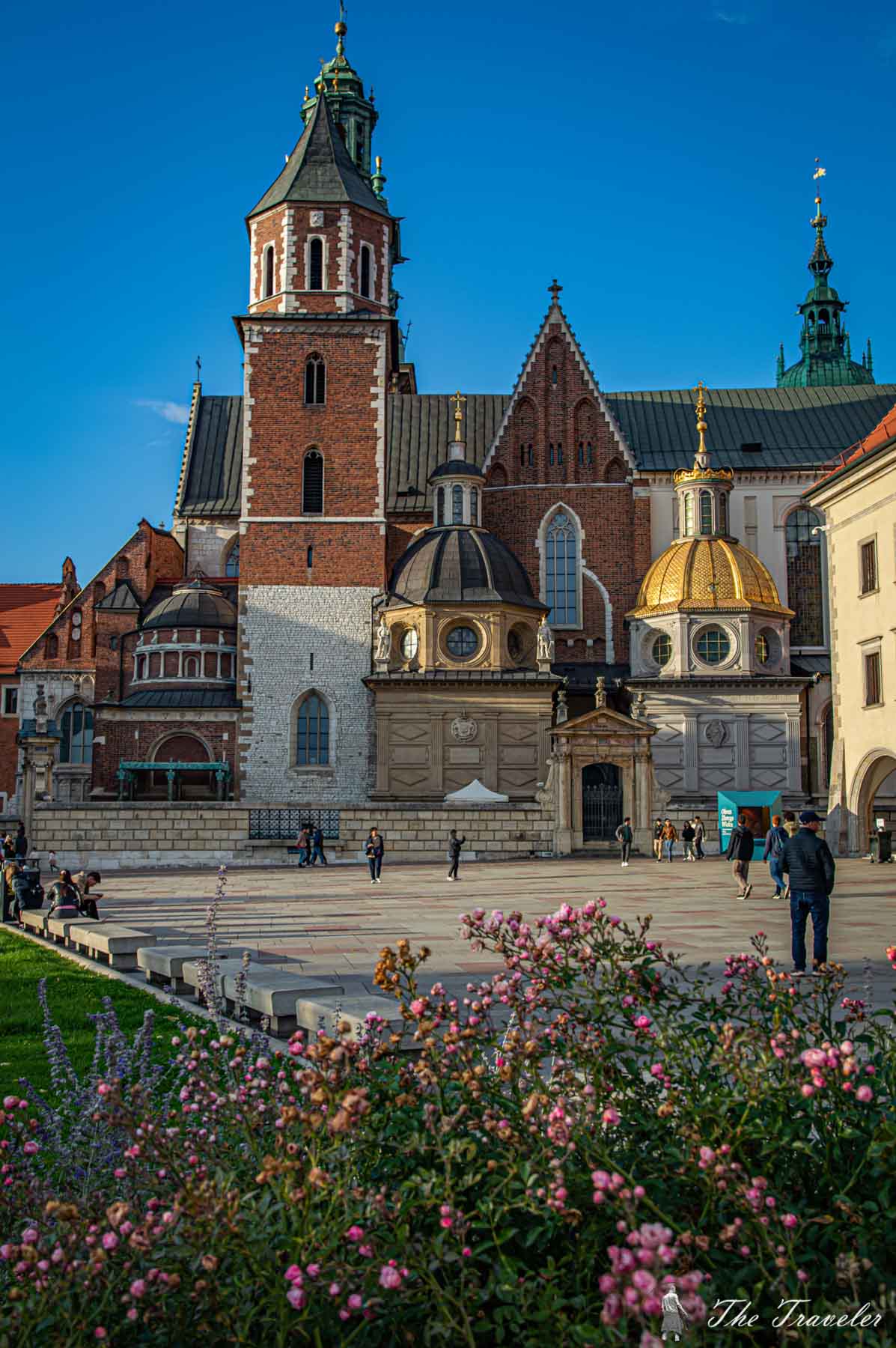
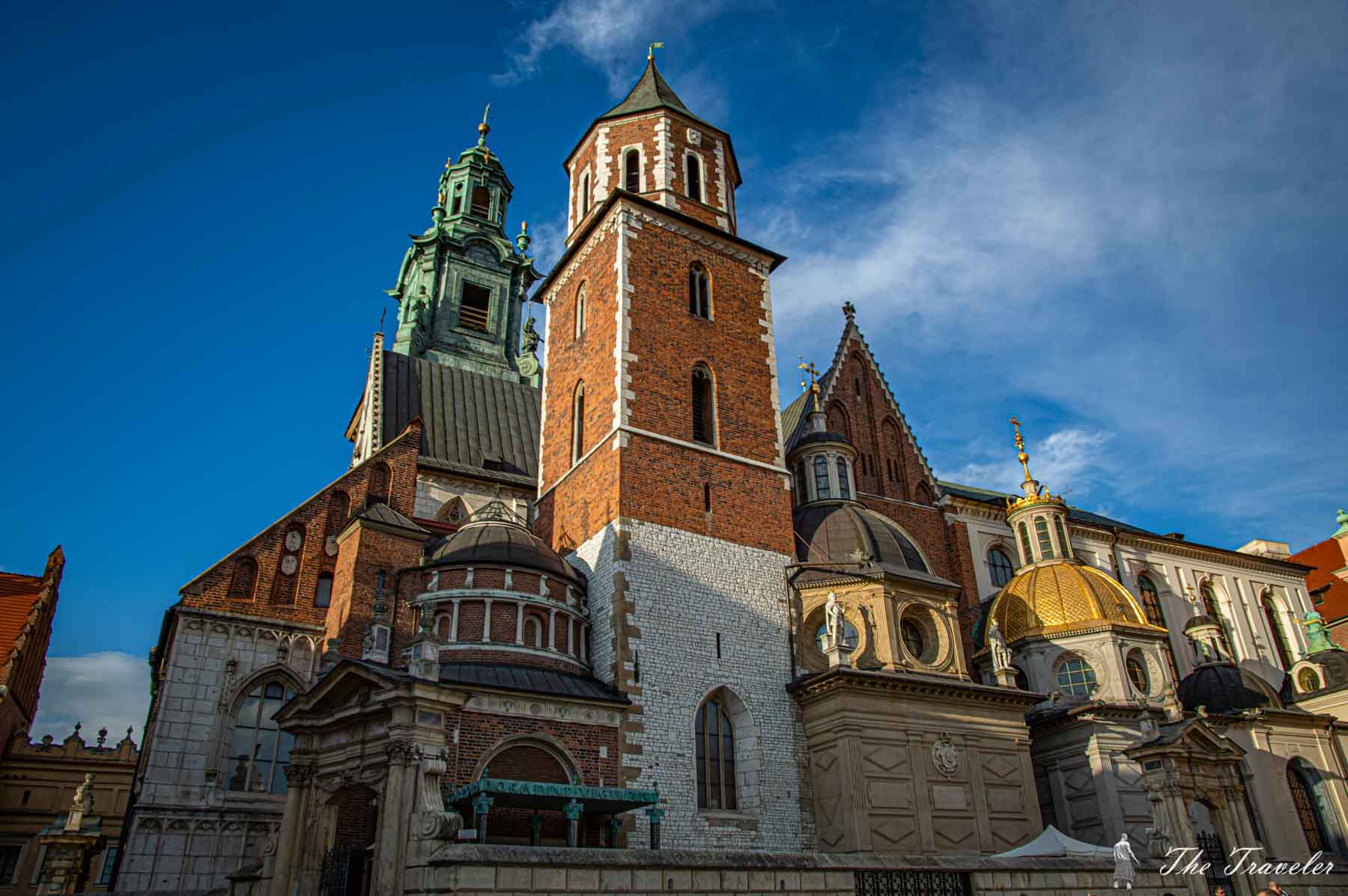
The exquisite Wawel Cathedral (Katedra Wawelska), with its domes and chapels, is perhaps the most important church in all of Poland! Besides being the traditional coronation site for centuries, it is also the final resting place of Polish kings, national heroes, prominent poets, and Bishop Stanisław, the patron saint of the country.
💡 The story of Stanisław, Bishop of Krakow, is often compared to that of Thomas Becket – the Archbishop of Canterbury. In 1079, following serious conflicts with King Bolesław, the Krakow cleric was executed by the ruler himself. To this day, it remains an unresolved question in Polish history whether Stanisław should be regarded as a traitor, as the king accused him, or as a national hero…
A visit to the castle includes various areas – the royal state rooms, private apartments, treasury, armory, dungeons, and more. You choose how many of them to visit, and the price depends on your selection. It’s a good idea to buy tickets online in advance – something we missed doing, so in the end we decided to enjoy the buildings only from the outside. The cathedral also has an entrance fee, which includes a climb up the Sigismund Tower (Wieża Zygmuntowska), home to the most famous and largest bell in Poland, spanning over 2 meters in diameter!
A walk along the Vistula and dragon legends
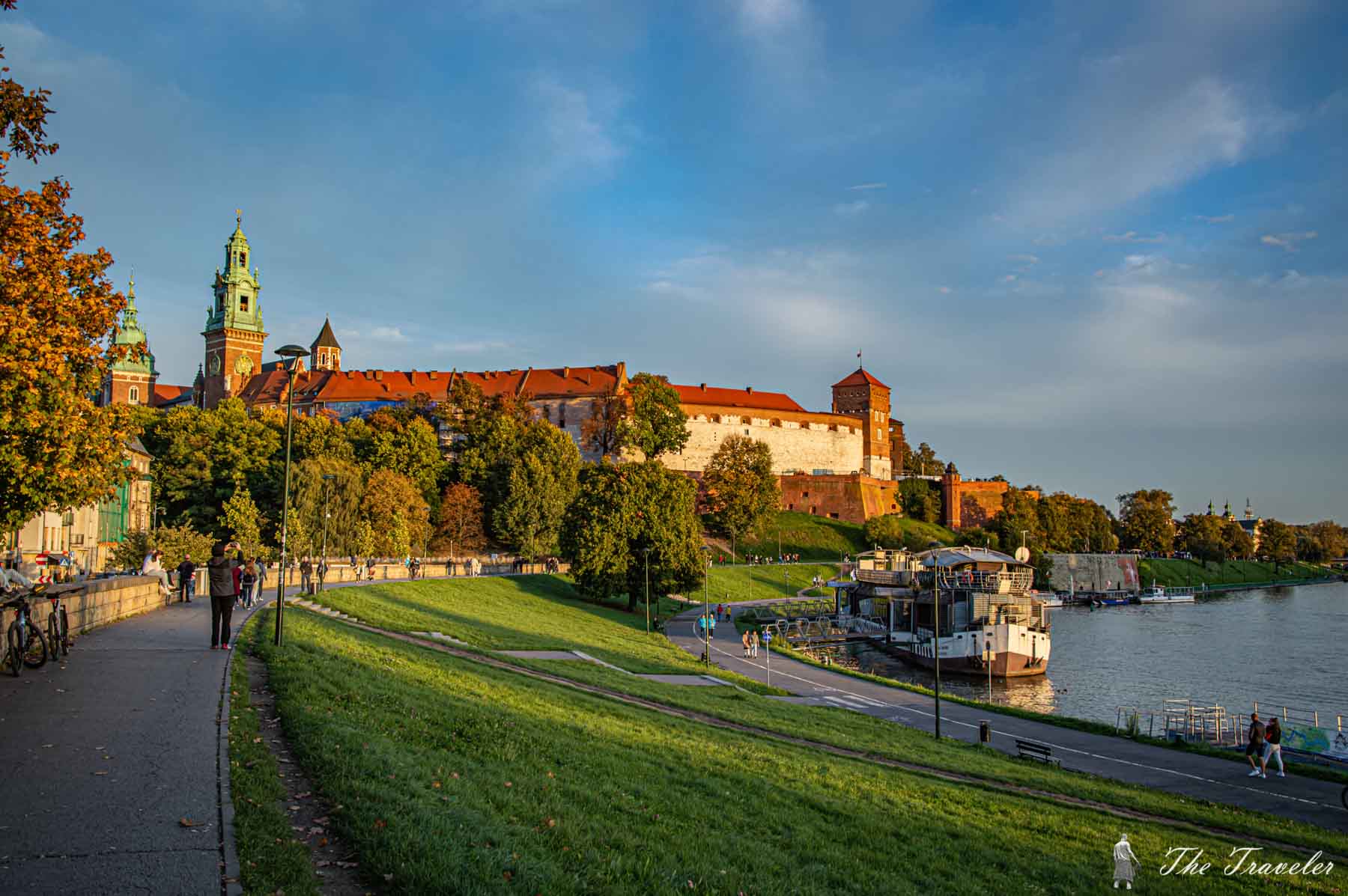
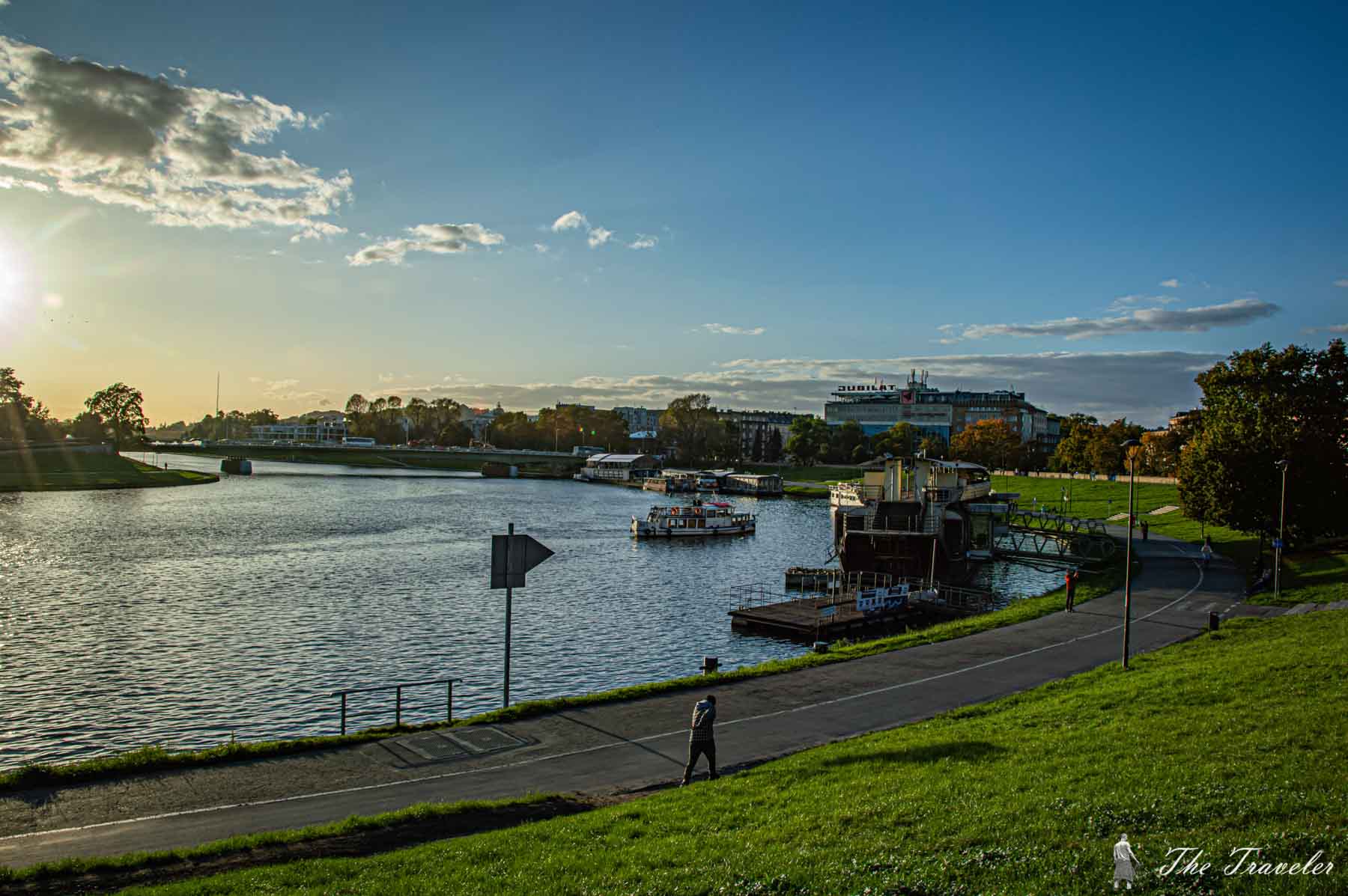
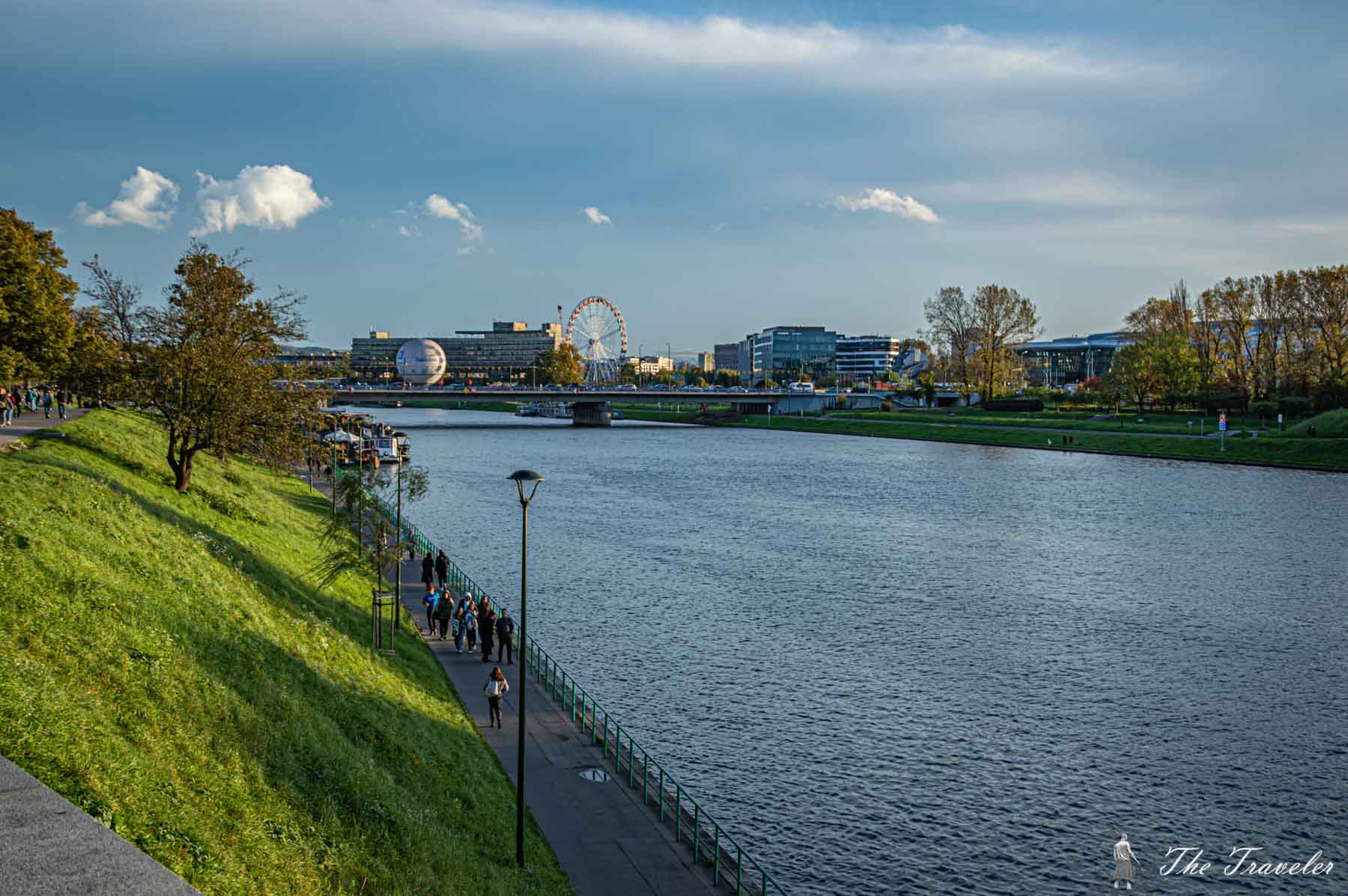
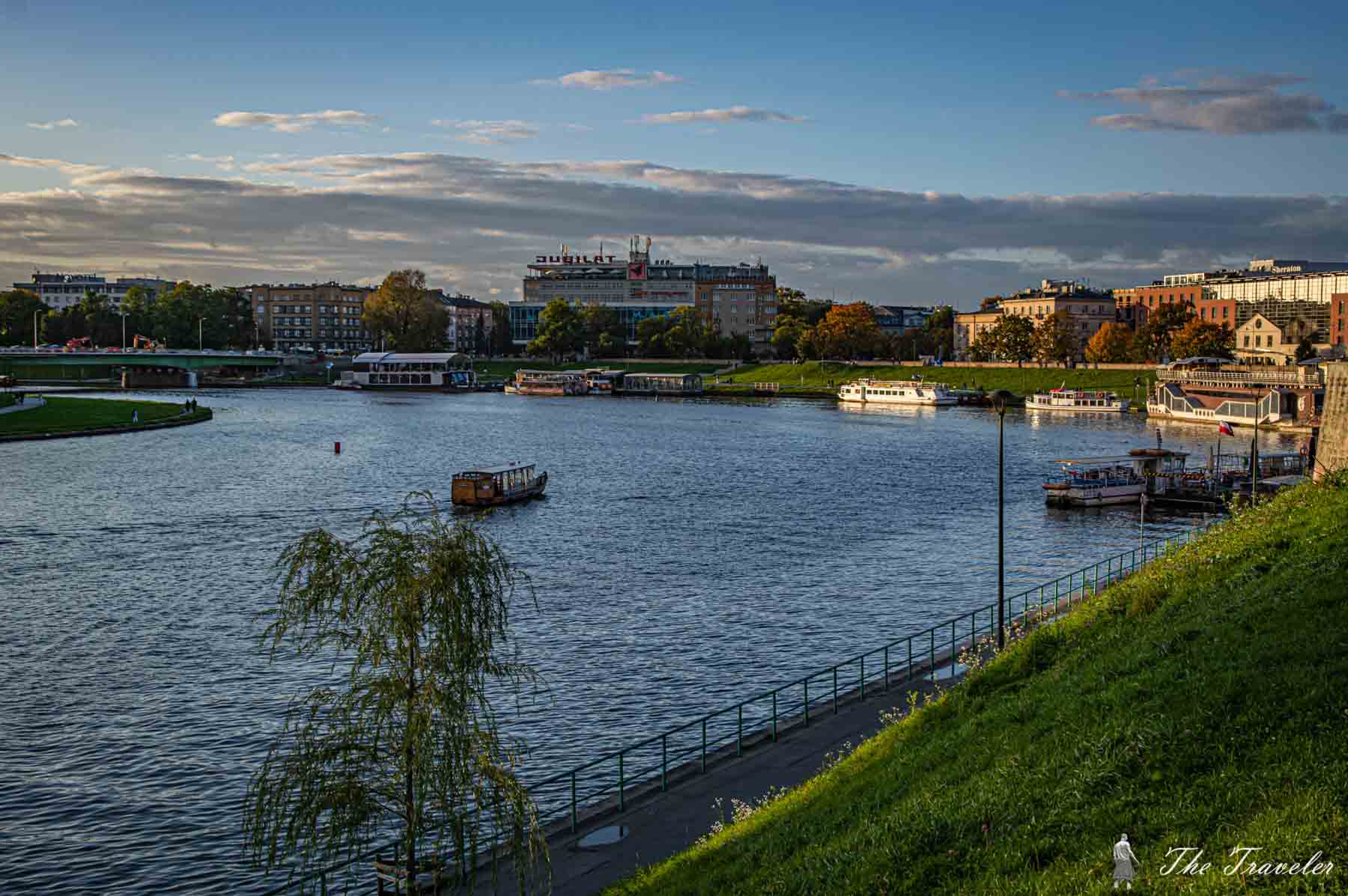
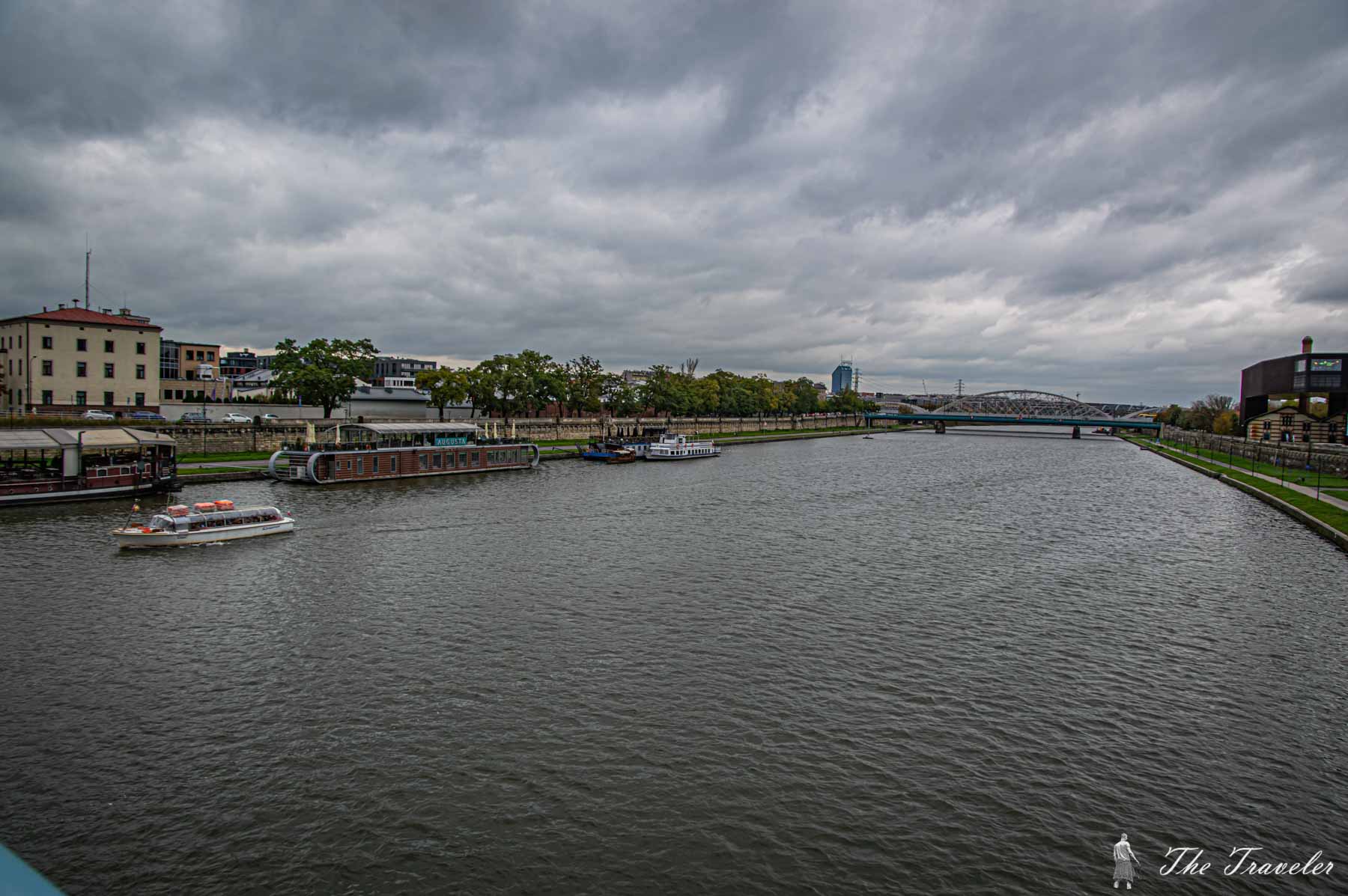
The atmosphere of the area is truly captivating, but the best part is that you can soak it up a little longer by descending to the Vistula (Wisła) riverside promenade! The Vistula rises on the western slopes of the Carpathians, and its length of just over 1,000 km makes it the longest river in Poland. Besides Krakow, it also flows through the capital, Warsaw, before emptying into the Baltic Sea very close to another major city – Gdansk.
The riverside park is wonderful – with wide, perfectly laid-out pedestrian and cycling paths, green lawns, and tree-shaded benches. In October, we were looking for spots in the sun instead, to sit for a while and enjoy the autumn landscape with falling leaves, boats gliding across the water, people exercising and strolling, and gently swaying restaurant boats… If you’re wondering where the best place to watch the sunset in Krakow is – this is it!
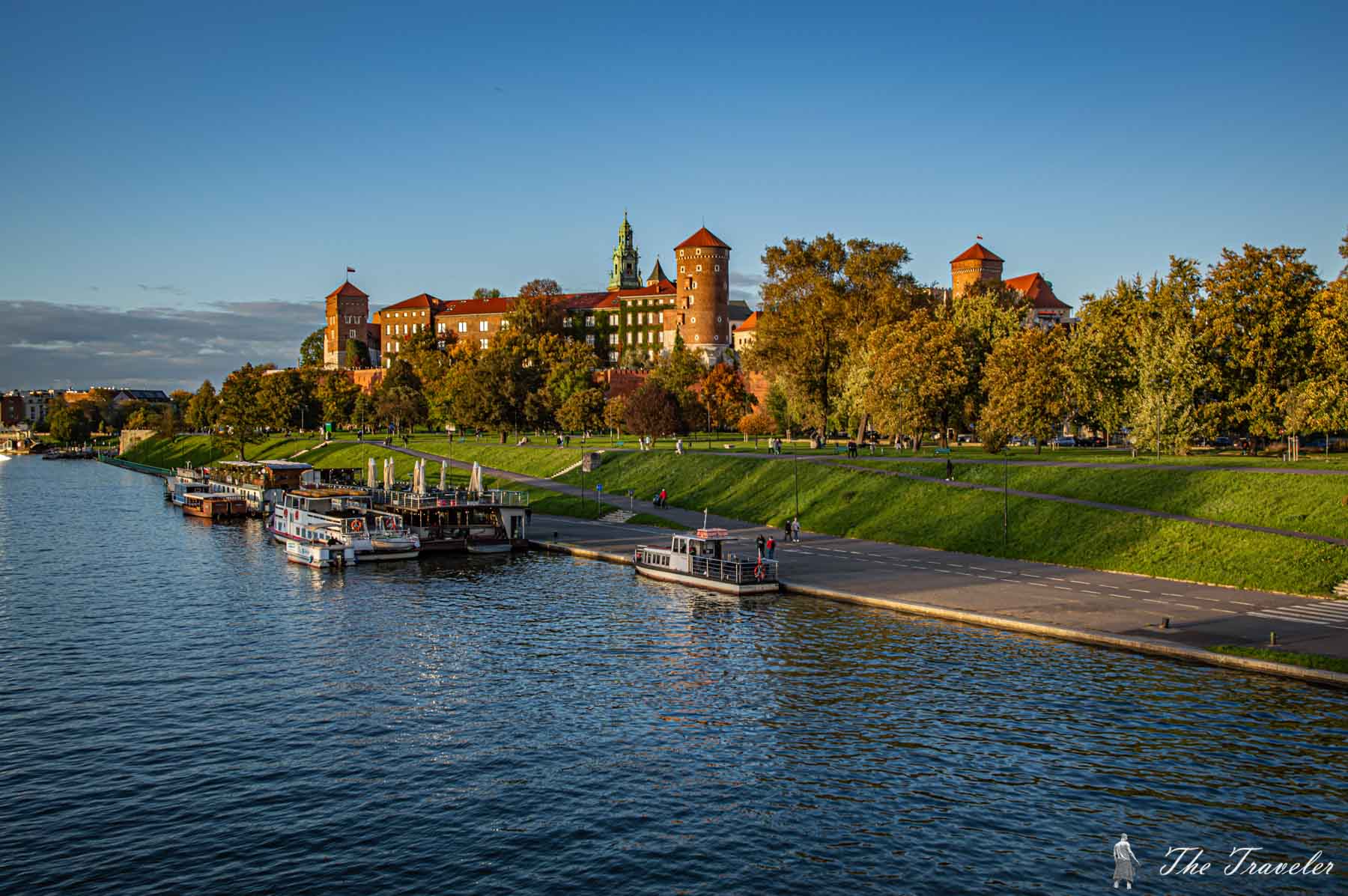
And for the best panorama of the entire Wawel Hill, head to the Grunwald Bridge (Most Grunwaldzki)! The sun was already dipping behind the horizon, but it still lit up the red brick walls of the castle directly, while the yellow-orange canopies of the trees at its base completed the colorful autumn scene… Oh yes, autumn suits this city so well!
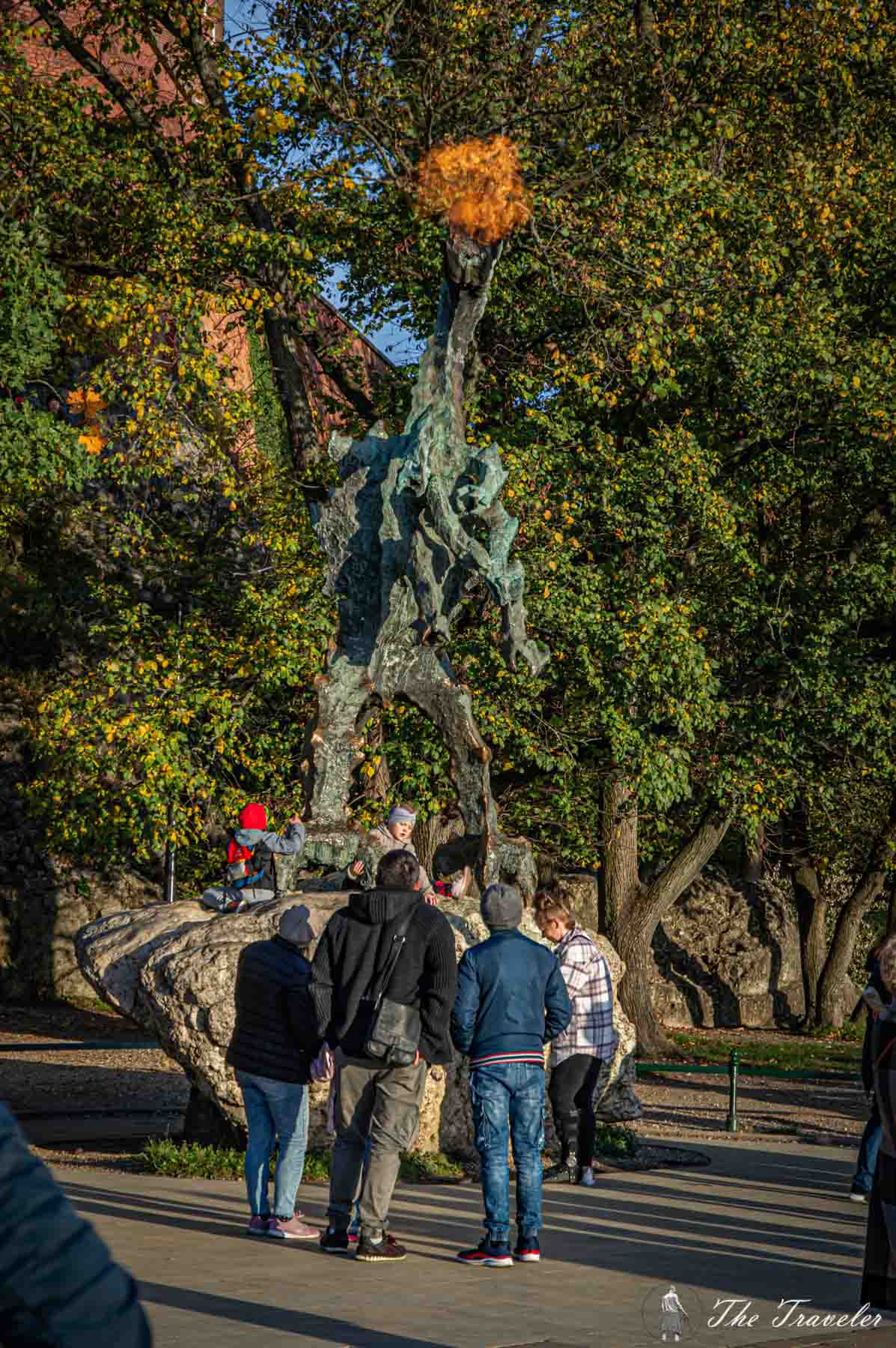
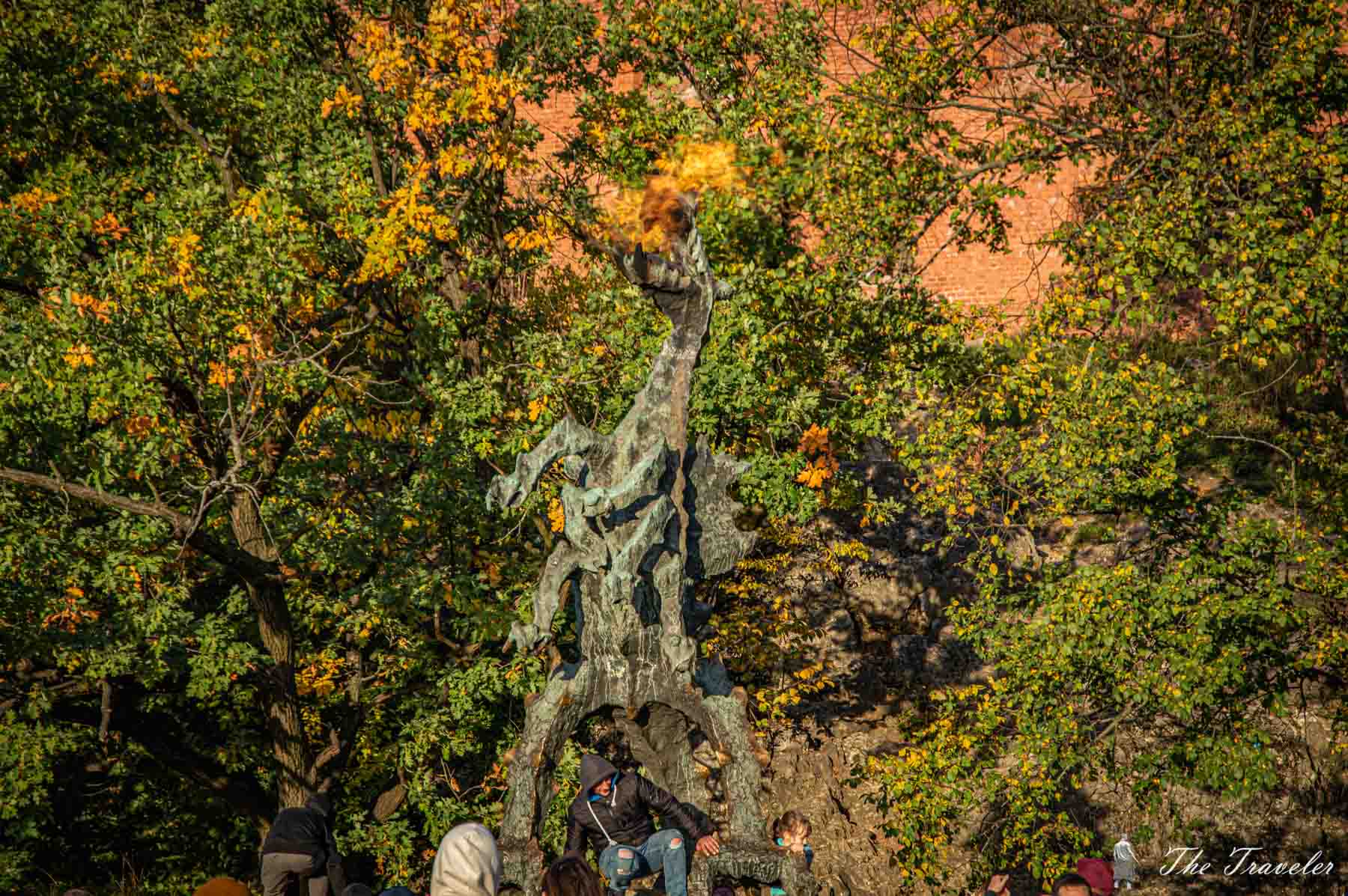
A walk along the river, however, wouldn’t be complete without meeting Krakow’s most famous resident – the Wawel Dragon (Smok Wawelski)! Right at the foot of the hill lies the entrance to the Dragon’s Den (Smocza Jama) and the bronze statue of the dragon. It’s a huge hit with both kids and adults because every 15 minutes, it breathes real fire! A crowd of children and adults gathers around to capture the exact moment the flame shoots from its mouth…
💡 According to the most popular legend, a terrible dragon once lived in the cave beneath the castle, terrorizing the city and demanding daily livestock from the locals. Many knights failed to defeat the beast, until a young shoemaker named Skuba stepped up. He outwitted the dragon by filling a sheepskin with sulfur and leaving it outside the cave. The dragon devoured it greedily, and the sulfur burned inside him so fiercely that he drank half the Vistula River to quench his thirst – until he finally burst!
Planty Park – Krakow’s green ring
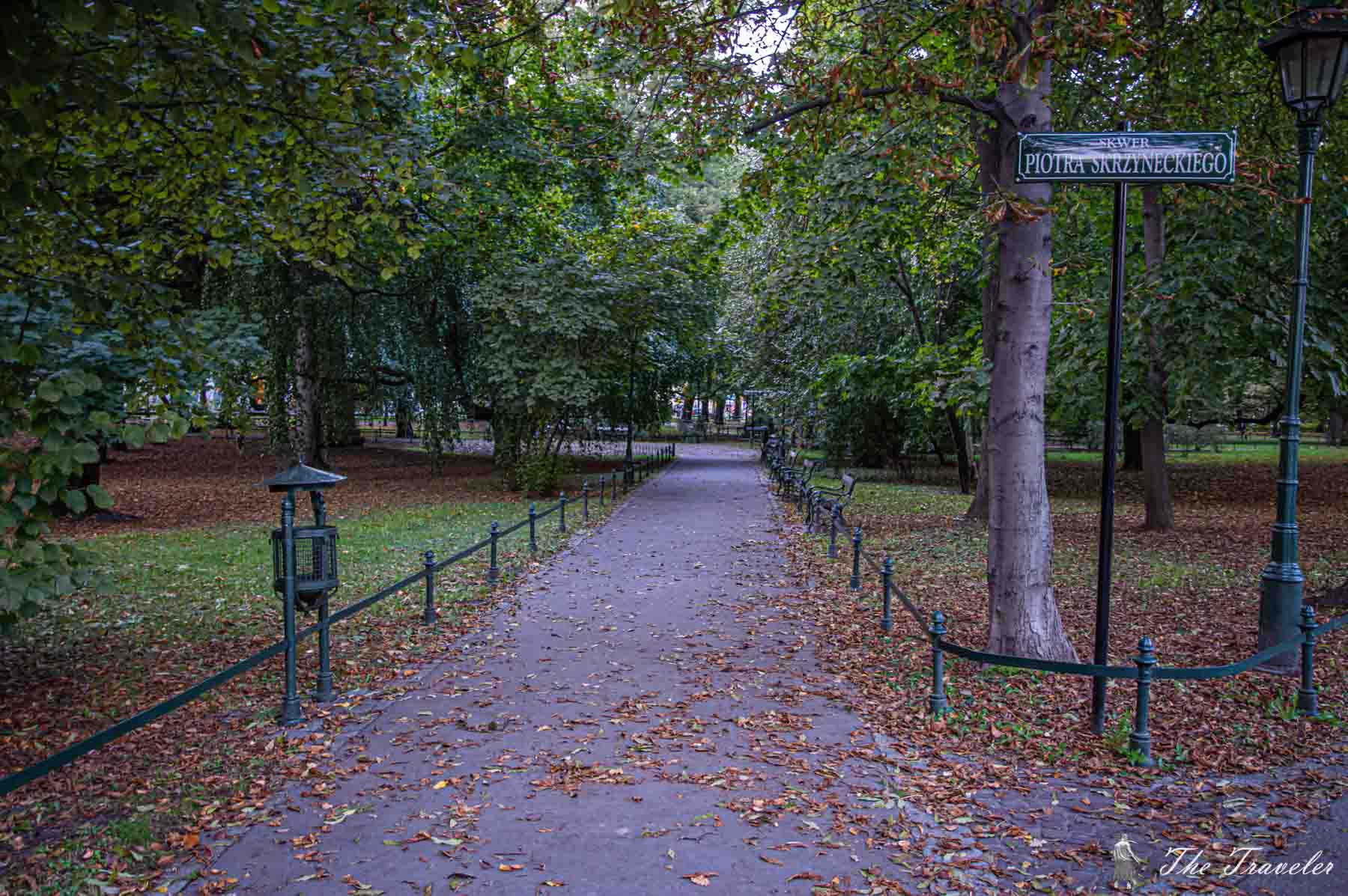
During our stay in Krakow, it so happened that we crossed this park several times… In fact, it’s a real challenge to leave the Old Town (or enter it) without passing through the green belt wrapping around it, even if only for a moment.
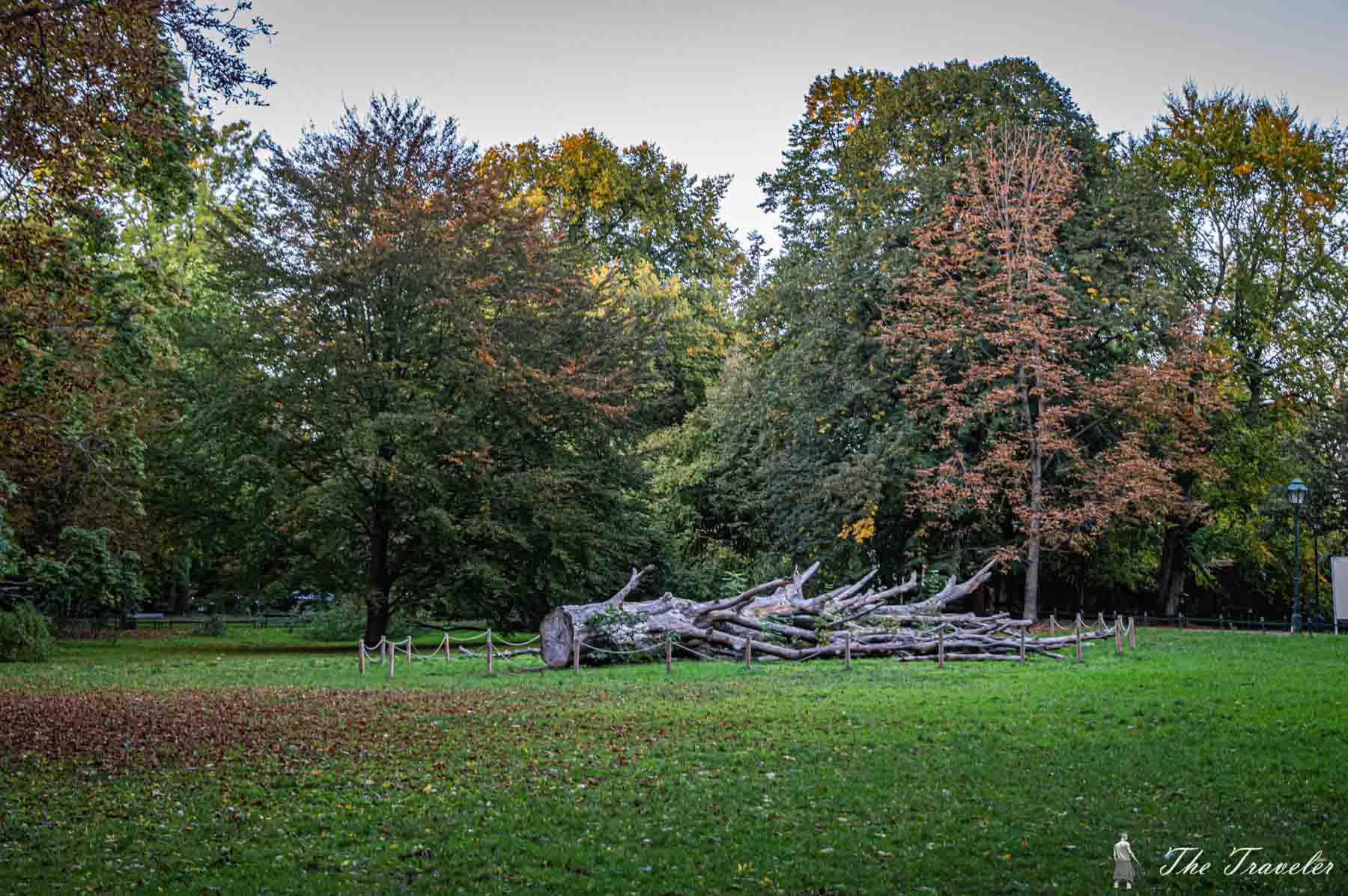
Planty Park is just steps away from the bustling crowds, street musicians, and noise of the main thoroughfares, yet you immediately step into an incredibly quiet, green, and peaceful space! The park is relatively young, dating back to the 19th century. In the past, Krakow’s medieval city walls and defensive moats occupied this exact ground. When the fortifications began to fall into disrepair and the trenches turned into breeding grounds for bacteria, the city administration decided that Krakow needed room to “breathe”! But instead of building over the newly freed land, they made the visionary decision to transform it into a sprawling urban garden.
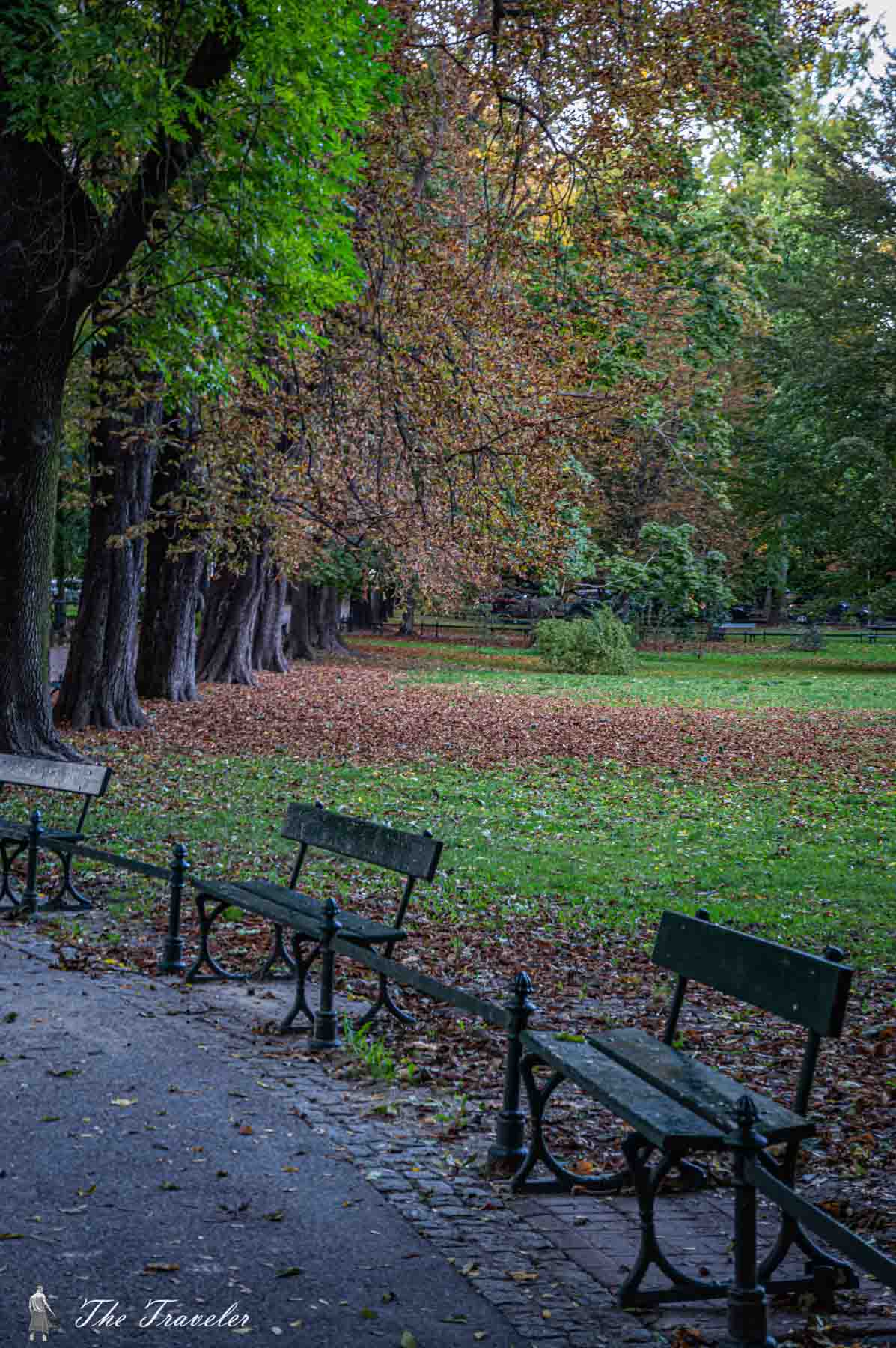
And in autumn, the park revealed its most magical side to us! The pathways were covered in a thick carpet of rustling leaves, the trees were dressed in warm golden and rusty shades, and the cozy benches invited us to pause for a moment with a cup of coffee in hand…
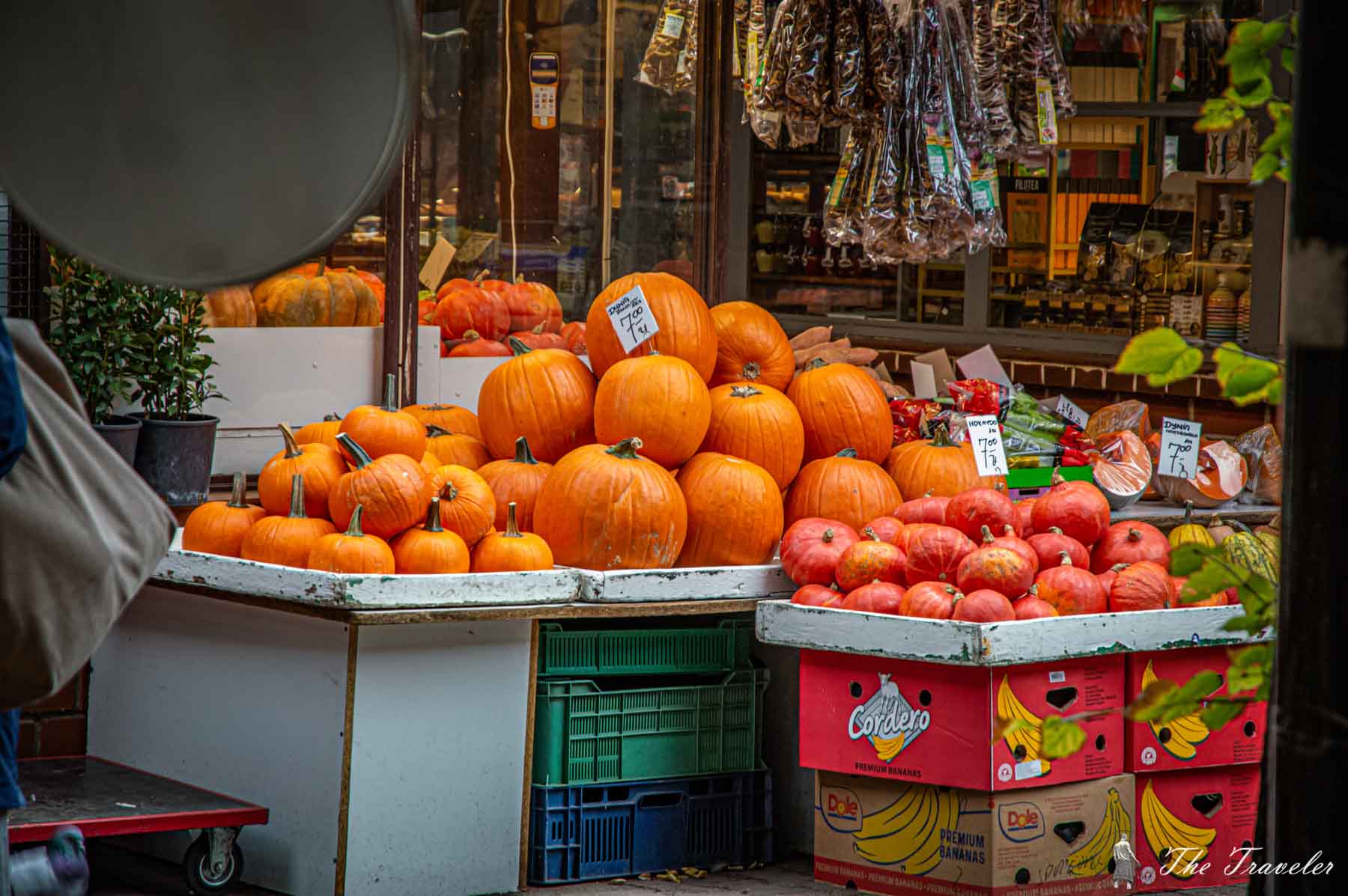
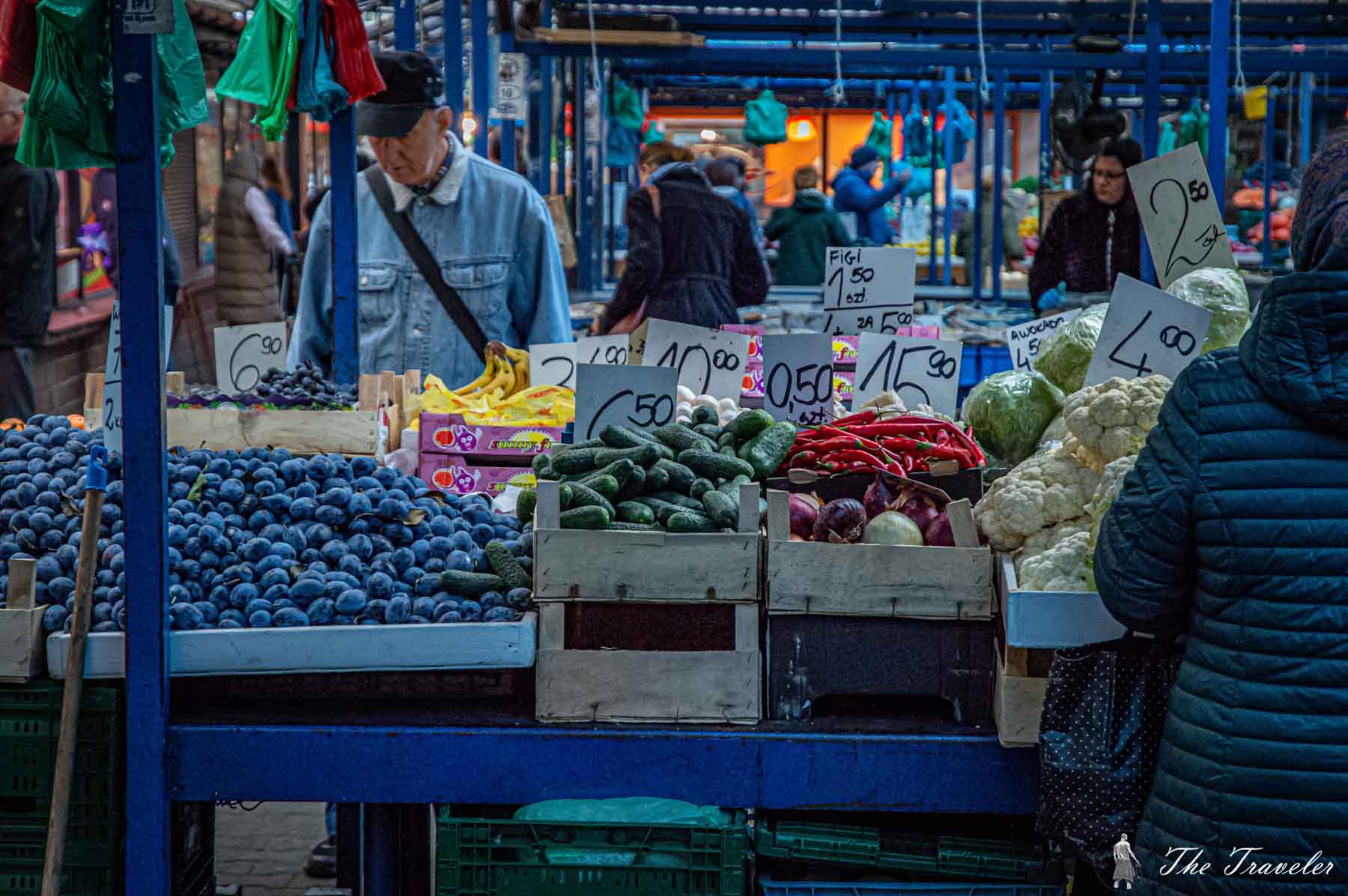
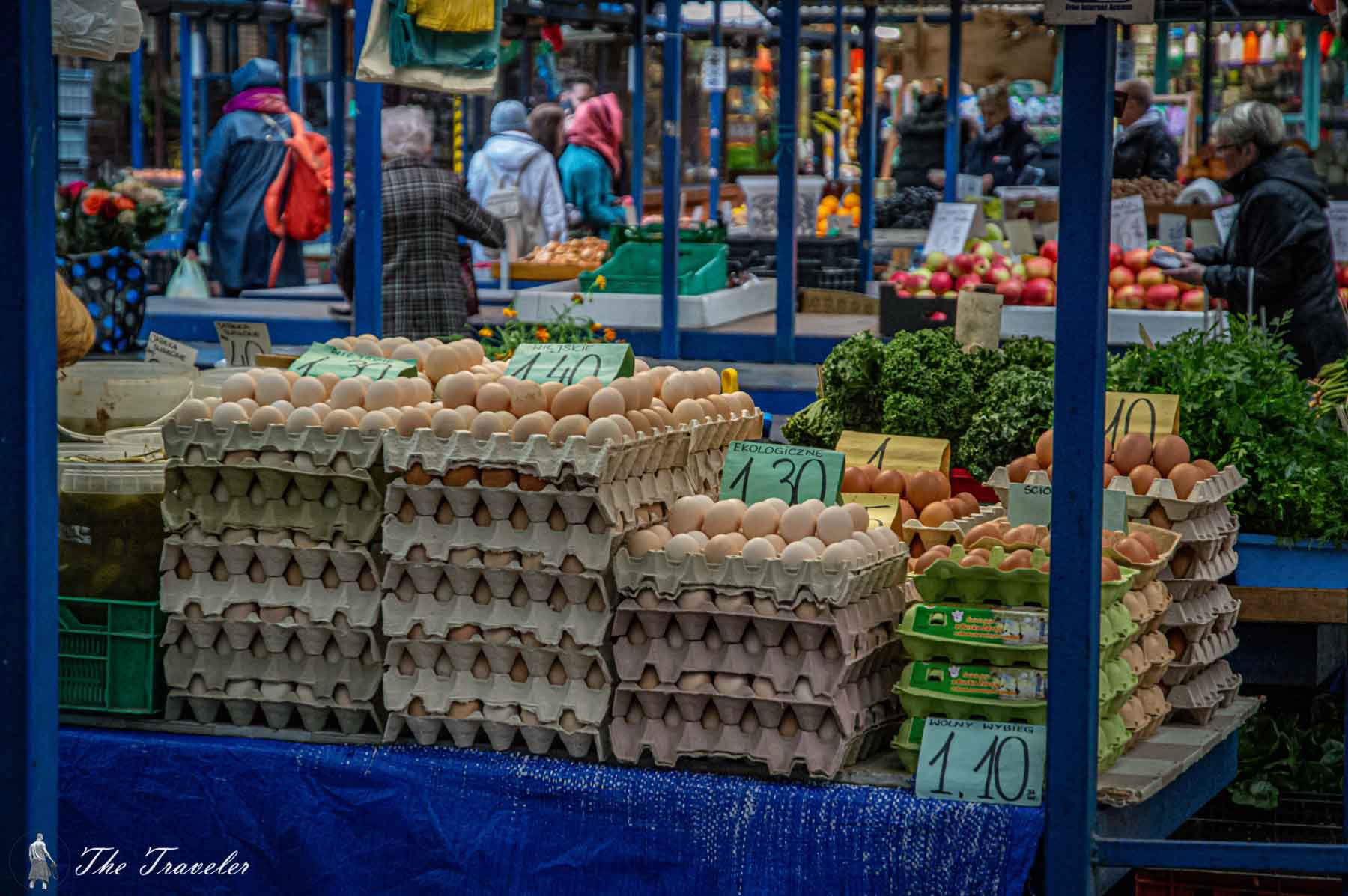
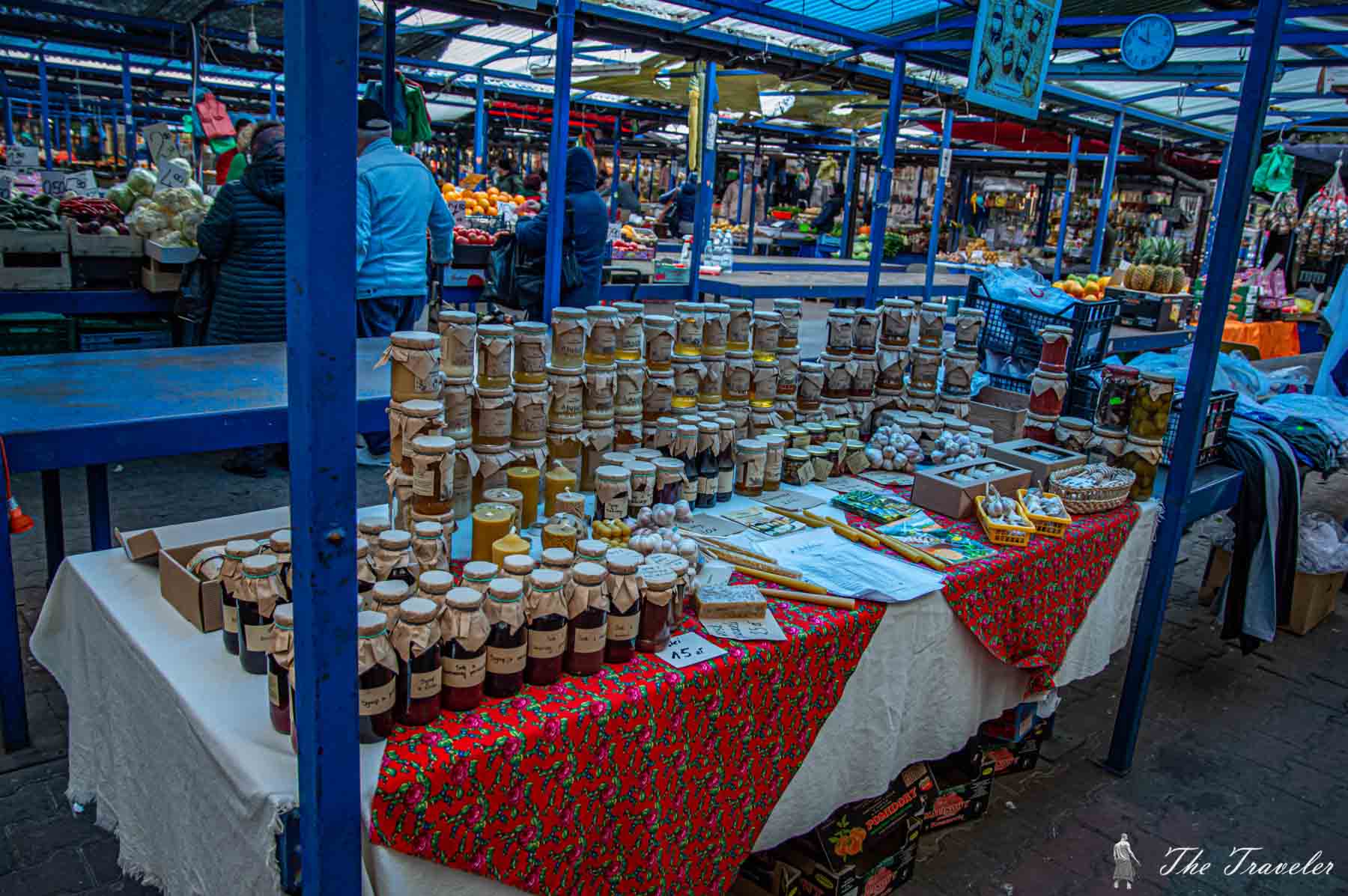
The authentic market (Stary Kleparz)
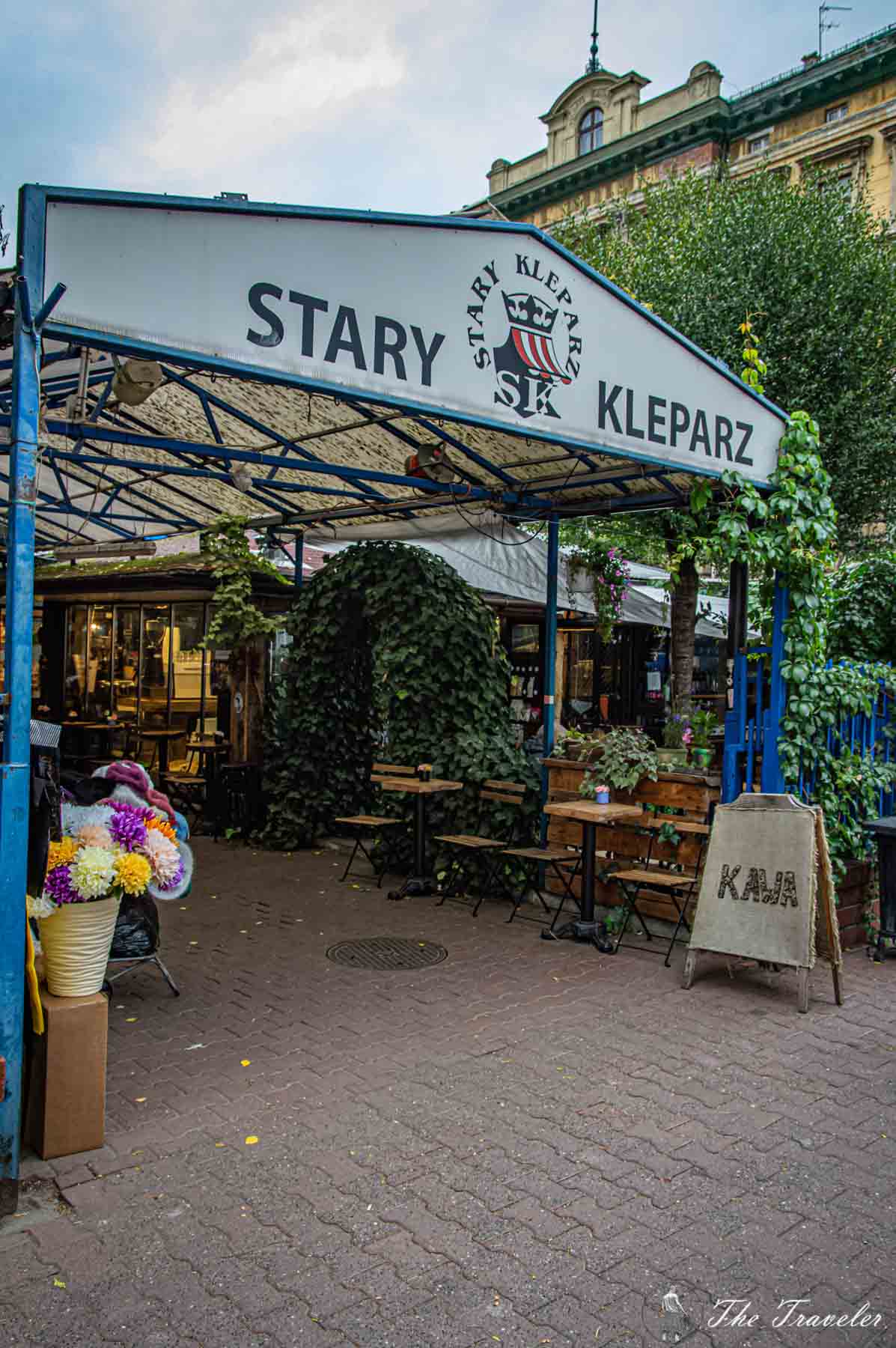
If you’ve read other articles on the blog, you surely already know that I absolutely love visiting local markets! For me, there is no better way to feel the authentic pulse of a city than to stroll among the stalls where mostly locals shop…
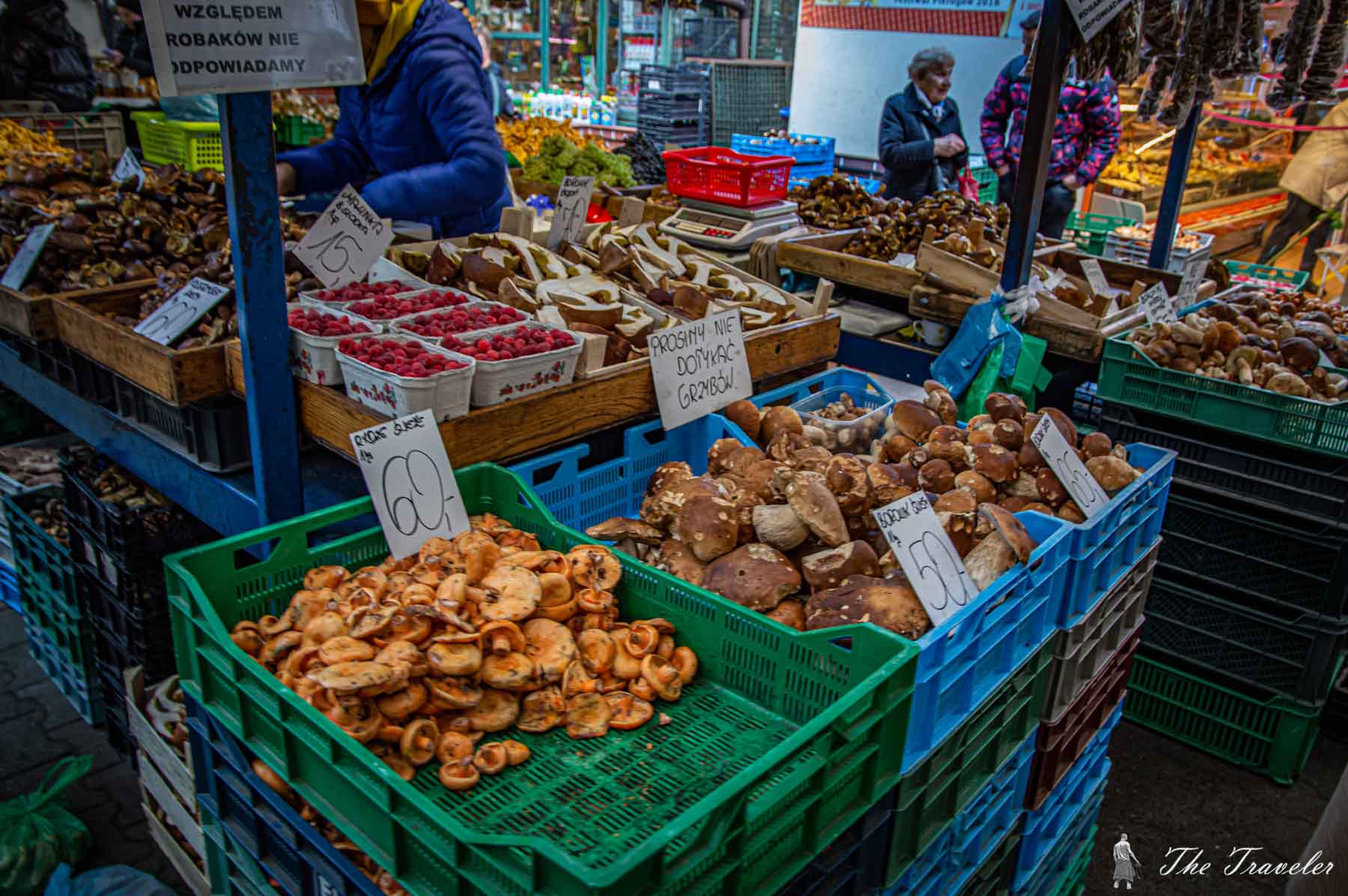
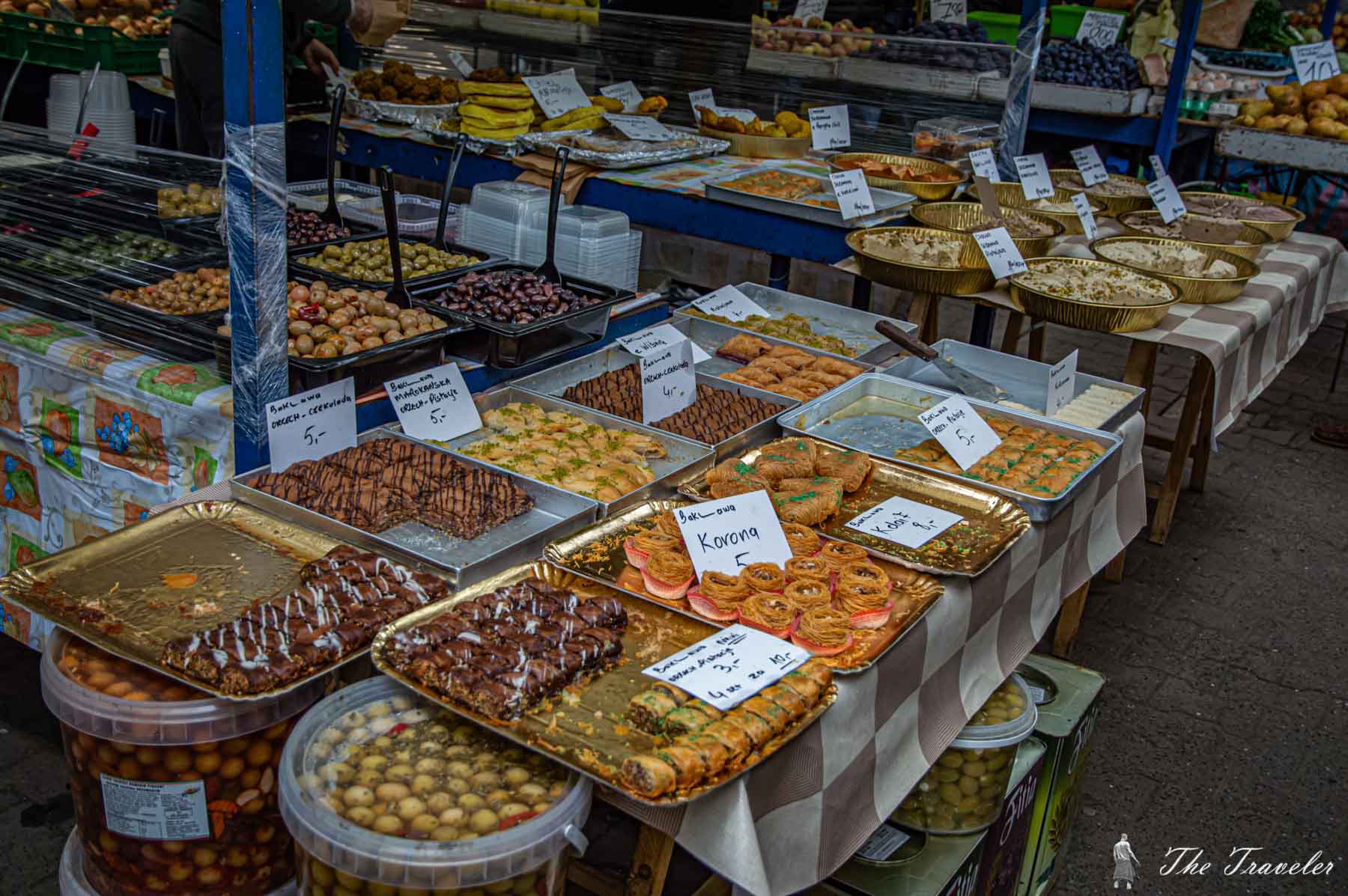
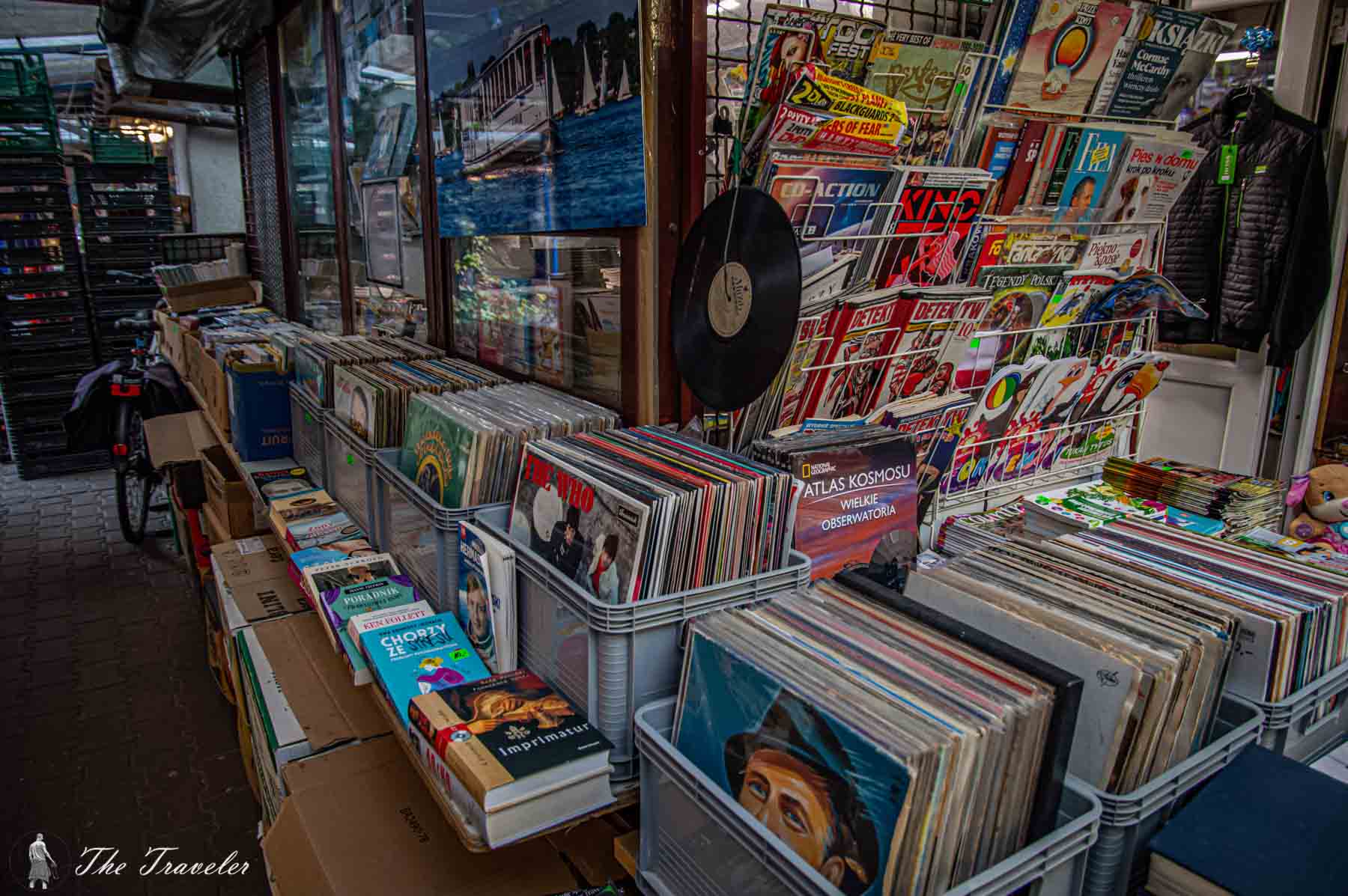
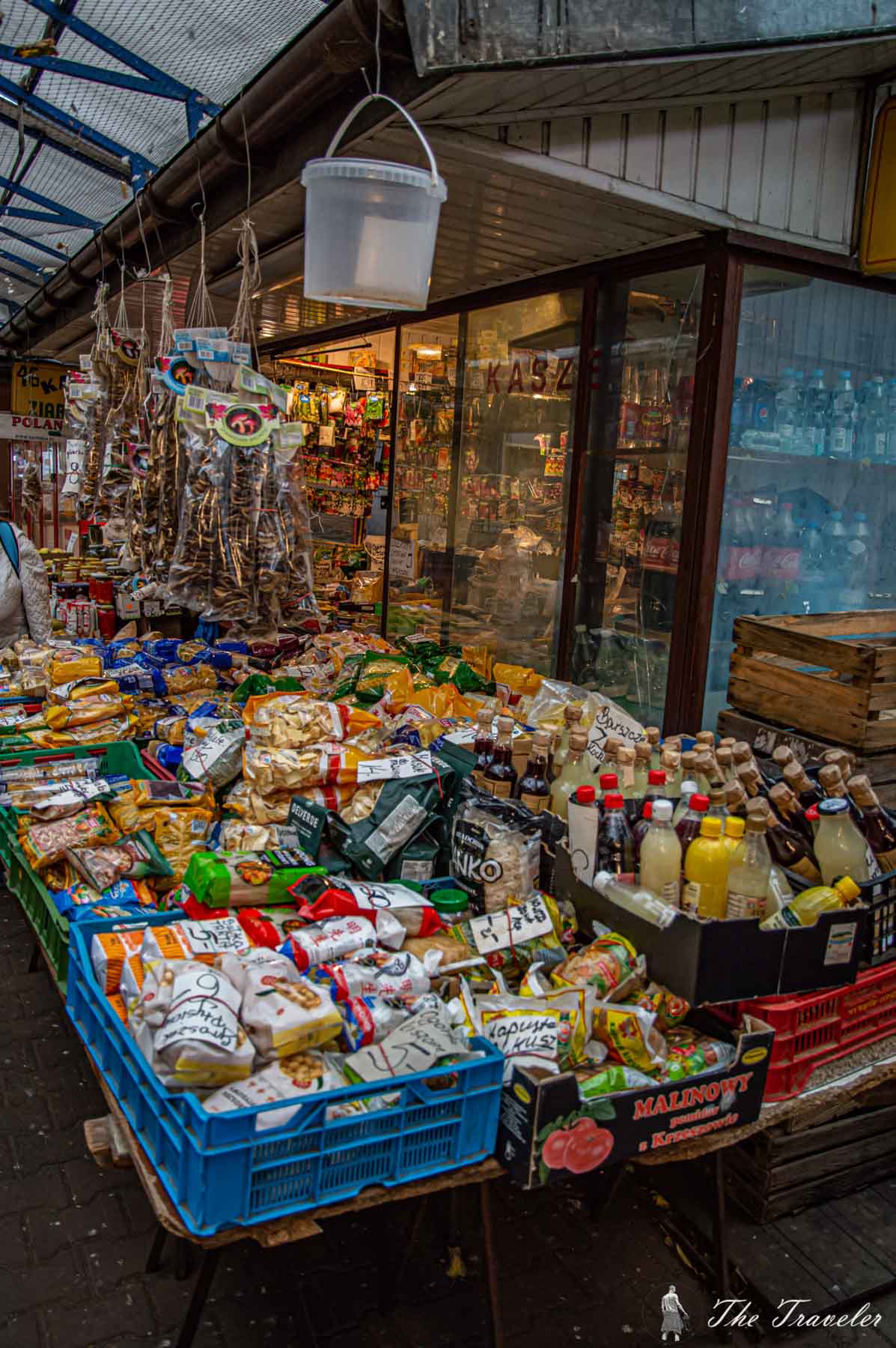
In Krakow, that place is undoubtedly Stary Kleparz – the oldest continuously operating market in the city, located just a few minutes north of the Florian Gate and very close to where we were staying. Its history dates back to the 14th century, and today, beneath its covered structures, it is bustling and buzzing with morning energy. There is no touristy kitsch here – instead, you’ll find tables piled high with freshly picked porcini and chanterelle mushrooms, farm-fresh eggs, fragrant cheeses, traditional cured sausages and cold cuts, vintage vinyl records, pastries straight out of the oven, homemade sweets, and so much more!
Even if you have no intention of buying anything in particular, wander among the stalls, soak up the aromas, watch how the locals pick out the finest fruits and vegetables, and capture the real, everyday Krakow…
Stare Podgórze and the Neo-Gothic jewel of St. Joseph
We head to the district on the other side of the Vistula River – Stare Podgórze. It is a place with a completely different feel from the historic center – much quieter, preserving the spirit of the time when it was an independent town.
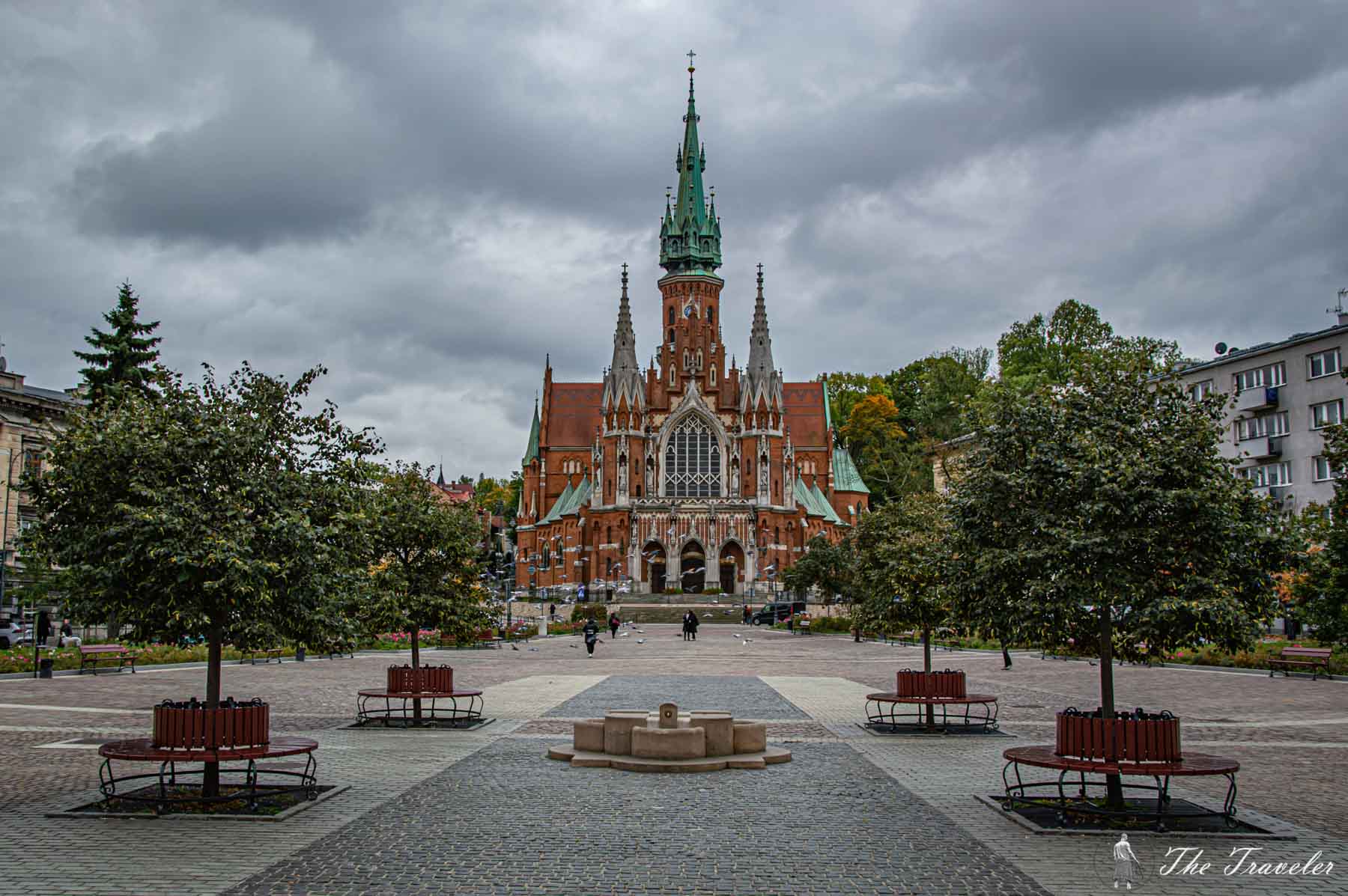
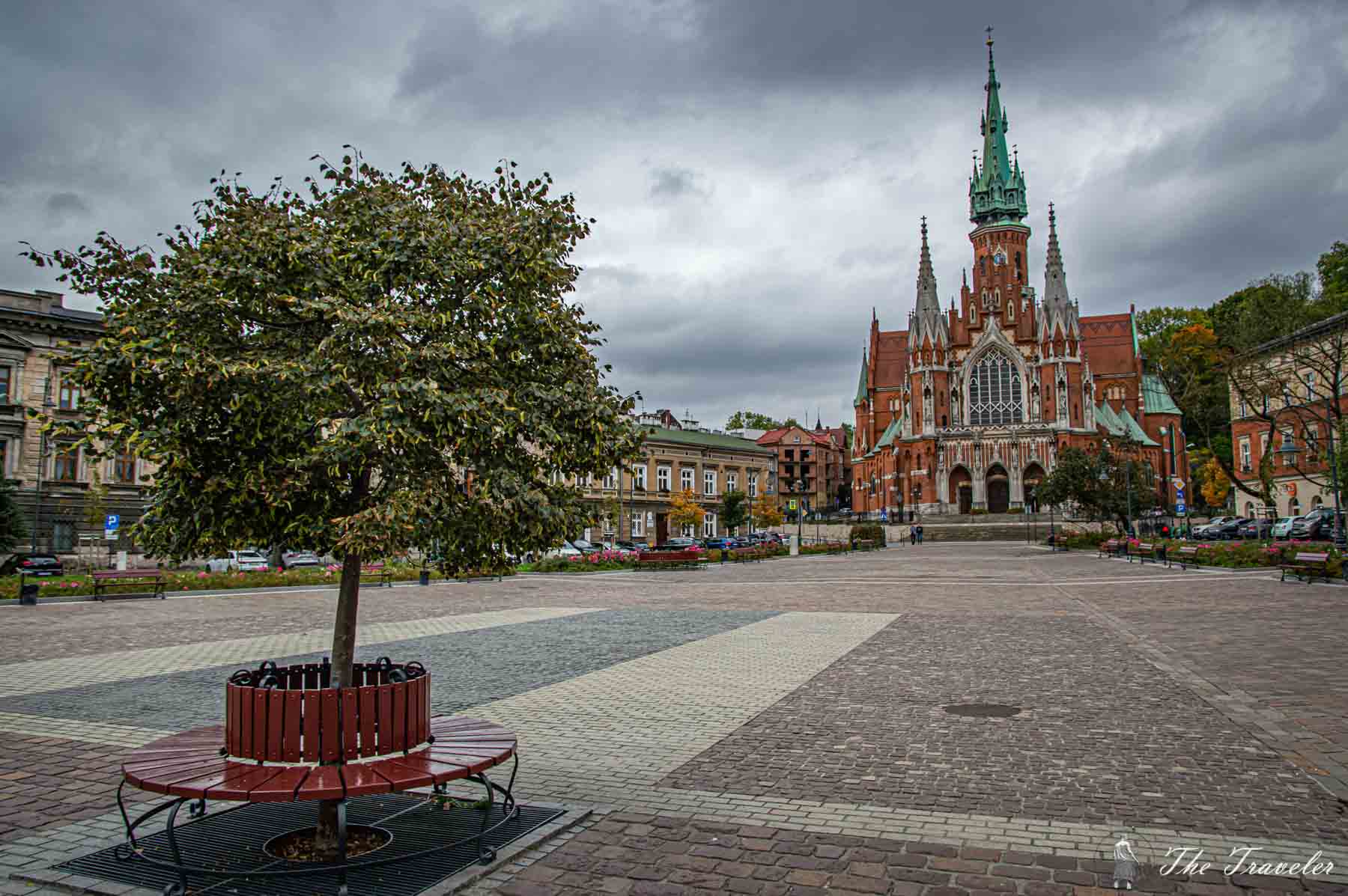
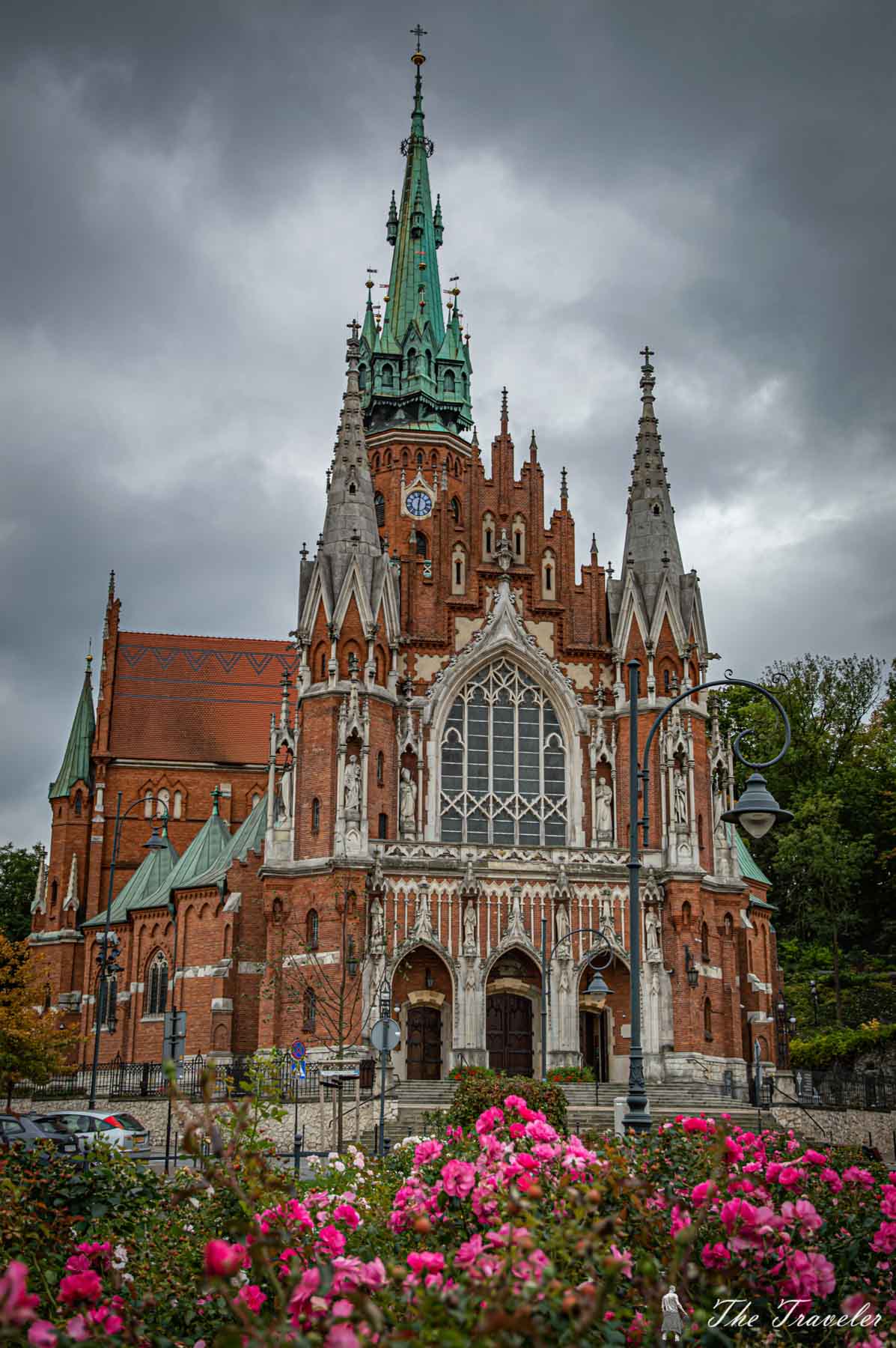
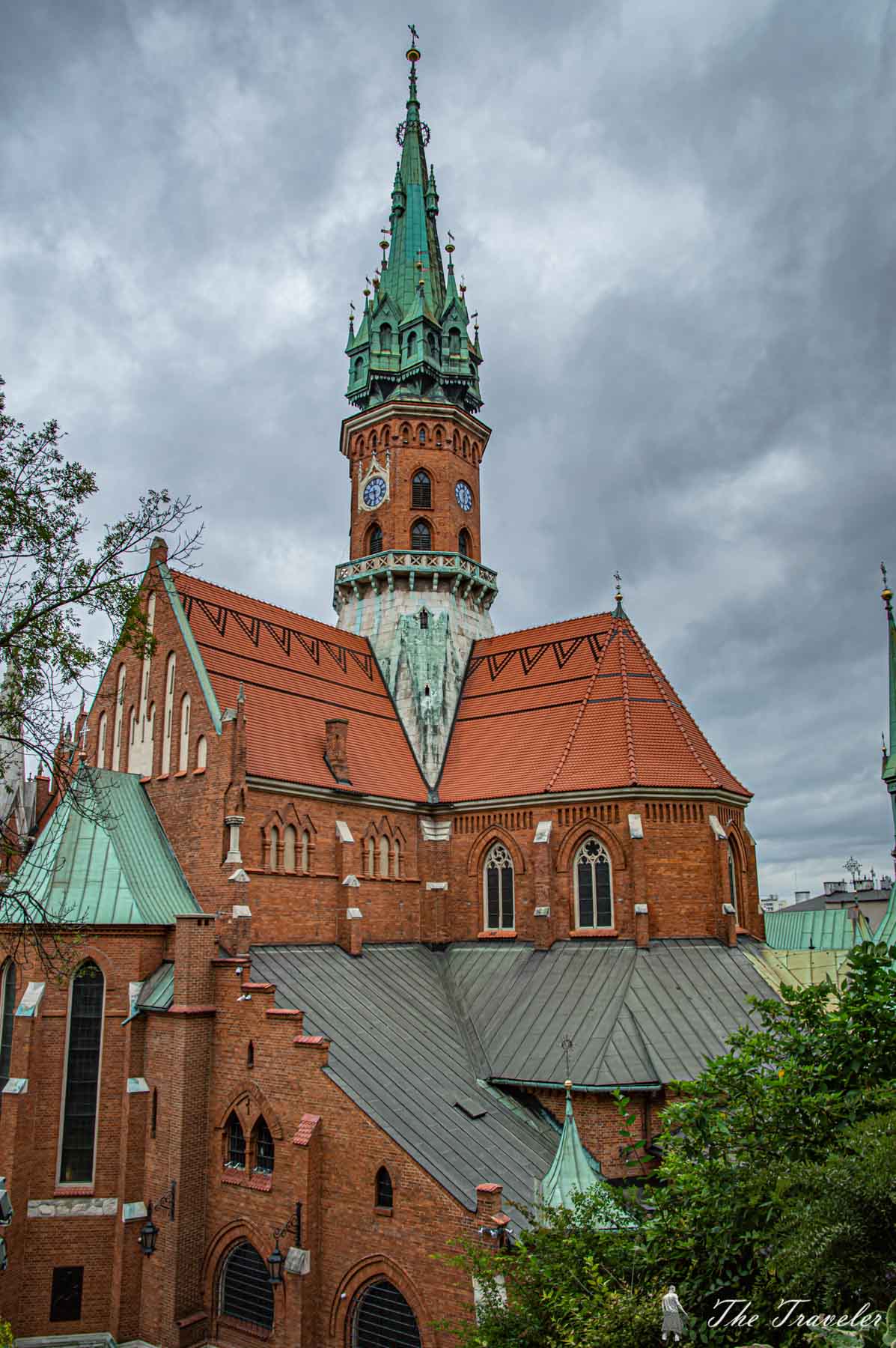
Without a doubt, the heart of the district is Rynek Podgórski square, above which the Church of St. Joseph (Sanktuarium Świętego Józefa w Krakowie) rises in all its grandeur. With its imposing red-brick façade, tall towers, and intricate Neo-Gothic details, it is perhaps one of the most photogenic buildings in all of Krakow! In fact, a child’s imagination quite naturally likens it to the Disney fairy tale castle, and when you look closely, it really does seem to have stepped right out of a magic book. The square in front, with its inviting benches, well-kept green lawns, and neat surrounding façades, makes the spot ideal for a short break.
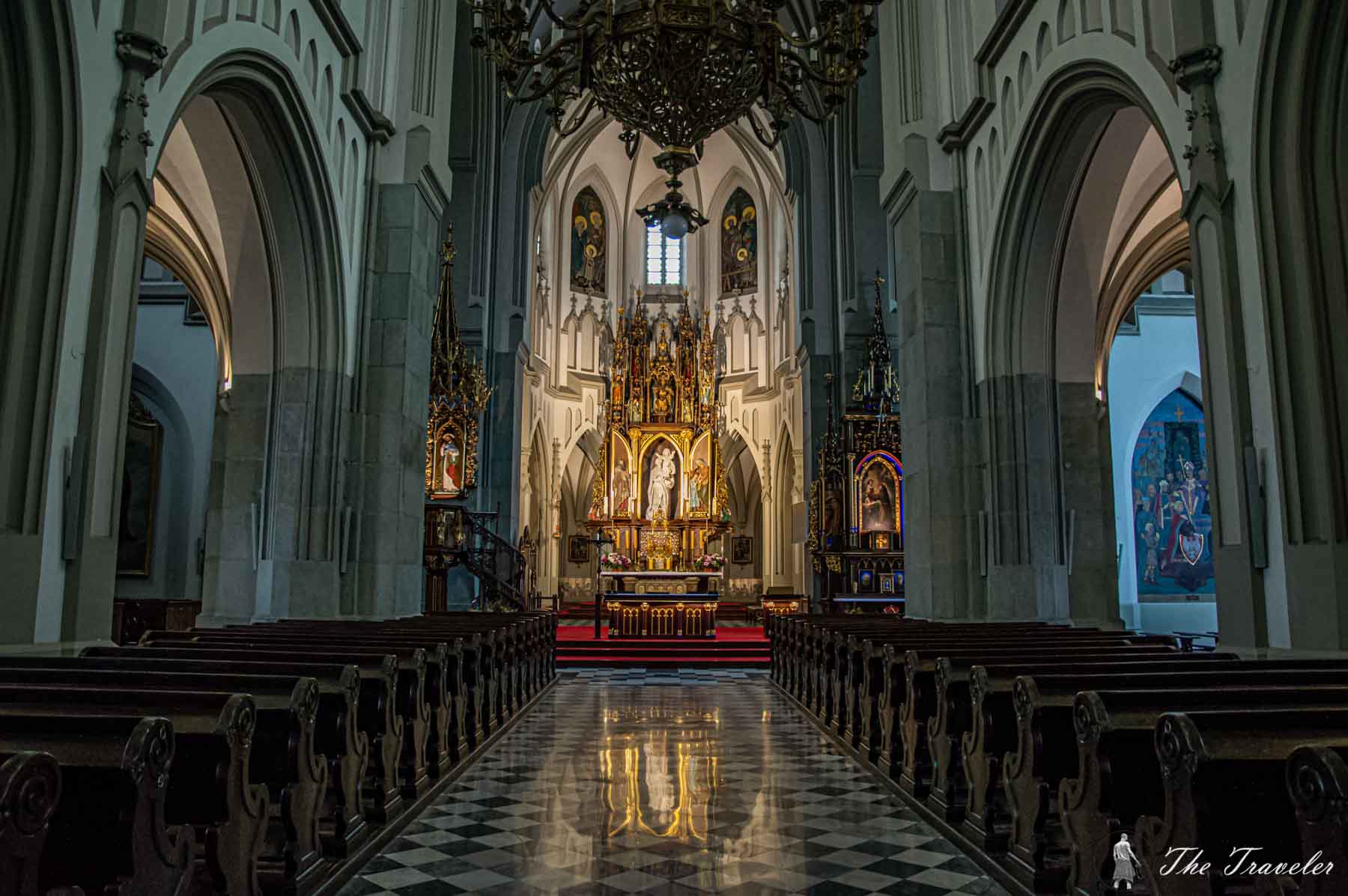
It is worth taking a look inside as well, although personally I find the interior a bit understated… Perhaps this feeling comes from comparing it to its striking exterior, but you can still find charm in the soaring vaults, the finely crafted altar, and the beautiful wood carvings.
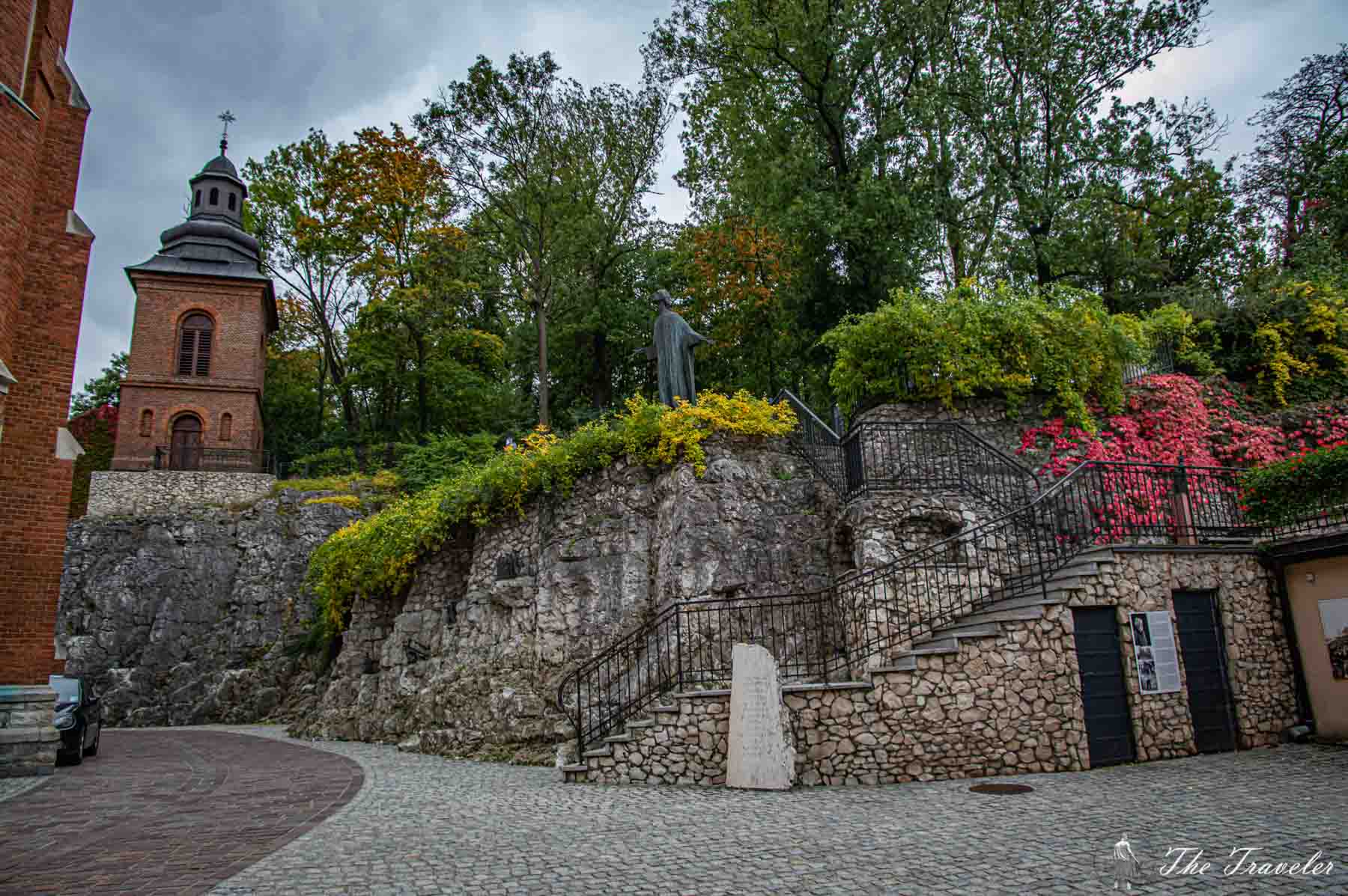
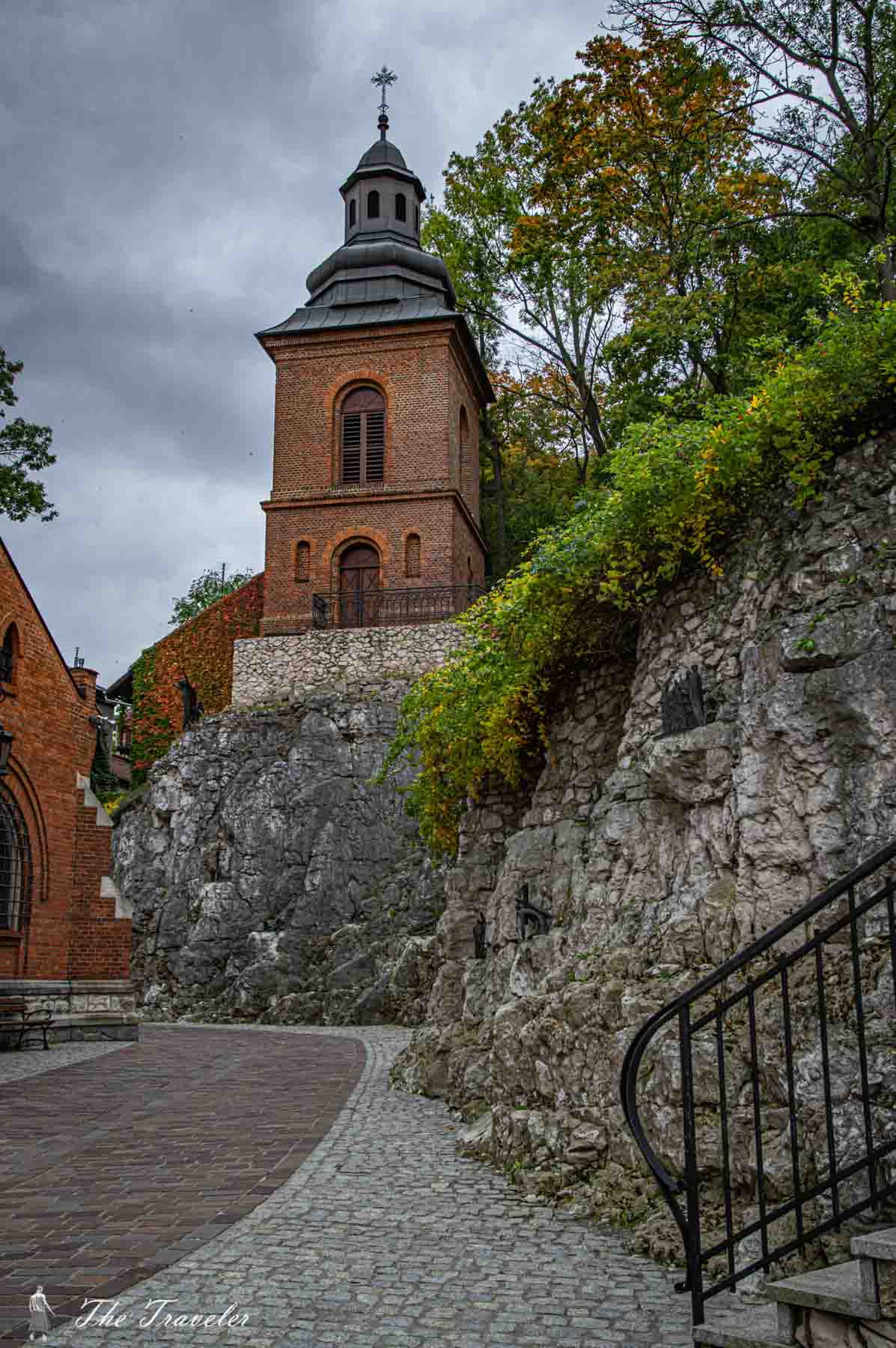
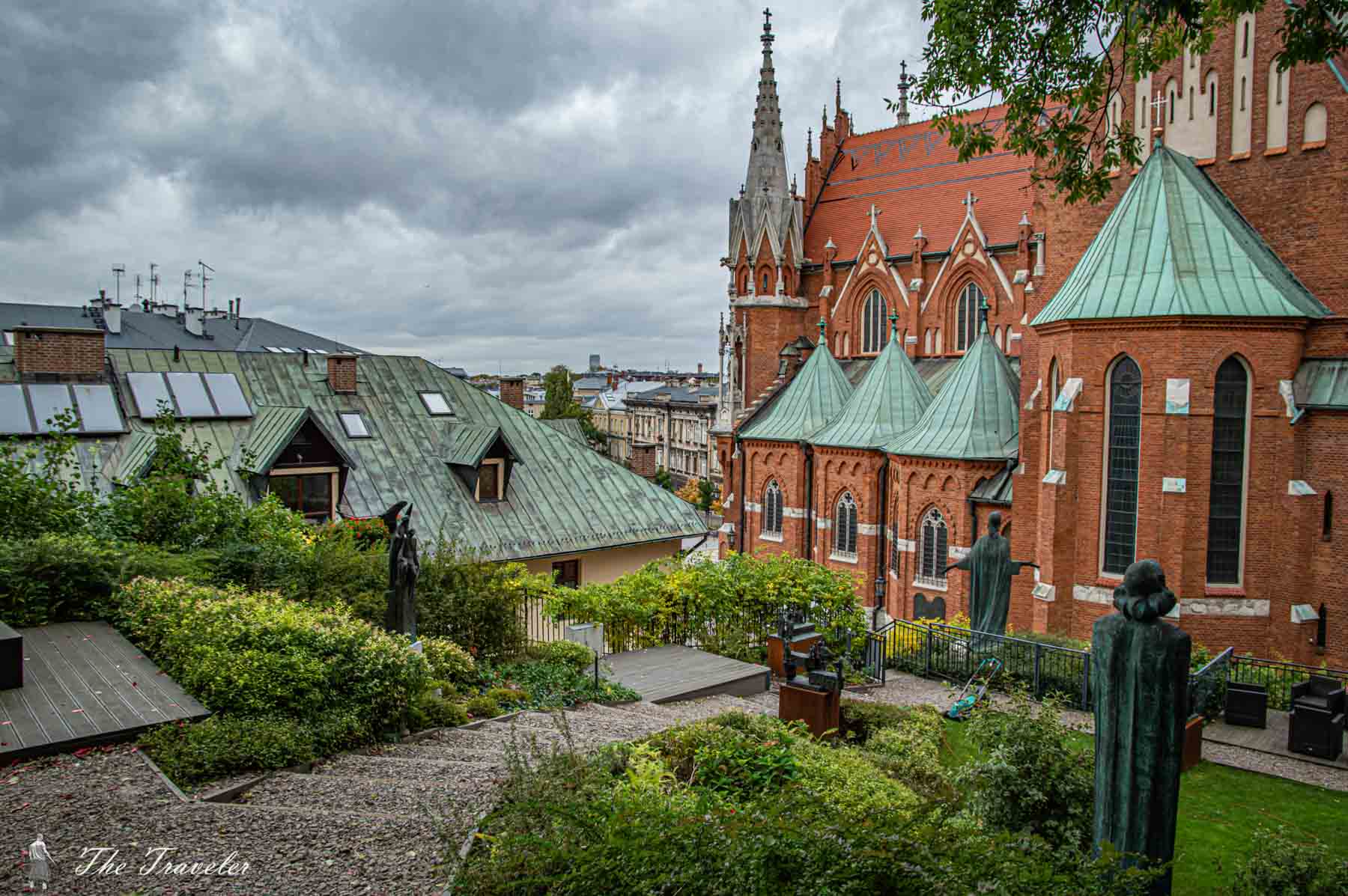
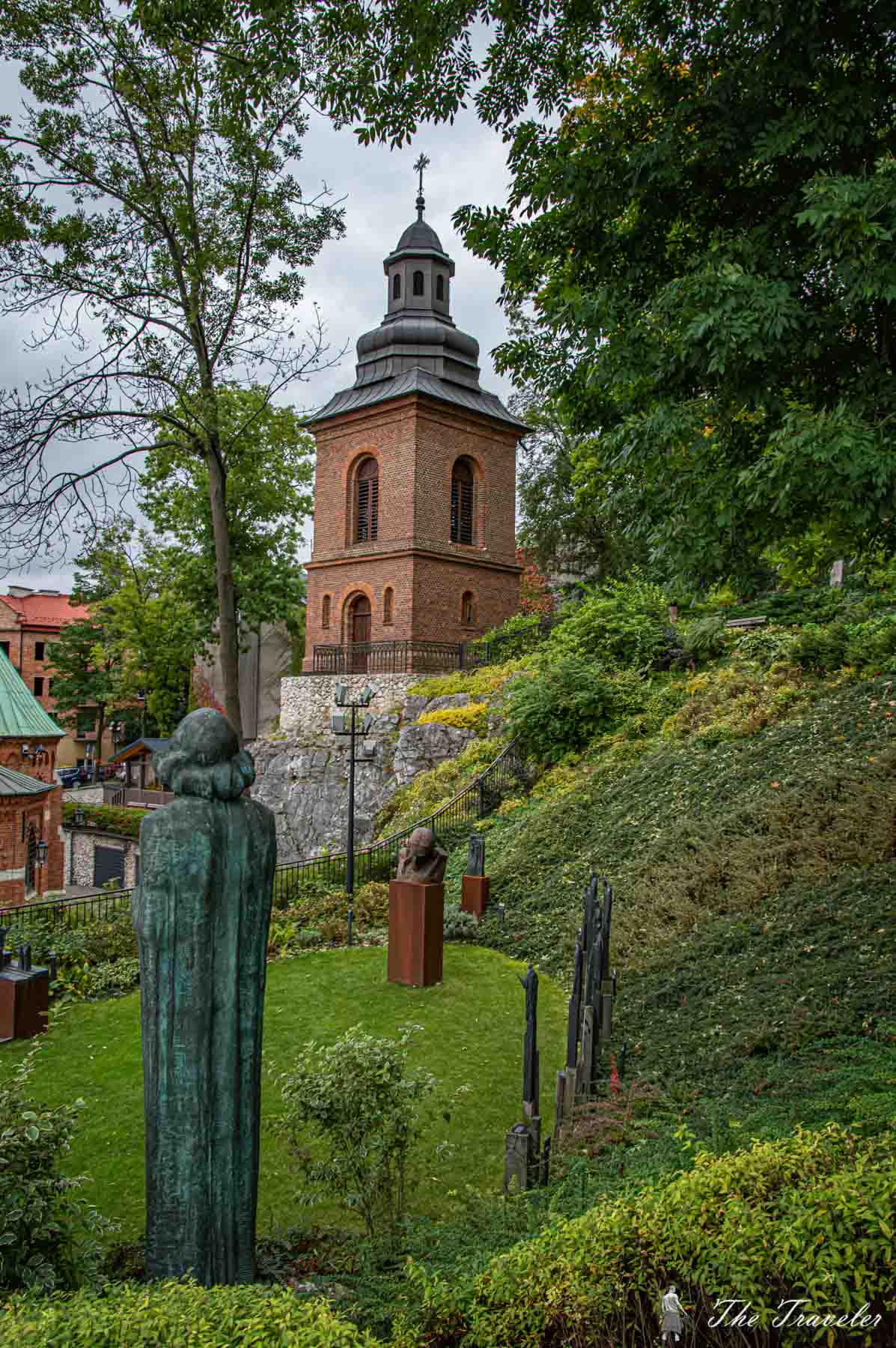
The most delightful spot is hidden behind the church, where a cobbled path leads to a rising rocky hill and a cozy courtyard park. Steps wind upward amid lush greenery, which in places had already turned bright yellow, leading to a terraced garden dotted with statues. The complete stillness and lush vegetation simply envelop us, and combined with the panoramic view over the district’s rooftops, make us feel as though we’ve discovered one of Krakow’s most captivating secret spots!
The Father Bernatek pedestrian bridge (Kładka Ojca Bernatka)
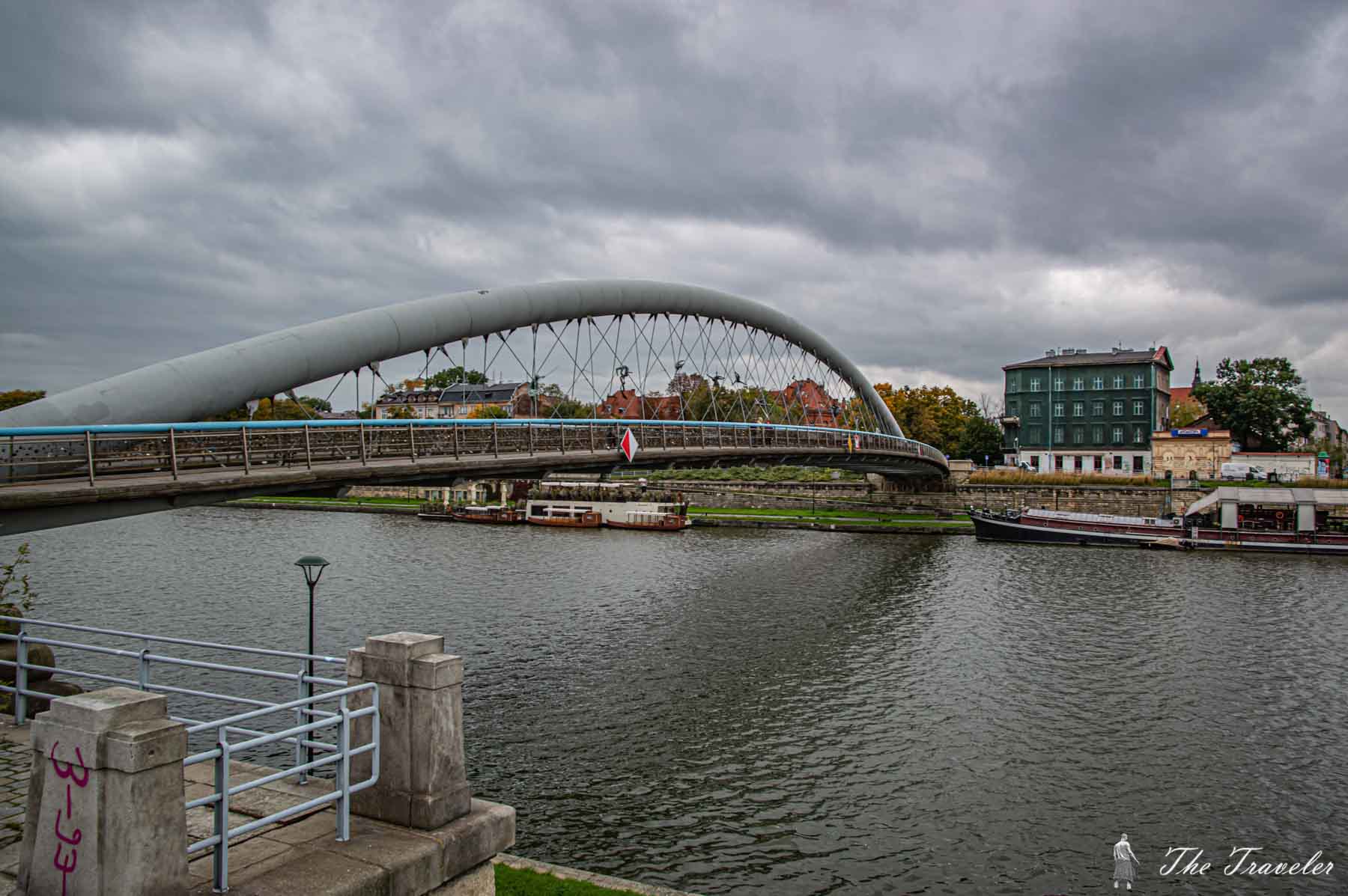
Until October 2026, when the new Kładka Kazimierz – Ludwinów bridge opened, the only solely pedestrian and cycle bridge in Krakow was “Father Bernatek” (Kładka Ojca Bernatka). Opened in 2010, featuring a sleek, curved oval structure about 145 meters long, it connects the districts of Kazimierz and Stare Podgórze via two parallel paths for pedestrians and cyclists.
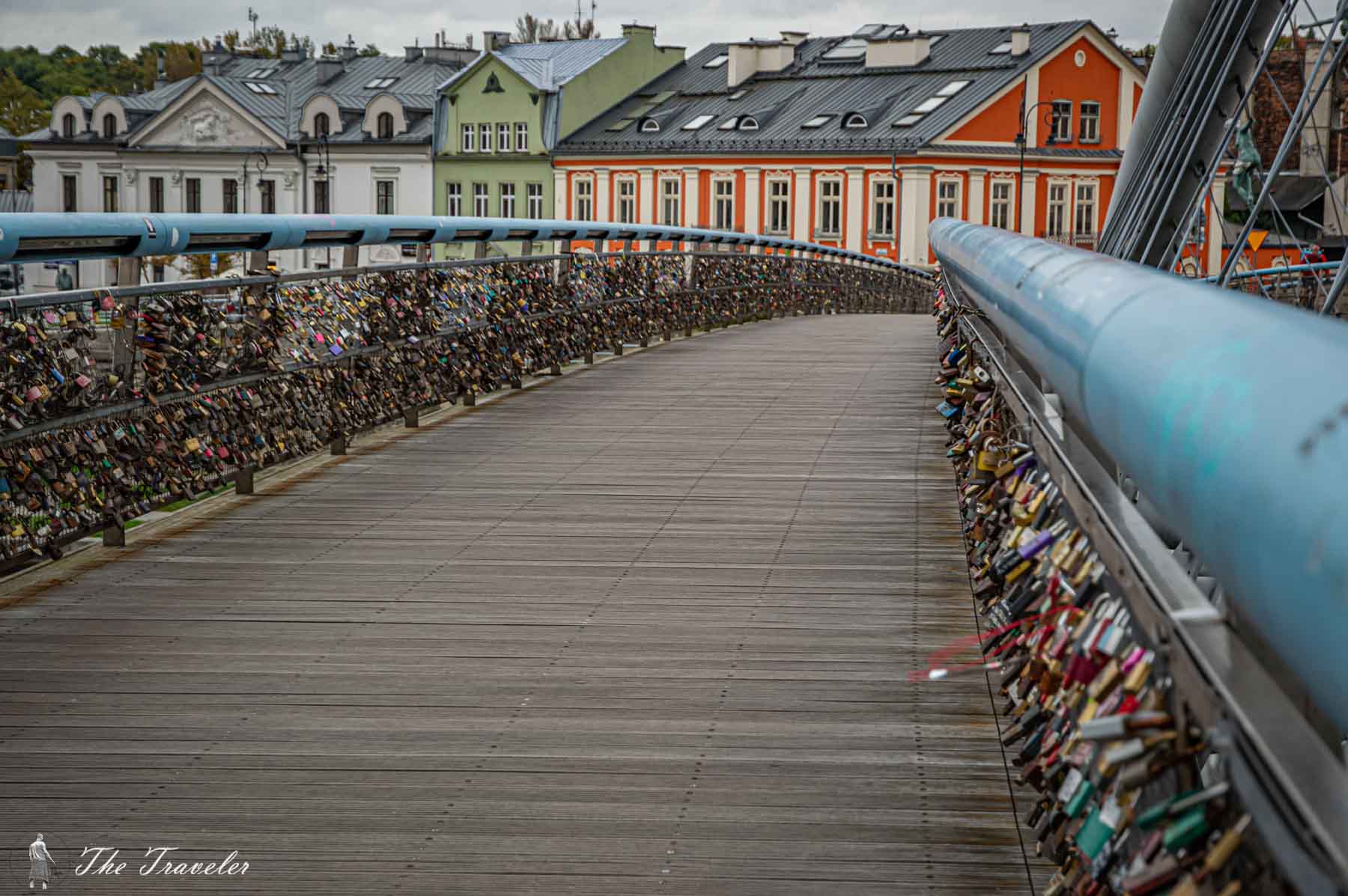
Its metal railings are adorned with thousands of lovers’ padlocks that seem to go on forever… The landscape along the Vistula banks in this area isn’t particularly grand, but a few colorful façades still manage to stand out under the gray clouds hovering above us. Yet something else catches your eye the moment you look up – figures that seem to mock gravity! Suspended from steel cables above the heads of passersby are bronze acrobats crafted by sculptor Jerzy Kędziora. Originally conceived as a temporary art installation, the locals embraced them with such enthusiasm that they fought to keep them permanently.
💡 The bridge’s name is no coincidence – Father Bernatek was a monk from the nearby Bernardine monastery who initiated the construction of a hospital and played a key role in combating cholera and smallpox epidemics in the late 19th century.
First steps in the Jewish quarter of Kazimierz
We finally arrive at the former Jewish quarter of Kazimierz, which transforms the scars of the past into captivating artistic and bohemian energy! Few people know that for centuries Kazimierz was actually a completely independent city, founded in the 14th century by the Polish King Casimir the Great (after whom it is named). According to some sources, it was even considered the second most important city in Poland during the Middle Ages, until the Swedes devastated it in the mid-17th century, which eventually led to its incorporation as a district of Krakow in the late 18th century.
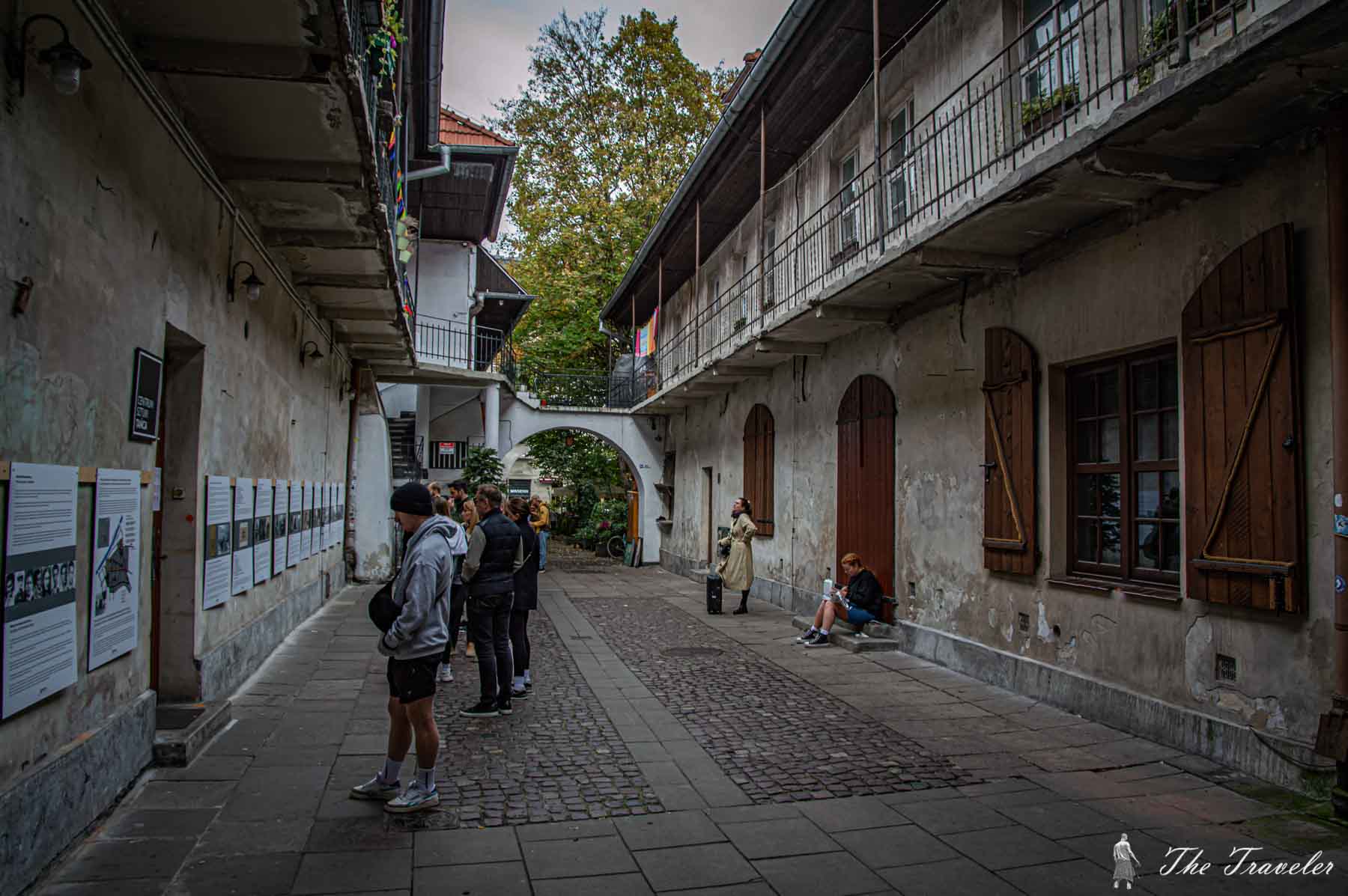
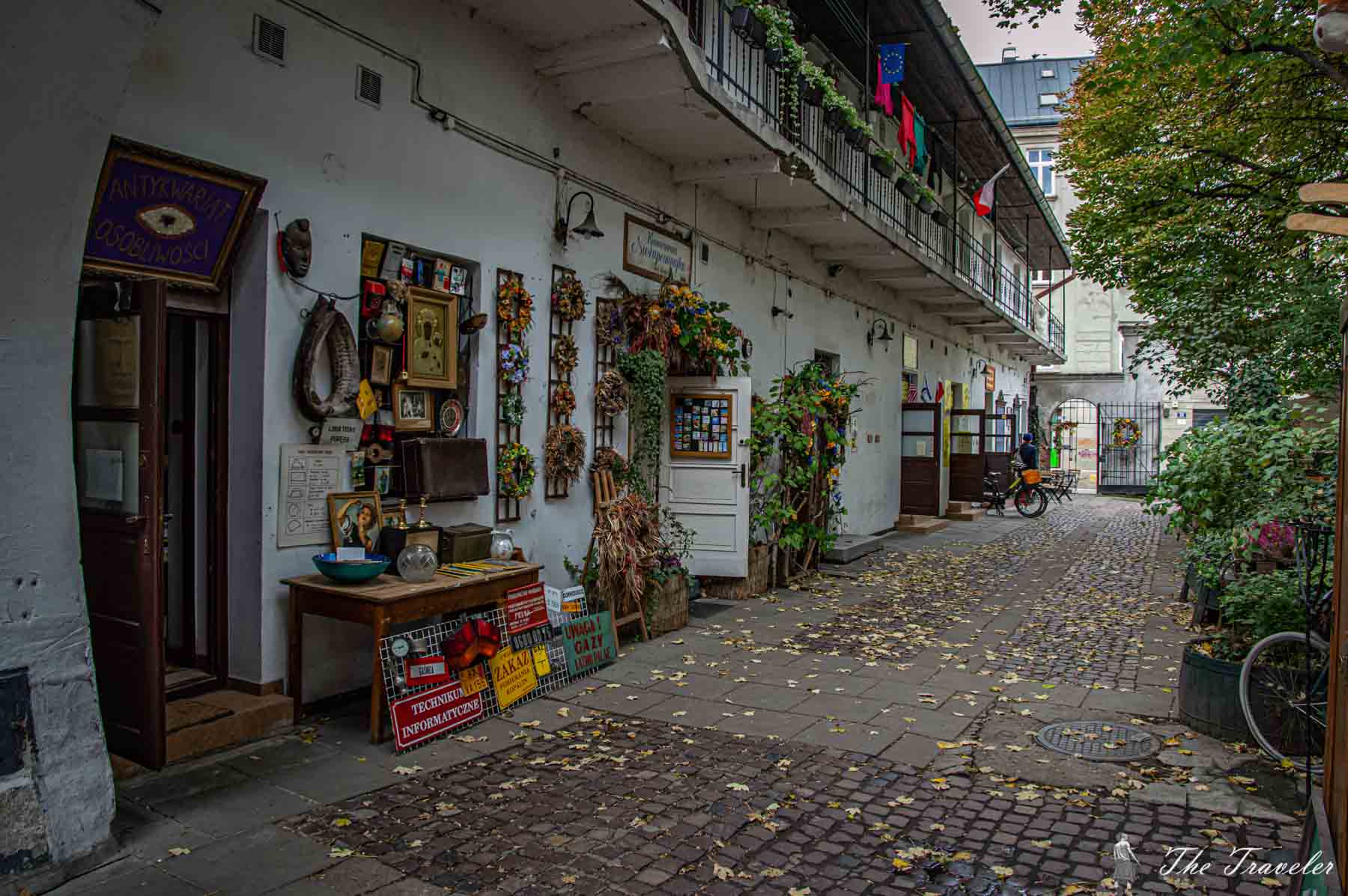
The first spot we headed to was the Schindler’s List Passage (Pasaż Listy Schindlera), which gained worldwide fame through Steven Spielberg’s film “Schindler’s List”. Despite having built movie sets elsewhere, Spielberg chose this exact spot to shoot one of the film’s most dramatic scenes, likely drawn by its unique atmosphere. Today, this cobbled courtyard with wooden balconies, old shutters, and historic exhibits mounted on the walls has turned into a mini open-air museum, carrying a special sense of authenticity and cinematic magic!
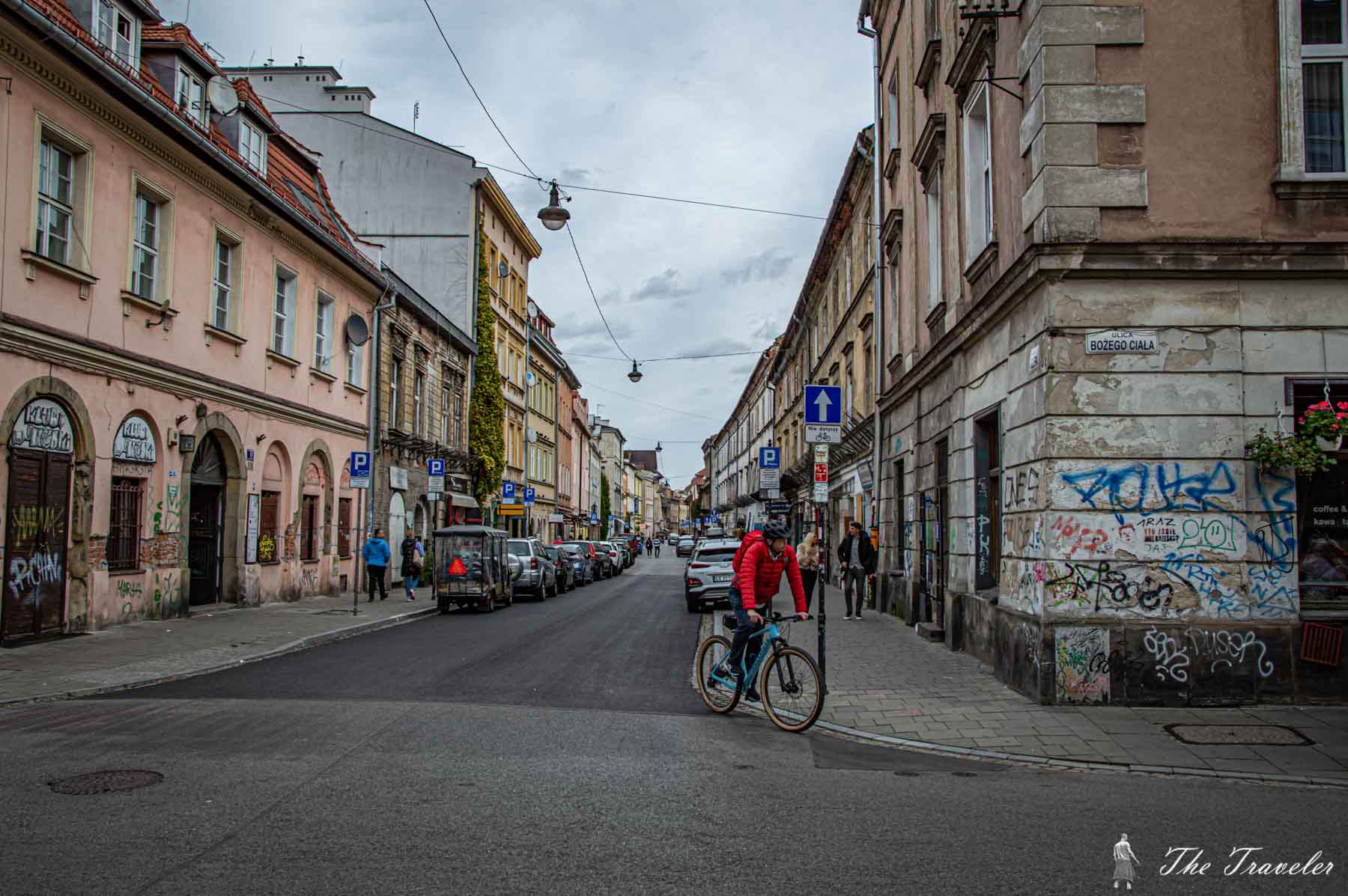
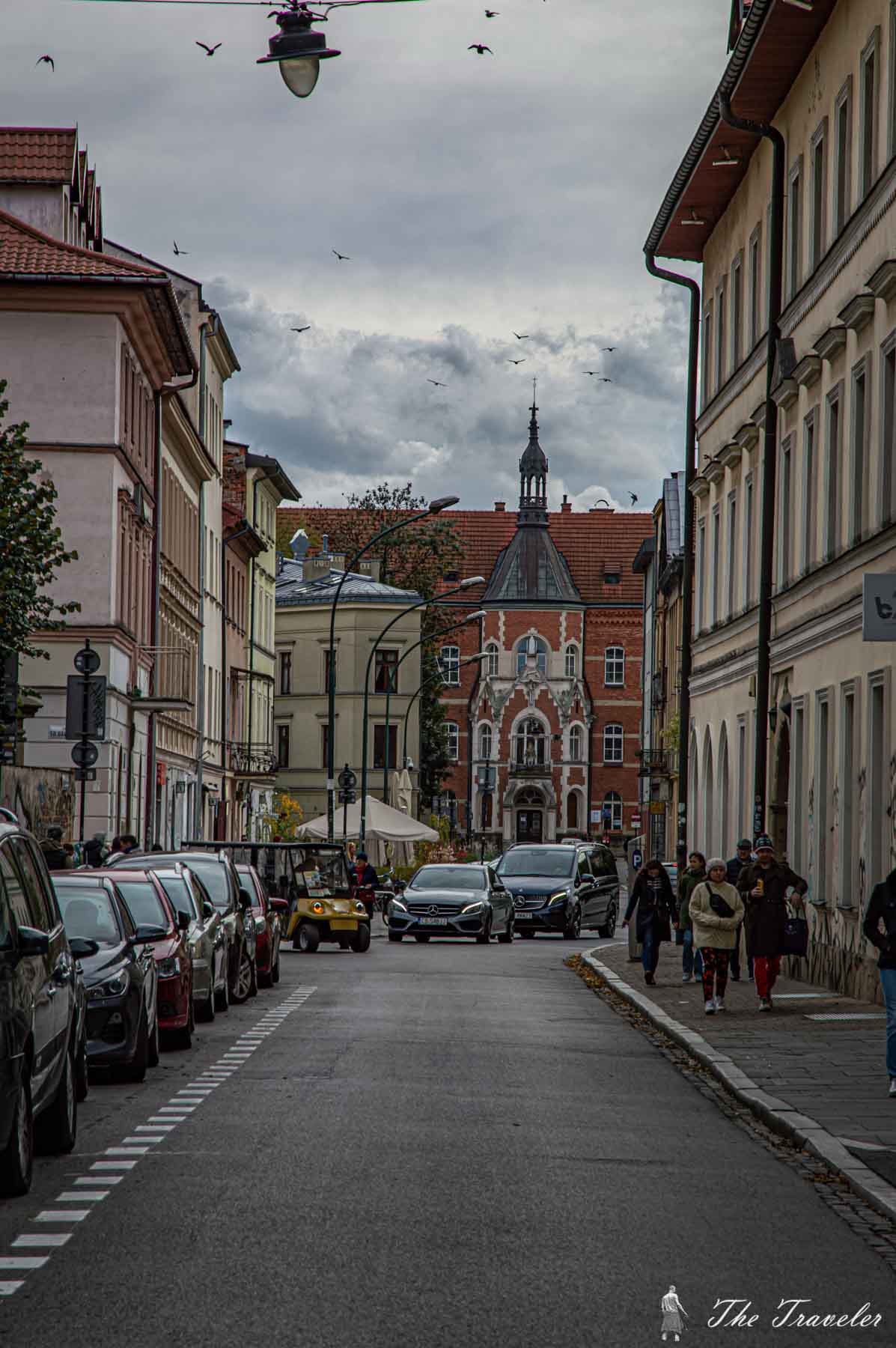
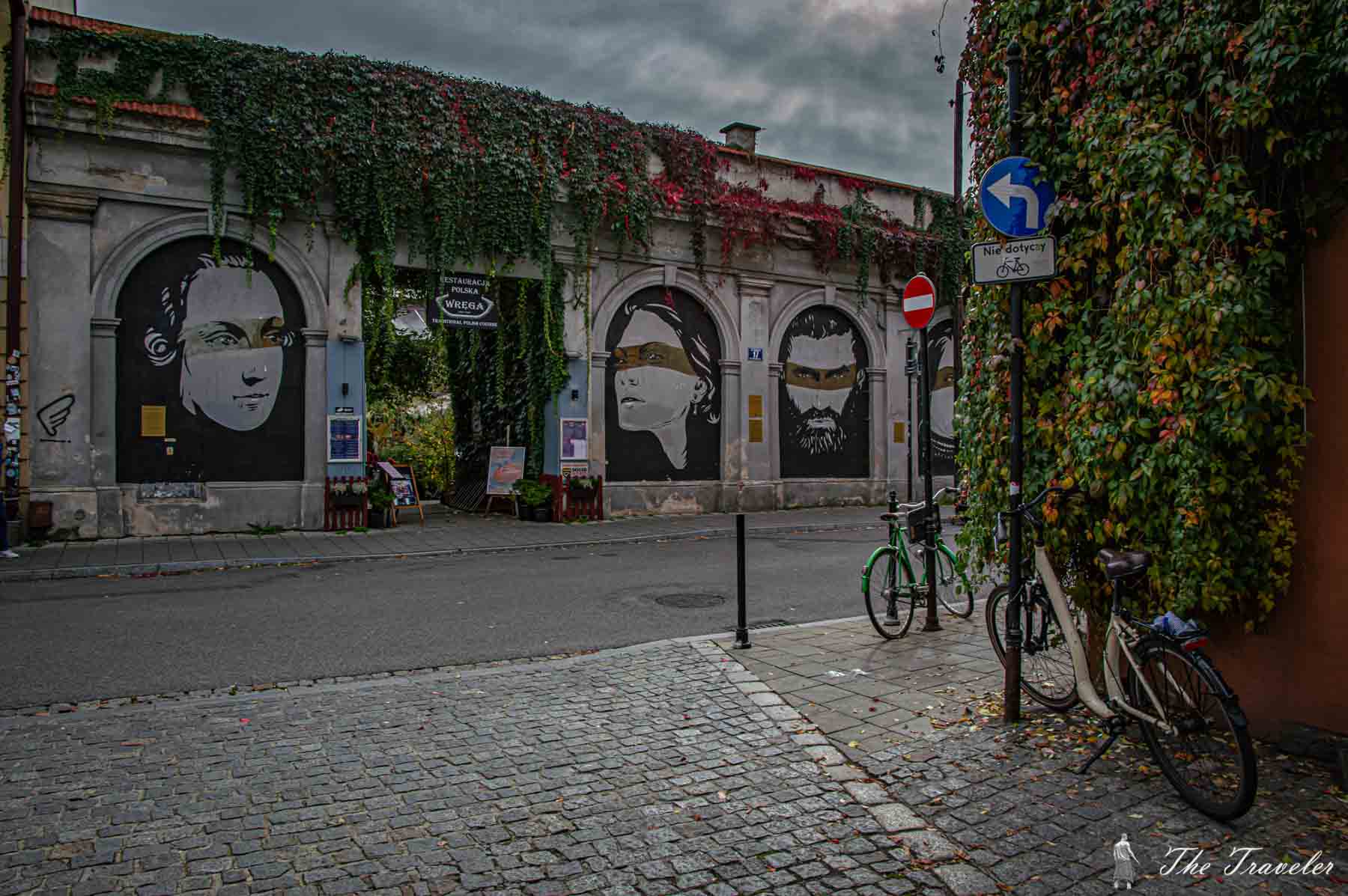
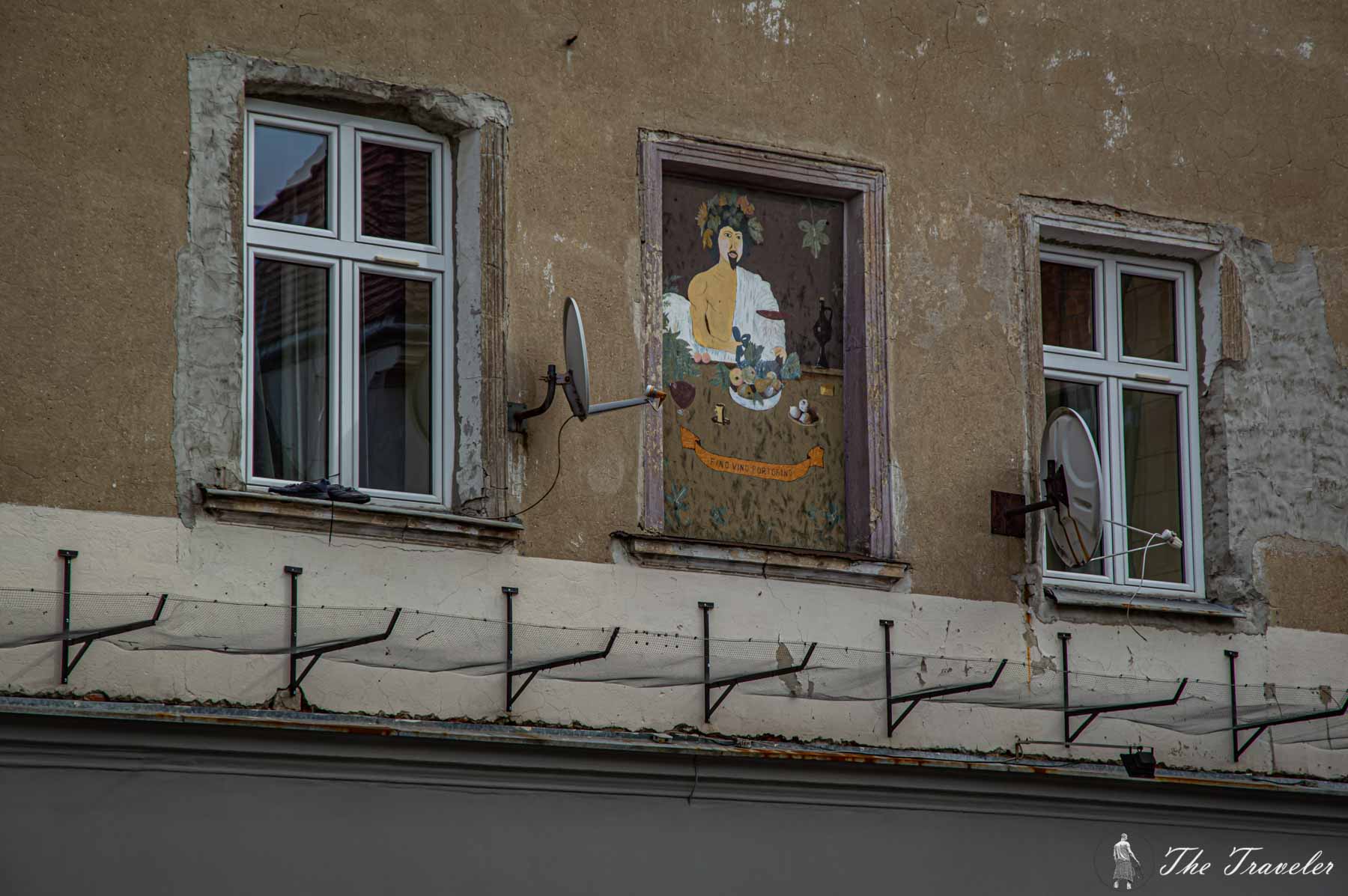
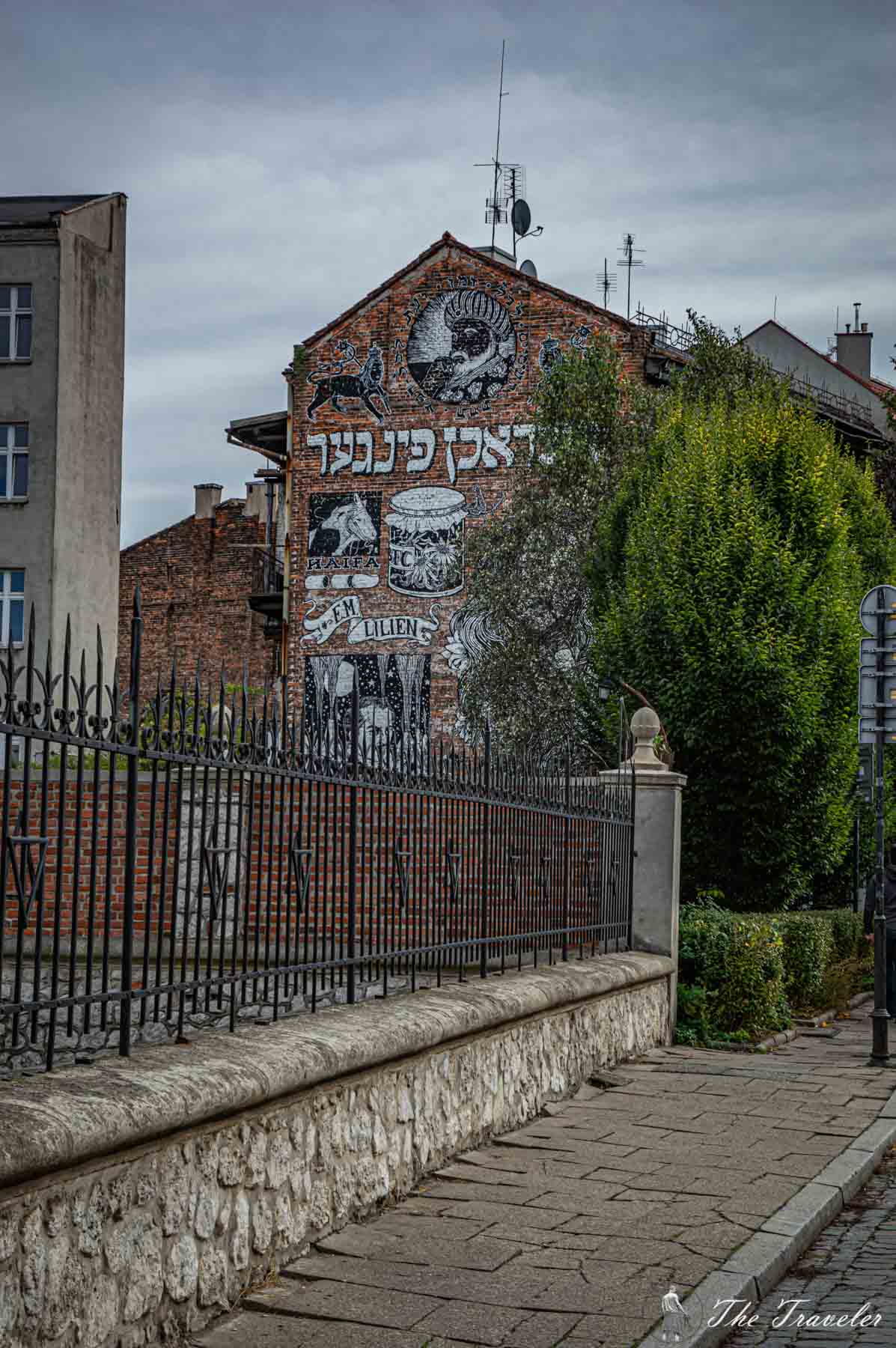
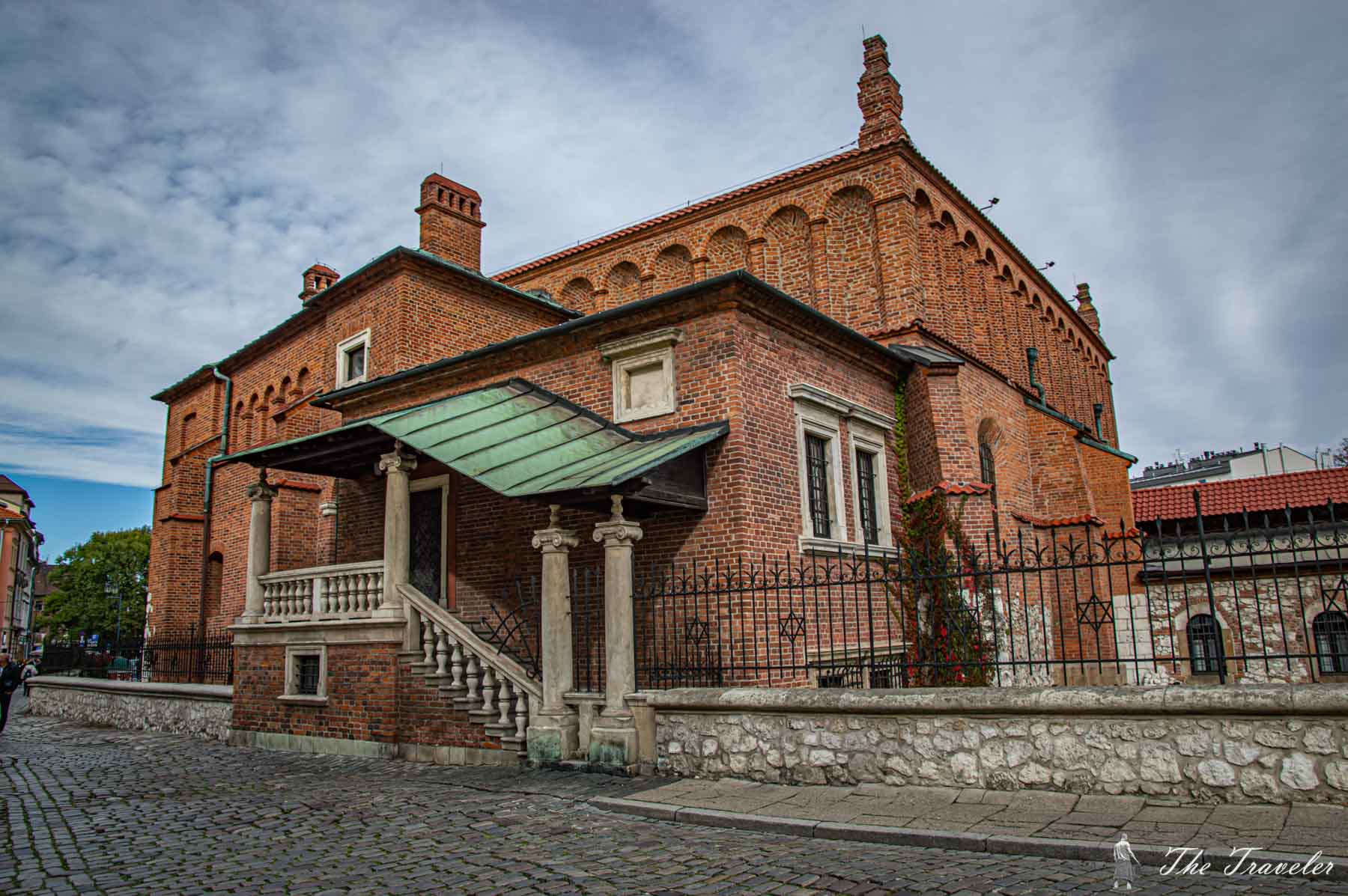
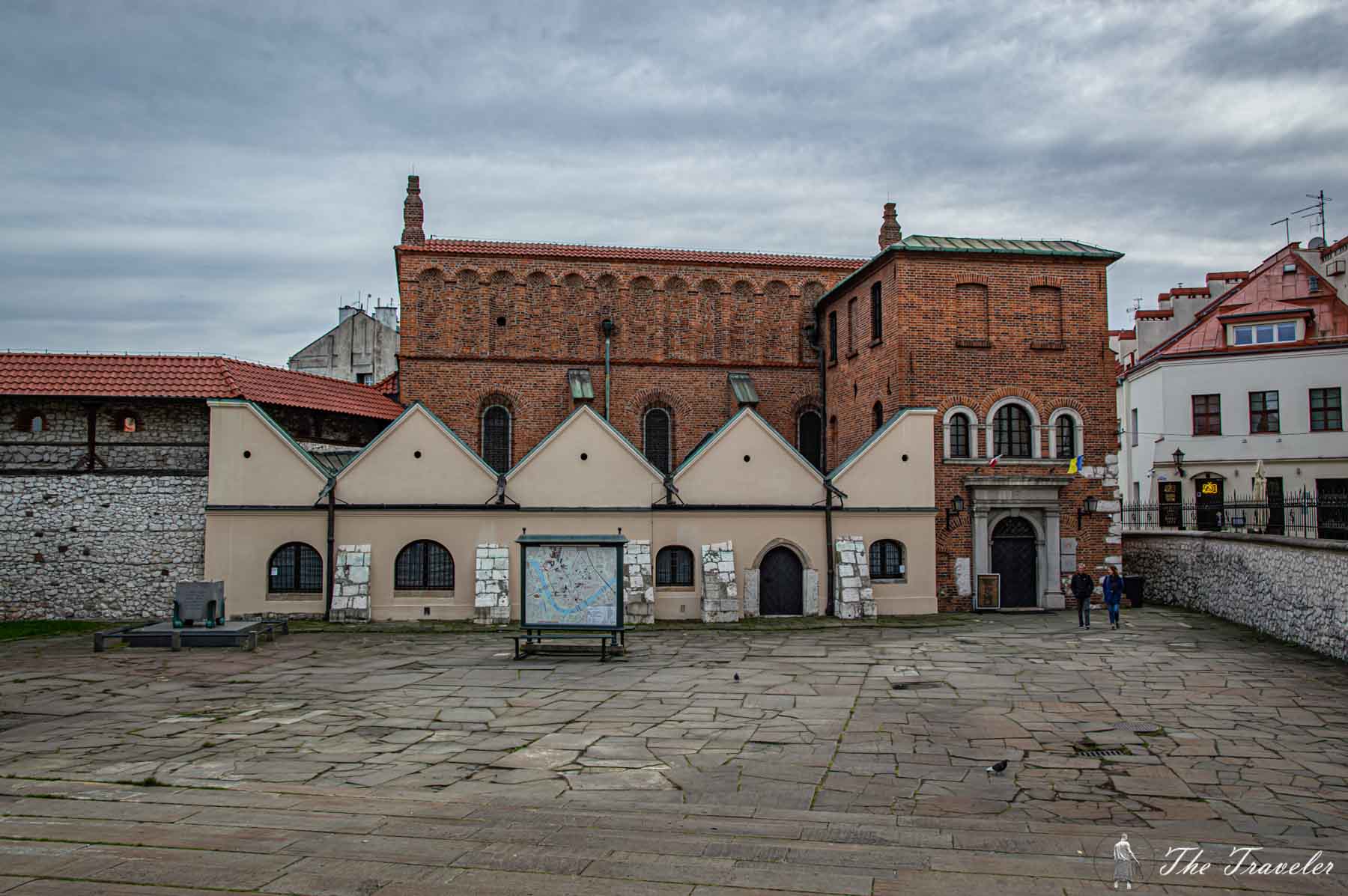
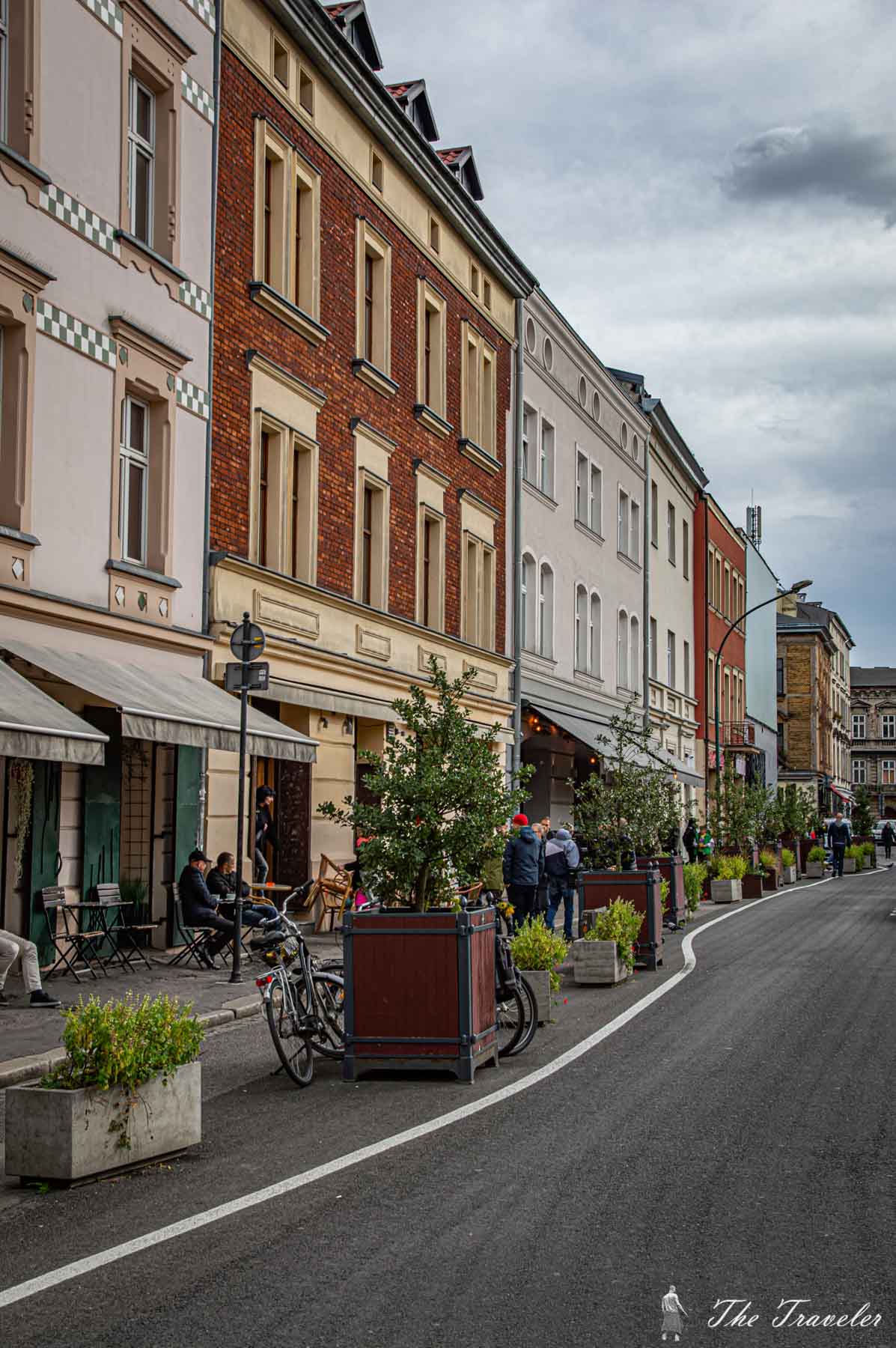
We continued to wander slowly through the narrow side streets, where old craft workshops, spots with retro façades, and buildings with peeling plaster – covered in ivy or painted with vibrant graffiti – coexist in complete harmony… Before we know it, we arrive at the Old Synagogue (Stara Synagoga). As its name suggests, it is the oldest surviving synagogue in Poland, dating back to the 15th century. It underwent several restorations over the centuries, the first following a major fire when the task was entrusted to the Florentine Matteo Gucci – which explains the Renaissance elements on its façade. Another interesting architectural feature is that it was designed to defend civilians during a siege, as it formed part of Kazimierz’s eastern fortification walls.
💡 Today, the synagogue is a branch of the Historical Museum of Krakow. If you’d like to learn more about the life of the local Jewish community, you can head inside – ticket price is 22 PLN (and entry is free on Mondays!).
A little more of Kazimierz
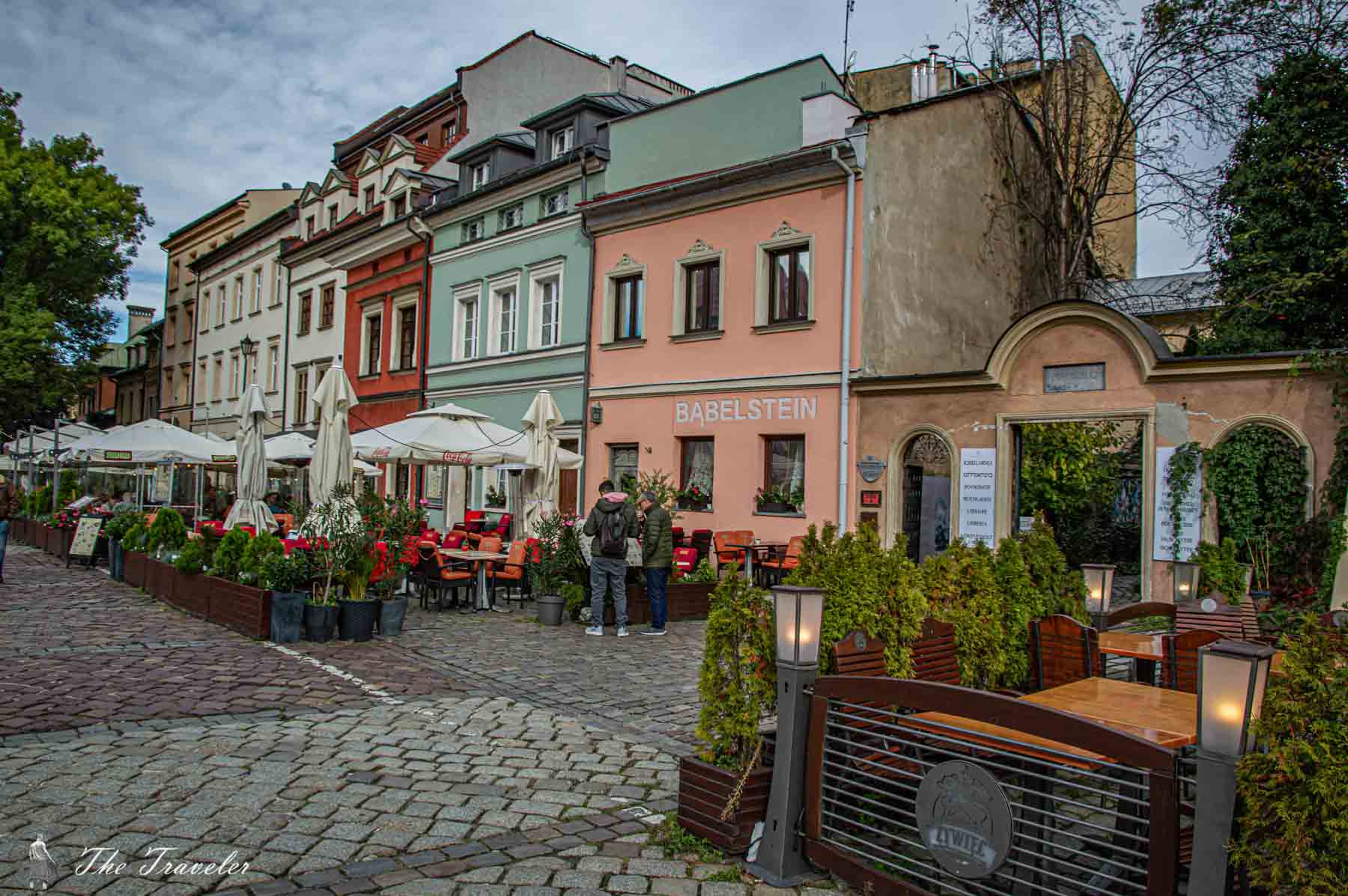
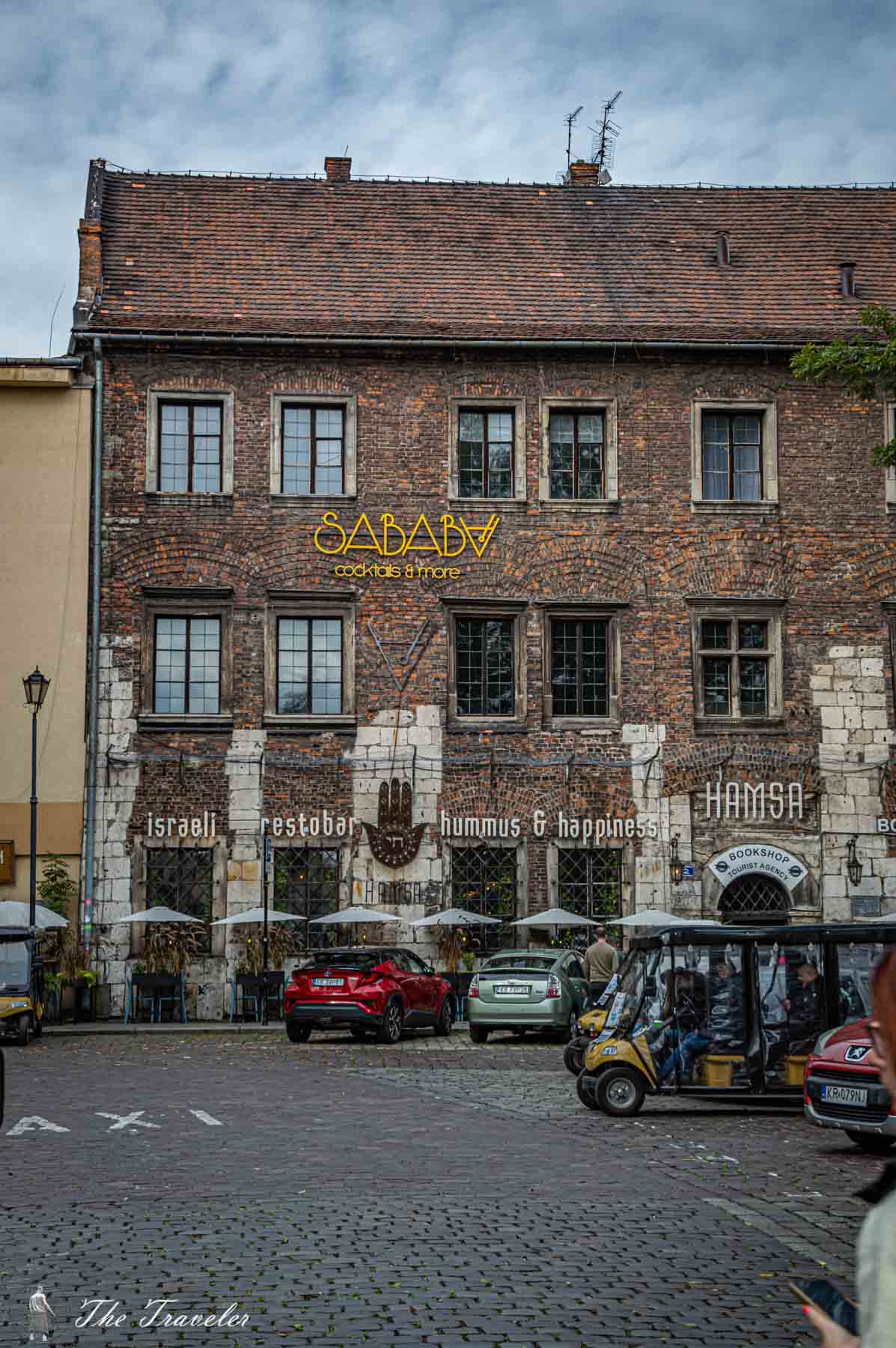
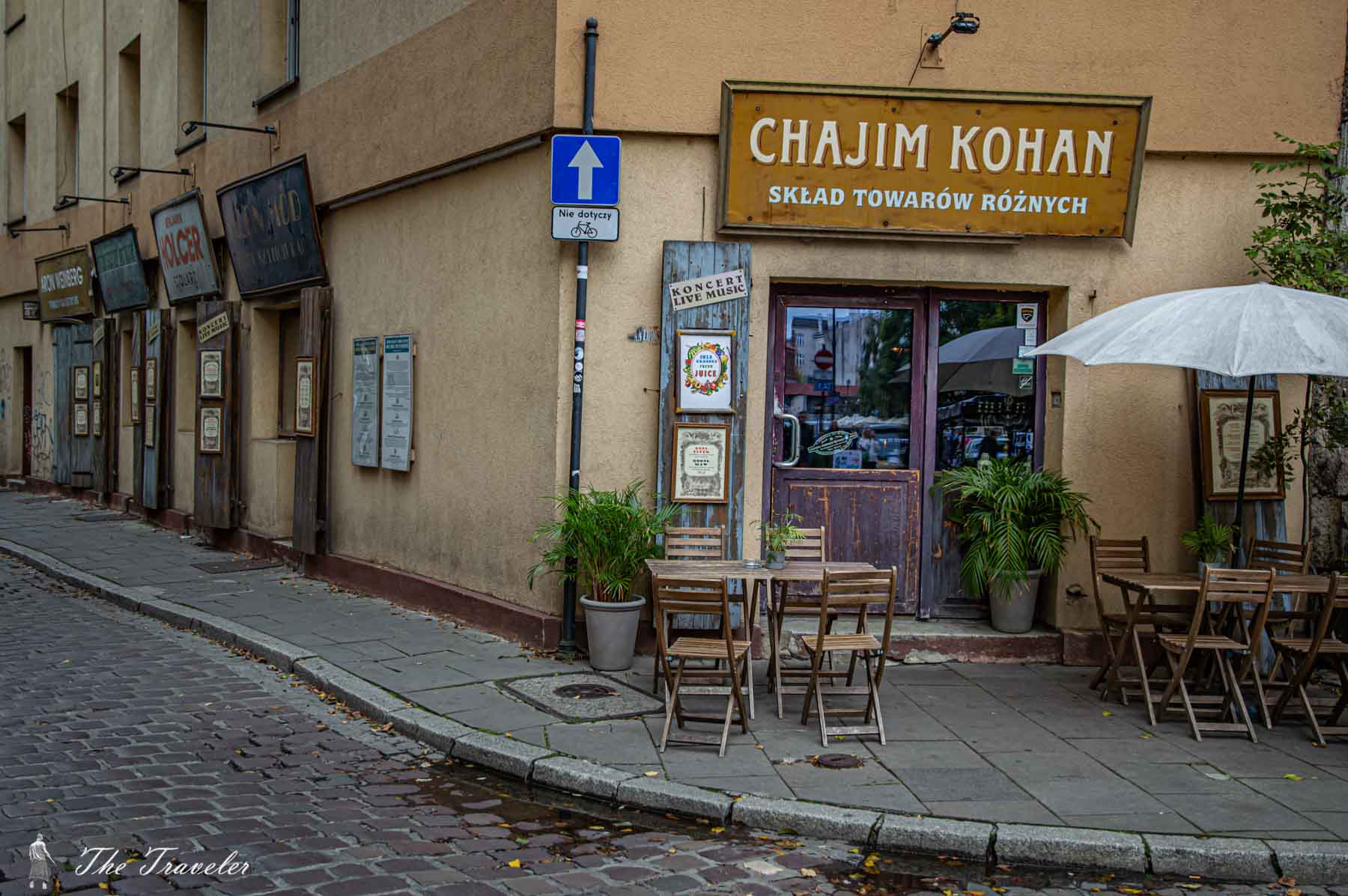
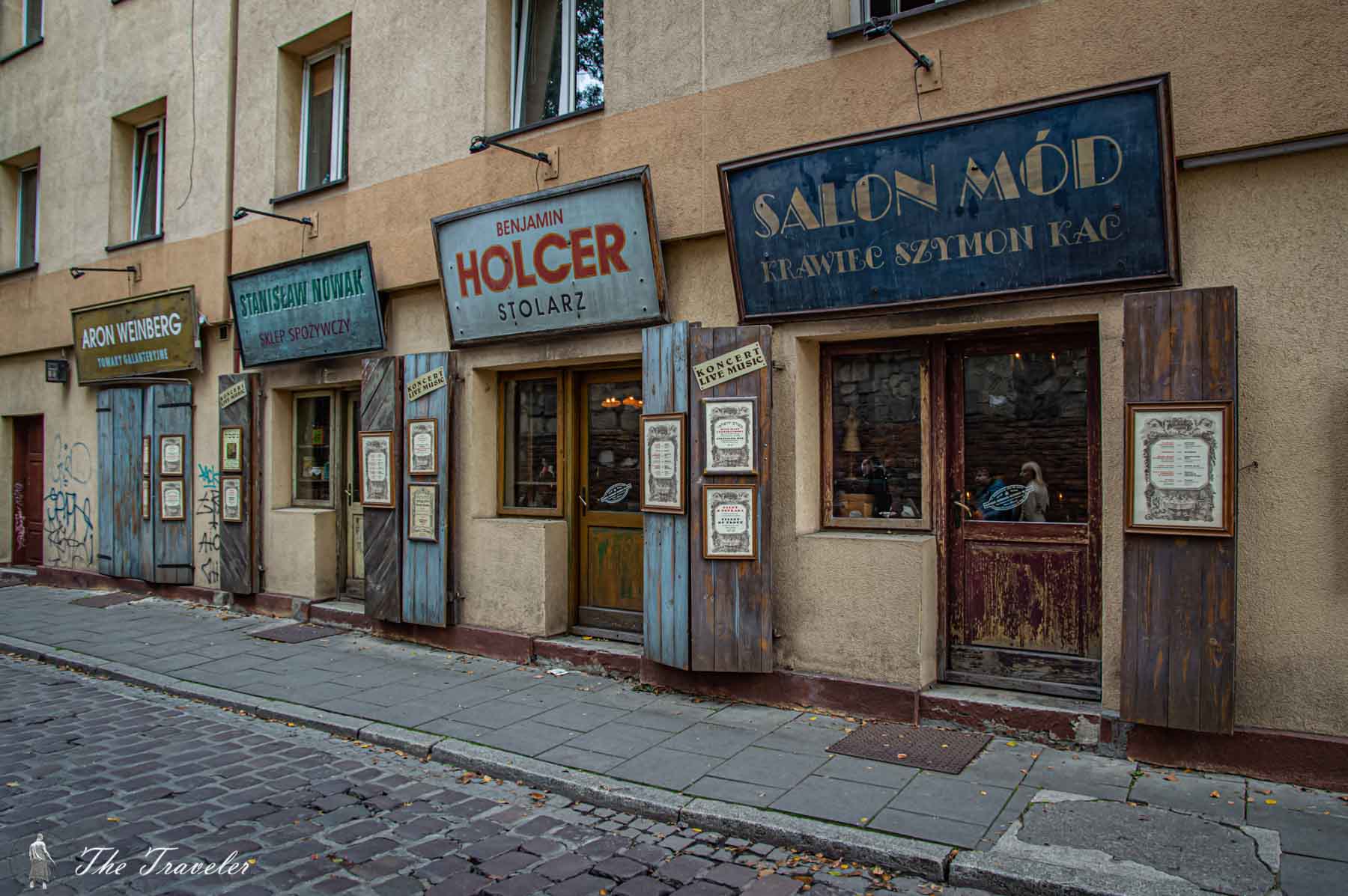
Right next to the Synagogue stretches the historic Szeroka Street – the beating heart of the district! It is filled with an abundance of eateries and small shops, and in the past, as many as four synagogues stood along it. At its northern end, towards Miodowa Street, lies what is perhaps the most photographed spot in the entire quarter! The façades here replicate prewar Jewish shopfronts, complete with faded retro signs and wooden shutters plastered with vintage posters…
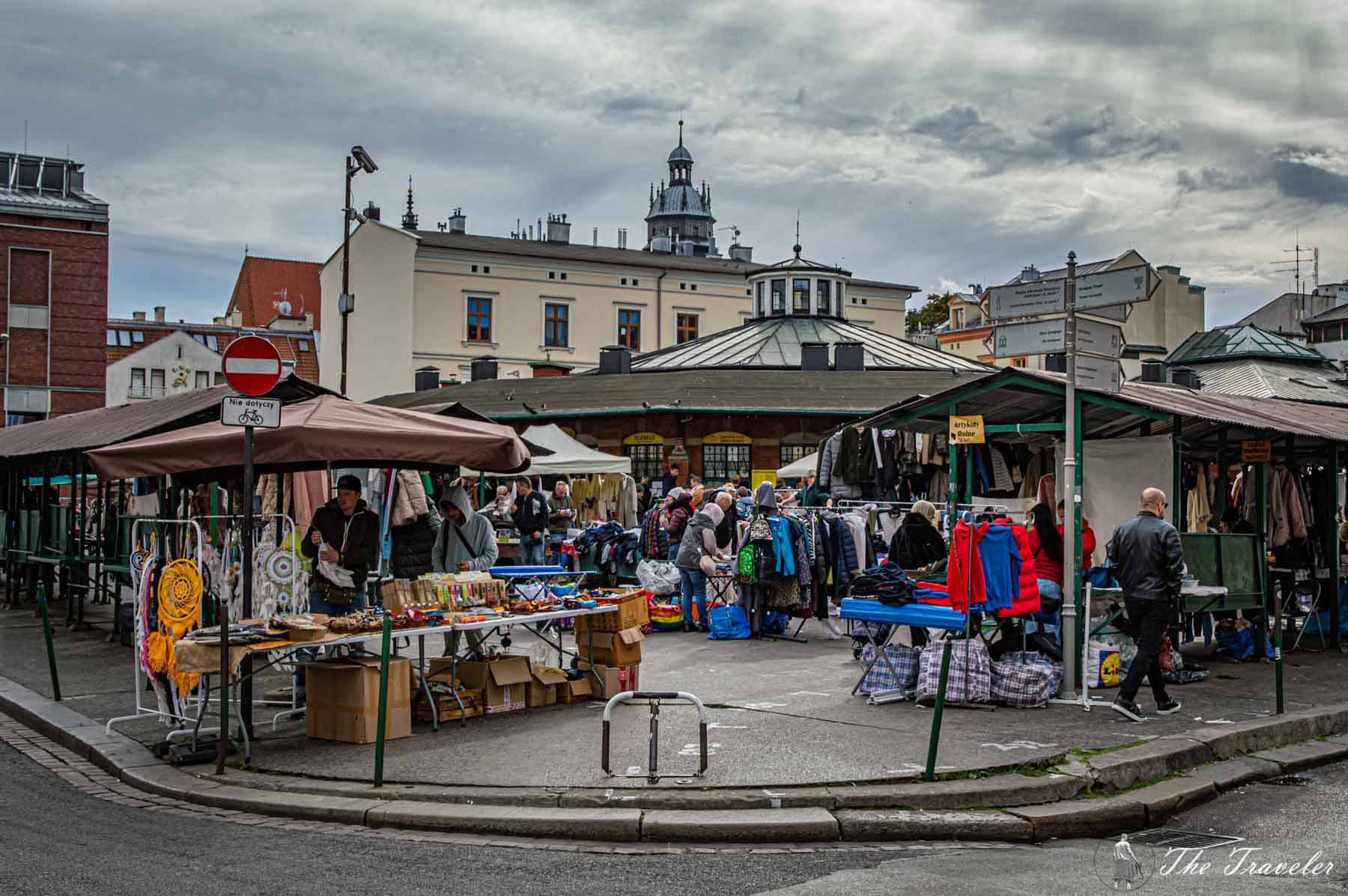
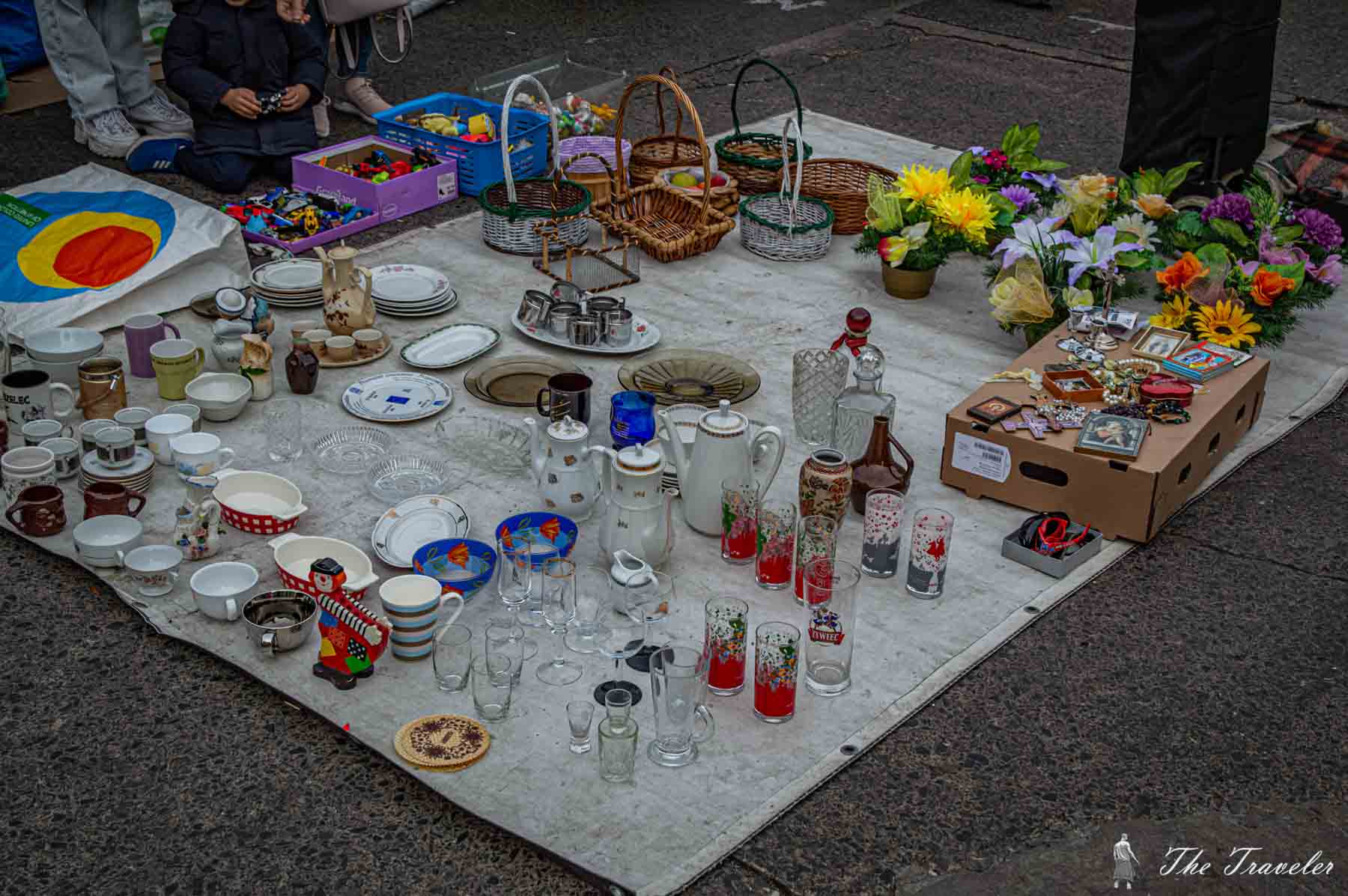
We wrap up our walk around Plac Nowy – the main market square of the Jewish quarter since the late 17th century. Right in its center, all kinds of flea market stalls spread out across the cobblestones, where you can find vintage antiques, retro tableware, nostalgic souvenirs, clothes, and various useful (and not-so-useful) items… They closely encircle the Okrąglak rotunda, built in 1900 as a ritual poultry slaughterhouse and now bustling with street food stalls. Here you’ll find some of the most famous vendors serving up the iconic Polish zapiekanka – a crispy toasted open-face baguette topped with melted cheese, mushrooms, and various toppings (we didn’t manage to try it in Krakow, but we made sure to in Wroclaw!).
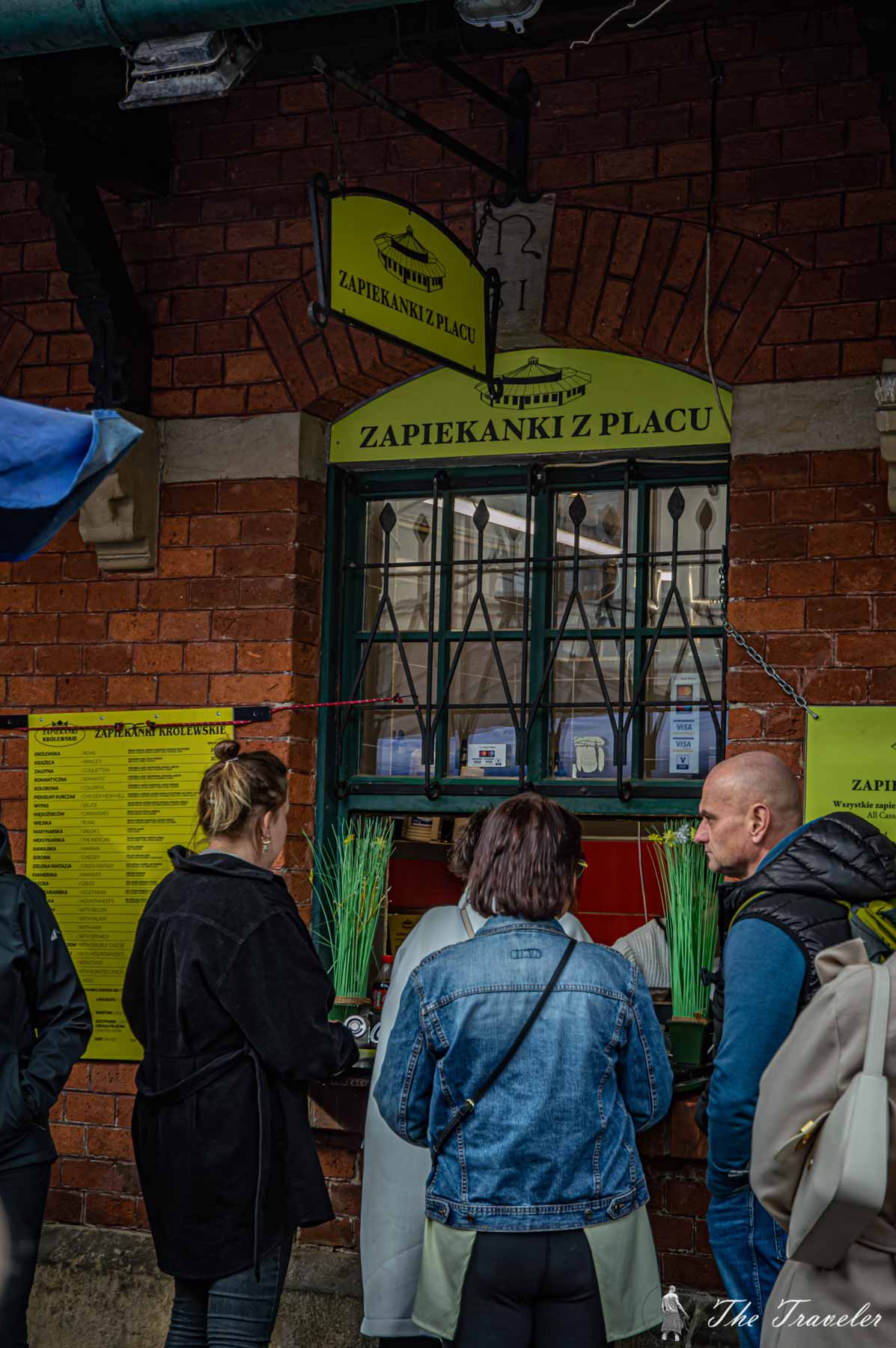
Local cuisine and cozy cafés
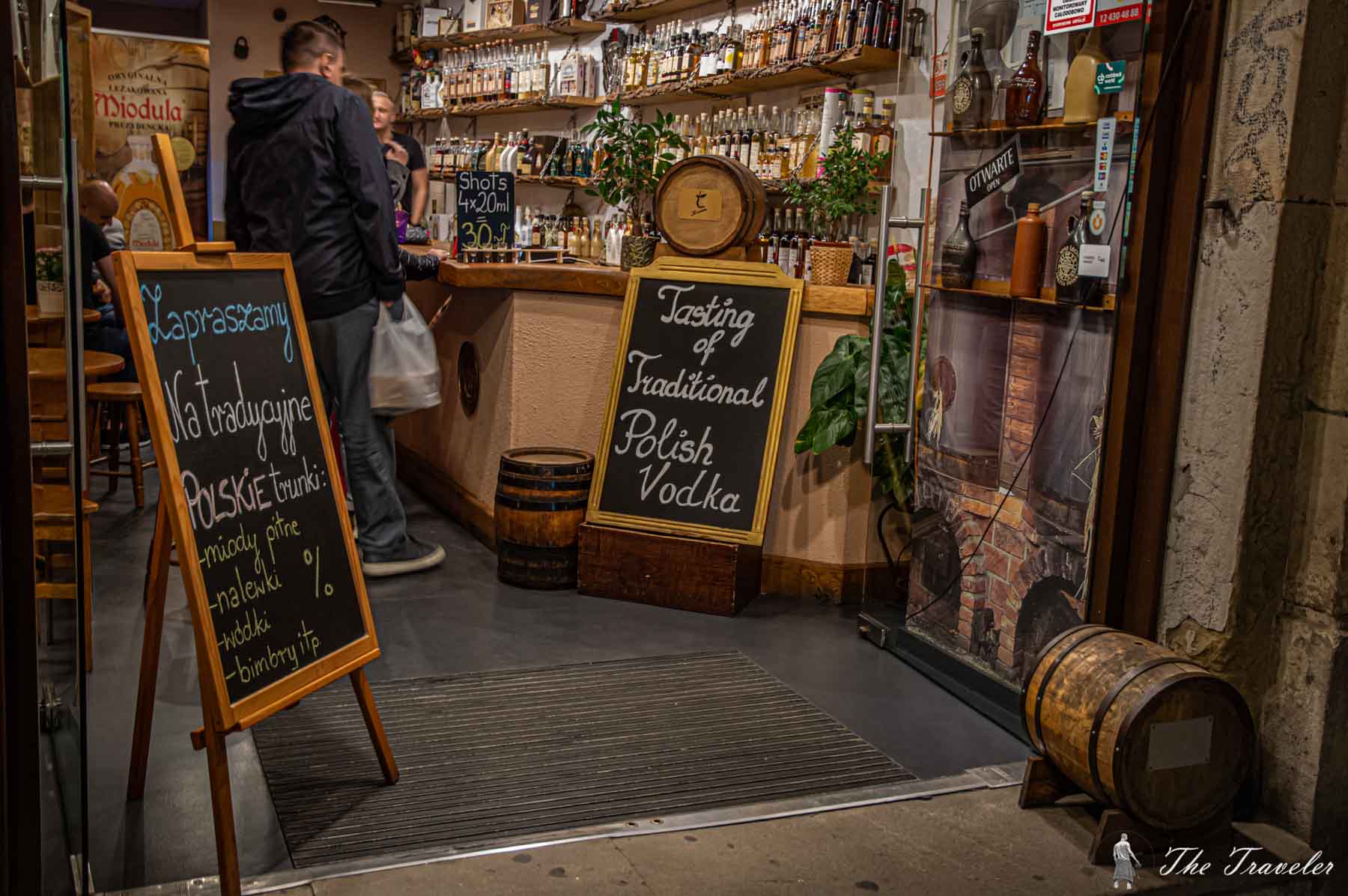
Without having high expectations for the food in Krakow, we were left absolutely enchanted! The city combines authentic Polish cuisine with a vibrant street food scene, which includes the traditional maczanka po krakowsku – an absolute must-try! Sweet temptations lurk around every corner, especially their fragrant doughnuts… Cozy brunch spots won us over with slow mornings and delicious options to start the day. Meanwhile, modern cafés with a Nordic hygge atmosphere became our favorite refuges for a warm cappuccino and long conversations, especially when our little one fell asleep in the stroller and we could quietly savor every sip… You can find all the places we visited, complete with personal impressions and photos, in our detailed article “Places to eat in Krakow”.


Final thoughts
Krakow survived almost miraculously through all the trials of the past that Poland endured, and today it effortlessly intertwines its historical scars with an invigorating youthful energy, an artistic spirit, and a welcoming sense of coziness… It quickly draws you into its own rhythm and makes you feel right at home! It isn’t a showy or flashy European destination where mass tourism has built up a heavy layer of commercialism… And that is exactly what makes it ideal for a short getaway or a long weekend. We can safely put it among the places we would gladly return to!


