

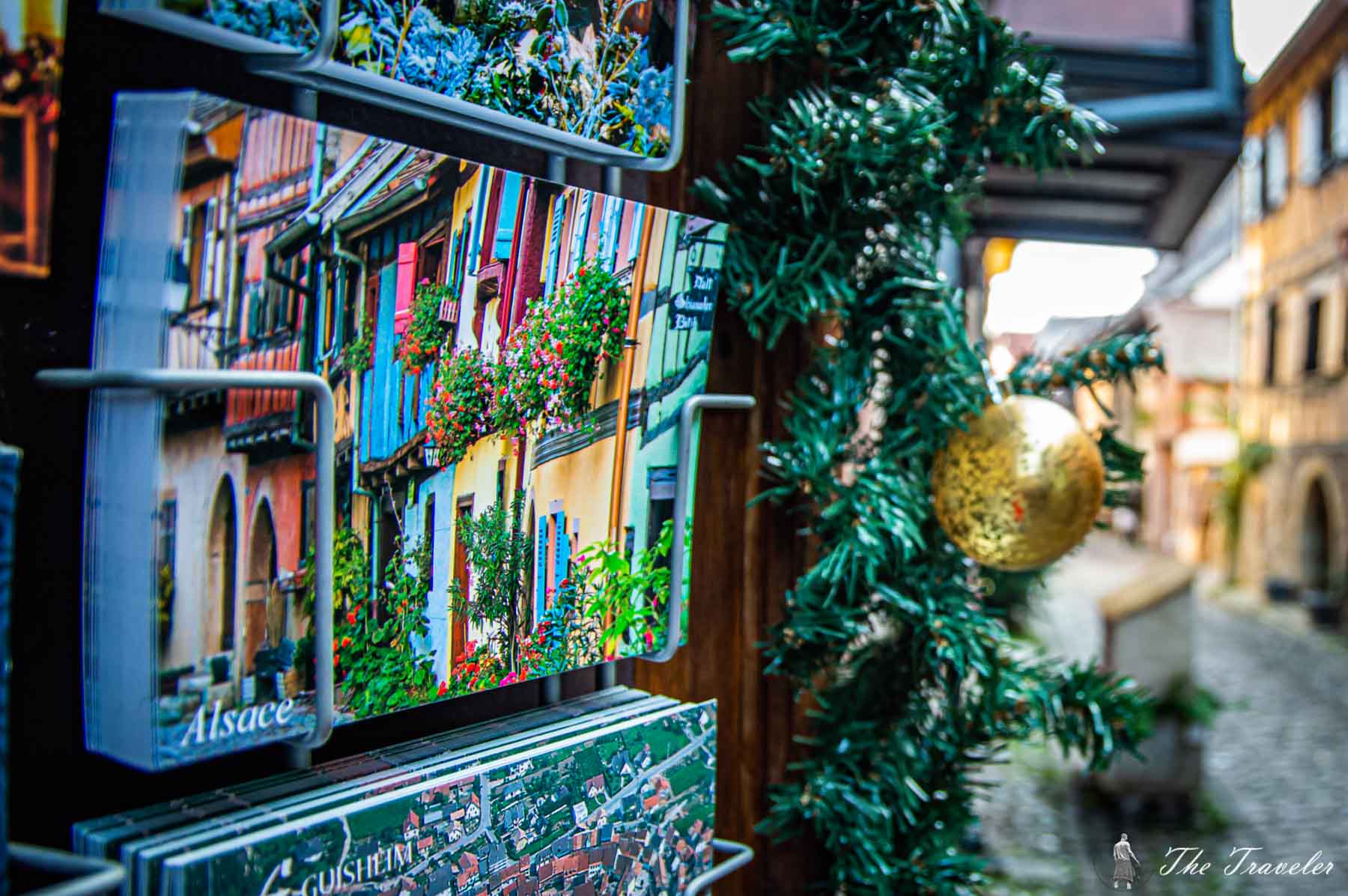
Alsace is that small, almost surreal corner of France where French sophistication and German orderliness have merged into something entirely different and unique! Nestled between the majestic Rhine and the gentle slopes of the Vosges Mountains, the region keeps its medieval heart intact – with colorful, geometrically imperfect half-timbered houses, narrow cobblestone streets and endless vineyards that seem to embrace every village…
Even though it is the smallest historical region in the country, in December it packs more Christmas spirit than you could possibly fit into a single trip… The aroma of cinnamon and hot mulled wine drifts through the air, shop windows come to life with teddy bears and handmade ornaments and thousands of lights turn the old squares into fairytale settings!
After sharing my stories about each place we visited separately, it is time to bring everything together into one article to help you plan a trip to Alsace. Because as magical as the region is, in December it requires a solid plan to save you both time and hassle…


Where is located and how to get there
Located in eastern France, right along the German border, Alsace is remarkably accessible – whether you prefer public transport or the freedom of your own car. If you are arriving by plane, there are several convenient options nearby. Strasbourg Airport itself is connected to the city center by fast trains running every 20 minutes (the journey takes about half an hour), while further alternatives include the Basel / Mulhouse / Freiburg airport (57 km from Colmar) and Baden-Baden (126 km from Colmar). We chose the latter and continued on from there with a rental car. The region’s railway network is also well developed, with direct trains to Colmar even from Paris. And in addition to regular bus routes, special Christmas shuttles operate between the villages in December.
Renting a car
Despite the well-organized public transport and even though I am repeating myself from my other articles about the region, the best way to experience Alsace remains a rental car! It is the only way you can stop wherever and whenever you want, escape the crowds and explore the small roads winding through the vineyards without relying on schedules. In a personal ranking of sorts, I place it among the most pleasant places to drive in Europe!
Having a car gives you complete freedom to organize your itinerary entirely as you see fit, saves valuable time and spares you from working around timetables or waiting for overcrowded intercity buses in December. Another big plus is that parking in many of the villages and towns is completely free, as long as you time it right and prepare in advance. Add to that the lack of a vignette requirement, with tolls only payable on certain highway sections.
We picked up our car directly from Baden-Baden Airport through our partners at AutoEurope. I always choose them for my travels because they provide a reliable service and the best terms and prices for the specific rental company – in our case, we went with Europcar.
See car rental options in France
More about Alsace
We have already mentioned the region’s location and size, yet its true character stems from the turbulent rollercoaster of its past! From Roman times and the medieval league of free trading cities to the frequent shifts in sovereignty between France and Germany… Alsace has lived between two cultures, experiencing all their benefits alongside deep historical wounds, including the tragedy of forced Germanization and the conscription of local young men against their will. It is precisely this clash and intertwining that is visible everywhere – in the architecture, the local dialect, the cuisine and the spirit of the people. Along the mountain hillsides stretch the famous vineyards, through which winds the legendary Wine Route with its picturesque villages; up on the peaks stand preserved medieval castles, while white storks are often spotted perched on the rooftops – having become a local symbol proudly featured on all sorts of souvenirs.
Christmas in Alsace – Why we chose this season
Alsace has its own distinct charm all year round! Spring and autumn bring color, greenery, wine routes and milder weather amidst the vineyards and the slopes of the Vosges Mountains; summer invites longer outdoor adventures, while winter lends a completely different, crisper and fairytale-like aura to the old streets. We chose Christmas specifically – the time when the entire region transforms and comes alive in full festive swing. Some of the earliest traditions of the Christmas tree and Christmas markets originated right here and every corner of Alsace has its own holiday theme and mood! In some places, the focus is on lights and Christmas trees; in others, on old local legends and festive characters, church concerts, parades and evening strolls beneath the decorated facades. The towns and villages are so colorful in their decorations that they almost seem to compete with one another for the best lighting and Christmas atmosphere. It was precisely this combination of living local customs, festive grandeur and winter magic that made us choose December for our first encounter with the region.


Where to stay
Choosing your base for overnight stays in Alsace in December is crucial for both your budget and your peace of mind. Colmar and Strasbourg naturally offer the widest variety of boutique hotels and apartments, yet around Christmas, prices there skyrocket (Colmar’s are perhaps the highest in the entire region) and the best places sell out months in advance.
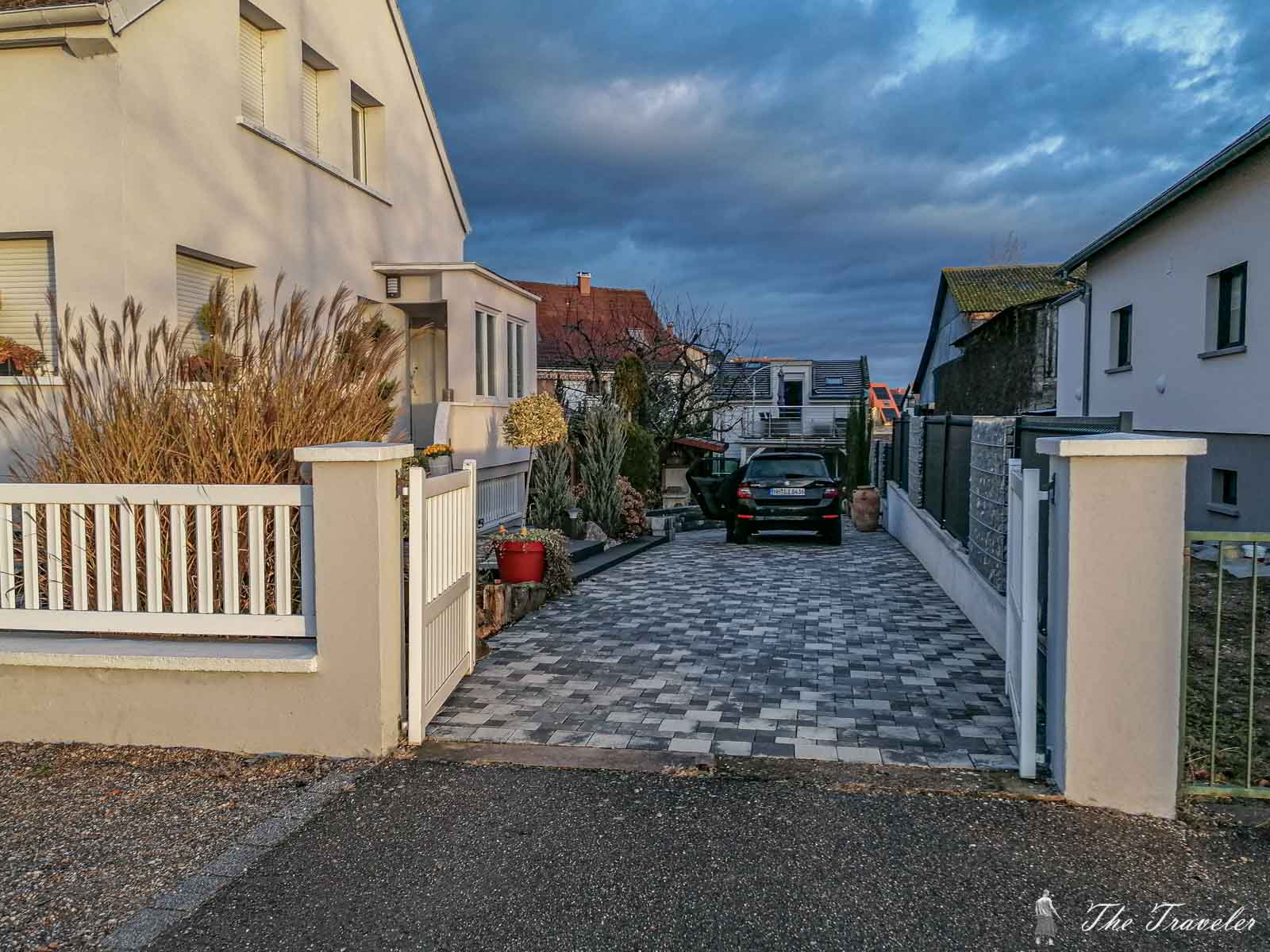
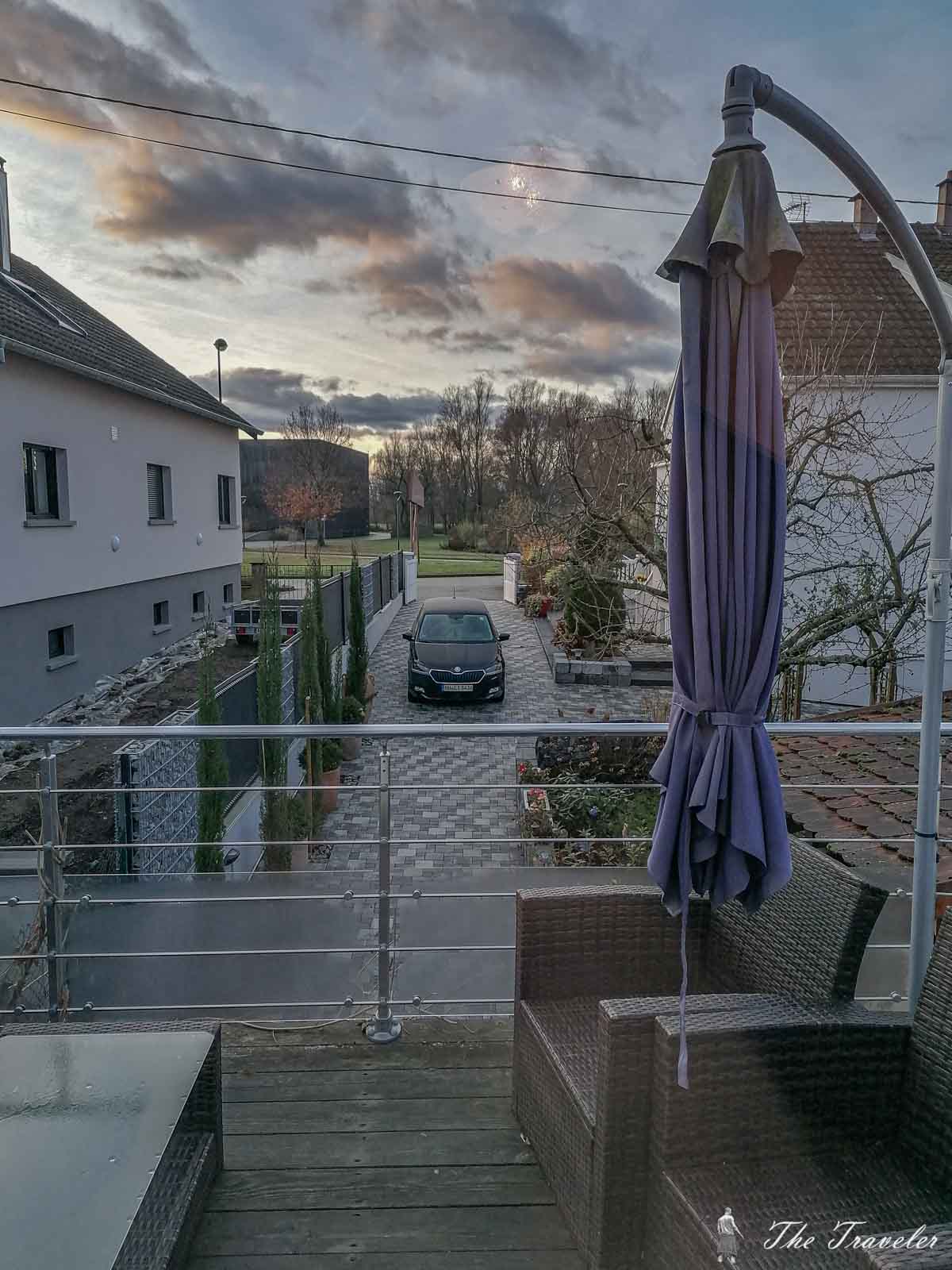
We decided to strategically position ourselves almost halfway between the two and chose a less popular town – Selestat. This gave us quick access to all the main destinations at significantly more affordable rates. We stayed in a small cottage in our hosts’ garden, right next to the Ill River and parked freely in the yard… The property is listed exclusively on Airbnb (Gîte on the banks of the Ill), though you can also browse other accommodation options through our partner link on Booking.

See more places to stay in Selestat
What not to miss – Colmar and Strasbourg
With a minimal stay in Alsace, the absolute must-visit stops are Strasbourg and Colmar. Strasbourg is the “Capital of Christmas” and fully lives up to its reputation – you can easily fill an entire day wandering among the canals of Petite France, the cathedral and the markets, though on a tighter schedule you can spend less time there. We dedicated about nine hours to it, which was enough to get a feel for the city and soak up its festive atmosphere.
Colmar, on the other hand, is considerably smaller and more compact to explore. To leave ourselves time for another spot or two, we decided not to spend a full day there, splitting our visit into two parts instead – a few hours in the evening, when the lights and mist turn the canals into a true fairytale and a few hours in the morning for a quieter stroll. That way, we got to see it both in the dark and in daylight without overloading our schedule.


My favorite – Ribeauville
My absolute favorite in Alsace in terms of atmosphere and emotion is Ribeauville and its distinctive medieval Christmas market! If your main goal is visiting Christmas markets, I strongly advise you to plan your itinerary and dates so you catch the themed days here – they take place on only two weekends before Christmas. That is when the streets literally come alive like a scene from the past, with merchants and passersby dressed in medieval attire, singing troubadours, stilt walkers, jugglers and even camels… In the main square, a wild boar roasts on a spit, while aromas drift everywhere from soups bubbling in cauldrons and giant pots of mulled wine. They fight off the evening chill with flames from split logs… And even though the crowds are huge, the emotion is so contagious that it completely swept us away! We had planned to stay for about two hours and in the end we spent considerably more time in Ribeauville, staying right until the end of the day…


More villages worth visiting – Riquewihr, Eguisheim and Turckheim
It is worth setting aside time for three more villages along the “Wine Route” – each with its own character and charm! Many call Riquewihr the “pearl in the crown” of Alsace for its colorful half-timbered houses, well-preserved ramparts, surrounding vineyards and rich Christmas atmosphere, though December does draw significant tourist crowds. Eguisheim, meanwhile, frequently makes rankings as one of the most beautiful villages in France, impressing with its circular layout, fairytale architecture and authentic Christmas spirit. And Turckheim brings a calmer, slightly different note – with smaller crowds even at the peak of December, colorful market chalets, preserved traditions and its impressive Advent calendar, where one window is opened each day until Christmas in a solemn ceremony…


The pleasant surprise – Obernai
I don’t know how it is for you, but for us, the most exciting parts of a trip are often the places we don’t expect much from, yet they win us over from the very first steps… Obernai was exactly like that! It certainly remains in the shadow of the larger cities in the area, yet compared to our initial expectations and the emotions it brought us, I rank it right at the top! One of the most beautiful Christmas streets in all of Alsace (Rue du Marche), brimming with teddy bears, reindeer and garlands across colorful half-timbered facades, the calmer market in the main square and the laid-back local vibe (without massive crowds) make it a true gem you shouldn’t pass by.


Less popular spots – Selestat, Bergheim and Rosheim
Aside from the famous destinations, Alsace also has smaller towns and villages that we added as “filler” to our itinerary, as well as for a slightly more authentic feel. Selestat is a quiet and peaceful town with a rich history, known as the birthplace of the Christmas tree. We would hardly have visited it had we not chosen it as our base, yet for that purpose, it is perfect! Bergheim is a favorite village among the French and impresses with its well-preserved medieval architecture and ramparts. We arrived there in the late hours when most of the market chalets were already closing, yet the nighttime atmosphere with numerous burning logs was captivating! Rosheim is a tiny, tranquil village with a cathedral and a handful of Christmas chalets that operate only on weekends during specific hours – a detail we missed, so we ended up finding them closed. As for Kaysersberg, it remained on our missed list… We had planned it for our fourth day, but the atmosphere in Ribeauville kept us there and we never made it over. Here is our combined article covering the three – Selestat, Bergheim and Rosheim | Christmas in Alsace.


How many days do you need
Alsace is compact and the distances between most villages are short, yet the temptations are so plentiful that time always seems to run out… We had three and a half days and still didn’t manage to see everything on our list. I believe that with four to five days, you will have the opportunity for more leisurely strolls and a relaxed immersion in the evening lights, which are the most magical part of the day!
How to organize your visits
Several main principles guided us when putting together our itinerary – trying to avoid the biggest crowds as much as possible and managing to see both Strasbourg and Colmar in daylight as well as after dark. The first is achievable if you make use of midweek days, which is why we arrived on a Wednesday. Here is a detailed breakdown of our plan for each day:
➡️ Day 1 – Selestat – Colmar (25 km, 30 minutes) – We arrived in the late afternoon and enjoyed Colmar by night. We took advantage of exploring it midweek, when the evening tourist foot traffic is significantly lower.
➡️ Day 2 – Selestat – Obernai (25 km, 30 minutes), Obernai – Rosheim (6 km, 10 minutes) and Rosheim – Strasbourg (27 km, 30 minutes) – We used the morning hours for a couple of towns near Strasbourg, leaving the bulk of the day for the region’s capital. That way, we ticked off the evening visits to the two busiest destinations on weekdays (Wednesday and Thursday).
➡️ Day 3 – Selestat – Eguisheim (40 km, 35 minutes), Eguisheim – Turckheim (8 km, 15 minutes), Turckheim – Riquewihr (12 km, 20 minutes), Riquewihr – Bergheim (7 km, 15 minutes) and Bergheim – Selestat (13 km, 20 minutes) – The busiest day in terms of logistics, yet it allowed us to see most of the small villages. We started with Eguisheim because, as a popular spot, heavy crowds are expected later in the day. In the morning, however, it was remarkably peaceful. We spent the most time in Riquewihr – and rightfully so, as it is one of the most beautiful places in Alsace.
➡️ Day 4 – Selestat – Colmar (25 km, 30 minutes) and Colmar – Ribeauville (18 km, 25 minutes) – Saturday morning was dedicated to Colmar and the rest of the day to Ribeauville and its one-of-a-kind medieval Christmas market, which takes place on only two weekends before Christmas. This was the day we had planned to fit in Kaysersberg, yet we were so captivated by the atmosphere in Ribeauville that we simply couldn’t leave…


Alsatian cuisine or what to try
There is a popular saying about the region – German food comes in abundance but isn’t particularly tasty, French food is refined and delicious yet served in small portions, while Alsatian cuisine combines the best of both worlds, meaning it is both delicious and served in generous portions! Among the traditional dishes worth trying are the famous choucroute (fermented cabbage served with several types of meat and boiled potatoes), baeckeoffe (a casserole baked in an earthenware dish with lamb, pork and beef marinated in local wine), as well as the thinly rolled tarte flambée (flammekueche) topped with crème fraîche, onions and smoked pork (or with more unconventional toppings like Emmental cheese, tomatoes and olives). And I certainly cannot fail to mention the wild boar slowly roasting on a spit in the center of Ribeauville…
At the Christmas markets, it is also well worth trying the sausage sandwiches, potato pancakes with herbs and leeks, Alsatian cured sausages, roasted chestnuts and hot soups. To warm up, there is mulled wine, hot chocolate and aromatic tea. There is no need to remind you of the exquisite French bakeries and their fragrant pastries, though in winter the focus shifts slightly toward kugelhopf (a traditional bundt cake) and bredeles (traditional Christmas cookies). My personal favorite among the sweet treats remains the Macarons de Riquewihr from Maison Alsacienne de Biscuiterie, which we tasted in Riquewihr!


Useful Tips
Make advance reservations for the restaurants you wish to visit.
Most mulled wine mugs require a deposit (€1.00–€3.00) and make a great souvenir if you decide not to return them.
The Christmas market chalets close early – around 7:00 PM–8:00 PM.
Dress warmly – winter in Alsace is cold and damp, especially in the evening with the mist along the canals, so warm clothing, a hat, a scarf and gloves are a must.
There are several interesting German cities nearby that also offer lavish Christmas markets. We managed to visit Baden-Baden and Freiburg.
Check the current dates of the Christmas markets in advance on the official tourism portal HERE.
Use our detailed articles for each destination to prepare optimally for your visit.


